Genetics Skills Worksheet Answer Key and Key Concepts Overview

Start by ensuring you have a clear understanding of inheritance patterns. When approaching problems related to dominant and recessive traits, be sure to recognize the different genetic cross types–monohybrid, dihybrid, and others. Focus on translating these concepts into visual tools like Punnett squares, which help you track allele distribution across generations.
Next, pay close attention to the specifics of the problem, such as whether the inheritance follows simple Mendelian patterns or involves more complex scenarios like incomplete dominance or codominance. Identifying these key details early on will allow you to apply the correct methods to determine genotype and phenotype ratios.
For more advanced tasks, such as calculating probabilities of inheritance or solving genetic mutation questions, break down the problem into smaller steps. Use logical reasoning to approach each aspect systematically. Be mindful of potential pitfalls, like misinterpreting ratios or overlooking recessive traits in heterozygous individuals.
In this guide, you will find clear explanations and practical examples to strengthen your understanding and application of genetic principles. Whether working on basic inheritance problems or tackling more complex genetic scenarios, these methods will ensure accuracy in your approach.
Answering Key Problems in Inheritance and Genotypic Ratios
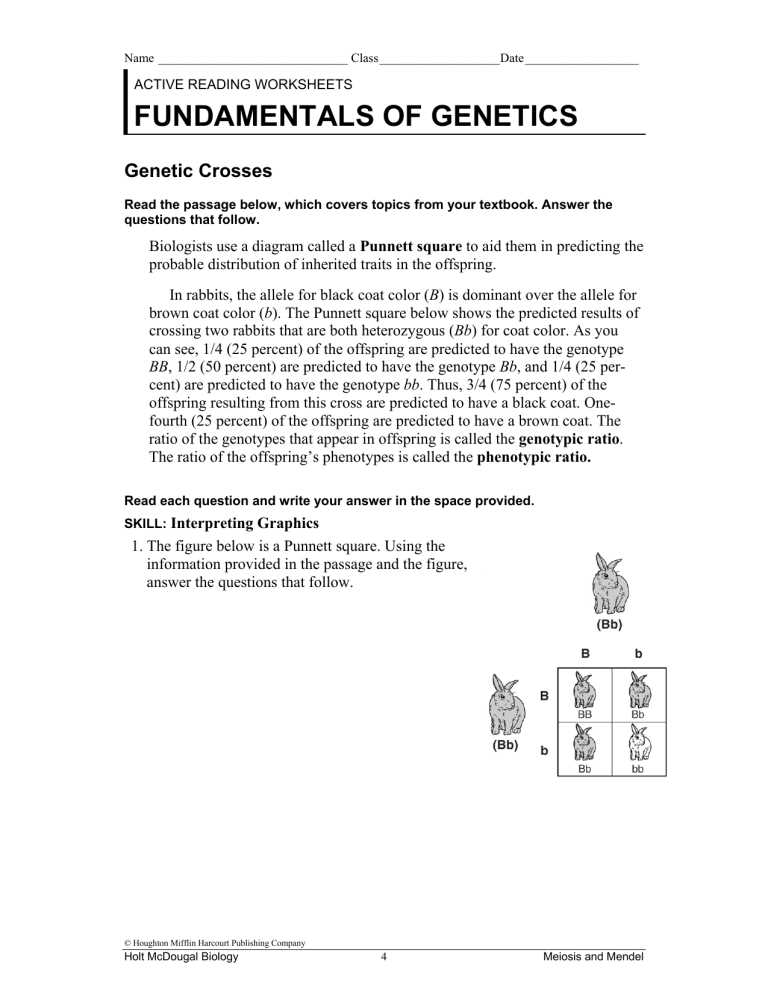
For problems involving genetic inheritance, it’s critical to start by identifying the genotypes of both parents. Use Punnett squares to predict the possible genetic outcomes for their offspring. Remember that for a monohybrid cross, the genotypic ratio should typically be 1:2:1 (homozygous dominant, heterozygous, and homozygous recessive), while the phenotypic ratio is 3:1 (dominant trait to recessive trait).
In cases involving dihybrid crosses, the principles remain similar, but you must account for two traits at once. Set up your Punnett square with the correct number of boxes (16 for a dihybrid cross) to determine all possible genotype and phenotype combinations. Keep track of dominant and recessive alleles for both traits to avoid confusion.
If you encounter incomplete dominance or codominance, be sure to adjust your expectations of offspring appearance. In incomplete dominance, the phenotype of heterozygotes will be an intermediate between the two homozygotes. For codominance, both alleles will be expressed in the phenotype. Always adjust your genotypic and phenotypic ratios accordingly to reflect these patterns.
When faced with more advanced problems such as sex-linked traits, remember that X-linked recessive traits are often passed from mothers to sons. This should be clearly indicated in your answer, as males will express the trait if they inherit a single X-linked recessive allele.
Finally, carefully check your calculations for probability questions. If asked to find the probability of certain genotypes or phenotypes appearing in offspring, remember to use the product rule for independent events. Multiply the probabilities of each allele combination to get the final answer.
How to Solve Punnett Square Problems in Genetics
Begin by identifying the genotypes of the parent organisms. For example, if both parents are heterozygous (Bb), the genotypes will be represented as Bb for each parent. This helps you set up the Punnett square correctly.
Next, draw a square divided into four boxes for a monohybrid cross. Label the top with the alleles from one parent and the left side with the alleles from the other parent. In our example, place “B” and “b” at the top, and “B” and “b” on the left side of the square.
| B | b | |
|---|---|---|
| B | BB | Bb |
| b | Bb | bb |
Now, fill in the boxes by combining the alleles from the top and left sides. This gives the possible genotypes of the offspring. For this example, the results are BB, Bb, Bb, and bb.
Finally, calculate the genotypic ratio and phenotypic ratio. For a monohybrid cross with heterozygous parents, the genotypic ratio would be 1 BB : 2 Bb : 1 bb. The phenotypic ratio would be 3 dominant (B) to 1 recessive (b), as the dominant allele B will mask the effect of the recessive allele b.
When working with more complex crosses, such as dihybrid crosses, expand the Punnett square to include all possible allele combinations for both traits. For dihybrid crosses, the square will have 16 boxes, representing the different combinations of two traits.
Understanding Mendelian Inheritance and Its Application
To apply Mendel’s laws, start by identifying the alleles of the parent organisms. Mendel’s first law, the Law of Segregation, states that each organism has two alleles for each trait, one inherited from each parent. These alleles segregate during gamete formation, meaning each gamete will carry only one allele for each gene.
For example, in a monohybrid cross between two heterozygous organisms (Bb x Bb), the possible allele combinations for their offspring are BB, Bb, and bb. The resulting genotypic ratio is 1 BB : 2 Bb : 1 bb, and the phenotypic ratio is 3 dominant (B) to 1 recessive (b), assuming the dominant allele masks the effect of the recessive allele.
Mendel’s second law, the Law of Independent Assortment, applies to dihybrid crosses and states that genes for different traits are inherited independently of each other. For a dihybrid cross (e.g., AaBb x AaBb), the alleles for two traits segregate independently, resulting in a 9:3:3:1 phenotypic ratio in the offspring.
To solve inheritance problems, use Punnett squares to visualize allele combinations. These tools help calculate the probability of inheriting certain genotypes or phenotypes based on parental genetic makeup. Whether working with single-gene traits or more complex scenarios involving multiple genes, Mendel’s principles remain foundational in predicting genetic outcomes.
Interpreting Genetic Crosses and Genotypic Ratios
Start by identifying the parental genotypes for the cross. For example, in a monohybrid cross between two heterozygous organisms (Bb x Bb), each parent contributes one allele for the trait. Use a Punnett square to visualize all possible combinations of these alleles.
Next, fill in the Punnett square by combining the alleles from each parent. This will give you the possible genotypes of the offspring. In the Bb x Bb cross, the resulting genotypes are BB, Bb, Bb, and bb. The genotypic ratio here is 1 BB : 2 Bb : 1 bb.
From the genotypic ratios, determine the phenotypic ratio. For a dominant-recessive trait, where the dominant allele (B) masks the recessive allele (b), the phenotypic ratio would be 3 dominant (B) to 1 recessive (b). This is because the offspring with BB or Bb genotypes will express the dominant phenotype, while only the bb offspring will express the recessive phenotype.
In a dihybrid cross, follow the same steps but consider two traits at once. For example, a cross between two organisms with the genotype AaBb x AaBb will produce a 16-box Punnett square. The genotypic ratio for a dihybrid cross is typically 1:2:2:4:2:4:1:2:1. From these combinations, you can derive the phenotypic ratio based on the interaction of both traits.
Accurately interpreting these ratios is key to predicting the likelihood of certain traits appearing in offspring, allowing for more precise calculations in various genetic problems.
Solving Problems Involving Codominance and Incomplete Dominance
In cases of incomplete dominance, neither allele is completely dominant over the other. The heterozygous phenotype will be an intermediate between the two homozygous phenotypes. For example, if red flowers (RR) are crossed with white flowers (WW), the offspring (RW) will have pink flowers, showing an intermediate phenotype.
When setting up a Punnett square for incomplete dominance, label the alleles as R and W. A cross between two heterozygous individuals (RW x RW) will produce offspring with the following genotypic ratio: 1 RR : 2 RW : 1 WW. The phenotypic ratio, in this case, would be 1 red : 2 pink : 1 white.
In codominance, both alleles are fully expressed in the heterozygous offspring. A classic example is the ABO blood group system, where both the A and B alleles are codominant. For instance, a cross between individuals with genotypes IAIB (heterozygous) and IAIO (heterozygous) will produce offspring with the following genotypic and phenotypic ratios: 1 IAIA : 2 IAIB : 1 IAIO. The phenotypic ratio will show both A and B antigens present in the heterozygous offspring.
For both incomplete dominance and codominance, it is important to correctly identify the alleles and predict the resulting phenotypic expressions based on their interactions. The Punnett square remains a valuable tool for visualizing these patterns and solving related problems.
Using Diagrams to Represent Genetic Traits in Exercises
Begin by drawing clear, organized diagrams such as Punnett squares or pedigree charts. These visual tools help track the inheritance of traits and make complex crosses easier to understand. For a monohybrid cross, create a 2×2 grid and place the alleles of each parent along the top and left sides.
For example, in a cross between two heterozygous individuals (Bb x Bb), label the alleles “B” and “b” for each parent. Fill in the square to show the possible allele combinations in the offspring. The resulting diagram will show a 1:2:1 genotypic ratio: 1 BB, 2 Bb, and 1 bb.
In cases involving more than one trait, use a larger Punnett square, such as a 4×4 grid for a dihybrid cross. For instance, a cross between two organisms with the genotypes AaBb x AaBb will require a 16-box square. This helps represent all possible allele combinations for both traits, resulting in a phenotypic ratio based on the interaction of the two genes.
Pedigree charts are another useful diagram, especially for tracking traits through multiple generations. Use circles to represent females and squares for males, and connect individuals to show mating pairs. Inheritance patterns can be traced through generations, helping identify dominant and recessive traits.
- Ensure that alleles are clearly labeled for easy reference.
- Use different symbols (e.g., circles and squares) to represent males and females in pedigree charts.
- Apply the correct ratios based on the genotypes and phenotypes of the offspring.
By incorporating these diagrams, you will be able to visualize and solve problems involving the inheritance of traits with greater accuracy and clarity.
Decoding Genetic Mutations in Scenarios
To decode mutations in genetic problems, first identify the type of mutation. A point mutation involves a change in a single nucleotide, such as a substitution, insertion, or deletion. Understand the impact of these mutations on the protein product. For example, a substitution might change one amino acid, affecting protein function.
If the mutation is a frameshift, caused by an insertion or deletion, the entire protein sequence can be altered downstream of the mutation. This can lead to a nonfunctional protein or a truncated version. Always check whether the mutation occurs in a coding region or affects regulatory sequences, which can also alter gene expression.
Next, analyze the potential effects of mutations on the phenotype. Some mutations are silent, meaning they do not affect the phenotype, while others are dominant or recessive. In dominant mutations, one copy of the altered gene is enough to express the trait, while recessive mutations require two copies to be expressed.
For example, sickle cell anemia is caused by a point mutation in the hemoglobin gene. The mutation changes a single amino acid, resulting in misshapen red blood cells. This is a case of a codominant mutation where heterozygotes have a mix of normal and sickle-shaped cells.
- Always examine the type of mutation (substitution, insertion, deletion).
- Consider whether the mutation is dominant, recessive, or codominant.
- Understand how the mutation affects the phenotype, and predict any associated traits or disorders.
For further information on genetic mutations, visit the National Human Genome Research Institute at https://www.genome.gov.
Calculating Probability in Genetic Inheritance Problems

To calculate probability in inheritance scenarios, start by determining the possible genotypes for offspring. For a monohybrid cross between two heterozygous individuals (Bb x Bb), use a Punnett square to find the genotype distribution: 1 BB, 2 Bb, and 1 bb. The probability of each genotype is determined by counting the number of occurrences for each genotype and dividing by the total number of possible outcomes. In this case, the probability of a BB offspring is 1/4, Bb is 2/4, and bb is 1/4.
For more complex crosses, such as a dihybrid cross, calculate the probability for each trait separately and then multiply the probabilities. For instance, a cross between AaBb x AaBb will produce 16 possible combinations in a 4×4 Punnett square. To find the probability of a particular genotype combination (e.g., A_B_ where A is dominant and B is dominant), first calculate the probability of A_ (1/4 for AA and 2/4 for Aa) and B_ (1/4 for BB and 2/4 for Bb), and multiply the two probabilities. The result is the probability of the desired genotype.
For cases involving codominance or incomplete dominance, account for the contribution of both alleles. If you’re working with a gene that exhibits incomplete dominance, like flower color in snapdragons, calculate the probability by considering the intermediate phenotype (e.g., pink flowers from a red and white cross). The approach remains similar, but with a focus on how the traits blend rather than being fully expressed.
- Draw a Punnett square to map out allele combinations.
- Calculate the probability for each genotype by counting occurrences and dividing by total possible outcomes.
- For multiple traits, multiply the probabilities of individual events to find the overall probability of a genotype.
Common Mistakes to Avoid in Problem Solving
One frequent mistake is failing to properly assign alleles in a Punnett square. Always ensure that the correct alleles are placed on the top and left sides of the square, and that all possible combinations are represented within the grid.
Another common error is misinterpreting the dominance of alleles. For example, in cases involving incomplete dominance or codominance, avoid assuming that one allele will completely dominate the other. Pay attention to how both alleles express themselves in the phenotype.
Additionally, be cautious when handling multiple traits. In a dihybrid cross, for instance, calculate the probability of each trait separately and then multiply the results. Don’t forget to account for the interaction between the two genes, as this can alter the overall ratio.
A common oversight occurs when calculating genotypic ratios. Make sure to check the total number of offspring in your analysis to ensure accurate ratios. Missing combinations or failing to consider all possibilities can lead to incorrect conclusions.
Lastly, don’t neglect the impact of mutations or environmental factors. These can alter inheritance patterns and phenotypic expression, so always consider external influences when solving problems.
- Double-check allele placement in Punnett squares.
- Understand the nature of allele dominance or codominance.
- Calculate probabilities for each trait separately when dealing with multiple genes.
- Ensure all possible genotypic combinations are considered in your calculations.
- Account for mutations and environmental influences that may affect the outcomes.