Complete Guide to Understanding the Structure of an Atom
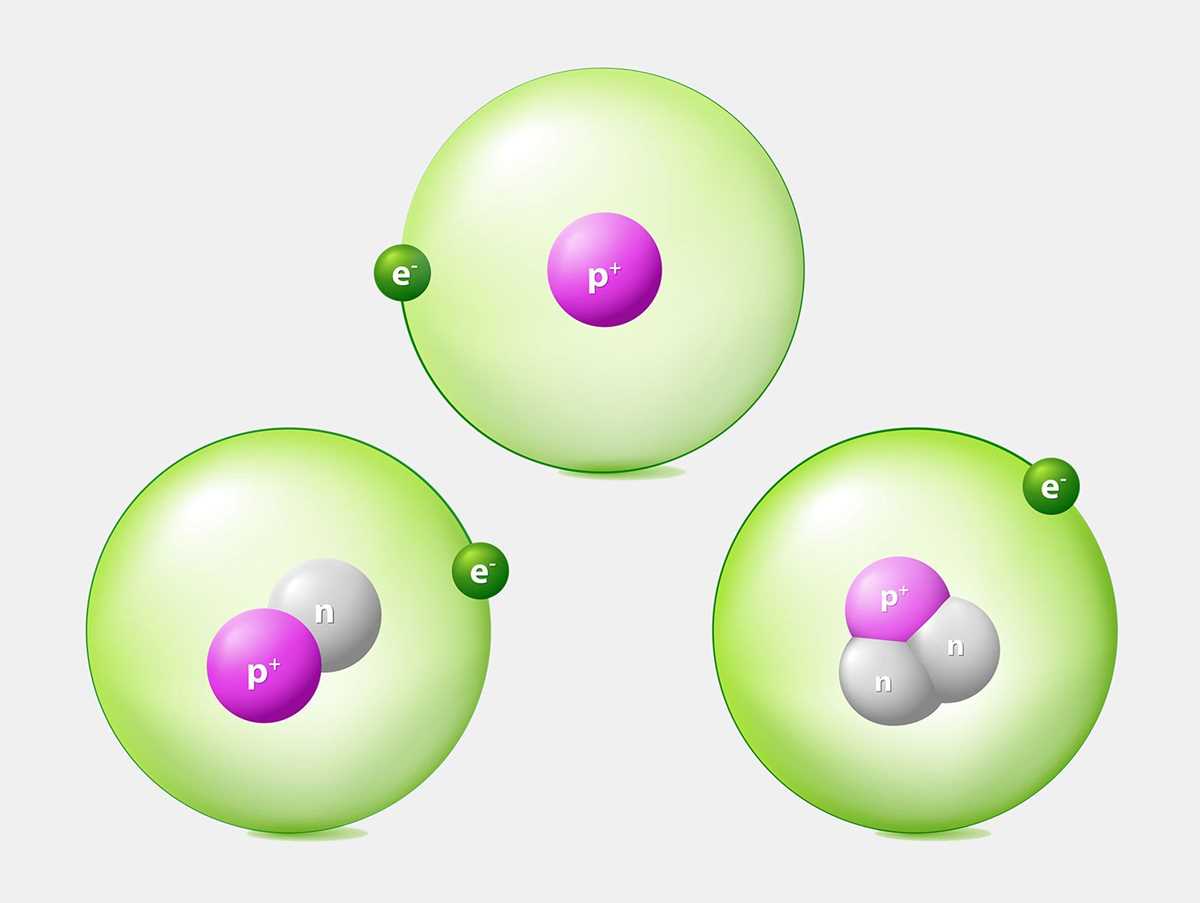
To understand the fundamentals of matter, it’s crucial to grasp the fundamental particles that compose it. Focus on the three primary particles: protons, neutrons, and electrons, and how they come together to form a stable unit.
Begin by examining how particles are arranged, paying attention to the central nucleus made of protons and neutrons. Electrons orbit this nucleus in defined energy levels. This concept is vital when studying chemical properties and behavior.
Familiarize yourself with the concept of atomic number, which represents the number of protons and thus the identity of an element. The mass number, which is the sum of protons and neutrons, is also critical in determining isotopes and atomic stability.
Understanding how these particles interact and organize themselves will provide the foundation for mastering more complex topics in chemistry and physics. Keep these basic concepts in mind to improve your grasp on atomic interactions and reactions.
Understanding the Components of Matter
Focus on the fundamental particles: protons, neutrons, and electrons. Protons and neutrons form the dense nucleus at the center, while electrons orbit the nucleus at various energy levels.
The number of protons in the nucleus determines the identity of the element and its position on the periodic table. Electrons, which are negatively charged, balance the positive charge of protons, ensuring electrical neutrality.
It’s also important to understand how the mass number, calculated by adding protons and neutrons, affects the stability and behavior of these units. Isotopes arise when atoms of the same element have different numbers of neutrons.
Recognizing how these particles interact within their respective orbits and how their arrangement impacts chemical bonds and reactions is fundamental to a deeper understanding of material properties.
Atomic Model and Its Components
The most recognized model is the Bohr model, where the central nucleus contains protons and neutrons, while electrons orbit in defined energy levels or shells.
Protons, with a positive charge, define the identity of an element. Neutrons, which are neutral, add to the mass of the nucleus and contribute to atomic stability.
Electrons are negatively charged particles that occupy different energy levels around the nucleus. Their distribution and movement are governed by quantum mechanics, influencing the chemical behavior of the element.
The model helps explain how atoms bond with one another to form molecules, a process that depends on the interaction of outermost electrons, or valence electrons.
How Electrons Orbit the Nucleus
Electrons move in specific energy levels around the nucleus, often referred to as electron shells. These shells are arranged at increasing distances from the nucleus, with each shell capable of holding a specific number of electrons.
According to quantum mechanics, electrons do not orbit in fixed paths like planets. Instead, their positions are described by probability clouds, known as orbitals, which define regions where an electron is most likely to be found.
Each orbital has a different shape, with s, p, d, and f orbitals representing various levels of energy and spatial distribution. Electrons fill these orbitals starting with the lowest energy level and moving outward, in accordance with the Aufbau principle.
Electrons in the outermost shell, or valence electrons, play a key role in chemical bonding. Their interactions determine the reactivity of atoms and their ability to form molecules.
For a deeper understanding, you can explore further resources such as the Chemistry Explained website, which provides detailed explanations of electron behavior and orbital theory.
Role of Protons and Neutrons in Atomic Structure
Protons and neutrons form the dense core of an element, the nucleus. They contribute to the majority of the mass within the particle, with protons carrying a positive charge and neutrons being electrically neutral.
Protons determine the chemical identity of the element, as each element has a unique number of protons. This number is referred to as the atomic number. The number of protons also dictates the electron count in a neutral atom, balancing the positive charge of the nucleus with the negative charge of the surrounding electrons.
Neutrons, while electrically neutral, play a significant role in stabilizing the nucleus. Their presence helps offset the electrostatic repulsion between positively charged protons, allowing the nucleus to remain intact. The number of neutrons can vary within isotopes of the same element, leading to different atomic masses.
In summary:
- Protons define the element’s identity and determine its charge.
- Neutrons provide stability by reducing proton-proton repulsion.
- The balance of protons and neutrons affects the atomic mass.
The Significance of Atomic Number and Mass Number

Atomic number directly determines an element’s identity by specifying the number of protons in the nucleus. This number is unique for each element and dictates its position on the periodic table. A change in atomic number results in a completely different element.
Mass number is the total count of protons and neutrons in the nucleus. It provides the mass of the particle, although it differs slightly from the atomic mass due to the varying number of isotopes. While the atomic number defines the element, the mass number reflects the isotope.
In practice:
- The atomic number identifies the element (e.g., carbon has an atomic number of 6).
- Mass number helps distinguish isotopes of the same element (e.g., carbon-12 and carbon-14 have different mass numbers).
- Understanding both numbers is crucial for understanding chemical behavior and isotopic variation.
Electron Configuration and Energy Levels
Electron configuration refers to the arrangement of electrons in different energy levels or orbitals around a nucleus. These configurations follow specific rules, including the Aufbau principle, Hund’s rule, and Pauli exclusion principle, which determine how electrons are distributed across orbitals in atoms.
Electrons occupy energy levels that are organized into shells. Each shell can hold a specific maximum number of electrons, and the further a shell is from the nucleus, the higher its energy. The first shell holds up to 2 electrons, the second up to 8, the third up to 18, and so on.
Energy levels are represented by quantum numbers. The principal quantum number (n) indicates the main energy level, while the angular momentum quantum number (l), magnetic quantum number (m), and spin quantum number (s) describe the shape, orientation, and spin of the orbital respectively.
For example, carbon has an electron configuration of 1s² 2s² 2p². This means:
- 2 electrons in the first shell (1s²),
- 2 electrons in the second shell (2s²),
- 2 electrons in the second shell’s p orbital (2p²).
This configuration dictates the chemical properties of the element, influencing how atoms bond with other atoms and interact in chemical reactions.
Understanding Isotopes and Atomic Variations
Isotopes are versions of an element that share the same number of protons but differ in the number of neutrons. This variation in neutrons leads to differences in mass number, while the atomic number remains unchanged. For example, carbon has both stable isotopes, carbon-12 and carbon-14, where the former has 6 neutrons and the latter has 8 neutrons.
Isotopes of an element behave similarly in chemical reactions because they have the same number of electrons, but they may differ in physical properties due to differences in mass. For instance, the isotopes of hydrogen include protium (1 proton, 0 neutrons), deuterium (1 proton, 1 neutron), and tritium (1 proton, 2 neutrons).
Some isotopes are stable, while others are unstable and undergo radioactive decay. This decay can result in the emission of radiation, leading to the transformation of one element into another. A well-known example is uranium-238, which decays into thorium-234 over time.
Applications of isotopes include their use in dating materials, such as carbon dating with carbon-14, and in medical imaging, where radioactive isotopes are used as tracers. Their variations also play a role in nuclear energy production and understanding fundamental processes in nature.
Determining Atomic Charge and Ion Formation
To determine the charge of an element, subtract the number of electrons from the number of protons. If an element has more electrons than protons, it carries a negative charge (an anion). If it has fewer electrons than protons, it carries a positive charge (a cation).
For example, sodium (Na) typically has 11 protons and 11 electrons. If it loses an electron, it becomes Na+ with a positive charge. Conversely, chlorine (Cl) has 17 protons and 17 electrons, and by gaining an electron, it becomes Cl- with a negative charge.
The ion formation process occurs when atoms either lose or gain electrons to achieve a stable electron configuration. Elements on the left side of the periodic table, like alkali metals, tend to lose electrons, while elements on the right, like halogens, tend to gain electrons. This behavior is driven by the desire to achieve a full outer electron shell, similar to the nearest noble gas.
Understanding atomic charge is crucial in predicting chemical reactions and understanding how atoms interact in bonding. This knowledge allows for the formation of stable compounds and molecules, such as salts, where ions combine to neutralize each other’s charges.
Common Misconceptions About Atomic Structure
One common misconception is that electrons orbit in fixed paths, similar to planets around the sun. In reality, electrons exist in regions of probability, known as orbitals, where their exact position cannot be precisely determined at any given moment.
Another misunderstanding is the belief that protons and neutrons are located on the outer part of the nucleus. In fact, both protons and neutrons are tightly packed in the nucleus, with protons carrying a positive charge and neutrons being neutral.
Many also assume that all elements have the same number of protons and neutrons. This is incorrect, as isotopes of an element contain different numbers of neutrons but the same number of protons. This variation impacts the mass without altering chemical properties.
It is also often thought that the number of electrons determines the chemical reactivity of an element. While this is partially true, it’s the arrangement and energy levels of electrons, particularly in the outermost shell, that largely influence chemical behavior.
Lastly, some believe that atoms are indivisible, but they can be broken down into subatomic particles, including quarks, which make up protons and neutrons, challenging the traditional view of atomic indivisibility.