Genetics Unit Test Solutions and Explanations
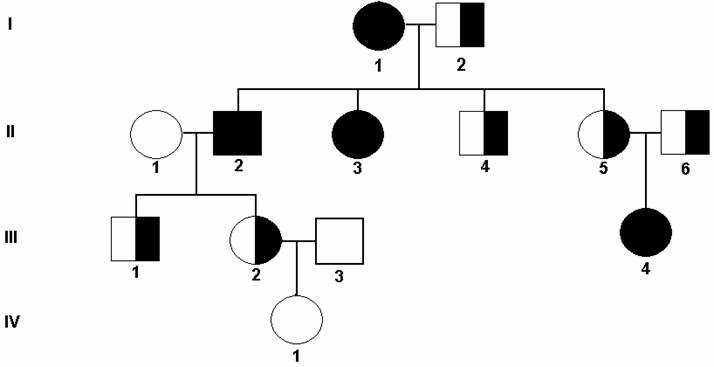
To succeed in solving questions related to inheritance, begin by reviewing foundational concepts like Mendelian patterns and Punnett square calculations. Identifying dominant and recessive traits is critical when determining offspring probabilities. Understanding the roles of alleles will help in solving inheritance-related queries accurately.
Focus on mastering how different genetic variations, such as mutations or gene expression, impact organisms. Pay attention to the specific instructions provided with each problem to ensure proper application of concepts. For example, when solving Punnett squares, clearly label parent genotypes and correctly interpret possible combinations in offspring.
Be mindful of common pitfalls, such as incorrectly labeling alleles or failing to account for environmental factors that influence phenotype expression. Double-check your calculations and always verify that the results align with Mendelian laws. This approach will strengthen your ability to handle more complex genetic scenarios with confidence.
Genetics Review Guide for Solving Common Questions
Start by reviewing core principles like inheritance patterns, genotype, and phenotype. When approaching problems about traits, it’s key to recognize the difference between dominant and recessive alleles. Understand how to calculate probabilities using tools like Punnett squares for cross-breeding scenarios.
Focus on key terminology: homozygous, heterozygous, codominance, incomplete dominance, and sex-linked traits. Be sure to connect these terms to real-world examples like eye color, blood type, or hemophilia, as these will often appear in questions about traits.
Double-check all calculations involving allele frequencies, especially when handling problems related to Hardy-Weinberg equilibrium. Remember to apply the right formulae and carefully read the question to determine if you’re being asked to calculate frequencies or predict phenotypic ratios.
Lastly, always check your work for consistency. For instance, in problems where multiple generations are involved, ensure you correctly track allele inheritance across generations and confirm that your answers are consistent with the principles of heredity.
How to Approach Common Genetics Questions
When solving problems related to inheritance, first identify whether you’re dealing with a monohybrid or dihybrid cross. For monohybrid crosses, use a Punnett square to determine the probability of offspring inheriting specific alleles. For dihybrid crosses, remember to separate the two traits and apply the rules of independent assortment.
If asked to find genotype or phenotype ratios, carefully distinguish between homozygous and heterozygous individuals. Apply basic Mendelian principles to calculate possible outcomes. For example, if both parents are heterozygous for a particular trait, the offspring will have a 25% chance of being homozygous dominant, 50% heterozygous, and 25% homozygous recessive.
In questions about incomplete dominance or codominance, recognize that both alleles may contribute to the phenotype in different ways. Be prepared to identify situations where neither allele is completely dominant, resulting in intermediate traits or both traits being expressed simultaneously.
For complex inheritance patterns, such as polygenic inheritance or sex-linked traits, use the appropriate tools and understand how multiple genes or the sex chromosomes influence the outcomes. Pay close attention to X-linked inheritance, as it often leads to different expression patterns in males and females.
Lastly, always double-check your calculations and logical steps. For example, when determining genetic probabilities or working with Hardy-Weinberg equilibrium, ensure that you’ve correctly applied the formula and interpreted the data provided in the problem.
Identifying Key Concepts in a Genetics Test
Focus on the following key topics when preparing for a test on inheritance and genetic principles:
- Mendelian Inheritance: Understand the basic principles, including dominant and recessive alleles, homozygous and heterozygous genotypes, and Punnett squares.
- Genetic Crosses: Be comfortable with monohybrid and dihybrid crosses, and apply the laws of segregation and independent assortment to predict outcomes.
- Genotype and Phenotype: Differentiate between genotype (genetic makeup) and phenotype (observable traits). Practice calculating ratios for both.
- Exceptions to Mendelian Laws: Know about incomplete dominance, codominance, and multiple alleles. Be prepared to recognize traits that do not follow simple dominant-recessive patterns.
- Sex-Linked Traits: Be aware of how traits linked to the X and Y chromosomes are inherited, especially in males and females.
- Polygenic Inheritance: Understand traits influenced by multiple genes, like eye color or height, and how they produce a range of phenotypes.
- Genetic Disorders: Recognize patterns of inheritance for common genetic conditions like cystic fibrosis or hemophilia. Know how these conditions follow Mendelian or non-Mendelian inheritance patterns.
- Population Genetics: Be familiar with Hardy-Weinberg equilibrium and how allele frequencies in a population are maintained or change over time.
Review these core concepts carefully, as they form the foundation of most questions in this subject area. Apply practice problems to reinforce your understanding and identify any areas needing further study.
Tips for Solving Punnett Square Problems
Follow these steps to solve Punnett square problems accurately and efficiently:
- Identify the Parent Genotypes: Start by determining the genotypes of both parents. Are they homozygous or heterozygous? What alleles do they carry?
- Determine the Possible Gametes: Write down the alleles each parent can pass on. For a heterozygous parent (e.g., Aa), the gametes will be A and a.
- Set Up the Punnett Square: Create a 2×2 grid. Place one parent’s gametes across the top and the other parent’s gametes down the left side of the grid.
- Fill in the Square: Combine the alleles in each box. Each box represents a possible genotype of the offspring.
- Analyze the Results: Count the number of each genotype and phenotype in the square. For example, how many offspring are homozygous dominant, heterozygous, or homozygous recessive?
- Calculate the Ratios: Use the results from the Punnett square to determine the phenotypic and genotypic ratios. This will show the probability of each outcome.
Practice with different scenarios to become comfortable with these steps. The more you practice, the quicker and more accurate your calculations will become.
Understanding Genetic Mutation and Inheritance Patterns
To accurately interpret mutation and inheritance, it’s important to understand how genetic alterations occur and how they are passed on to offspring. Here are key points to consider:
- Types of Genetic Mutations: Mutations can be point mutations, deletions, insertions, or duplications. Each type has distinct effects on the genetic sequence and, ultimately, on the phenotype.
- Mutation Effects: Mutations may be silent (no effect on phenotype), harmful (leading to diseases or conditions), or beneficial (increasing fitness in certain environments).
- Inheritance Patterns: Inheritance can follow several patterns, such as autosomal dominant, autosomal recessive, X-linked dominant, or X-linked recessive. Each pattern has specific rules for how traits are passed from parents to offspring.
- Carrier States: In recessive inheritance, carriers possess one mutated allele but do not express the phenotype. Understanding carrier status is crucial for predicting offspring outcomes.
- Penetrance and Expressivity: These terms describe the proportion of individuals with a genotype who express the phenotype (penetrance) and the variation in the phenotype among individuals with the same genotype (expressivity).
- Examples of Inherited Disorders: Examples such as cystic fibrosis, sickle cell anemia, and Huntington’s disease illustrate different inheritance patterns and mutation effects on offspring.
To assess inheritance probabilities, Punnett squares can be helpful. Understanding these principles helps predict the likelihood of a mutation appearing in offspring, depending on the genetic makeup of the parents.
How to Interpret Pedigree Charts in Genetics Tests
Pedigree charts visually represent family relationships and the inheritance of traits. Here’s how to interpret them effectively:
- Symbols and Their Meaning: Circles represent females, while squares represent males. A filled symbol indicates an individual who expresses the trait, and an unfilled symbol indicates one who does not.
- Understanding Generations: Each row of the chart represents a different generation, with the oldest generation at the top and the youngest at the bottom. Connecting lines show familial relationships, typically with horizontal lines for marriages and vertical lines for offspring.
- Autosomal Dominant and Recessive Traits: Autosomal dominant traits often appear in every generation, with affected individuals having at least one affected parent. Autosomal recessive traits may skip generations, requiring both parents to carry the allele for the trait to appear in offspring.
- X-linked Inheritance: For X-linked traits, females can be carriers, while males are typically affected if they inherit the mutant allele. This pattern is important for understanding how traits are passed down through genders.
- Consanguinity: A double line between two individuals indicates a consanguineous relationship (marriage between relatives), which can increase the likelihood of recessive traits appearing.
- Patterns of Inheritance: Analyzing the chart for patterns like autosomal dominant, autosomal recessive, and X-linked inheritance helps predict the probability of trait inheritance in future generations.
For more information, visit reliable educational sources such as NCBI Education for in-depth explanations and examples of pedigree analysis.
Common Mistakes to Avoid in Genetics Testing
Avoiding errors during assessments related to hereditary traits is crucial for accurate results. Here are some common mistakes and how to prevent them:
- Incorrect Interpretation of Punnett Squares: Ensure that you correctly place alleles from both parents in the appropriate columns and rows. Misplacing them can lead to incorrect probabilities for offspring traits.
- Confusing Dominant and Recessive Traits: Don’t assume that a dominant trait always appears in every generation. Some dominant traits can be hidden in carriers, and recessive traits require both parents to pass on the allele.
- Misunderstanding X-linked Inheritance: X-linked traits affect males more frequently because males have only one X chromosome. Mistaking this inheritance pattern can lead to incorrect conclusions about gender-related traits.
- Overlooking the Role of Mutations: Genetic mutations can occur spontaneously and affect inheritance patterns. Always consider the possibility of a mutation when analyzing pedigree charts or trait inheritance.
- Ignoring Genetic Linkage: Genes located on the same chromosome tend to be inherited together. Failing to account for genetic linkage can lead to incorrect predictions of inheritance.
- Assuming Patterns from a Small Sample: Small family sizes can make it difficult to draw accurate conclusions about inheritance. Be cautious when interpreting results from limited data.
- Neglecting Environmental Factors: While genetic predisposition plays a significant role, environmental factors can also influence the expression of certain traits. Always consider both genetic and environmental influences when analyzing inheritance patterns.
Reviewing Complex Genetics Terminology
Understanding specialized terms is key to excelling in assignments related to inheritance patterns and molecular biology. Here are some critical terms to master:
- Allele: A variant form of a gene. Individuals inherit two alleles for each trait, one from each parent.
- Homozygous: Having two identical alleles for a given gene, either dominant or recessive (e.g., AA or aa).
- Heterozygous: Having two different alleles for a given gene (e.g., Aa). This condition can result in a carrier status for recessive traits.
- Phenotype: The observable physical or biochemical characteristics of an organism, influenced by both its genetic makeup and environment.
- Genotype: The genetic constitution of an individual organism, specifically the alleles it possesses.
- Dominant: An allele that expresses its effect even when paired with a different allele. A dominant trait will appear if at least one dominant allele is present (e.g., Aa or AA).
- Recessive: An allele that only expresses its trait when two copies are present (homozygous recessive, e.g., aa).
- Codominance: A genetic scenario where both alleles contribute equally to the phenotype, such as in AB blood type.
- Incomplete Dominance: A situation where neither allele is completely dominant, leading to a blended phenotype (e.g., red and white flowers producing pink offspring).
- Mutation: A change in the DNA sequence that can lead to variations in traits. Mutations can be spontaneous or induced by environmental factors.
- Genetic Linkage: The tendency for genes located close to each other on the same chromosome to be inherited together.
Where to Find Additional Resources for Practice
For those looking to deepen their understanding and practice with genetic concepts, the following resources can help reinforce knowledge and improve performance:
- Online Educational Platforms: Websites like Khan Academy and Coursera offer free courses and exercises on inheritance, mutation, and molecular biology. They also provide interactive quizzes to assess your understanding.
- Textbook Solutions: Many biology textbooks include practice problems and detailed solutions at the end of chapters. Popular options include textbooks by Campbell and Reece.
- Interactive Simulations: Explore tools like PhET Interactive Simulations that offer virtual labs on genetics topics. These tools allow you to experiment with genetic crosses and visualize inheritance patterns.
- Online Forums and Study Groups: Platforms such as Reddit’s biology community and online study groups on Discord allow students to discuss complex topics, share resources, and clarify doubts with peers and instructors.
- Flashcards: Using flashcard apps like Quizlet, you can find pre-made sets on key concepts such as Mendelian inheritance and genetic mutations. Creating your own flashcards can also help reinforce terms and definitions.
- Practice Websites: Websites like BioMan Biology and Study.com offer free and paid quizzes, games, and problem sets to test knowledge on key biological concepts, including genetic inheritance and DNA structure.
- YouTube Channels: Channels like CrashCourse and Bozeman Science provide detailed video lessons and visual explanations on topics like genetic disorders, inheritance laws, and molecular genetics.