Cellular Respiration Concept Map Answer Key and Guide
The best way to understand how energy is produced within cells is to break down the complex processes into their individual stages. Focus first on the breakdown of glucose during glycolysis. This initial step, occurring in the cytoplasm, generates small amounts of ATP and provides pyruvate for the next stage. It’s important to visualize this step correctly on a diagram to avoid confusion, as many maps show glucose being split into two molecules of pyruvate, which is critical for understanding the overall process.
Next, pay attention to the transformation of pyruvate into acetyl-CoA in the mitochondria. This step feeds into the citric acid cycle, where a series of reactions result in the production of high-energy electron carriers like NADH and FADH2. These carriers will play a key role in the final stage of energy production. Make sure to track how each molecule moves through the cycle and the exact moments where ATP, NADH, and FADH2 are generated.
The electron transport chain is where the majority of ATP is made. Understanding how electrons are transferred along protein complexes in the inner mitochondrial membrane can help you map out the production of ATP more accurately. The final step, where oxygen is consumed and water is produced, is crucial for completing the cycle. Identifying the role of oxygen as the terminal electron acceptor will clear up any uncertainties about how the process wraps up.
Make use of a detailed diagram to identify key enzymes and intermediate products in each stage. Knowing the exact sequence of events helps reinforce memory retention and clarifies any misunderstandings about energy production. By reviewing this step-by-step process and correcting any mistakes along the way, you’ll develop a solid grasp of cellular energy flow.
Detailed Breakdown of Energy Production Pathways
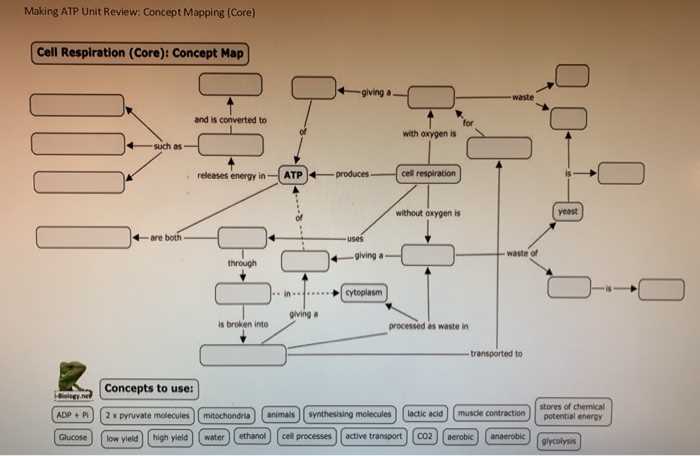
Begin by focusing on glycolysis. It’s crucial to understand that this process occurs in the cytoplasm and involves the splitting of glucose into two molecules of pyruvate, while producing a small amount of ATP and NADH. Ensure that the conversion of glucose to pyruvate is clearly marked in your diagram, as it’s the starting point for further stages.
Once pyruvate enters the mitochondria, it undergoes decarboxylation, turning into acetyl-CoA. This step connects glycolysis to the citric acid cycle, where the acetyl-CoA combines with oxaloacetate to form citrate. Map this reaction clearly to show the beginning of the cycle. The citric acid cycle generates NADH, FADH2, and ATP, all of which play important roles in the next step of energy generation.
Pay close attention to how the electron transport chain functions. This part of the process involves a series of protein complexes in the inner mitochondrial membrane, where electrons are transferred, and a proton gradient is established. The energy from electrons passing through these complexes is used to pump protons into the intermembrane space, creating the proton gradient necessary for ATP synthesis via ATP synthase.
Don’t forget the role of oxygen. It acts as the final electron acceptor in the electron transport chain, combining with electrons and protons to form water. Oxygen’s involvement is critical for maintaining the flow of electrons and preventing the chain from becoming backed up.
Lastly, verify the ATP production tally at each stage. Glycolysis contributes 2 ATP, the citric acid cycle yields 2 ATP, and the electron transport chain is responsible for producing the majority, typically around 28 ATP. Make sure your diagram reflects this distribution of ATP output to have a complete understanding of energy flow within the cell.
Understanding Glycolysis in the Cellular Energy Pathways
Focus on the sequence of reactions that convert glucose into two molecules of pyruvate. Glycolysis occurs in the cytoplasm and is the first step in extracting energy from glucose. The process begins with the phosphorylation of glucose by ATP, which traps the molecule inside the cell. This step is crucial for understanding how energy is initially invested to later extract greater returns.
During the breakdown, glucose is split into two three-carbon molecules, which are then further processed to produce ATP and NADH. Pay close attention to the two main phases: the energy investment phase and the energy payoff phase. The first phase consumes 2 ATP, while the second generates 4 ATP and 2 NADH, resulting in a net gain of 2 ATP for the cell.
Here’s a breakdown of the steps in glycolysis:
| Step | Reaction | ATP/NADH Produced/Consumed |
|---|---|---|
| 1. Glucose phosphorylation | Glucose → Glucose-6-phosphate | Consumes 1 ATP |
| 2. Isomerization | Glucose-6-phosphate → Fructose-6-phosphate | No ATP/NADH |
| 3. Phosphorylation | Fructose-6-phosphate → Fructose-1,6-bisphosphate | Consumes 1 ATP |
| 4. Cleavage | Fructose-1,6-bisphosphate → Dihydroxyacetone phosphate + Glyceraldehyde-3-phosphate | No ATP/NADH |
| 5. Conversion | Dihydroxyacetone phosphate → Glyceraldehyde-3-phosphate | No ATP/NADH |
| 6. Oxidation | Glyceraldehyde-3-phosphate → 1,3-bisphosphoglycerate | Produces 2 NADH |
| 7. ATP generation | 1,3-bisphosphoglycerate → 3-phosphoglycerate | Produces 2 ATP |
| 8. Isomerization | 3-phosphoglycerate → 2-phosphoglycerate | No ATP/NADH |
| 9. Dehydration | 2-phosphoglycerate → Phosphoenolpyruvate | No ATP/NADH |
| 10. ATP generation | Phosphoenolpyruvate → Pyruvate | Produces 2 ATP |
At the end of glycolysis, 2 ATP are produced per molecule of glucose, and 2 NADH are generated, which will be used in the electron transport chain for further ATP production. Understanding these steps in detail helps clarify how glucose is efficiently processed to extract energy for the cell’s needs.
How the Krebs Cycle Fits into Cellular Energy Production
Once acetyl-CoA enters the mitochondria, it enters the Krebs cycle, also known as the citric acid cycle. This cycle is a series of enzyme-driven reactions that transform acetyl-CoA into high-energy electron carriers NADH and FADH2, while also producing a small amount of ATP. Ensure that the transition from glycolysis to the Krebs cycle is clearly shown in your diagram, as this step is key to energy production in the cell.
The cycle begins with the combination of acetyl-CoA and oxaloacetate to form citric acid, a six-carbon compound. This reaction is catalyzed by the enzyme citrate synthase. Following this, citric acid undergoes several transformations that lead to the production of 3 NADH, 1 FADH2, 1 ATP, and the release of 2 CO2 molecules. This step is critical for maximizing energy extraction from the initial glucose molecule.
The NADH and FADH2 produced here are then used in the electron transport chain to generate a large portion of ATP. The cycle also regenerates oxaloacetate, allowing the process to continue as long as acetyl-CoA is available. Understanding how these products feed into the next phase of energy production is crucial for mapping the cell’s overall energy production pathway.
Here’s a summary of the main steps in the Krebs cycle:
| Step | Reaction | Products |
|---|---|---|
| 1. Citrate formation | Acetyl-CoA + Oxaloacetate → Citrate | No ATP/NADH/FADH2 |
| 2. Isomerization | Citrate → Isocitrate | No ATP/NADH/FADH2 |
| 3. Oxidation and Decarboxylation | Isocitrate → Alpha-ketoglutarate | Produces 1 NADH, releases 1 CO2 |
| 4. Second Decarboxylation | Alpha-ketoglutarate → Succinyl-CoA | Produces 1 NADH, releases 1 CO2 |
| 5. ATP Generation | Succinyl-CoA → Succinate | Produces 1 ATP |
| 6. Oxidation | Succinate → Fumarate | Produces 1 FADH2 |
| 7. Hydration | Fumarate → Malate | No ATP/NADH/FADH2 |
| 8. Final Oxidation | Malate → Oxaloacetate | Produces 1 NADH |
In summary, the Krebs cycle plays a pivotal role in the energy extraction process by generating key electron carriers that fuel the electron transport chain, where the majority of ATP is produced. Make sure your diagram reflects the cyclical nature of this pathway, as it continuously operates as long as the necessary substrates are available.
The Role of the Electron Transport Chain in Energy Production
The electron transport chain (ETC) is where the majority of ATP is produced. After the Krebs cycle, NADH and FADH2 carry high-energy electrons to the proteins embedded in the inner mitochondrial membrane. These electrons are passed through a series of protein complexes (Complex I, II, III, and IV) in a stepwise manner, releasing energy that is used to pump protons across the membrane into the intermembrane space. This creates an electrochemical gradient, or proton gradient, which is crucial for ATP synthesis.
At the end of the chain, oxygen acts as the final electron acceptor. It combines with electrons and protons to form water. Without this step, the entire chain would back up, halting ATP production. It’s important to note that without oxygen, this process cannot continue, which is why it is sometimes referred to as oxidative phosphorylation.
ATP synthase, another protein complex in the inner membrane, uses the proton gradient to synthesize ATP. As protons flow back into the mitochondrial matrix through ATP synthase, the energy released is harnessed to convert ADP and inorganic phosphate into ATP.
Here’s a simple breakdown of the events in the electron transport chain:
| Step | Action | Products |
|---|---|---|
| 1. Electron transfer | NADH and FADH2 donate electrons to protein complexes | No direct ATP production |
| 2. Proton pumping | Energy from electrons pumps protons into the intermembrane space | Proton gradient created |
| 3. Oxygen as electron acceptor | Electrons combine with protons and oxygen to form water | Water produced |
| 4. ATP synthesis | Protons flow through ATP synthase, driving ATP production | ATP produced |
This process produces approximately 28 ATP per molecule of glucose, making it the most ATP-efficient step in energy production. It’s important to visualize the flow of electrons and protons across the membrane and understand the interconnectedness of each complex in this process.
Key Enzymes Involved in Energy Production Pathways
Several enzymes play crucial roles in the various stages of energy extraction from glucose. These enzymes facilitate the biochemical reactions necessary for breaking down glucose and converting it into usable energy. Below are some of the most important enzymes involved:
- Hexokinase – Catalyzes the phosphorylation of glucose, the first step in glycolysis. This step consumes ATP and traps glucose inside the cell as glucose-6-phosphate.
- Phosphofructokinase (PFK) – The rate-limiting enzyme of glycolysis. It regulates the conversion of fructose-6-phosphate to fructose-1,6-bisphosphate, a key step in controlling the speed of glycolysis.
- Pyruvate Kinase – Facilitates the final step in glycolysis, converting phosphoenolpyruvate (PEP) into pyruvate, producing ATP in the process.
- Citrate Synthase – Catalyzes the first step in the citric acid cycle by combining acetyl-CoA with oxaloacetate to form citrate.
- Aconitase – Converts citrate into isocitrate through an isomerization reaction in the citric acid cycle.
- Isocitrate Dehydrogenase – Responsible for the decarboxylation of isocitrate, producing NADH and releasing CO2. This is a key step in generating energy from glucose breakdown.
- Alpha-Ketoglutarate Dehydrogenase – Similar to isocitrate dehydrogenase, this enzyme catalyzes the decarboxylation of alpha-ketoglutarate to produce NADH, CO2, and succinyl-CoA.
- Succinate Dehydrogenase – Converts succinate to fumarate, while reducing FAD to FADH2, which enters the electron transport chain to produce ATP.
- ATP Synthase – Located in the inner mitochondrial membrane, this enzyme uses the proton gradient created by the electron transport chain to synthesize ATP from ADP and inorganic phosphate.
Each of these enzymes plays a specific role in ensuring the proper flow of energy through the metabolic pathways. Understanding their function helps clarify the overall process of energy production and the regulation of metabolism. Pay attention to where each enzyme acts in the pathway and how it influences the flow of metabolites and energy carriers.
ATP Yield from Different Stages of Energy Production
ATP production occurs in multiple stages during the breakdown of glucose. Each stage contributes to the overall ATP yield, with varying amounts generated at different points in the process.
1. Glycolysis: This process occurs in the cytoplasm and breaks down one molecule of glucose into two molecules of pyruvate. In total, glycolysis produces 4 ATP, but since 2 ATP are used in the initial steps, the net gain is 2 ATP. Additionally, 2 NADH molecules are produced, which will later contribute to ATP production in the electron transport chain.
2. Citric Acid Cycle: Each turn of the citric acid cycle, which processes one molecule of acetyl-CoA, produces 1 ATP directly through substrate-level phosphorylation. Since two molecules of acetyl-CoA are generated from one glucose molecule, the cycle runs twice per glucose, yielding a total of 2 ATP. Along with ATP, 6 NADH and 2 FADH2 are produced, which will later contribute additional ATP in the electron transport chain.
3. Electron Transport Chain and Oxidative Phosphorylation: This is where the majority of ATP is generated. NADH and FADH2 produced in the previous stages donate electrons to the electron transport chain, which powers proton pumps across the mitochondrial membrane, creating a proton gradient. The proton flow through ATP synthase generates about 28 ATP molecules from the NADH and FADH2 produced in the earlier stages. Oxygen is required to accept electrons at the end of the chain, forming water as a byproduct.
In total, from one molecule of glucose, the approximate ATP yield is:
- 2 ATP from glycolysis
- 2 ATP from the citric acid cycle
- 28 ATP from oxidative phosphorylation (electron transport chain and ATP synthase)
Thus, the complete breakdown of one glucose molecule yields around 32 ATP, although the exact number may vary slightly depending on the cell type and conditions. Understanding these contributions helps clarify how the different stages of energy production work together to generate ATP efficiently.
Common Mistakes in Interpreting Energy Production Pathways
Here are the most common errors when interpreting diagrams of energy production processes and their pathways:
- Incorrectly placing reactions in the wrong cellular location: Each step of energy production occurs in a specific part of the cell. Glycolysis happens in the cytoplasm, while the citric acid cycle and electron transport chain are localized in the mitochondria. Confusing these locations can lead to a misunderstanding of the process.
- Overstating ATP production at early stages: Glycolysis and the citric acid cycle produce relatively small amounts of ATP directly. Glycolysis generates 2 ATP (net), and the citric acid cycle produces 2 ATP per glucose molecule. The majority of ATP is produced through oxidative phosphorylation in the electron transport chain.
- Equating NADH and FADH2 contributions to ATP production: While both NADH and FADH2 are electron carriers that donate electrons to the electron transport chain, NADH generates more ATP (about 3 ATP per molecule) compared to FADH2 (about 2 ATP per molecule). Misinterpreting their contributions can lead to errors in understanding the energy yield.
- Overlooking oxygen’s role as the final electron acceptor: Oxygen’s essential role in the electron transport chain is sometimes not highlighted. It accepts electrons at the end of the chain and combines with protons to form water. Without oxygen, the entire process would halt, and ATP production would stop.
- Misunderstanding the proton gradient: The proton gradient created by the electron transport chain is critical for ATP production. Incorrectly representing how protons move across the membrane or how ATP synthase uses this gradient to generate ATP can lead to confusion about how energy is produced.
- Neglecting intermediate steps like acetyl-CoA: The conversion of pyruvate to acetyl-CoA is a key step between glycolysis and the citric acid cycle. Omitting this intermediate step can cause confusion about how energy moves through the pathways.
By ensuring accurate placement of processes, proper understanding of ATP generation, and clear representation of electron carriers and oxygen’s role, you can avoid these common mistakes and better interpret the flow of energy through the cell.
Linking Fermentation to Energy Production Pathways
Fermentation serves as an alternative pathway to generate ATP when oxygen is limited or unavailable. Unlike aerobic processes, fermentation does not rely on the electron transport chain. Instead, it allows glycolysis to continue by regenerating NAD+ from NADH, which is crucial for sustaining ATP production in the absence of oxygen.
There are two main types of fermentation:
- Lactic acid fermentation: This occurs in muscle cells during intense exercise when oxygen is scarce. Pyruvate, produced from glycolysis, is reduced to lactic acid, allowing NADH to be oxidized back to NAD+.
- Alcoholic fermentation: Common in yeast and some bacteria, this process converts pyruvate into ethanol and CO2, regenerating NAD+ in the process.
In both types, the primary goal is to maintain the supply of NAD+ to enable glycolysis to continue. However, both processes are less efficient than aerobic pathways, yielding only 2 ATP per glucose molecule compared to up to 32 ATP in aerobic conditions.
For more detailed information on how fermentation fits into metabolic pathways, check the latest updates from authoritative resources like NCBI, where detailed research articles and data on metabolic processes are regularly published.
How to Use Study Guides for Learning Energy Production Pathways
Study guides for metabolic processes can be highly useful for reinforcing your understanding of complex pathways. Here’s how to effectively use them for studying:
- Focus on the flow of metabolites: Trace the movement of molecules like glucose, pyruvate, acetyl-CoA, and oxygen through the different stages. Pay attention to their transformations and how energy is captured at each step.
- Understand enzyme functions: Identify the enzymes responsible for key steps. Knowing their roles in catalyzing reactions will help you understand the control points within each pathway.
- Examine ATP production at each stage: Break down how much ATP is produced during glycolysis, the citric acid cycle, and oxidative phosphorylation. This will give you a clearer picture of energy yields in aerobic and anaerobic conditions.
- Link reactions across pathways: Identify connections between processes like glycolysis, fermentation, and the citric acid cycle. This will help you see how different pathways interact to maintain energy production under various conditions.
- Practice with diagrams: Redraw the pathways or use diagrams to visualize each reaction step. Repeating this exercise will reinforce your understanding of how each process fits into the overall flow of energy.
By following these strategies, you can deepen your understanding of energy production processes and improve your ability to recall key steps and components during exams or discussions.