How to Use a Dichotomous Key for Leaf Identification in Biology
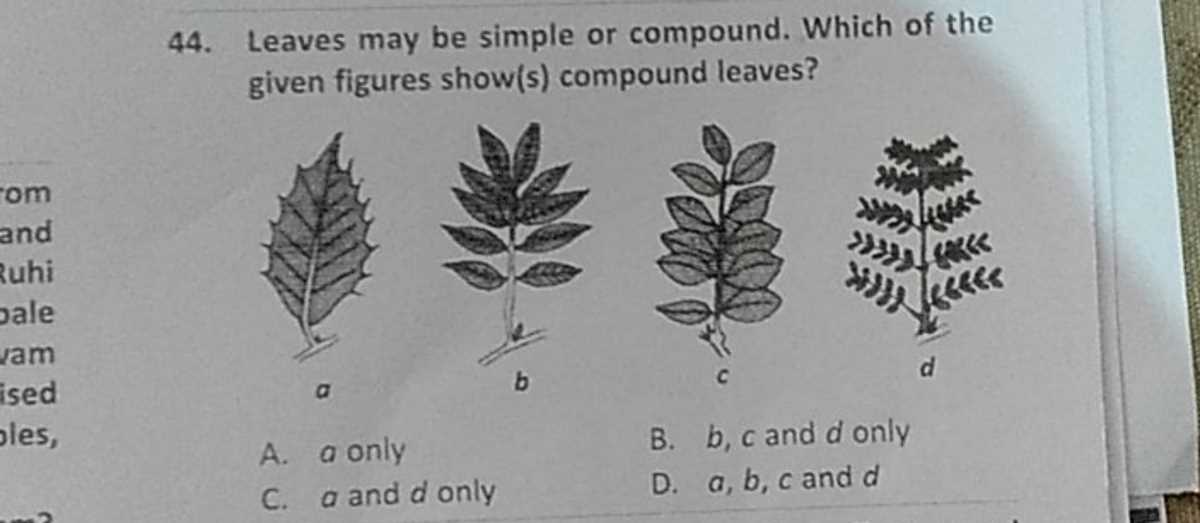
Start by focusing on the shape of the leaf. Pay attention to whether the edges are smooth or serrated, and if the leaf is broad or narrow. This will help you eliminate possibilities early on.
Next, examine the vein pattern. Leaves can have parallel, reticulate, or palmate veins, each pointing to different plant families. These patterns are essential for narrowing down plant species quickly.
Consider the arrangement of the leaves on the stem. Are they opposite, alternate, or whorled? This feature can significantly narrow your search, especially for trees and shrubs. The leaf’s overall size and texture also offer critical clues about its classification.
When you encounter difficulty, use a systematic approach. Start with the most obvious traits and work step by step. Understanding these basic identifiers will allow you to categorize most plants accurately.
Biology Method for Leaf Identification
To identify a plant based on its foliage, begin by observing the leaf shape. Look for round, elongated, or deeply lobed edges. This is often the first step in eliminating potential matches.
Next, evaluate the venation pattern of the leaf. Leaves with parallel veins often belong to monocots, while reticulate or netted veins are more common in dicots. This observation helps differentiate broad plant families.
Check the leaf arrangement on the stem. Determine if the leaves are opposite (pairs of leaves), alternate (one leaf per node), or whorled (three or more leaves per node). This trait can significantly narrow down possible species.
Consider the leaf’s texture and size. Some plants have leathery leaves, others have thin or hairy surfaces. The size can also give clues about the plant’s environment and species.
- Start by observing the leaf’s overall shape to identify basic categories.
- Next, focus on venation, leaf arrangement, and texture to narrow down possibilities.
- Finally, use a process of elimination to refine your identification, cross-referencing with plant guides and resources.
Understanding the Structure of a Classification Guide
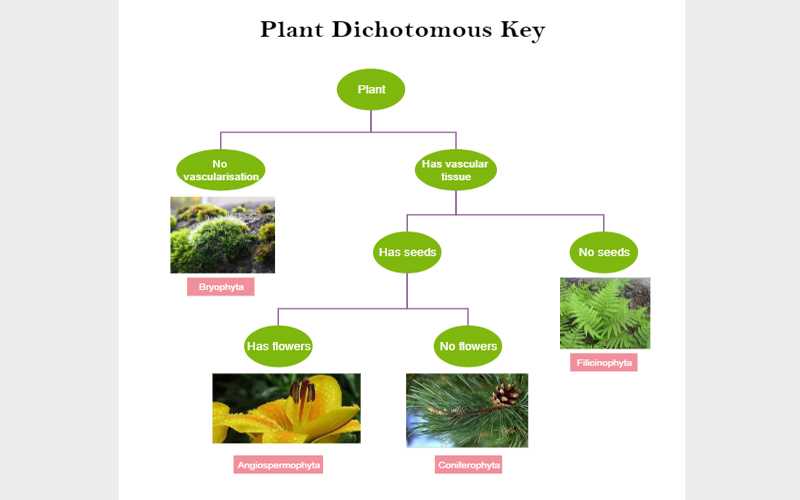
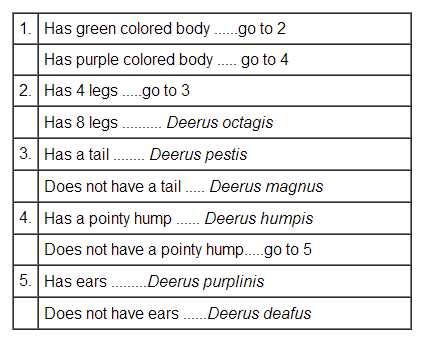
A classification guide typically begins with a series of choices that lead you through the identification process. Each step presents two options, allowing you to narrow down the characteristics of the specimen you’re working with.
Each choice in the guide is structured to help you make a simple, binary decision. For example, the first question might ask whether the specimen has broad or narrow features, which helps you eliminate large groups of possibilities.
The structure is designed to break down the complex task of identification into smaller, manageable steps. At each fork, you will choose between two distinct features, progressively refining the specimen’s identification.
The options should be clear and mutually exclusive, ensuring that each decision leads to a distinct conclusion. By following the steps, you can reach a final identification without ambiguity.
- Start with the most obvious feature to reduce broad categories.
- Use visible traits, such as shape, color, and texture, to guide you through the decision points.
- Follow the path step by step, always making clear and definitive choices.
Step-by-Step Guide to Using a Classification System for Identification
1. Examine the specimen closely, focusing on its physical features, such as size, shape, and texture. Identify any distinct traits that could help differentiate it from other specimens.
2. Begin with the first distinguishing question in the guide. This question typically describes a broad characteristic. For example, it may ask whether the specimen has smooth or jagged edges.
3. Answer the question based on your observation. Each subsequent question will help you narrow down the possible categories. Be specific and accurate with your observations.
4. Move through each set of questions sequentially. The questions are structured to guide you through increasingly specific traits, eliminating choices that don’t match the description.
5. Upon reaching the final stage, you should have a more accurate identification based on the answers you’ve given. Check the outcome to see if it aligns with your specimen.
6. If the result seems unclear, revisit the previous questions and reassess your answers. A slight misjudgment in an early stage can lead to an incorrect final result.
7. If you’re still uncertain, cross-check your identification with other sources or consult an expert for confirmation. The classification system is a helpful tool but may not always provide a definitive answer.
Common Features Used in Leaf Identification
1. Leaf Shape: The overall form of the leaf can help in identifying its species. Common shapes include oval, lance-shaped, heart-shaped, and needle-like.
2. Leaf Margin: The edge of the leaf can vary significantly. Key types include smooth (entire), serrated (toothed), or lobed edges.
3. Leaf Size: The dimensions of a leaf, both length and width, can indicate specific plant families or genera. Larger leaves often belong to certain tree species.
4. Leaf Venation: The pattern of veins in the leaf is another identifying feature. Common venation patterns include parallel, pinnate, and palmate.
5. Leaf Arrangement: Leaves may be arranged in various patterns on the stem, such as opposite, alternate, or whorled. This is an important identifying feature.
6. Leaf Surface Texture: The texture of the leaf can vary from smooth to rough. Some leaves have a waxy coating, while others may be hairy or sticky.
7. Leaf Color: The color of the leaf can indicate the species or the health of the plant. Some leaves are a vibrant green, while others may be red, purple, or variegated.
8. Leaf Presence of Stipules: Some plants have small leaf-like structures at the base of the leaf stalks called stipules, which can aid in identification.
9. Leaf Type: Leaves can be simple, with a single blade, or compound, consisting of multiple leaflets. The type of leaf significantly impacts identification.
10. Leaf Petiole: The petiole is the stalk that attaches the leaf to the stem. It can vary in length, shape, and texture, aiding in species identification.
How to Identify Leaf Types Based on Shape and Size
1. Oval Shape: Oval leaves have a symmetrical, elongated form. These are commonly found in species like the apple tree or magnolia. The length is usually greater than the width, and the leaf tapers slightly toward the tip.
2. Lance-shaped: Lance-shaped leaves are narrow with a pointed tip and gradually widen toward the base. Examples include species like willows or many types of oaks.
3. Heart-shaped: Heart-shaped leaves, also known as cordate leaves, are wide at the base with a pointed tip. They are characteristic of species such as the redbud tree or wild ginger.
4. Needle-like: Needle-like leaves are long, slender, and sharp, often found in coniferous trees like pines, firs, and spruces. Their small size helps in water conservation and minimizes wind resistance.
5. Palmate Shape: Palmate leaves have multiple lobes radiating from a central point, similar to the shape of a hand. These are common in species like maples and some species of buckeyes.
6. Oval with Serrated Edges: Some oval leaves have a serrated edge. These sharp edges are often seen in species like birch trees or hazelnuts. The serrations vary from fine to coarse, depending on the plant species.
7. Large vs. Small Size: Large leaves, such as those found on the fig tree, typically require more energy to maintain but help in photosynthesis. Smaller leaves, found in plants like holly, are typically more water-efficient and suited to dry environments.
8. Broad vs. Narrow Leaves: Broad leaves tend to have more surface area for light absorption, typical of deciduous trees. Narrow leaves, on the other hand, are more common in plants in arid climates, such as those found in conifers like pines.
9. Compound vs. Simple Leaves: Compound leaves are made up of multiple leaflets, while simple leaves have a single, continuous blade. A good example of compound leaves are those of the walnut tree, while oak trees typically have simple leaves.
10. Leaf Shape and Environment: Leaves in dry environments (e.g., cacti) are often small, thick, or spiny, helping to conserve water. In contrast, leaves in humid or tropical areas tend to be larger to maximize sunlight absorption.
Using Leaf Venation to Narrow Down Identifications
1. Parallel Venation: This pattern is characterized by veins running in parallel lines along the length of the leaf. Common in monocots such as grasses, lilies, and corn, this venation pattern helps in distinguishing them from dicots.
2. Pinnate Venation: In this pattern, a central main vein (midrib) runs from the base to the tip of the leaf, with smaller veins branching off either side. This is typical of many dicot plants, such as roses and oak trees.
3. Palmate Venation: In palmate venation, multiple main veins radiate from a single point at the base of the leaf, resembling fingers on a hand. This pattern is seen in species like maples and buckeyes.
4. Reticulate Venation: A network of interconnected veins forms a web-like structure. This is most common in dicot leaves and can be helpful in identifying plants such as ivy or hickory, which have complex venation patterns.
5. Dichotomous Venation: Characterized by veins that fork evenly, dichotomous venation is less common but present in certain species like ginkgo trees. This can help in distinguishing ginkgo leaves from others.
6. Vein Positioning: Pay attention to how veins are arranged. In some species, veins curve inward toward the leaf margin, while in others, they remain straight or angle outward. This detail can help confirm the plant family.
7. Vein Texture: Some leaves have raised or prominent veins, which can be useful for identification. For example, the venation of magnolia leaves is often noticeable due to their raised central vein.
8. Leaf Size and Vein Density: The size and density of veins are often correlated with environmental adaptations. For example, leaves in wetter climates may have finer, denser veins, while those in arid areas may show thicker, sparser veins to reduce water loss.
9. Comparing Venation with Leaf Shape: Combining the knowledge of leaf venation with the leaf’s shape can speed up the identification process. For example, large, broad leaves with pinnate venation may indicate species like walnut or pecan trees.
Identifying Trees vs Shrubs Using a Dichotomous Key
1. Height and Structure: Measure the height and note the overall structure. Trees typically grow taller than 6 meters with a single main trunk, while shrubs are shorter and tend to have multiple stems arising from the base.
2. Trunk or Stem: Trees have a single, prominent trunk, while shrubs have multiple stems or trunks. If the plant exhibits one thick trunk, it is likely a tree.
3. Foliage Arrangement: Examine how the leaves are arranged on the plant. Trees often have larger, more spaced-out leaves, while shrubs may have denser foliage with smaller leaves clustered together.
4. Woody vs. Herbaceous Stems: Check if the stems are woody or soft. Trees typically have thicker, woodier stems, while shrubs can have either woody or soft stems, depending on the species.
5. Flowering Characteristics: Observe the flowers. Trees may have larger, more prominent flowers, whereas shrubs typically have smaller or less noticeable blooms. The presence and size of flowers can provide important clues.
6. Growth Pattern: Look at the overall growth habit. Trees grow vertically and often develop a canopy, while shrubs grow more horizontally and are typically bushier.
7. Location and Habitat: Identify the plant’s environment. Trees generally dominate open spaces or forests, while shrubs often grow in clusters or along forest edges or as ground cover under taller plants.
8. Lifespan and Maturity: Consider the age and lifespan of the plant. Trees tend to live longer and reach a larger size over time, while shrubs usually have shorter lifespans and remain smaller in size throughout their life.
For more detailed plant identification, consult resources like the USDA Plant Database.
Tips for Overcoming Challenges in Leaf Identification
1. Examine Multiple Features: Don’t rely on just one characteristic like shape or color. Assess leaf margins, venation, and petiole to ensure accurate identification.
2. Use a Magnifying Glass: Some distinguishing features, such as fine details in venation patterns or glandular spots, may be hard to spot with the naked eye. A magnifier can help reveal these features.
3. Consult Reliable Resources: Use up-to-date plant identification guides or apps. The iNaturalist platform is a great resource for plant identification.
4. Identify by Location: Take note of where the plant is growing. Some species are specific to certain regions, climates, or ecosystems. This can help narrow down possibilities.
5. Collect Multiple Samples: Sometimes, a single leaf may not provide enough information. Collect a few samples from different plants, focusing on various parts like the upper and lower surfaces of leaves, and even the stems.
6. Consider Seasonal Changes: Leaves can look very different depending on the season. A leaf might be different in shape, color, or texture during the growing season compared to the fall or winter.
7. Ask for Expert Help: If you’re still unsure, ask a local botanist or use online plant identification forums. Many communities are dedicated to helping with plant IDs.
8. Practice Consistently: The more you practice identifying plants, the better you’ll get. Regularly engage with plant identification resources and field guides to improve your skills.
Examples of Common Plants Identified Through Characteristic Leaf Features
Here are examples of common species identified by specific leaf traits:
- Maple (Acer spp.): Leaves are palmate with five lobes and serrated edges. They can be distinguished by the distinctive v-shaped sinuses between the lobes.
- Oak (Quercus spp.): Leaves are lobed with pointed tips and vary from rounded to sharp depending on the species. Typically, they have deep sinuses and are arranged alternately on the stem.
- Birch (Betula spp.): The leaves are simple, triangular, and have serrated margins. They have an asymmetric base and are often quite soft to the touch.
- Elm (Ulmus spp.): Leaves are ovate with a double-serrated edge, meaning there are small teeth along the edge of the larger teeth. The base of the leaf is uneven.
- Maple-leaf Viburnum (Viburnum acerifolium): The leaves are deeply lobed, resembling those of the maple, but the shape is smaller, with smooth edges and a soft texture.
Identification relies on understanding the shape, margin, and arrangement of the blades. For example, serrated edges are common in many species, but the exact pattern (e.g., fine or coarse teeth) can be crucial for narrowing down possibilities. Similarly, venation patterns such as pinnate or palmate can be significant indicators of the plant’s family.