APUSH Period 3 Key Concepts and Answer Guide for Students

Focus on the French and Indian War and its aftermath. The conflict set the stage for colonial dissatisfaction with Britain. Following the war, Britain’s decision to levy taxes like the Stamp Act and the Townshend Acts led to widespread protests and, eventually, rebellion. These events are central to understanding the causes of the American Revolution.
Next, consider the debates over independence. The Declaration of Independence marked a pivotal moment in American history. Understanding the influences of Enlightenment thinkers such as John Locke and Jean-Jacques Rousseau on the founders’ political philosophy will help clarify why the colonies sought separation from Britain.
Another important area is the development of the Articles of Confederation, which initially governed the new nation. Its weaknesses, including the inability to raise revenue or regulate trade, highlighted the need for a stronger central government, leading to the Constitutional Convention and the creation of the U.S. Constitution.
Focus also on the role of the Bill of Rights. Added to the Constitution as a response to fears of excessive government power, these first ten amendments ensured protection of individual freedoms and were a direct result of anti-federalist concerns.
Understanding Key Events and Ideas in Early U.S. History
Focus on the French and Indian War (1754-1763). It altered the relationship between Britain and its colonies. The war left Britain with massive debts, prompting the government to impose new taxes, which directly led to colonial unrest. Key laws like the Stamp Act and the Townshend Acts are critical to understanding the buildup to revolution.
Next, analyze the colonial response to British actions. The Boston Tea Party in 1773 was a direct reaction to the Tea Act, showcasing the increasing tension. The resulting Intolerable Acts further escalated the situation, pushing the colonies closer to open rebellion. Understanding these events helps explain the shift from protest to armed conflict.
The Declaration of Independence in 1776 is a turning point. The document, influenced by Enlightenment thinkers, justified the colonies’ decision to break away from Britain. It’s important to recognize the philosophical arguments laid out by Thomas Jefferson and how they reflected growing dissatisfaction with British rule.
Another area to study is the formation of new government structures. The Articles of Confederation created a weak national government, which struggled to manage economic and foreign policy. The Constitutional Convention of 1787 addressed these flaws by creating a stronger federal system with checks and balances.
The Bill of Rights also plays a key role in shaping the new nation. The first ten amendments, ratified in 1791, protect individual freedoms and limit government power. Understanding the debates between Federalists and Anti-Federalists over these protections is essential to understanding the early political divisions in the United States.
Key ideas to focus on:
- Colonial resistance and its role in escalating conflict with Britain.
- The importance of the Declaration of Independence in solidifying the philosophical foundation for revolution.
- Weaknesses of the Articles of Confederation and the need for a more effective national government.
- The Bill of Rights and its impact on securing personal freedoms and limiting governmental power.
Colonial America and the Road to Revolution
The French and Indian War (1754-1763) marked a significant turning point in colonial relations with Britain. Following the war, Britain imposed taxes on the colonies to recover war debts, including the Stamp Act (1765), which required colonists to pay for an official stamp on various documents. This was met with widespread protests and led to the formation of the Stamp Act Congress, where colonial leaders unified against the tax.
Following the Stamp Act, Britain passed the Townshend Acts (1767), which imposed duties on common goods like glass, tea, and paper. The colonies responded with boycotts and increased resistance, further deepening the divide. The Boston Massacre (1770) served as a flashpoint, where British soldiers killed five colonists during a confrontation, fueling anti-British sentiment.
The Tea Act of 1773, designed to assist the struggling British East India Company, led to the Boston Tea Party. Colonists, disguised as Native Americans, dumped over 300 chests of tea into Boston Harbor in protest of the tax on tea. In retaliation, Britain passed the Intolerable Acts (1774), which further limited colonial self-governance and closed Boston’s port, escalating tensions and uniting the colonies against British rule.
In response to these actions, the First Continental Congress convened in 1774, bringing together representatives from twelve of the thirteen colonies. They demanded the repeal of the Intolerable Acts and organized a boycott of British goods. This marked the beginning of coordinated resistance across the colonies.
The growing unrest led to the Battles of Lexington and Concord in 1775, where British troops clashed with colonial militias. These were the first military engagements of the American Revolutionary War, signaling the shift from political resistance to armed rebellion.
The Impact of the French and Indian War on Colonial Relations
The French and Indian War had profound effects on the relationship between Britain and its American colonies. Following the conflict, Britain faced massive debts and sought to recoup the costs by taxing the colonies, leading to widespread discontent. The imposition of the Stamp Act (1765) was the first direct tax on the colonies, requiring them to pay for official stamps on printed materials. This action angered the colonists, who had no representation in Parliament.
Britain’s decision to station troops in the colonies after the war, to defend against potential Native American uprisings, also strained relations. The Proclamation of 1763 forbade colonial settlement west of the Appalachian Mountains, frustrating settlers who had hoped to expand into these new territories. This order was seen as an infringement on colonial rights and fueled resentment toward British authority.
As a result, the colonies began to view their relationship with Britain in a new light. The imposition of taxes and military presence led to organized resistance movements. The Stamp Act Congress of 1765 was the first formal meeting of representatives from different colonies, where they united in opposition to the Stamp Act. This marked the beginning of a more unified colonial stance against British policies.
The French and Indian War also led to the growth of colonial self-awareness. Many colonists began to see themselves as separate from Britain, especially as they had fought alongside British troops during the war. The war also encouraged the development of a more independent economy, as colonists sought to trade with countries other than Britain.
In summary, the aftermath of the French and Indian War significantly altered the dynamics of colonial governance. Britain’s increased attempts to control colonial affairs, through taxes and military presence, triggered a shift toward rebellion and laid the groundwork for the eventual American Revolution.
The Role of Enlightenment Ideas in the American Revolution
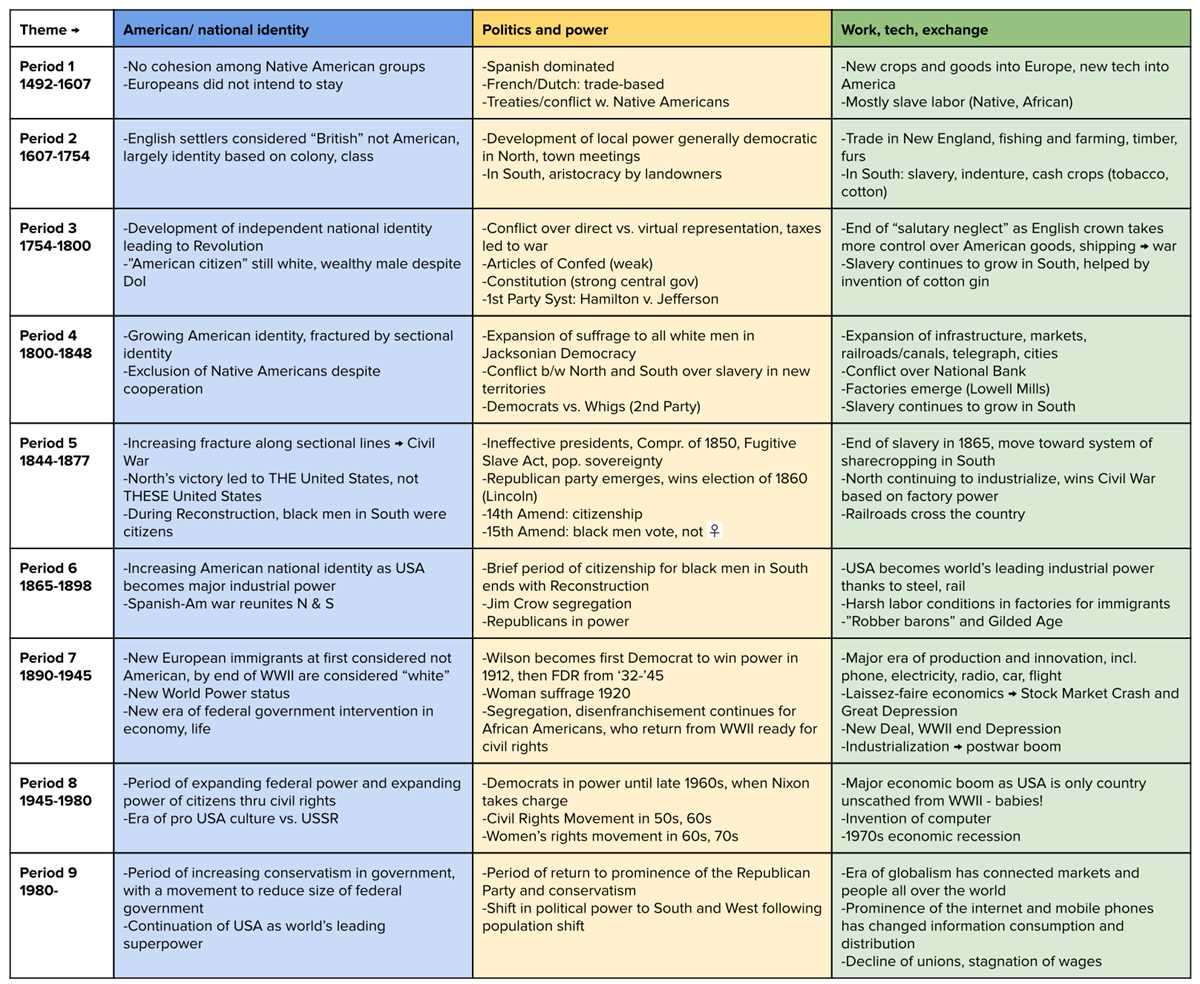
Enlightenment thought played a crucial role in shaping the intellectual foundation of the American Revolution. Key ideas from Enlightenment philosophers like John Locke, Jean-Jacques Rousseau, and Baron de Montesquieu directly influenced colonial leaders in their push for independence from Britain.
John Locke’s theory of natural rights, which argued that individuals possess inherent rights to life, liberty, and property, became central to the colonists’ argument for independence. Locke’s idea that government exists only by the consent of the governed helped frame the argument against British rule, particularly the imposition of taxes without representation. These ideas were clearly reflected in the Declaration of Independence, particularly in Thomas Jefferson’s phrasing of the unalienable rights to “life, liberty, and the pursuit of happiness.”
Rousseau’s concept of the social contract also resonated with colonial leaders. Rousseau believed that legitimate political authority arises from an agreement among individuals to form a collective society. This notion directly challenged the legitimacy of British rule, as the colonists had never agreed to be governed by a distant monarchy.
Montesquieu’s ideas about the separation of powers influenced the structure of the U.S. government. His belief that political power should be divided into distinct branches–executive, legislative, and judicial–became a foundational principle in the drafting of the U.S. Constitution, ensuring that no one branch could become too powerful.
The ideas of Enlightenment thinkers provided colonists with a new framework for understanding their rights and the role of government. These philosophies helped to justify resistance against British rule and provided intellectual support for the formation of an independent nation.
- John Locke: Natural rights theory and the consent of the governed.
- Jean-Jacques Rousseau: The social contract and popular sovereignty.
- Montesquieu: The separation of powers in government.
The Development of Early American Political Parties
The emergence of political parties in the early United States stemmed from deep divisions over government policy and the interpretation of the Constitution. The Federalists, led by figures like Alexander Hamilton, advocated for a strong central government, a national bank, and policies that supported industrial growth. They believed in a broad interpretation of the Constitution, which allowed for implied powers to achieve national goals.
In response, the Democratic-Republicans, led by Thomas Jefferson and James Madison, opposed Federalist policies, fearing that too much power in the hands of the central government would threaten individual liberties and state rights. They argued for a strict interpretation of the Constitution, limiting federal authority and emphasizing agrarian interests.
The divide between these two groups became clear during debates over the Bank of the United States, where Hamilton’s proposal for a national bank was strongly opposed by Jefferson and his allies. This conflict highlighted the differing visions of government power and economic policy.
The political rivalry between the Federalists and Democratic-Republicans laid the groundwork for the formation of organized political parties, a phenomenon that was not initially anticipated by the framers of the Constitution. Over time, these parties began to define the political system in the United States, setting the stage for future electoral contests and the ongoing evolution of American political ideologies.
- Federalists: Advocated for a strong central government and a broad interpretation of the Constitution.
- Democratic-Republicans: Favored states’ rights, a strict interpretation of the Constitution, and an agrarian economy.
- Key Issues: National bank, federal vs. state power, economic policy.
The Constitution and the Debate over Federalism
The drafting of the U.S. Constitution in 1787 was driven by the need to address the weaknesses of the Articles of Confederation, which created a loose alliance of states with a weak central government. The key issue during the Constitutional Convention was determining the balance of power between the national government and the states. This debate led to the formation of two primary factions: the Federalists and the Anti-Federalists.
The Federalists, led by figures such as Alexander Hamilton, James Madison, and John Jay, supported a strong central government. They argued that a more powerful federal system was necessary to maintain order, regulate commerce, and defend the nation. Federalists believed in a broad interpretation of the Constitution, allowing the government to take actions not explicitly mentioned in the document, such as creating a national bank.
On the other hand, the Anti-Federalists, including Thomas Jefferson and Patrick Henry, feared that a strong central government would undermine individual liberties and the rights of states. They advocated for a strict interpretation of the Constitution, believing that the federal government should only exercise powers explicitly granted to it by the document. Anti-Federalists were particularly concerned about the lack of a Bill of Rights to protect individual freedoms.
The resolution of this debate was reflected in the structure of the Constitution, which created a federal system with a clear division of powers between the national government and the states. The inclusion of the Bill of Rights in 1791, which guaranteed individual freedoms such as freedom of speech and the right to a fair trial, helped address Anti-Federalist concerns and led to broader support for the new government.
The Federalist Papers, a series of essays written by Hamilton, Madison, and Jay, played a significant role in shaping public opinion in favor of the Constitution. These essays outlined the rationale behind the Constitution’s provisions and the importance of a strong central government.
| Federalists | Anti-Federalists |
|---|---|
| Supported a strong central government | Feared centralization of power |
| Advocated for a broad interpretation of the Constitution | Supported a strict interpretation of the Constitution |
| Believed in the necessity of a national bank and strong federal institutions | Opposed the establishment of a national bank |
| Included leaders like Alexander Hamilton and James Madison | Included leaders like Thomas Jefferson and Patrick Henry |
Significance of the Bill of Rights in Early U.S. History
The Bill of Rights was introduced in 1791 as the first ten amendments to the U.S. Constitution, addressing concerns raised by Anti-Federalists about individual freedoms and limiting government power. The inclusion of these amendments was crucial in securing the ratification of the Constitution and ensuring a broader acceptance of the new government.
One of the most significant aspects of the Bill of Rights was its protection of individual liberties. The First Amendment guaranteed freedoms of speech, religion, and the press, as well as the right to assemble and petition the government. This was a direct response to fears of governmental overreach and helped establish the foundational principles of democratic governance in the United States.
The Second Amendment, which protects the right to bear arms, and the Fourth Amendment, which safeguards against unreasonable searches and seizures, provided legal protections that were aimed at preventing abuses by the government, reflecting the distrust many Americans had toward centralized power after their experience with British rule.
The Fifth, Sixth, and Eighth Amendments focused on the rights of individuals within the criminal justice system, including protections against self-incrimination, guarantees of due process, and the prohibition of cruel and unusual punishment. These provisions helped to create a legal system that emphasized fairness and the protection of personal freedoms.
Lastly, the Ninth and Tenth Amendments were designed to limit the scope of federal power. The Ninth Amendment clarified that the enumeration of certain rights in the Constitution did not deny others retained by the people, while the Tenth Amendment affirmed that powers not delegated to the federal government were reserved for the states or the people.
Overall, the Bill of Rights not only secured individual liberties but also reinforced the principles of federalism and limited government. It played a foundational role in shaping the legal and political landscape of the United States, ensuring the protection of rights and preventing the rise of an overbearing central government.
The Economic Foundations of the Early American Republic
In the early years of the United States, economic development was shaped by both internal and external factors. A key component of this development was the establishment of a national economic system. Under the leadership of Alexander Hamilton, the first Secretary of the Treasury, the federal government laid the groundwork for a robust national economy. Hamilton’s financial plan included the creation of a national bank, the assumption of state debts, and the establishment of a system of tariffs to promote American manufacturing.
The Bank of the United States, chartered in 1791, played a pivotal role in stabilizing the economy by providing a uniform currency and regulating credit. This institution was essential for managing national debt and promoting economic growth, though it also sparked significant debate, particularly between Federalists and Democratic-Republicans who disagreed on the scope of federal power.
Hamilton’s system was designed to support a market economy, emphasizing trade, industry, and investment. His policies encouraged the growth of the manufacturing sector, which was supported by protective tariffs and subsidies for American industries. These policies were intended to reduce the nation’s dependence on foreign goods, particularly from Britain.
Meanwhile, the economy was also driven by agriculture. The Southern economy remained heavily reliant on plantation agriculture, particularly tobacco, cotton, and rice, cultivated by enslaved labor. This agricultural system shaped regional economies and contributed to tensions between the North and South, especially regarding the issue of slavery.
The United States also relied on international trade, especially with European powers. However, during the 1790s, the country faced challenges in securing favorable trade agreements and maintaining neutrality in conflicts between European nations, particularly the wars between Britain and France. The economic instability caused by these conflicts further influenced the shaping of domestic economic policies.
For further exploration of early American economic policy, see the following source: National Archives: The Founding Documents
The Challenges of Foreign Relations during the Early Years
The early years of the United States were marked by significant challenges in managing foreign relations. The young nation was caught between the conflicting interests of European powers, particularly Britain and France, both of whom sought to influence American policies. The struggle for neutrality and the need to establish credibility as an independent nation were central issues during this period.
One of the most pressing foreign policy challenges was maintaining neutrality in the conflict between Britain and France. In the 1790s, both nations were at war, and the United States faced pressure to take sides. President George Washington’s Neutrality Proclamation of 1793 was a key moment in the nation’s foreign policy, asserting the U.S. intention to avoid involvement in European conflicts. However, this stance was not without complications, as both Britain and France violated American neutrality by interfering with American shipping.
Relations with Britain were particularly tense. The British continued to occupy forts in the Northwestern territories, a violation of the Treaty of Paris (1783), which had ended the Revolutionary War. Additionally, British naval ships frequently seized American merchant vessels, a practice that fueled resentment. In response, President Washington sent John Jay to Britain to negotiate a settlement, resulting in the Jay Treaty of 1794. While the treaty resolved some issues, such as the withdrawal of British troops from American soil, it was controversial because it did not address the seizure of American ships or impressment of sailors, leaving many Americans dissatisfied.
Relations with France also became strained during this time. Initially, the U.S. had supported France during the French Revolution, but the XYZ Affair in 1797 further soured relations. French diplomats demanded bribes before negotiations could begin, leading to widespread anti-French sentiment in the United States. The incident led to an undeclared naval conflict known as the Quasi-War, which lasted from 1798 to 1800. It was only after the election of Thomas Jefferson and his administration’s diplomatic efforts that tensions with France were resolved.
The young nation’s struggle to balance its foreign interests with domestic concerns and the desire to avoid entangling alliances set the stage for the development of American foreign policy principles that would guide the country through the 19th century.
| Foreign Challenge | U.S. Response | Outcome |
|---|---|---|
| Neutrality during French and British war | Neutrality Proclamation (1793) | Attempted to avoid European conflicts |
| British occupation of forts and impressment of sailors | Jay Treaty (1794) | British withdrawal from western forts, unresolved issues of impressment |
| French interference and XYZ Affair | Quasi-War (1798-1800) | Resentment and anti-French sentiment, diplomatic resolution under Jefferson |