How to Balance Chemical Equations Using Coloring Techniques

Assigning distinct colors to different components in a reaction provides a clear and visual way to track the elements as they interact. This method allows students to easily follow the steps of balancing a reaction by seeing how each atom or molecule is represented.
Start by choosing a unique color for each reactant and product, then assign a different color to atoms that are balanced on both sides. As you work through the equation, use these colors to ensure each element appears the same number of times on both sides. This technique reduces confusion and improves understanding of the balancing process.
Additionally, highlighting common patterns in reactions can aid in recognizing how certain compounds behave in different contexts. This approach not only helps in completing the task more accurately but also strengthens the underlying knowledge of molecular structure and conservation of mass.
Using Colors to Organize and Balance Reactants and Products
Assign different colors to each atom or molecule involved in a reaction. For example, use blue for reactants and red for products. This visual distinction makes it easier to follow the steps of balancing and ensures that you track all components effectively.
As you proceed, ensure that atoms on both sides of the equation are matched by their corresponding color. Start with the most complex molecules and work your way to the simpler ones. This method will help identify discrepancies quickly and show where adjustments are needed.
Utilize a consistent color scheme across multiple reactions to identify patterns. For example, color all oxygen atoms the same and all nitrogen atoms another. This will allow you to recognize and apply the same approach to similar reactions, improving speed and accuracy over time.
Understanding the Basics of Equation Balancing
To balance a reaction, ensure that the number of atoms for each element is the same on both sides of the equation. This is achieved by adjusting the coefficients (the numbers placed in front of molecules) rather than altering the chemical formulas themselves.
Start with the most complex molecules first, usually those containing multiple atoms of different elements. Balance one element at a time, and work through the reaction systematically, ensuring that each element’s count is equal on both sides.
Check the result by counting atoms for each element on both sides of the equation. If necessary, adjust the coefficients again to maintain balance. This process may require several iterations to ensure complete consistency.
For a more detailed explanation on how to apply these principles, visit the Chemguide website, which provides step-by-step tutorials on chemical reactions and equation balancing.
Why Coloring Methods Help Simplify the Process
Using color-coding techniques during the process of adjusting molecular ratios makes it easier to track and organize elements. Assigning distinct colors to each atom type helps visually identify imbalances and identify which elements need further adjustment.
Coloring also aids in distinguishing between different species in a reaction, which can reduce confusion when manipulating complex compounds. By color-coding the atoms, it’s easier to pinpoint exactly where adjustments are required without making mistakes.
For students or beginners, visual aids like color help reinforce understanding of how atoms interact and how the reaction is structured, improving both learning and retention. This method transforms a potentially abstract concept into something tangible and visually understandable.
Step-by-Step Guide to Using Colors for Balancing Equations
Start by assigning a specific color to each element involved in the reaction. For instance, use red for oxygen, blue for hydrogen, and green for carbon. This will help you easily differentiate the atoms in the reaction.
Next, color-code each atom in both the reactants and products. As you examine the molecules, highlight the atoms in the reactants first. Use the same color scheme to mark the atoms in the products, ensuring the colors match across both sides.
After marking the atoms, identify which elements are in unequal amounts. If the number of atoms on one side doesn’t match the other, use the corresponding color to visually track and adjust the coefficients. This color-coding technique simplifies finding discrepancies and makes it easier to adjust the numbers accurately.
Once the equation is balanced, double-check the colors to confirm that each atom is correctly accounted for. The visual cues provided by the colors will help ensure no element has been overlooked or miscounted.
Common Mistakes to Avoid When Using the Coloring Approach
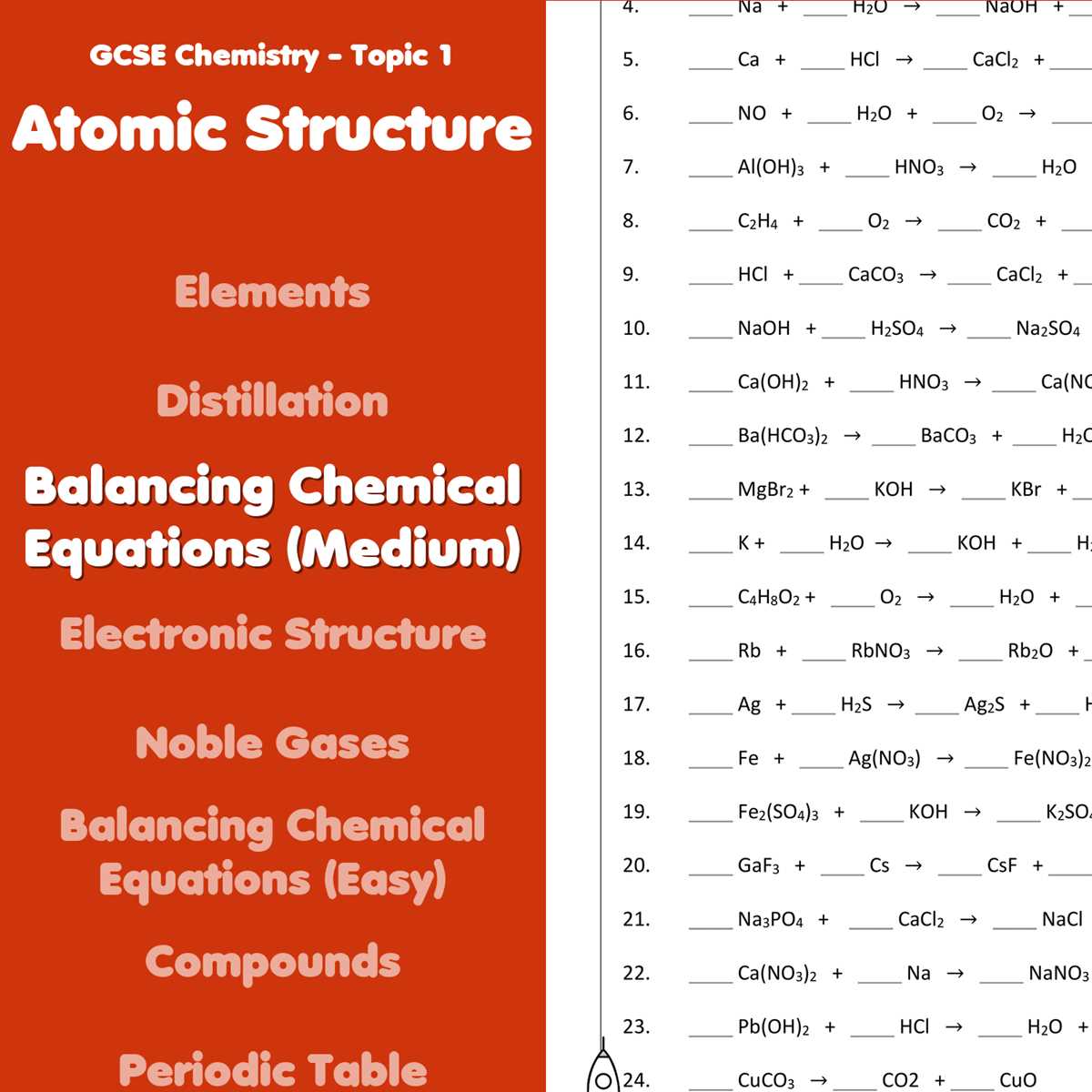
One common error is using inconsistent colors for the same elements on both sides of the reaction. Ensure that each element is consistently represented by the same color throughout the process. This avoids confusion when comparing reactants and products.
Another mistake is not counting atoms properly before applying the color. Before you begin coloring, ensure that each atom is correctly counted and represented. Skipping this step may result in inaccurate coloring and an unbalanced reaction.
Be cautious about overcomplicating the color scheme. Using too many colors can create unnecessary complexity and make it harder to focus on the key elements. Stick to a minimal and clear color code to maintain simplicity and clarity.
Don’t neglect the need for rechecking the equation after assigning colors. As you adjust coefficients, ensure that the colors still align correctly with the atoms on both sides. Discrepancies can arise as you make adjustments, so frequent checks are vital.
Finally, avoid ignoring the visual representation of bonds and structures. Simply coloring the atoms without considering their bonds can lead to misunderstandings, especially in complex reactions. Pay attention to the molecular structure as you apply the color to maintain accuracy.
How to Interpret the Colors in Your Balanced Equation
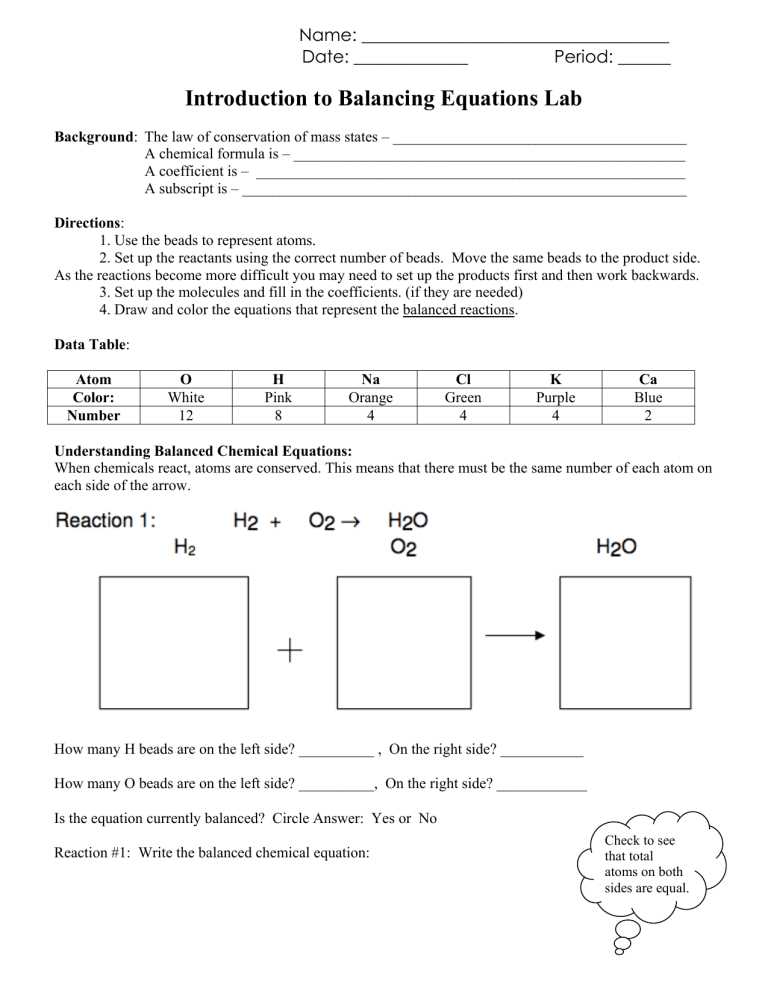
Each color in the equation represents a distinct atom or molecule. To interpret the colors effectively, first identify what each color corresponds to. For example, red could represent oxygen, while blue might indicate hydrogen. Make sure to reference the color code consistently across both reactants and products to ensure accurate comparison.
Colors also help in tracking the conservation of matter. Atoms represented by the same color on both sides of the equation must have an equal count. For example, if oxygen atoms are red on both sides, the number of red atoms should match before and after the reaction. This ensures the law of conservation of mass is upheld.
Be mindful of changes in color as you adjust coefficients. A change in the number of atoms for a given element should reflect a shift in the corresponding color grouping. Each update in the reaction must be visually tracked to verify that the atoms align properly across the equation.
Interpretation of colors can also highlight where errors might have occurred. If a color appears to mismatch or is unaccounted for, it may indicate that atoms were not correctly counted or aligned. Ensure that each element’s color is consistently applied and correctly matched to its corresponding atoms.
Finally, the use of colors can simplify the process of identifying which parts of the reaction are being transformed. By keeping reactants and products in distinct colors, you can easily trace how atoms move through the reaction and where they end up, giving you a clearer picture of the reaction process.
Practical Tips for Organizing Your Materials for Coloring
Start by categorizing your materials into separate containers. Use different boxes or organizers for each type of item, such as pens, highlighters, and colored pencils. Label each container for easy access during the process.
Create a color chart that corresponds to each element in your reaction. This chart will help you quickly identify which color represents which atom or molecule. Keep this chart nearby while you work to minimize mistakes.
Use a system to keep track of your progress. For example, keep a checklist that outlines the elements you’ve already colored, and mark off each one as you finish. This will help you stay organized and ensure you don’t miss any steps.
Keep your workspace clean and clutter-free. A clear and organized workspace reduces distractions and allows for better focus. Make sure you have all your materials within easy reach, including extra pens or markers in case a color runs out.
Prepare your materials before starting. Double-check that all markers or pencils are in good condition and that you have enough of each color. This will help avoid interruptions during the task.
If working digitally, organize your files in clearly labeled folders. Keep each version of your reactions separate to avoid confusion. It’s also a good idea to save backups to avoid losing your work.
Examples of Reactions and Their Color-Coded Solutions
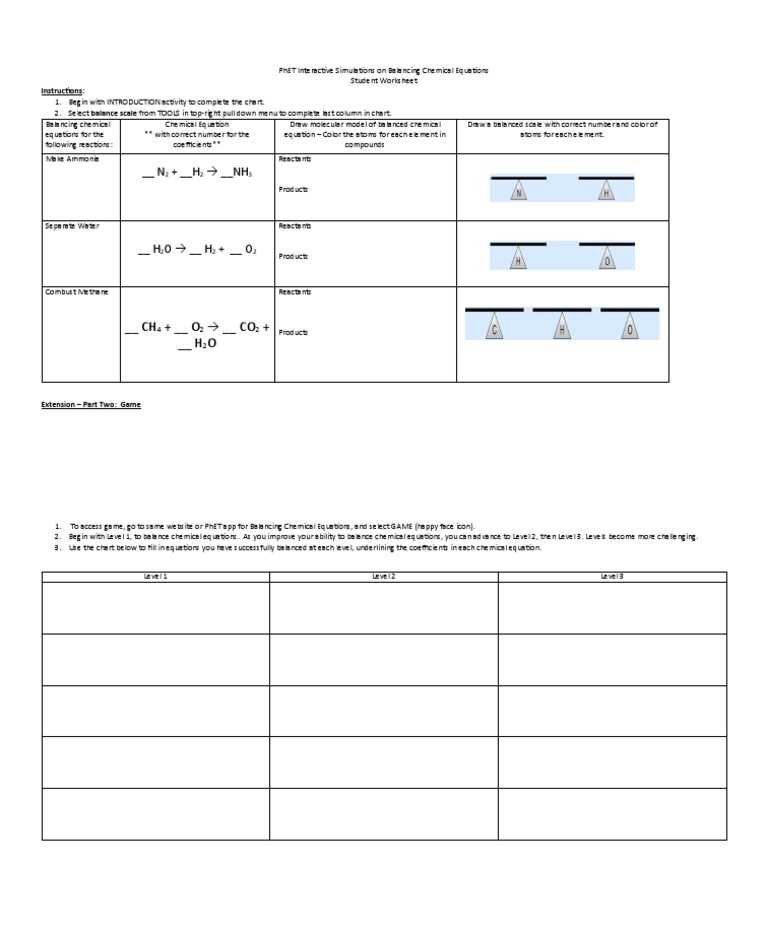
For the reaction between hydrogen and oxygen to form water, use the following colors to differentiate the elements:
- Hydrogen (H2): Color the hydrogen molecules in red.
- Oxygen (O2): Use blue for oxygen molecules.
- Water (H2O): Use green to represent the water molecules formed.
By color-coding the atoms and molecules in this reaction, it is easier to see the relationship between reactants and products, as well as to track the flow of elements through the reaction.
For the reaction of nitrogen dioxide (NO2) and oxygen (O2) to form nitrogen tetroxide (N2O4), follow these steps:
- Nitrogen Dioxide (NO2): Color the nitrogen dioxide molecules in orange.
- Oxygen (O2): Use purple for oxygen molecules.
- Nitrogen Tetroxide (N2O4): Color the nitrogen tetroxide molecules in yellow.
Coloring the atoms in this reaction helps visualize the combination of nitrogen dioxide and oxygen to form nitrogen tetroxide, making it easier to understand how molecules interact during the reaction.
For a reaction where sodium chloride (NaCl) and silver nitrate (AgNO3) combine to form silver chloride (AgCl) and sodium nitrate (NaNO3), use these color codes:
- Sodium Chloride (NaCl): Use light blue for sodium chloride molecules.
- Silver Nitrate (AgNO3): Color silver nitrate molecules in gray.
- Silver Chloride (AgCl): Use silver for silver chloride molecules.
- Sodium Nitrate (NaNO3): Color sodium nitrate molecules in dark blue.
This color-coding scheme provides a visual representation of the products and reactants in the reaction, helping to identify the changes occurring at the molecular level.
How to Use This Approach for Different Types of Reactions
For synthesis reactions, color the reactants and products differently to show how elements combine. Use one color for each element involved, and ensure that both the reactants and products are color-coded consistently. For example:
- Reactants: Use blue for the first element and green for the second.
- Products: Combine the colors from the reactants into a new combination, such as yellow.
This method visually demonstrates how individual components come together to form new substances.
In decomposition reactions, the approach involves showing how a compound breaks down into simpler substances. Color each part of the original molecule distinctly, and then assign a different color to each product. Example:
- Reactant: Use red for the original molecule.
- Products: Color each new element or compound in different shades, such as blue and green for the decomposed parts.
By using distinct colors, the breakdown of the original compound becomes easier to track and understand.
For single displacement reactions, color-code the elements that swap places. Highlight the changing elements to show their movement between reactants and products. Example:
- Reactant 1: Color the first element in orange.
- Reactant 2: Use yellow for the second element.
- Products: Color the new combinations with different colors, such as purple and green.
This helps illustrate the shift of elements from reactants to products.
For double displacement reactions, assign colors to each element in both reactants. This way, you can easily track which parts of each reactant combine to form the products:
- Reactant 1: Use blue.
- Reactant 2: Color in red.
- Products: The combination of colors from both reactants can form the new product colors, such as purple and green.
The visual cues make it clear which components exchange and form new compounds.
In combustion reactions, color the fuel and oxygen differently from the products formed, like carbon dioxide and water. This highlights the transformation during the process:
- Fuel: Use black.
- Oxygen: Color oxygen in white.
- Products: Color the products, such as grey for carbon dioxide and blue for water.
Coloring each step allows for a clearer visualization of the reactants turning into products during the combustion process.