How to Interpret Information in a Pedigree Chart Accurately
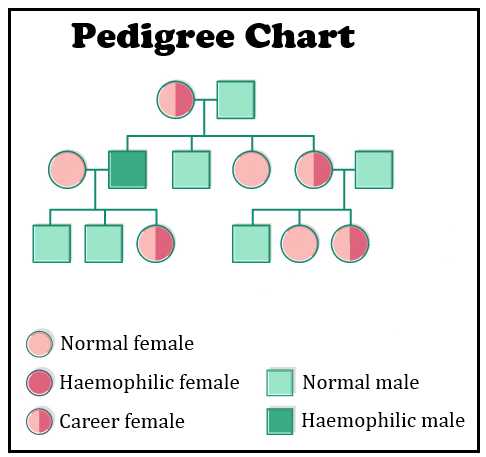
To analyze genetic relationships, focus on understanding the various symbols used in family trees. Circles represent females, while squares stand for males. Shading indicates the presence of a specific trait, whether dominant or recessive. Always identify the generation number by noting the position of each individual in relation to others. This simple observation can help determine inheritance patterns with clarity.
Once symbols are understood, tracing family links becomes key. Start by identifying parents and their offspring, then connect individuals to determine how traits are passed down. Remember that generations are typically arranged from top to bottom, with each row representing one generation. This structure will help track traits across multiple generations and see patterns emerge.
When analyzing complex genetic disorders, focus on how traits appear in successive generations. If a condition shows up in every generation, it might be dominant. If it skips generations, it’s likely recessive. Identifying the presence of carriers, individuals who may not show symptoms but can pass the condition on, is an important step in analyzing family health histories.
Understanding Symbols in a Family Tree
Focus on identifying basic symbols. Squares represent males, while circles represent females. A shaded symbol typically indicates the presence of a specific trait, while an unshaded symbol suggests its absence. If the symbol is half-shaded, it usually indicates a carrier, a person who does not exhibit the condition but can pass it on.
Tracking Generations
Look at how individuals are organized. Each row represents a generation, with the top row being the oldest generation. Lines connect parents to their children, showing the relationships between individuals across generations. This structure helps visualize the inheritance of traits over time.
Determining Inheritance Patterns
Examine the pattern of trait distribution across generations. If a trait appears in every generation, it is likely dominant. If it skips generations, it’s more likely recessive. For X-linked traits, pay attention to whether the trait is more common in males or females.
Understanding Consanguinity
Consanguinity refers to the relationship between family members. Double lines between symbols indicate that the individuals are related by blood, such as cousins or siblings. This helps track inherited conditions that may be passed down more commonly within families.
Identifying Carriers
Carriers are individuals who carry one copy of a recessive allele but do not show the trait themselves. These individuals are typically represented by a half-shaded symbol. By identifying carriers, you can better understand how a condition might spread through a family.
Interpreting Rare Genetic Traits
For rare traits, if two individuals who are not known to carry the condition produce a child with it, the condition is likely recessive. Understanding this helps predict the likelihood of certain traits appearing in future generations.
Cross-Referencing with Medical History
Always cross-reference the chart with the medical history of individuals. Information about the health of family members can offer valuable insights into whether certain traits are genetic or due to environmental factors.
Using the Chart for Genetic Counseling
A family tree can be a helpful tool in genetic counseling. By analyzing the chart, genetic counselors can give families a clearer understanding of their risk for inherited conditions and help with decision-making about testing or preventive measures.
Understanding Symbols and Notations in Family Diagrams
In these diagrams, squares represent males, and circles represent females. Each individual is connected to their parents with a vertical line, indicating the direct relationship. Siblings are shown by horizontal lines branching from the same vertical line, creating a family unit.
Shaded symbols typically denote individuals affected by a certain condition. An unshaded symbol indicates the absence of the trait. If a symbol is half-shaded, it suggests the person is a carrier, meaning they carry one copy of a recessive allele but do not express the condition themselves.
Double lines connecting two symbols indicate that the individuals are closely related, such as cousins or siblings. This is particularly important for identifying inherited conditions that are more likely to be passed on within families with higher degrees of relatedness.
In some diagrams, Roman numerals are used to label generations. The first generation is usually marked with “I”, the second with “II”, and so on. This helps track the inheritance of traits over multiple generations, providing a clearer view of how certain traits are passed down over time.
A diagonal slash through a symbol typically indicates that the individual is deceased. This notation helps distinguish between living and deceased family members, adding context to the family structure and health history.
Vertical lines connecting individuals to their children indicate parent-child relationships. The presence of a diagonal line from one individual to another often represents a relationship that may be affected by marriage or other legal unions, which is crucial when tracking hereditary patterns across a family.
How to Identify Inherited Traits from Family Diagrams
To identify inherited traits, begin by examining the symbols for affected individuals. Shaded symbols represent individuals with the trait. If the trait is dominant, at least one parent of an affected person must also carry the trait. For recessive traits, both parents must be carriers or affected for the trait to appear in their offspring.
Trace the pattern across generations. If a trait appears in every generation, it is likely dominant. If the trait skips generations, it may be recessive. Recessive traits require two copies of the gene (one from each parent) to be expressed, which is why they often appear sporadically.
Look for carriers of recessive traits. These individuals will show no visible symptoms but can pass the gene to their children. Carriers are represented by half-shaded symbols in most diagrams.
Consider the sex of affected individuals. Some traits are sex-linked, often carried on the X chromosome. In these cases, males are more frequently affected because they have only one X chromosome. Female carriers of sex-linked traits are typically unaffected but may pass the trait to their sons.
Analyze sibling patterns to detect potential inherited conditions. If both siblings are affected and the trait is recessive, the parents must both be carriers. If only one sibling is affected, the trait is more likely to be dominant or the result of a mutation in that individual.
Decoding Generational Relationships in Family Diagrams
To understand generational connections, start by identifying the horizontal lines that connect partners, which represent marriages or unions. Vertical lines descending from this connection indicate their offspring. Each generation is typically represented by a new row, with the first generation at the top and subsequent generations below.
Each individual is depicted by a symbol. Males are represented by squares, while females are represented by circles. These symbols are connected to one another by lines indicating parent-child relationships. The number of vertical lines coming from the parents’ symbol corresponds to the number of children they have.
For accurate generational tracking, follow each vertical line from the previous generation to the offspring. If there are multiple siblings, they will be placed in a row on the same level. If a child is connected to multiple parents, look for additional lines that connect different sets of parents.
Keep in mind that some charts may use additional symbols or notations to represent half-siblings, adopted children, or other familial variations. For example, a dashed line connecting two individuals may represent a non-biological relationship.
To better understand relationships, refer to educational resources or tools that explain familial connections and chart notations, such as the one provided by Genetics Online, which offers detailed guidance on interpreting family diagrams.
Recognizing Autosomal and Sex-Linked Inheritance Patterns
Autosomal inheritance patterns can be identified when the trait or disorder is passed through the non-sex chromosomes (chromosomes 1-22). Both males and females are equally affected, and the trait appears in every generation. Typically, if both parents are carriers, the children have a 25% chance of inheriting the trait. Autosomal dominant traits appear in every generation, while autosomal recessive traits may skip generations.
To distinguish autosomal dominant from recessive inheritance in a diagram, look for the presence of the trait in at least one parent of each affected individual. Autosomal dominant traits typically do not skip generations. In contrast, autosomal recessive traits may appear only in individuals who inherit two copies of the mutated gene (one from each parent).
Sex-linked inheritance is typically associated with the X or Y chromosome, often manifesting as X-linked or Y-linked traits. X-linked disorders are more commonly seen in males, as they have only one X chromosome. Females, who have two X chromosomes, are often carriers of the disorder without showing symptoms. To identify X-linked inheritance, look for an affected male who passes the trait to all of his daughters but none of his sons. The trait may also appear more frequently in males than females.
| Inheritance Type | Key Characteristics |
|---|---|
| Autosomal Dominant | Trait appears in every generation. Affected individuals have an affected parent. |
| Autosomal Recessive | Trait may skip generations. Two unaffected parents can have an affected child. |
| X-Linked Recessive | More males affected. Passed from mother to son. Daughters are carriers. |
| Y-Linked | Only males are affected. Trait is passed from father to all male offspring. |
Analyzing Dominant vs Recessive Inheritance in Pedigrees
In dominant inheritance, a single copy of the altered gene is enough to express the trait. This means that an affected individual with one affected parent can pass the trait to offspring with a 50% probability. Dominant traits tend to appear in every generation and affect both sexes equally. Look for the following signs: affected individuals will have at least one affected parent, and both males and females can be affected equally. If the trait does not skip generations, it is likely dominant.
In recessive inheritance, the trait manifests only when an individual inherits two copies of the altered gene, one from each parent. Parents who carry one copy of the mutated gene typically do not express the trait but can pass it on. Recessive traits often skip generations, appearing only in individuals who inherit the gene from both parents. The following indicators suggest recessive inheritance: the trait may appear in siblings but not in parents, and carriers (heterozygous individuals) are often unaffected. Both males and females are equally likely to inherit a recessive trait.
| Inheritance Type | Key Features |
|---|---|
| Dominant | One copy of the altered gene results in the trait. Appears in every generation. Both sexes equally affected. |
| Recessive | Trait appears only with two copies of the altered gene. May skip generations. Both sexes equally affected. |
Determining Carrier Status in Pedigree Charts
To identify carriers in family diagrams, look for individuals who are unaffected by the trait but have affected offspring. These individuals typically carry one copy of the mutated gene and are heterozygous. Carriers for recessive traits will often appear normal but can pass on the gene to their children, who may express the trait if they inherit two copies of the mutation. In a dominant inheritance pattern, carriers are rare because only one copy of the altered gene is necessary to express the condition.
In charts where the trait is recessive, you can determine a carrier by tracing affected individuals and their unaffected parents. If both parents are unaffected but have an affected child, both parents are likely carriers. In dominant inheritance, carriers are harder to identify since affected individuals show the trait. However, if two affected individuals have an unaffected child, it is likely that both parents carry one copy of the altered gene.
Carriers for X-linked traits are typically females, as males with the mutation will express the trait. If a mother is a carrier, her sons have a 50% chance of being affected, while daughters have a 50% chance of being carriers themselves.
How to Trace Mutations and Genetic Disorders in Pedigrees
To trace mutations and genetic conditions in family charts, begin by identifying affected individuals. Start with the most recent generation and work backward, tracking the inheritance pattern. Look for consistent transmission through generations to determine whether the mutation follows a dominant or recessive pattern.
- If a trait is present in every generation, it is likely dominant. The affected individual will pass the trait to about half of their children, regardless of gender.
- If the trait skips generations, it suggests a recessive inheritance. Both parents of an affected child must carry the mutation, though they themselves may not show any symptoms.
- In X-linked traits, affected males will pass the mutation to all of their daughters, but none of their sons. Female carriers (heterozygotes) can pass the mutation to both sons and daughters.
Pay attention to consanguinity (marriages between close relatives), as this increases the chance of recessive genetic disorders appearing. Affected offspring with parents who are close relatives may suggest an autosomal recessive disorder.
For each mutation, track the inheritance through both maternal and paternal lines. When analyzing complex traits, consider the family history to help clarify how the condition has been passed through generations.
Common Mistakes in Pedigree Interpretation and How to Avoid Them

Avoid assuming a trait is always autosomal dominant just because it appears in each generation. Some traits, especially recessive ones, may appear to skip generations. Carefully check the family history to confirm inheritance patterns.
- Misidentifying carriers is a frequent error. Carriers of a recessive disorder often appear unaffected but can pass the mutation to offspring. Be cautious of labeling individuals as unaffected if both parents are carriers.
- Another common mistake is confusing X-linked inheritance patterns. Males with an X-linked mutation will not pass it to their sons, but all daughters will be carriers. Double-check gender-specific inheritance patterns to avoid this confusion.
- Incorrectly identifying consanguinity (inbreeding) can lead to misinterpretations. Consanguineous marriages significantly increase the risk of autosomal recessive disorders in offspring, so always verify family relationships carefully.
Ensure that you account for incomplete penetrance, where individuals with the mutation do not express the trait. Some disorders may not manifest in every individual carrying the mutation, which can make it challenging to identify the true inheritance pattern.
Lastly, don’t overlook the possibility of new mutations. If a disorder appears in a single generation with no family history, consider the possibility of a de novo mutation, especially in dominant conditions.