Understanding Codominance and Its Role in Genetic Inheritance
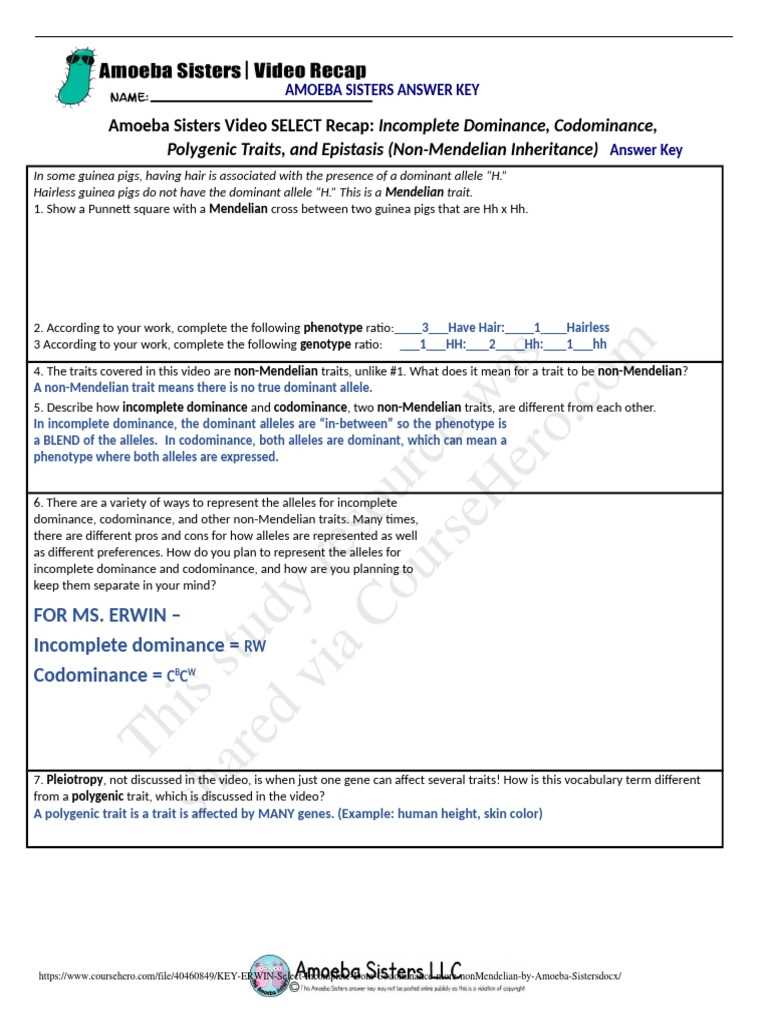
The inheritance of traits can involve different patterns, one of which is the inheritance where both alleles are expressed equally. This results in offspring showing characteristics from both parents simultaneously, without one trait dominating over the other.
To successfully solve related problems, it’s necessary to first understand how such traits manifest in the organisms you are studying. The classical example involves certain types of blood groups, where both parent alleles contribute equally to the phenotype.
Once you recognize the patterns of inheritance in these cases, it becomes easier to predict possible offspring outcomes using genetic diagrams like Punnett squares. Working through these examples will help refine your understanding of this specific genetic phenomenon.
Genetic Crosses and Resulting Traits
When solving problems related to shared expression of alleles, it is important to identify how each allele interacts in the offspring. Use a Punnett square to predict the distribution of traits between parents and offspring. For example, crossing individuals with two alleles that are both equally expressed will show both parental traits in the progeny.
For instance, in a case where one parent has the A allele and the other has the B allele, the resulting offspring will exhibit both A and B traits. It is crucial to understand how the interaction of these alleles leads to distinct phenotypic outcomes, such as mixed coat colors in certain animals or blood type patterns in humans.
To avoid errors in interpretation, verify your predictions by reviewing known examples from reputable sources. You can also cross-check your results with tools such as genetic calculators available from trusted biology educational websites. The resources at Khan Academy provide in-depth explanations and practice examples for mastering these genetic principles.
Explaining the Basics of Shared Expression in Genetics
In genetics, some traits are controlled by alleles that equally influence the organism’s phenotype. When both alleles contribute to the observable characteristic without one dominating the other, they are said to exhibit shared expression. This is most commonly observed in cases like blood types, where both the A and B alleles are expressed together in the AB phenotype.
To understand this concept, focus on the following principles:
- Equal Contribution: Both alleles from the parents will be fully expressed in the offspring, resulting in a phenotype that displays features from both alleles.
- Non-Dominance: Unlike dominance, where one allele overpowers the other, shared expression occurs without such dominance. Both traits are visible in the organism.
- Genetic Inheritance: Inheritance of such traits follows Mendelian patterns but differs from classical dominance because both alleles appear in the organism’s phenotype.
To apply this understanding, consider the example of a red and white flower cross where both colors appear in the offspring, resulting in a flower with both red and white patches, illustrating the shared expression. A similar scenario occurs in the case of certain blood types, such as AB, where both A and B proteins are present on the red blood cells.
For further clarification, review educational resources like Khan Academy, which offers detailed tutorials and examples of genetic inheritance patterns.
How Shared Expression Differs from Incomplete Expression
The main difference between shared expression and incomplete expression lies in how the alleles affect the phenotype. With shared expression, both alleles contribute equally to the visible trait, resulting in both characteristics being expressed together without one overpowering the other. This is seen in examples like the AB blood type, where both A and B alleles are fully present in the phenotype.
On the other hand, incomplete expression occurs when neither allele is fully dominant. Instead, the offspring exhibit a blend of both traits. A common example is the cross between a red and white flower, where the resulting flower is pink, as the red and white alleles blend to create an intermediate color.
Key differences include:
| Characteristic | Shared Expression | Incomplete Expression |
|---|---|---|
| Trait Appearance | Both alleles are fully expressed | Intermediate blending of alleles |
| Inheritance | Both alleles contribute equally | Neither allele is dominant |
| Example | AB blood type | Red and white flower producing a pink flower |
Understanding these differences is key to interpreting genetic inheritance patterns accurately and identifying the precise mechanisms of trait expression in organisms.
Key Examples of Shared Expression in Real-Life Organisms
Shared expression can be observed in various species where both alleles are fully expressed. Some prominent examples include:
- Human Blood Types: The AB blood group demonstrates shared expression. Individuals with this blood type express both the A and B antigens on the surface of their red blood cells, reflecting the full expression of both alleles.
- Roan Horses: Roan horses show a mix of white and colored hairs throughout their coats. This occurs because both the red and white hair color alleles are equally expressed, resulting in a coat that is not fully red or fully white.
- Flower Color in Certain Plants: In some species, such as the snapdragon flower, plants with the red and white flower color alleles may produce flowers that have both red and white spots, rather than one dominant color.
These examples illustrate how both alleles contribute equally to the phenotype, rather than one overriding the other.
| Organism | Trait | Expression |
|---|---|---|
| Humans | Blood Type AB | Both A and B antigens are expressed |
| Horses | Roan Coat | Red and white hairs are mixed |
| Snapdragon Flower | Flower Color | Red and white spots in flowers |
These cases demonstrate the importance of understanding the mechanism of gene expression in genetics and its impact on the characteristics of organisms.
Understanding the Role of Shared Expression in Blood Types
The ABO blood group system in humans is a classic example where both alleles contribute equally to the blood type. The genes responsible for this trait encode for different antigens on the surface of red blood cells. These antigens are the result of two alleles: A and B.
Individuals inherit one allele from each parent. The presence of both A and B alleles results in the AB blood type, where both A and B antigens are expressed simultaneously. This is different from situations where one allele is dominant over another, as seen in other genetic traits.
Here is a summary of how different combinations of these alleles determine blood types:
| Genotype | Blood Type | Antigens Present |
|---|---|---|
| AA or AO | A | A antigens |
| BB or BO | B | B antigens |
| AB | AB | A and B antigens |
| OO | O | No A or B antigens |
The AB blood type exemplifies shared expression, as both A and B antigens are equally present on the red blood cells. This genetic pattern plays a key role in blood transfusions and organ donations, as compatibility depends on the presence of the correct antigens.
How to Solve Shared Expression Problems in Genetic Crosses
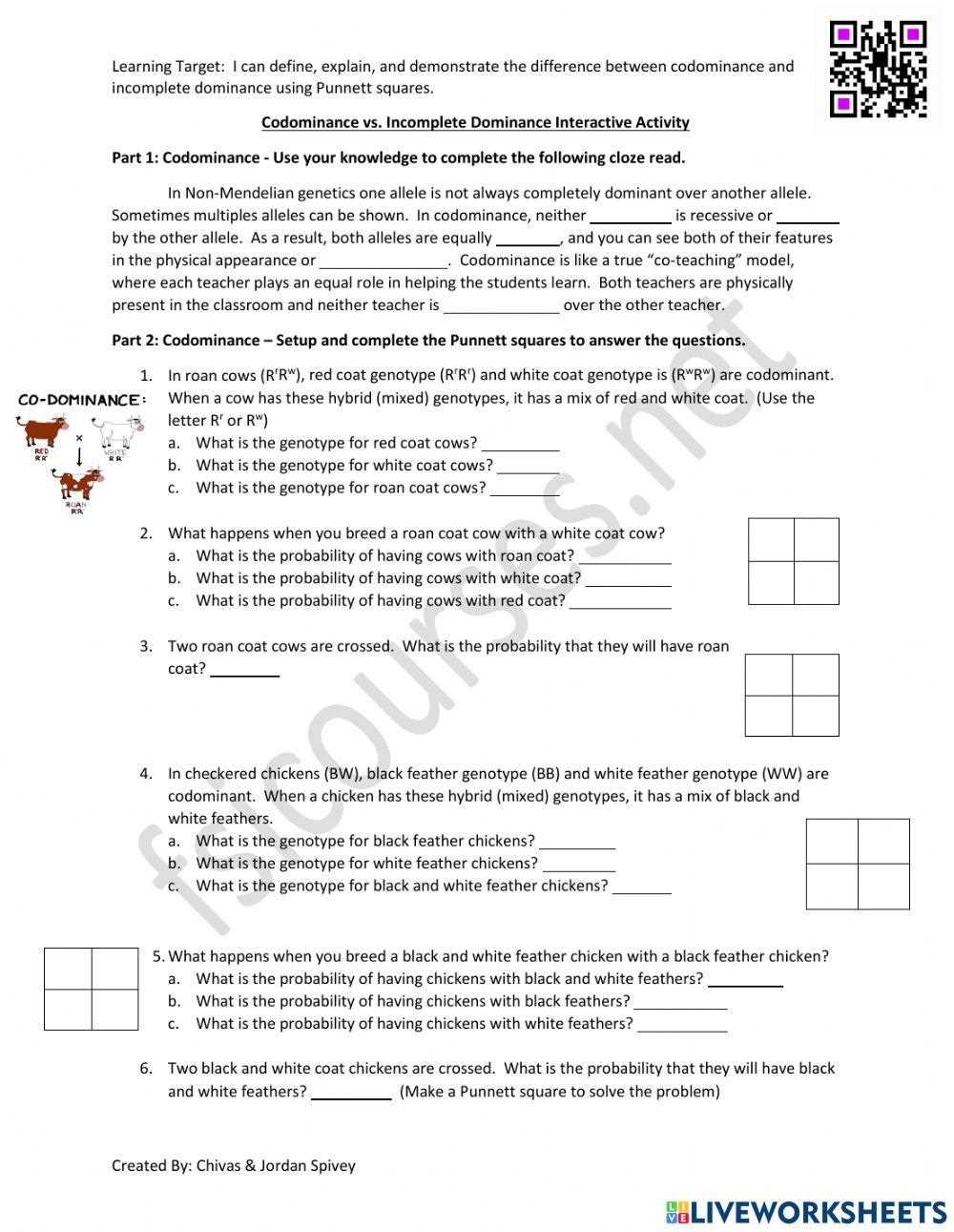
To solve genetic problems involving traits with shared expression, follow these steps:
- Identify the alleles involved: Determine which alleles exhibit shared expression. For example, the alleles for a specific trait may be labeled A and B, both of which contribute to the phenotype when present.
- Determine the parental genotypes: Identify the genetic makeup of both parents. Each parent contributes one allele per gene. For instance, if one parent has genotype AB and the other has genotype AO, the offspring can inherit either A or B from one parent and either A or O from the other.
- Set up the Punnett square: Create a Punnett square to visualize the possible genetic combinations. Place one parent’s alleles on the top and the other parent’s alleles on the side.
- Fill in the Punnett square: Combine the alleles from each parent to find all possible genotypes for the offspring. For example, crossing AB and AO could result in offspring with genotypes AB, AB, AO, and AO.
- Interpret the results: Based on the genotypes, determine the possible phenotypes. If both alleles contribute equally to the phenotype, then the presence of both antigens or characteristics will be expressed together. For example, in a case with blood types, the AB offspring will have both A and B antigens expressed on their red blood cells.
By following these steps, you can solve problems involving shared expression in genetics and predict the traits of offspring in genetic crosses.
Common Misconceptions About Dual Allele Expression
Correct any confusion by verifying whether both alleles produce detectable phenotypic outputs; many learners mistakenly assume one allele must dominate, yet measurable markers such as antigen types or pigment distribution show parallel expression without suppression.
Reject the notion that blended traits indicate dual expression. Blending refers to intermediate phenotypes, whereas parallel outputs remain discrete, for example, distinct red and white patches in certain flower varieties confirmed through pigment quantification.
Do not classify silent alleles as participants in parallel expression patterns. Only alleles with observable products–verified through protein assays or biochemical profiling–qualify for this category.
Avoid assuming this pattern applies to all loci with multiple variants. Validate each locus through empirical data such as electrophoresis results or genotype–phenotype correlation tables before assigning it to parallel expression behavior.
Clarify that environmental modifiers do not generate this genetic pattern. Temperature shifts or nutrient variations can alter phenotype intensity but do not create simultaneous allele output; confirm through controlled experimental replication.
Practical Applications of Dual-Allele Expression in Genetic Research
Apply dual-allele signaling to refine blood-group typing: quantifying separate antigen outputs (such as A and B) on erythrocytes increases accuracy in population studies and reduces mismatch risks in transfusion protocols.
Use parallel allele markers to track hybrid lineages in plant breeding; measuring independent pigment or protein fractions helps pinpoint recombination hotspots and supports selection of stable agricultural traits.
Incorporate parallel gene outputs into forensic profiling by analyzing distinct peptide variants produced from paired alleles; high-resolution mass spectrometry improves discrimination among closely related individuals.
Leverage simultaneous allele expression in livestock genomics to map quantitative trait loci; monitoring distinct protein isoforms narrows candidate regions influencing wool density, milk composition, or muscle fiber ratios.
Integrate dual-allele phenotypic readouts into CRISPR validation pipelines; confirming the presence of two detectable products indicates accurate editing outcomes and helps distinguish heterozygous edits from mosaic events.
Using Punnett Squares to Predict Dual-Allele Parallel Inheritance
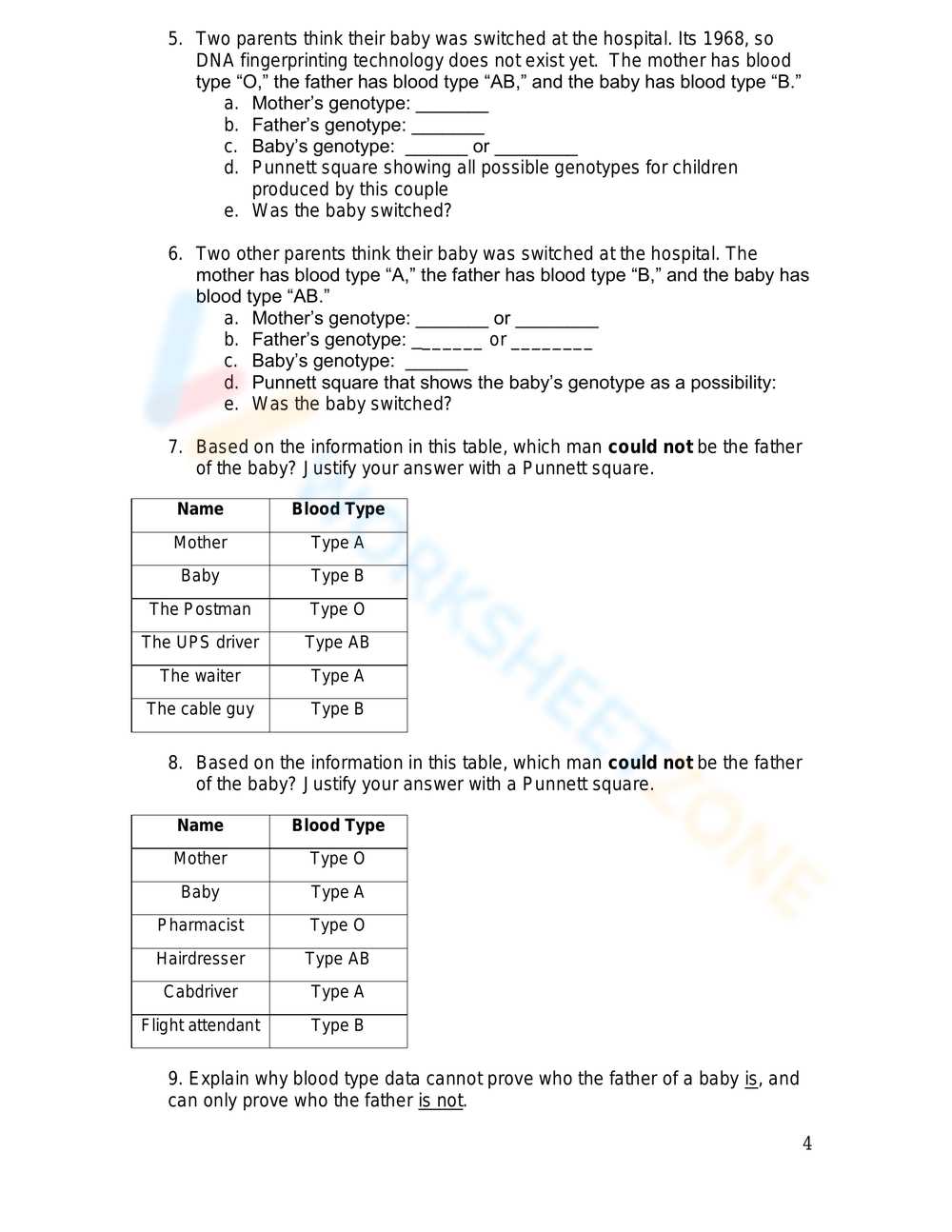
Generate a Punnett grid only after confirming that both alleles produce measurable outputs, such as independent antigens or pigment units; this prevents misclassification of interaction patterns.
- Assign each parent’s genotype using clear labels (e.g., A and B) that correspond to separately detectable products confirmed through lab assays.
- Place parental gametes along the top and side of the grid, ensuring each cell represents a unique pairing of these alleles.
- Record each offspring combination without merging symbols; parallel expression requires both markers to remain distinct in notation.
- Annotate each genotype with expected phenotypic markers such as dual antigen presence or patchwise pigment distribution.
- Use frequency counts from the completed grid to calculate exact proportions of offspring exhibiting both outputs.
- Cross-reference predicted ratios with observed lab data (e.g., gel profiles or antigen quantification) to validate accuracy.
- Repeat the grid with alternative parental genotypes to model population-level shifts in parallel-expression variants.