Understanding the Structure and Function of a Generalized Cell
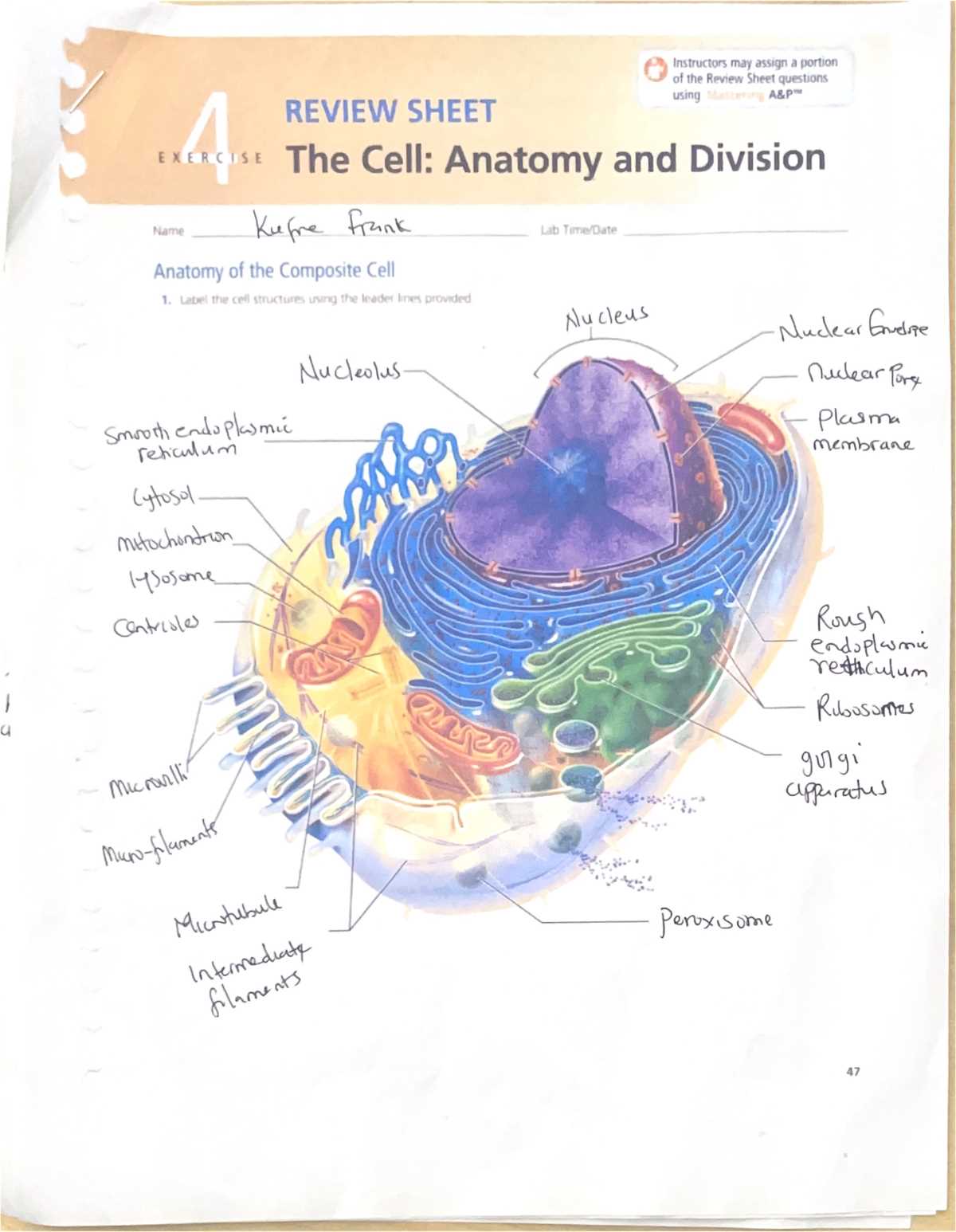
The cell membrane serves as the outer boundary of the cell, regulating the movement of materials in and out. It plays a pivotal role in maintaining the internal environment by controlling substances such as nutrients, waste products, and ions. Understanding how the membrane functions is key to grasping cellular processes such as communication and transport.
Inside the cell, organelles work together to carry out essential functions. The nucleus acts as the control center, housing genetic material and directing cellular activities. Mitochondria generate energy, while ribosomes facilitate protein synthesis. Each organelle contributes to the overall well-being of the cell by supporting life-sustaining processes.
To comprehend how a cell operates, it’s important to look at the interaction between these structures. The endoplasmic reticulum, for example, synthesizes proteins and lipids, while the Golgi apparatus modifies, sorts, and packages these products for transport. Together, these components form a complex system that enables cellular function and survival.
Structure and Function of a Typical Eukaryotic Organism
The outer boundary of a eukaryotic organism is the membrane, which controls the movement of substances into and out of the organism. This structure helps maintain an internal balance by regulating ions, nutrients, and waste. Understanding the role of the membrane is key in comprehending how organisms interact with their environment and carry out essential functions.
Inside, the nucleus holds the genetic material and directs the organism’s activities. This structure controls processes like cell division, growth, and the synthesis of proteins. Ribosomes, scattered throughout the internal environment, play a critical role in protein creation, which is vital for the organism’s function and development.
Mitochondria provide energy by converting chemical compounds into a usable form. This power source is critical for all cellular processes. Meanwhile, the endoplasmic reticulum and Golgi apparatus help in protein and lipid synthesis, sorting, and packaging, ensuring the efficient transport of these materials throughout the structure.
Each part of this system works in coordination with the others, ensuring the overall functionality of the organism. The smooth operation of these components is essential for sustaining life, and any disruption can lead to cellular malfunction or death. The efficiency of these processes relies on the interplay between all components.
Understanding the Structure of the Cell Membrane
The outer boundary of a living structure is the membrane, composed primarily of a lipid bilayer. This bilayer consists of phospholipids with hydrophilic heads facing outward and hydrophobic tails facing inward. The arrangement forms a selective barrier that controls the movement of substances in and out.
Integral proteins embedded in the lipid bilayer perform various functions. Some of these proteins act as channels, allowing specific molecules to pass through, while others function as receptors, triggering internal processes when they bind to external signals.
In addition to lipids and proteins, the membrane may contain carbohydrates attached to proteins or lipids, forming glycoproteins and glycolipids. These carbohydrate chains play a key role in cell recognition and communication with other structures.
The fluid mosaic model describes the membrane as a dynamic structure, with components that can move laterally within the layer. This fluidity is essential for the membrane’s ability to adapt and interact with its environment, as well as to facilitate processes like endocytosis and exocytosis.
- Lipid Bilayer: Acts as the primary barrier between the cell and its environment.
- Membrane Proteins: Include transporters, enzymes, and receptors that regulate cellular activities.
- Carbohydrates: Provide recognition sites for communication between cells.
Identifying Organelles in a Generalized Cell
To identify the various organelles in a typical eukaryotic structure, start by examining the nucleus, which houses genetic material. The nucleus is enclosed by a double membrane, and inside it, the nucleolus is responsible for ribosome production.
Next, observe the endoplasmic reticulum (ER), which comes in two forms: rough and smooth. The rough ER is studded with ribosomes, making it key in protein synthesis, while the smooth ER is involved in lipid synthesis and detoxification processes.
The Golgi apparatus functions in packaging and sorting proteins for transport. Vesicles bud off from the Golgi to deliver materials either within the cell or outside it. Mitochondria, often referred to as the powerhouse of the cell, generate ATP through cellular respiration.
In addition, you’ll find lysosomes, which contain enzymes that break down waste materials, and peroxisomes, involved in detoxifying harmful substances. The cytoskeleton, composed of microtubules and filaments, helps maintain cell shape and facilitates intracellular transport.
Other components include ribosomes, which are either free-floating in the cytoplasm or attached to the rough ER, playing a vital role in protein synthesis.
- Nucleus: Contains the cell’s genetic material.
- Endoplasmic Reticulum: Synthesizes proteins (rough) and lipids (smooth).
- Golgi Apparatus: Modifies, sorts, and packages proteins for transport.
- Mitochondria: Generates ATP via cellular respiration.
- Lysosomes: Break down waste materials and cellular debris.
- Peroxisomes: Detoxify harmful substances.
- Cytoskeleton: Provides structural support and aids in intracellular transport.
For more detailed information on the functions and structures of cellular components, visit NCBI Bookshelf.
Role of the Nucleus in Cellular Functions
The nucleus plays a key role in regulating cellular activities by storing and managing genetic information. It houses DNA, which is organized into chromosomes, and is the site where RNA is transcribed from these genes.
The transcription process within the nucleus is vital for producing messenger RNA (mRNA), which carries genetic instructions from the DNA to the ribosomes in the cytoplasm for protein synthesis. This is the first step in the gene expression process, ultimately determining the structure and function of proteins.
Another important function of the nucleus is to control cell division through the regulation of the cell cycle. During cell division, the nucleus ensures accurate replication of DNA and proper distribution of chromosomes into daughter cells. This process is vital for maintaining genetic stability and cell function.
The nuclear envelope, a double-layered membrane, surrounds the nucleus and regulates the passage of molecules in and out of the nucleus through nuclear pores. This selective permeability ensures that only necessary substances, like RNA and ribosomal proteins, are transported while protecting the genetic material from harmful molecules.
In addition, the nucleolus within the nucleus is responsible for the production of ribosomal RNA (rRNA), which is essential for ribosome assembly. These ribosomes are then transported to the cytoplasm to participate in protein synthesis.
Overall, the nucleus acts as the control center of the cell, directing activities that govern cellular growth, protein production, and reproduction through precise management of genetic material.
How Mitochondria Produce Energy for the Cell
Mitochondria generate energy through a process known as cellular respiration. This process converts nutrients, primarily glucose, into adenosine triphosphate (ATP), which is the main energy source for the cell.
The process begins in the cytoplasm, where glucose undergoes glycolysis to produce pyruvate. The pyruvate is then transported into the mitochondria, where it is further broken down in the Krebs cycle (also called the citric acid cycle). In this cycle, high-energy electrons are transferred to carrier molecules like NADH and FADH2.
These carrier molecules then move to the inner mitochondrial membrane, where the electron transport chain (ETC) is located. As electrons move through the chain, energy is released, which is used to pump protons (H+) across the membrane, creating a proton gradient. This gradient stores energy, which is used to produce ATP through a process called oxidative phosphorylation.
Oxygen plays a critical role in this process, acting as the final electron acceptor in the ETC. Oxygen combines with the electrons and protons to form water, preventing a backup of electrons and allowing the cycle to continue. This is why oxygen is vital for cellular respiration and energy production.
ATP produced by mitochondria is then used by the cell for various functions, including muscle contraction, protein synthesis, and other vital activities. Mitochondria are often referred to as the “powerhouses” of the cell because of their role in energy production, crucial for maintaining cellular function and life.
The Importance of Ribosomes in Protein Synthesis
Ribosomes play a pivotal role in the process of protein synthesis by translating messenger RNA (mRNA) into amino acid sequences, forming proteins. They are found in both the cytoplasm and attached to the endoplasmic reticulum, known as the rough ER. Ribosomes consist of two subunits: a large subunit and a small subunit, both of which are composed of ribosomal RNA (rRNA) and proteins.
The synthesis process begins when mRNA, transcribed from DNA, enters the cytoplasm. Ribosomes read the mRNA codons, each corresponding to a specific amino acid. Transfer RNA (tRNA) molecules then bring the correct amino acids to the ribosome, where they are linked together to form a polypeptide chain. This sequence of amino acids folds into a functional protein, which carries out various tasks in the organism, from structural support to enzymatic functions.
Ribosomes ensure the accuracy of protein synthesis by matching the tRNA anticodons with the mRNA codons. This interaction is key for producing proteins with the correct structure and function. Disruptions in ribosomal function can lead to faulty protein production, which is linked to numerous diseases, including some forms of cancer and genetic disorders.
In summary, ribosomes are essential for translating genetic information into functional proteins, maintaining cellular functions, and ensuring the proper expression of genetic traits. Without them, cells would be unable to produce the proteins necessary for life.
Exploring the Function of the Endoplasmic Reticulum
The endoplasmic reticulum (ER) is a network of membranes within the cytoplasm, playing a key role in protein and lipid synthesis. There are two distinct types: rough ER and smooth ER, each with specific functions in the cell.
The rough ER is studded with ribosomes on its surface, making it the site of protein synthesis. These proteins are either secreted from the cell, incorporated into the cell’s membrane, or sent to the lysosomes. The rough ER is particularly important for synthesizing proteins that will be exported outside the cell or inserted into membranes.
In contrast, the smooth ER lacks ribosomes and is involved in the synthesis of lipids, metabolism of carbohydrates, detoxification of drugs and poisons, and storage of calcium ions. The smooth ER plays a critical role in producing phospholipids and steroid hormones, important for maintaining membrane integrity and cellular communication.
The endoplasmic reticulum also contributes to intracellular transport by serving as a conduit for materials to move within the cell. It is involved in the modification, folding, and transport of proteins from the ribosomes to their final destinations. Additionally, the ER aids in the packaging of synthesized proteins into vesicles for transport to other cellular structures.
Without the proper functioning of the ER, cells would struggle to maintain proper protein and lipid production, which can lead to various disorders and dysfunctions. These range from diseases related to lipid metabolism to those caused by protein misfolding, such as cystic fibrosis.
How the Golgi Apparatus Processes Cellular Materials
The Golgi apparatus is responsible for modifying, sorting, and packaging proteins and lipids for transport within the cell or secretion outside the cell. It consists of a series of membrane-bound structures called cisternae, which work in conjunction with the endoplasmic reticulum (ER) to ensure proper cellular functioning.
After proteins are synthesized in the rough endoplasmic reticulum, they are transported to the Golgi apparatus in vesicles. Once inside, the Golgi apparatus processes these proteins by adding carbohydrate groups (glycosylation) or phosphate groups (phosphorylation), which are important for protein function, stability, and targeting to specific locations within the cell.
The Golgi apparatus sorts the processed proteins based on their destination. Proteins that are destined for secretion are packaged into vesicles, which then fuse with the plasma membrane to release their contents outside the cell. Other proteins are sent to lysosomes or incorporated into the cell membrane.
Additionally, the Golgi apparatus plays a key role in the synthesis of complex polysaccharides and in the modification of lipids. These modifications are critical for maintaining the structure of the plasma membrane and for producing molecules that are involved in cell communication and signaling.
In summary, the Golgi apparatus is central to the post-translational modification of proteins and the sorting and delivery of cellular materials. Its efficient functioning is essential for maintaining cellular organization and communication.
The Role of Lysosomes in Cellular Waste Management
Lysosomes are membrane-bound organelles that function as the cell’s waste disposal system. They contain digestive enzymes that break down unwanted materials, including cellular debris, old organelles, and external pathogens. By maintaining cellular cleanliness, lysosomes prevent the accumulation of harmful substances that could interfere with cellular processes.
Once a material is identified for degradation, it is enclosed in a vesicle called a phagosome, which then fuses with a lysosome. The enzymes inside the lysosome digest the contents, breaking them down into simpler molecules, which can either be recycled or expelled from the cell.
Lysosomes also play a critical role in autophagy, a process in which the cell breaks down its own components, such as damaged organelles, and recycles them for new cellular construction. This process helps maintain cellular health and function by removing damaged parts before they can accumulate and cause harm.
In addition to waste management, lysosomes are involved in the regulation of cell growth, cell death, and responses to cellular stress. Disruptions in lysosomal function can lead to various diseases, including lysosomal storage disorders, where waste materials accumulate inside the cell due to the lack of proper enzymatic breakdown.
In conclusion, lysosomes are integral to maintaining cellular integrity by managing waste, recycling essential components, and regulating cellular processes. Their proper function is critical for overall cellular health and longevity.