Exploring Different Forms of Energy and Their Applications
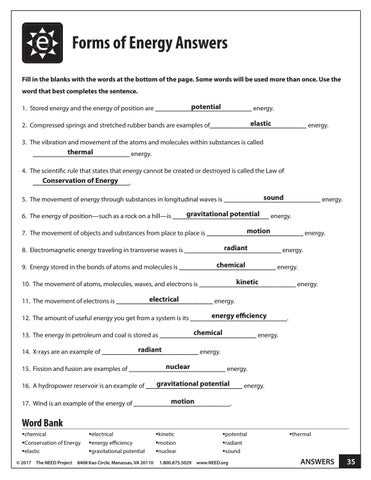
Start by recognizing the primary types of mechanical and thermal forces that exist in nature and technology. These forces play significant roles in how systems function, from simple machines to complex processes in nature. Understanding their behavior and interaction can give you insight into everyday phenomena as well as technological advancements.
One key area to focus on is how certain forms of motion and stored materials can be harnessed for practical use. This includes how a moving object stores kinetic force or how an object in a high position holds gravitational potential energy. Recognizing these patterns allows you to solve problems related to motion, heat, and power generation in a more effective way.
Next, think about the transformation of heat into mechanical power, or how chemical reactions release or store energy. This understanding can help in applications like batteries or engines, where chemical bonds are broken to release energy, driving everyday devices. Be sure to practice applying these principles to specific scenarios to master their usage in real-world contexts.
Understanding Types of Energy and Their Practical Uses
Heat is one of the most straightforward types of force, commonly used in cooking, heating systems, and industrial processes. It can be generated through combustion, friction, or chemical reactions. This type of force is also fundamental in power plants, where thermal energy is converted to mechanical power to produce electricity.
Another widely utilized force is motion, or kinetic energy. It is found in vehicles, wind turbines, and moving machinery. By capturing the energy from motion, devices like regenerative braking systems in electric cars can convert it into usable electricity. Additionally, wind energy relies on the motion of air masses to drive turbines that generate power.
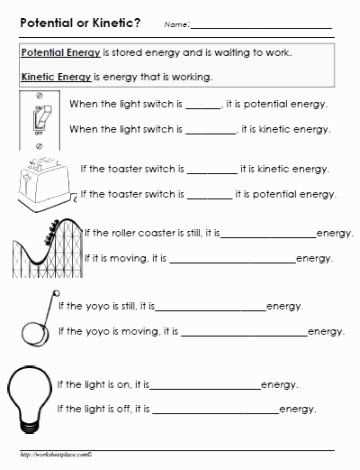
Potential energy is critical in everyday systems, from hydroelectric dams to roller coasters. Stored in elevated objects or materials under tension, it can be converted into kinetic energy. For example, the water behind a dam has stored potential energy that, when released, drives turbines to generate electricity.
Chemical energy stored in fuel cells, batteries, and other reactive substances plays a central role in modern technology. It powers everything from portable devices to vehicles. When chemical bonds break, energy is released in the form of heat and electricity. Rechargeable batteries utilize chemical reactions to store and release energy repeatedly.
Finally, electrical energy is perhaps the most versatile in modern life. It powers almost every appliance and system. Whether through static electricity or electrical currents, it enables everything from lighting to computing. Advances in superconductors and transmission technologies continue to improve its efficiency and range.
Understanding Kinetic Force and Its Real-Life Examples
Kinetic force is the energy that an object possesses due to its motion. It is calculated by the formula: KE = ½ mv², where m is the mass of the object, and v is its velocity. The faster an object moves or the heavier it is, the more kinetic power it holds. Here are some real-life applications:
- Vehicles in Motion: A moving car or train stores kinetic force, which can be converted into other forms, like mechanical or electrical energy. This principle is used in regenerative braking systems.
- Wind Turbines: Wind harnesses kinetic motion as it blows across blades, transforming that movement into electrical power.
- Sports: A thrown baseball or a running athlete exhibit kinetic power. The faster the movement, the more energy is involved, which is essential in both athletic performance and sports equipment design.
- Roller Coasters: When a roller coaster car is lifted to a high point, it gains potential energy. As it descends, that energy is converted into kinetic energy, providing the force needed for the rest of the ride.
- Water Flow: Water flowing down a river has kinetic force that can be used to turn turbines in hydroelectric plants, generating electricity.
Understanding how kinetic force works in these examples helps us develop more efficient systems in transportation, energy generation, and even sports technologies. It is a central concept in the field of mechanics and physics, showing how movement can be converted to useful power.
Exploring Potential Force in Different Environments
Potential force refers to stored power due to an object’s position or state. This type of force is most noticeable when an object is at rest but has the potential to move. Below are a few examples of where potential force plays a significant role:
- Gravitational Potential Force: An object at height, such as a rock on a cliff, has stored force due to its position relative to the Earth. When the rock falls, this potential energy is converted to kinetic energy.
- Elastic Force: A stretched rubber band or a compressed spring stores energy that is released when the tension is released. These systems are commonly used in mechanical devices, from toys to industrial machinery.
- Chemical Potential Force: Stored within the bonds of atoms and molecules, chemical energy is released during reactions. For example, when gasoline burns in an engine, the chemical force stored in fuel is converted into kinetic energy to power vehicles.
- Electrical Potential Force: In a battery, energy is stored in the form of chemical energy and can be released when connected to an electrical circuit, powering everything from flashlights to smartphones.
- Hydraulic Systems: Water held in a reservoir at a higher elevation has potential force that can be used to generate power when released, as seen in hydroelectric plants.
Understanding these types of stored energy helps in designing more efficient systems for everyday life, from renewable energy sources to mechanical systems used in industries. By knowing how potential force works in different settings, we can harness it to create practical, efficient solutions for power generation and movement.
The Role of Thermal Force in Everyday Processes
Thermal force, also known as heat, plays a key role in countless everyday tasks. It involves the transfer of heat between objects and systems, which results in changes in temperature and physical state. Below are several examples where heat impacts daily activities:
- Cooking: The process of heating food on a stove or in an oven relies on thermal force to change the temperature and texture of ingredients, allowing them to become edible.
- Heating and Cooling Systems: Thermal force is at the heart of central heating and air conditioning systems, regulating the temperature of homes and buildings by transferring heat to or from the air.
- Industrial Manufacturing: In industries like metalworking and glass production, heat is used to melt or mold materials, making it essential for manufacturing products like vehicles, electronics, and machinery.
- Transportation: Cars, trains, and airplanes utilize thermal force in engines, where fuel combustion generates heat that powers the vehicle and propels it forward.
- Renewable Energy: Solar panels and geothermal systems harness thermal energy to generate power, providing sustainable alternatives to fossil fuels.
Thermal force is indispensable for various technologies, and it is responsible for numerous processes that support modern life. From the warmth in your home to the fuel in your car, heat is an underlying factor in many aspects of daily living.
For more detailed information on thermal force and its applications, check out the U.S. Department of Energy website.
How Chemical Power Fuels Living Organisms
Living organisms rely on chemical processes to obtain the power required for growth, movement, and reproduction. Through the breakdown of nutrients such as glucose, organisms release stored chemical power, which is then converted into usable energy for biological functions. This process is most commonly known as cellular respiration.
In animals, food is broken down into glucose, fats, and proteins. Glucose, in particular, plays a central role. Once ingested, glucose molecules are metabolized in cells, where they are processed to release energy. This energy is then stored temporarily in the form of ATP (adenosine triphosphate), which cells use to perform essential functions such as muscle contractions, nerve signaling, and cellular repair.
For plants, photosynthesis is the primary way to harness chemical power. During this process, plants convert sunlight into glucose by combining carbon dioxide and water. The glucose produced is then used as fuel for growth and development. Just like animals, plants break down this glucose during cellular respiration to produce ATP.
Both animals and plants depend on chemical reactions that break down nutrients to extract and store the power needed to function. This process is fundamental to sustaining life on Earth.
Impact of Electrical Power in Modern Technology
Electrical power is a driving force behind almost all technological innovations today. From powering household devices to fueling complex computing systems, it plays an integral role in advancing industries, medicine, communication, and entertainment.
In computing, electrical power enables the operation of processors, memory storage, and the network infrastructure that allows for rapid data transfer and processing. Without electricity, modern computing would not be possible, stalling everything from basic applications to artificial intelligence and machine learning.
In communication, electrical power drives the devices that connect people worldwide, including smartphones, computers, and communication satellites. These devices rely on continuous power for sending and receiving signals, making global communication instantaneous.
Moreover, electrical power revolutionizes industries such as healthcare, where advanced medical equipment such as MRI machines, ventilators, and diagnostic tools all rely on electrical power to function accurately and efficiently.
Finally, in everyday life, electrical power is crucial for appliances, transportation systems, and entertainment devices. It enables the functionality of everything from refrigerators and washing machines to electric cars and home entertainment systems, significantly improving convenience and quality of life.
Renewable Power Sources and Their Growing Importance
Renewable power sources, such as wind, solar, and hydropower, are becoming increasingly crucial as global demand for cleaner and more sustainable options rises. These alternatives not only reduce dependence on fossil fuels but also help mitigate climate change by decreasing carbon emissions.
Wind power harnesses the natural movement of air to generate electricity. With advancements in turbine technology, wind energy has seen a significant increase in efficiency and is now a major contributor to the global energy mix, especially in countries with large open spaces and favorable wind conditions.
Solar power captures sunlight using photovoltaic panels, converting it into usable electricity. As solar panel prices have dropped and efficiency improved, solar power has become a viable option for both residential and commercial installations. It provides a decentralized and scalable method of generating power, making it particularly important in rural or remote areas.
Hydropower, generated through the movement of water in rivers or dams, has long been a reliable source of clean electricity. While large-scale hydropower projects can have significant environmental impacts, smaller, run-of-river systems are increasingly being developed to minimize ecological disruption while providing consistent energy production.
Incorporating renewable power into national grids helps diversify energy sources, reduce volatility in energy prices, and promote energy security. As technology continues to evolve, the cost-effectiveness and scalability of these systems will make them even more accessible to a wider range of regions and communities.
Converting Mechanical Motion into Usable Work
Mechanical motion is commonly transformed into usable work through machines like engines, gears, and turbines. The key to this conversion lies in the transfer of kinetic energy to do practical tasks.
For example, in a simple gear system, rotational motion from one wheel is transferred to another, amplifying force or changing the direction of movement. This process is crucial in vehicles, where engine rotation drives wheels, translating fuel into motion that powers the car.
Turbines, commonly used in hydroelectric and wind power stations, convert the mechanical motion of water or wind into electricity. The blades of a wind turbine rotate as the wind blows, transferring kinetic energy into rotational motion. This movement spins a generator, producing electrical current that can be used to power homes and businesses.
Engines, both internal combustion and electric, convert mechanical work from pistons or motors into movement. In an internal combustion engine, the combustion of fuel generates high-pressure gases that push pistons, which in turn rotate a crankshaft, converting chemical energy into mechanical motion used to move the vehicle or machine.
In industrial applications, mechanical energy is often converted into work through hydraulic systems. These systems use fluid pressure to transfer energy, making them suitable for heavy machinery like excavators, where the pressure within hydraulic fluid is used to move large components with precision.
Overall, converting mechanical motion into practical work relies on a range of mechanical principles, including force, motion, and energy transfer. Mastering these systems is fundamental for building efficient machines and tools that drive modern industry and transportation.
Understanding Nuclear Power and Its Uses
Nuclear power generates vast amounts of heat through nuclear fission, where the nucleus of an atom is split into smaller parts, releasing significant energy. This process is utilized primarily in nuclear reactors to generate electricity.
In a nuclear reactor, uranium or plutonium atoms are bombarded with neutrons, causing them to split and release energy. The heat produced from these reactions is used to produce steam, which drives turbines connected to generators that produce electricity.
Nuclear reactors are commonly used in power plants to provide electricity on a large scale. These plants are capable of supplying vast amounts of energy with low greenhouse gas emissions, making them a key player in efforts to reduce carbon footprints.
Beyond electricity generation, nuclear reactions are also used in medicine. Radioactive isotopes are utilized for diagnostic imaging and cancer treatments. For example, PET scans use isotopes to detect disease, while radiation therapy targets cancer cells, providing effective treatment.
In addition to power plants and medical uses, nuclear technology has applications in space exploration. Nuclear reactors and radioisotope thermoelectric generators are used to power spacecraft, particularly in missions where solar power is not viable due to distance from the sun.
While nuclear power provides a reliable and potent energy source, it comes with challenges. Safety concerns, radioactive waste disposal, and the potential for nuclear proliferation are significant factors that must be addressed in its use.