Understanding the Structure and Function of Tissue Types
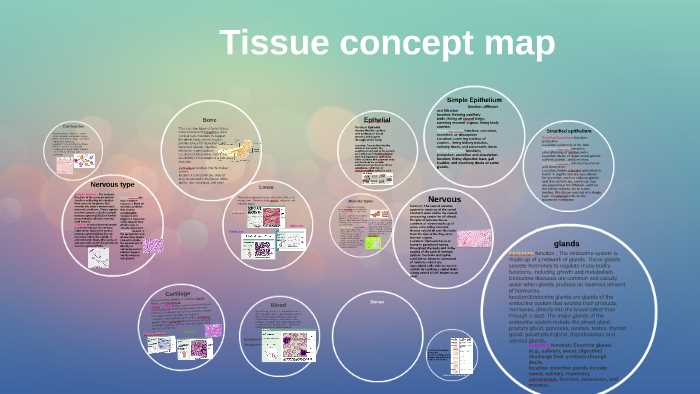
Identify the key structural and functional elements of the body’s different types of cells. These building blocks are essential for understanding how organs and systems perform their vital tasks. The cells within the body are organized into specific categories, each with a unique role, ranging from protection to communication and movement.
Understand the categories that categorize these cellular groups. Classifying and connecting the major groups, like those that form muscles, skin, and organs, is crucial for linking the functions that each provides to the overall health and function of the body.
Review how these groups work together to form organs. The interdependence of cellular groups within organs highlights the importance of each type in maintaining system functions. These connections help visualize the system of interactions and the outcomes of damage to specific cell groups.
Use this understanding for practical applications. Knowing how different cell types contribute to biological processes helps identify disorders and can improve medical treatments. By mapping out these relationships, it’s easier to see how tissues work together and where they might break down in diseases.
Identifying Major Structural Groups and Their Functions
Recognize the four primary categories of cells: These categories include epithelial, connective, muscle, and nerve cells, each serving distinct functions crucial for the body’s operations.
- Epithelial: Forms protective barriers, lines internal cavities, and participates in absorption and secretion processes.
- Connective: Provides structural support, stores nutrients, and aids in immune defense.
- Muscle: Facilitates movement through contraction, enabling locomotion and force generation.
- Nervous: Conducts electrical impulses for communication between body parts, controlling functions.
Link these cell groups to their role in organ formation. Different combinations of these cells create organs within various systems, such as the digestive or circulatory system. For example, muscle and nerve cells collaborate to control bodily movement in the musculoskeletal system.
Understanding Interactions Between Cell Types
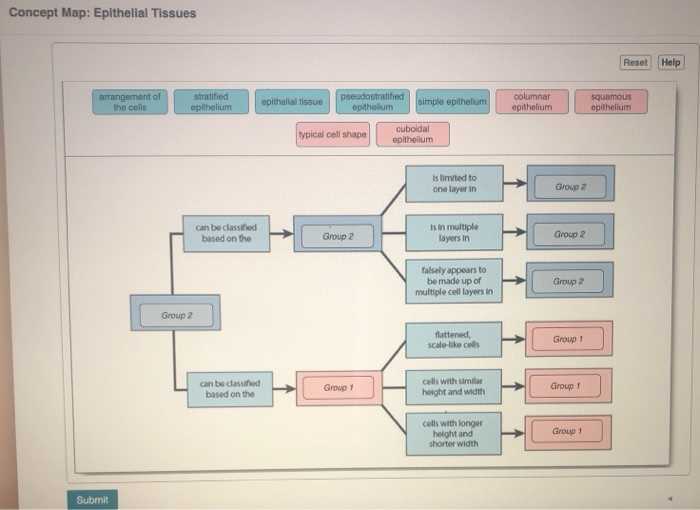
Study the connections between cells of the same type. Cells of the same category may form specialized structures like glands, blood vessels, or bones, each contributing to the body’s complex functionality.
Focus on how structure supports function. Analyzing how cells are organized within tissues and organs reveals their specific roles. Disruptions in these organizations can lead to dysfunction, which is essential for understanding various diseases and conditions.
Understanding Different Tissue Types in the Human Body
Identify the four primary categories of cells: The human body consists of epithelial, connective, muscle, and nervous cells. Each type plays a specific role in supporting the body’s function.
- Epithelial Cells: These cells form protective layers that line organs and cavities. They are involved in absorption, secretion, and filtration processes.
- Connective Cells: These cells provide structural support, store energy, and play a role in immune response. Examples include bone, blood, and adipose tissue.
- Muscle Cells: Muscle cells are responsible for movement through contraction. There are three types: skeletal, smooth, and cardiac muscle cells, each with distinct functions in voluntary and involuntary movement.
- Nervous Cells: These cells are responsible for transmitting electrical signals throughout the body. They make up the brain, spinal cord, and peripheral nerves, controlling sensory input, motor output, and internal communication.
Understand the structural and functional differences: Each cell type’s structure reflects its function. For example, epithelial cells form tight junctions for protection, while muscle cells are elongated to facilitate contraction. Connective cells have varying structures depending on their specific roles, such as collagen fibers in tendons or fat cells in adipose tissue.
Recognize the role of tissue in organ formation: Different combinations of cells form complex organs, where specialized functions are carried out. For example, cardiac muscle cells form the heart, while epithelial cells line the blood vessels within it.
Key Characteristics of Epithelial Tissue
Cellularity: Epithelial cells are closely packed together, forming continuous sheets. These cells have minimal extracellular matrix, allowing them to create effective barriers and surfaces for absorption or secretion.
Polarity: Epithelial cells exhibit distinct apical and basal surfaces. The apical surface faces the body cavity, lumen, or external environment, while the basal surface attaches to underlying connective tissue through the basement membrane.
Attachment to Basement Membrane: The basal surface of epithelial cells is anchored to a thin layer called the basement membrane, which provides structural support and regulates cell behavior.
Avascularity: Epithelial layers do not contain blood vessels. Nutrients and oxygen are supplied through diffusion from adjacent tissues, making epithelial tissue highly dependent on its underlying connective tissue for nourishment.
Regenerative Capacity: Epithelial cells have a high rate of cell division and regeneration. This enables rapid healing and replacement of cells, especially in areas exposed to damage, such as skin and the lining of the gastrointestinal tract.
Functions: Epithelial cells serve various functions, including protection (as in the skin), absorption (in the intestines), secretion (in glands), and filtration (in kidneys). Their specific roles depend on their structure and location.
Classification: Epithelial cells are classified based on their shape (e.g., squamous, cuboidal, columnar) and the number of layers (e.g., simple, stratified). This classification helps determine the function of the tissue in different organs and structures.
Source: For more detailed information on epithelial tissue, visit NCBI Bookshelf.
The Role of Connective Tissue in Supporting the Body
Structural Support: Connective structures provide a scaffold that holds organs and tissues together. Ligaments, tendons, and cartilage are examples of supportive structures that enable stability and flexibility.
Protection: Connective elements like bone and cartilage protect vital organs from mechanical injury. The rib cage, for instance, shields the heart and lungs, while the skull encases and protects the brain.
Transport of Nutrients and Waste: Blood, a specialized form of connective matter, plays a crucial role in the distribution of oxygen, nutrients, and hormones throughout the body, as well as in the removal of waste products from cells.
Energy Storage: Adipose cells, a type of connective form, store energy in the form of fat. These reserves provide energy during periods of scarcity, while also insulating the body and cushioning organs.
Healing and Repair: Connective structures are involved in tissue repair. When injury occurs, fibroblasts produce collagen to rebuild damaged structures, helping to restore integrity and function to the affected area.
Cell Communication: Fibers and ground substance within connective forms allow cells to communicate with each other. This coordination is crucial for maintaining homeostasis and responding to injury or infection.
Source: For more detailed information, visit NCBI Bookshelf.
Muscle Tissue: Types and Functions
Skeletal Muscle: This type of muscle is attached to bones and is under voluntary control. It is responsible for body movement, posture, and stability. Contractions of skeletal fibers allow for activities such as walking, lifting, and speaking.
Cardiac Muscle: Found only in the heart, this tissue is responsible for pumping blood throughout the circulatory system. Cardiac muscle fibers contract involuntarily and rhythmically, ensuring continuous heartbeats.
Smooth Muscle: Smooth muscle lines the walls of internal organs such as the stomach, intestines, and blood vessels. It functions involuntarily to regulate processes such as digestion, blood flow, and the contraction of the bladder.
Energy Use: All muscle types rely on adenosine triphosphate (ATP) for contraction. ATP is produced during cellular respiration, allowing muscle fibers to perform work by contracting and relaxing in response to stimuli.
Repair and Regeneration: Skeletal muscle has a limited ability to regenerate after injury, mainly through satellite cells. Cardiac and smooth muscle have a more restricted capacity for regeneration, but certain smooth muscles can regenerate more readily than others.
Source: For more detailed information, visit NCBI Bookshelf.
Nervous Tissue: Structure and Communication
Neurons: Neurons are the fundamental cells of the nervous system, responsible for transmitting electrical signals. They have three main parts: the cell body, dendrites, and axon. Dendrites receive signals, while the axon transmits them to other neurons, muscles, or glands.
Glial Cells: These supporting cells play a crucial role in maintaining the environment for neurons. They provide structural support, supply nutrients, and insulate axons. Key types include astrocytes, oligodendrocytes, and microglia.
Synapses: Synapses are the junctions between neurons where communication occurs. Chemical signals, in the form of neurotransmitters, cross the synaptic gap and bind to receptors on the next neuron, ensuring signal transmission.
Signal Transmission: The process of communication between neurons is primarily based on electrical impulses called action potentials. These impulses are generated when a neuron’s membrane potential reaches a certain threshold, allowing ions to flow across the membrane and propagate the signal.
Myelination: Many axons are covered with myelin, a fatty substance that speeds up signal transmission by insulating the axon. This process is carried out by oligodendrocytes in the central nervous system and Schwann cells in the peripheral nervous system.
Neuroplasticity: Neuroplasticity refers to the ability of the nervous system to adapt to changes by reorganizing its structure, functions, or connections. This ability is critical for learning, memory, and recovery from injury.
| Cell Type | Function |
|---|---|
| Neurons | Transmit electrical signals |
| Astrocytes | Support neurons, regulate blood-brain barrier |
| Oligodendrocytes | Form myelin sheath in the central nervous system |
| Microglia | Act as the immune cells of the brain |
| Schwann Cells | Form myelin sheath in the peripheral nervous system |
How Cell Groups Work Together in Organs
In complex systems, various cell types collaborate within organs to perform specific functions. For example, in the heart, muscle cells are responsible for contractions that pump blood, while structural cells support the heart’s architecture. Protective cells line blood vessels, ensuring proper circulation and shielding them from damage.
In the stomach, muscle fibers help churn food, while cells that secrete enzymes and mucus aid digestion and protect the lining. Supporting cells provide stability to the stomach’s structure. This integration allows each part to work together smoothly.
The lungs also demonstrate this cooperation. Muscle cells facilitate breathing by enabling lung expansion and contraction. Cells lining the airways enable the exchange of gases like oxygen and carbon dioxide. Structural cells support lung function and ensure elasticity for proper respiratory function.
| Organ | Cell Types | Function |
|---|---|---|
| Heart | Muscle, Structural, Protective | Muscle cells pump blood, structural cells provide stability, protective cells line blood vessels |
| Stomach | Muscle, Secretory, Structural | Muscle cells churn food, secretory cells release enzymes, structural cells maintain form |
| Lungs | Muscle, Epithelial, Structural | Muscle cells enable breathing, epithelial cells allow gas exchange, structural cells ensure lung function |
Common Disorders Affecting Function
Diseases can severely impact the functionality of various cell types, leading to widespread disruption. For example, in the case of rheumatoid arthritis, inflammation damages joint-supporting cells, causing pain and loss of movement. Similarly, muscular dystrophy results from the breakdown of muscle fibers, compromising mobility and strength.
Cystic fibrosis is another condition where the dysfunction of secretory cells in the lungs leads to thick mucus buildup, obstructing airways and leading to respiratory failure. In contrast, diabetes affects blood cells, disrupting insulin production and affecting glucose regulation throughout the body.
Fibrosis is a common complication in which connective cells proliferate abnormally, leading to scarring in organs like the liver or lungs, impairing their function. Similarly, cancer can arise when cellular regulation is disrupted, causing uncontrollable cell division and tumor formation.
- Rheumatoid Arthritis: Inflammation of connective and synovial cells causing joint pain and dysfunction.
- Muscular Dystrophy: Degeneration of muscle fibers, leading to progressive weakness.
- Cystic Fibrosis: Defective secretory cells in the lungs lead to mucus buildup and respiratory issues.
- Diabetes: Impaired function of pancreatic cells responsible for insulin secretion.
- Fibrosis: Excessive connective cell growth leads to scarring and organ dysfunction.
- Cancer: Uncontrolled cell division, often leading to tumors in various organs.
Practical Applications of Mapping in Biology
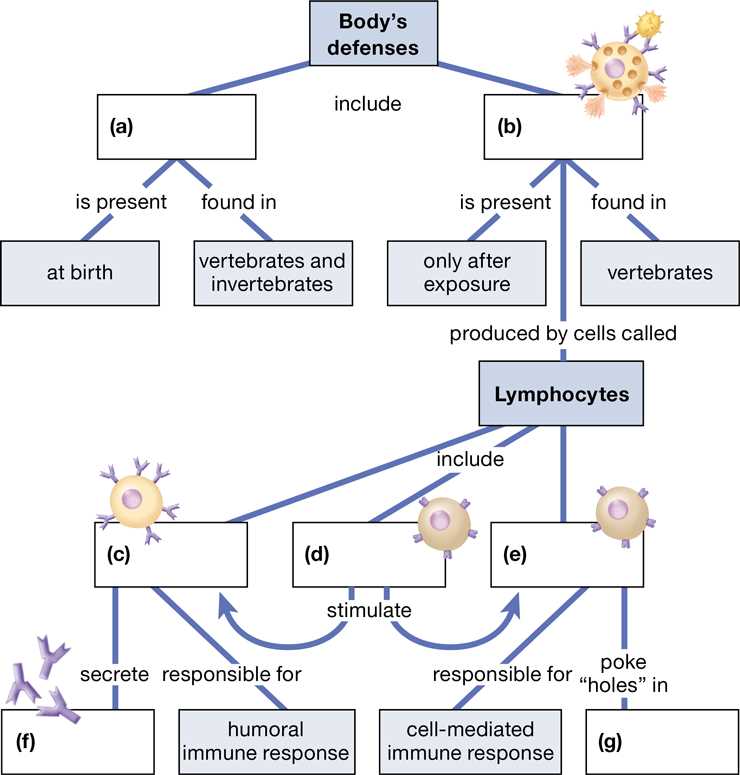
Using visual representations to illustrate the relationships between various cell types and their roles in biological systems can significantly enhance understanding. This approach is particularly useful for students and researchers to grasp complex interconnections and the specific functions of each cell type within organs.
For instance, when studying diseases, diagrams can help clarify how disruptions in one cell type affect the whole system. Understanding how connective cells support muscular structures, or how epithelial cells line and protect internal organs, is more easily visualized with diagrams. These visuals can also show how different cells interact to maintain homeostasis, such as the role of blood cells in oxygen transport.
Another practical application lies in teaching and curriculum design. Biology educators can incorporate these diagrams to improve student engagement and help learners better organize their knowledge. These visual aids help students see the “big picture” while understanding the specific roles each cell plays within the larger system.
In research, mapping is used to illustrate complex pathways of cellular interaction, aiding in the identification of targets for therapeutic intervention. For example, understanding how abnormal cell interactions contribute to cancer can be better visualized with clear, detailed representations.
- Education: Helps students visualize cell roles and their interactions in different organs.
- Research: Clarifies the molecular pathways and potential targets for drug development.
- Healthcare: Used to illustrate how cellular dysfunction leads to diseases, aiding in diagnostics and treatment planning.
- Clinical Practice: Enhances understanding of pathology and guides clinicians in understanding disease mechanisms.