Cellular Respiration Concept Map Answer Key and Explanation
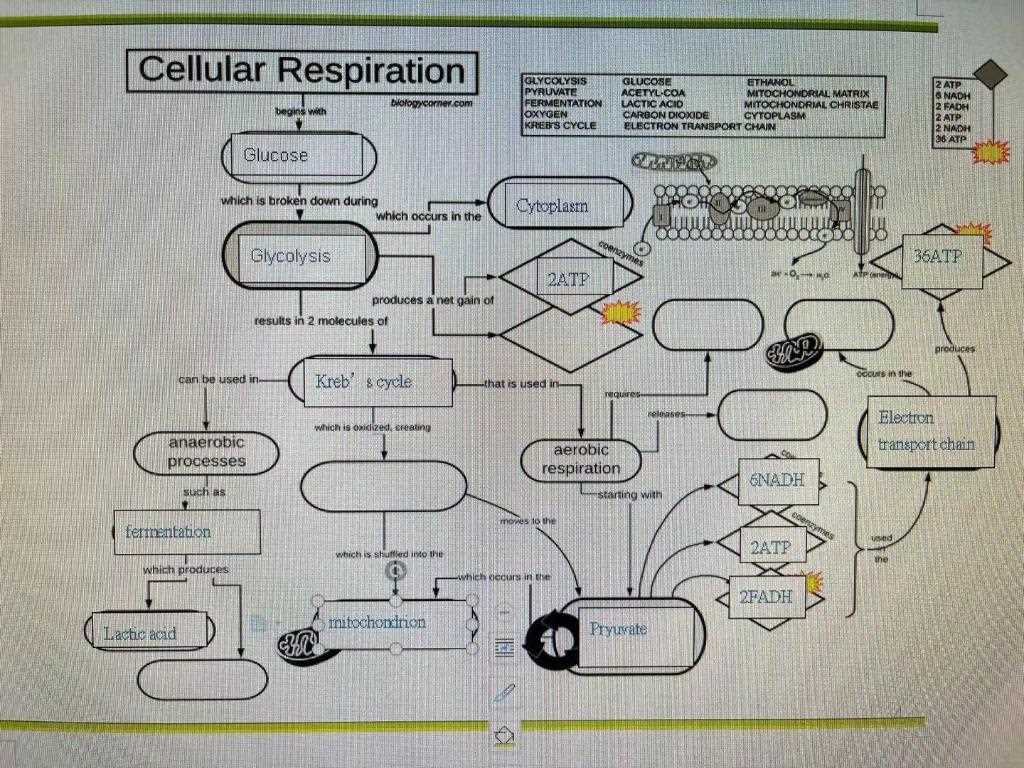
Start by identifying the main stages of energy production in living cells: Glycolysis, the citric acid cycle, and the electron transport chain. These are the three critical phases where glucose is broken down to release energy, primarily in the form of ATP. By understanding these steps and their interconnections, you can visualize how energy flows through a cell and fuels its functions.
Glycolysis occurs in the cytoplasm and is the first step of energy production. It breaks down glucose into two molecules of pyruvate, yielding a small amount of ATP and NADH. The next phase, the citric acid cycle, takes place in the mitochondria and processes pyruvate into carbon dioxide while transferring high-energy electrons to carrier molecules.
The electron transport chain is the final stage, occurring across the inner mitochondrial membrane. This phase is where most ATP is generated. High-energy electrons from NADH and FADH2 move through protein complexes, creating a proton gradient that drives ATP production via oxidative phosphorylation. Understanding how each stage contributes to the overall energy yield is key for grasping the full process.
When studying this process, keep track of the reactants and products at each stage. Glycolysis starts with glucose, produces pyruvate, ATP, and NADH, while the citric acid cycle consumes acetyl-CoA and produces NADH, FADH2, and ATP. The electron transport chain then uses these electron carriers to create a proton gradient, ultimately driving the synthesis of ATP. Pay attention to how each step feeds into the next, ensuring you can see the big picture.
A helpful approach is to break the entire process into smaller sections and focus on the role of each molecule involved. For instance, understanding the role of NAD+ and FAD in transferring electrons, or how ATP synthase works to convert ADP to ATP, will deepen your comprehension and retention of the material.
Understanding the Steps of Energy Production
Focus on the three main stages: Glycolysis, the citric acid cycle, and the electron transport chain. These are the core processes that drive energy creation in cells. Each step has distinct inputs, outputs, and locations within the cell, which are vital to mapping the flow of energy.
Glycolysis: This step occurs in the cytoplasm and involves the breakdown of glucose into two molecules of pyruvate. It produces a small amount of ATP and NADH, which are carried into the next stage. Understanding the specific enzymes and reactions involved helps clarify the transition to the citric acid cycle.
Citric Acid Cycle: Occurring in the mitochondria, this cycle processes pyruvate into carbon dioxide while generating more NADH and FADH2. These high-energy molecules are key to the next stage, where they donate electrons to the electron transport chain. Tracking the intermediate compounds and their transformations is critical here.
Electron Transport Chain: Located in the inner mitochondrial membrane, this process is where most ATP is generated. The high-energy electrons from NADH and FADH2 pass through protein complexes, creating a proton gradient that drives ATP synthesis via ATP synthase. This is the final and most energy-efficient phase.
Below is a table summarizing the key components and processes at each stage:
| Stage | Location | Inputs | Outputs |
|---|---|---|---|
| Glycolysis | Cytoplasm | Glucose, NAD+, ADP | 2 Pyruvate, 2 ATP, 2 NADH |
| Citric Acid Cycle | Mitochondria | Acetyl-CoA, NAD+, FAD, ADP | 2 CO2, 6 NADH, 2 FADH2, 2 ATP |
| Electron Transport Chain | Inner Mitochondrial Membrane | NADH, FADH2, O2 | ATP, H2O |
For clarity, make sure to map the flow from glucose to pyruvate in glycolysis, then track how acetyl-CoA enters the citric acid cycle. Finally, ensure you understand how the energy carried by NADH and FADH2 is transferred to the electron transport chain to generate ATP.
Key Components of Energy Production Process
Glycolysis breaks down glucose into two molecules of pyruvate, producing ATP and NADH. This process occurs in the cytoplasm and does not require oxygen. The main focus is on the conversion of glucose into pyruvate, which then moves into the mitochondria for further processing.
Citric Acid Cycle takes place in the mitochondria and processes acetyl-CoA, a product of pyruvate breakdown. This cycle generates NADH, FADH2, and ATP while releasing carbon dioxide as a byproduct. Tracking the intermediate steps of this cycle helps clarify how energy is transferred to electron carriers.
Electron Transport Chain is located in the inner mitochondrial membrane. NADH and FADH2 transfer high-energy electrons to protein complexes. These electrons create a proton gradient, which drives ATP synthesis through ATP synthase. The final product of this stage is water, as electrons combine with oxygen and protons.
ATP Synthesis occurs in both the glycolysis and citric acid cycle stages, but the majority happens in the electron transport chain. The proton gradient created during the electron transport chain is used by ATP synthase to convert ADP to ATP, the primary energy carrier in cells.
NADH and FADH2 are critical electron carriers that shuttle high-energy electrons to the electron transport chain. Their role is to transfer energy from glucose breakdown to the chain, where it is used to produce the majority of ATP.
Oxygen acts as the final electron acceptor in the electron transport chain. Without oxygen, the electron transport chain would cease to function, halting ATP production and resulting in the accumulation of intermediate products like lactic acid in anaerobic conditions.
How to Interpret a Cellular Energy Production Diagram
Focus on the flow of energy and how molecules transition from one step to the next. Each process in energy production is interconnected. Start by identifying the primary molecules involved, such as glucose, pyruvate, acetyl-CoA, NADH, and ATP, and trace their journey through the different stages.
Look for key stages and transitions: The first step is glycolysis, which breaks down glucose into pyruvate. This is usually represented at the top of the diagram, followed by the citric acid cycle, which takes place in the mitochondria. Afterward, the electron transport chain and ATP synthesis are shown, where the majority of ATP is produced. Understanding where each molecule enters and exits will help clarify the flow of energy.
Identify the roles of electron carriers: NADH and FADH2 are essential for transferring electrons to the electron transport chain. They are often depicted as arrows moving from the citric acid cycle to the electron transport chain. Pay attention to how their energy is used to create a proton gradient, which drives ATP production.
Understand the final outputs: Oxygen is typically shown as the final electron acceptor in the electron transport chain. Its role is critical in forming water as a byproduct and preventing a buildup of electrons. Make sure to connect the oxygen to the end of the chain to see how it fits into the entire process.
Use the table below to visualize the steps:
| Stage | Key Inputs | Key Outputs | Location |
|---|---|---|---|
| Glycolysis | Glucose, NAD+ | 2 Pyruvate, 2 ATP, 2 NADH | Cytoplasm |
| Citric Acid Cycle | Acetyl-CoA, NAD+, FAD | 2 CO2, 6 NADH, 2 FADH2, 2 ATP | Mitochondria |
| Electron Transport Chain | NADH, FADH2, O2 | ATP, H2O | Inner Mitochondrial Membrane |
Check for feedback loops and connections: Some diagrams will show how high-energy molecules like NADH and FADH2 are produced in one step and then used in the next. Recognizing these cycles is important for understanding how energy is transferred and stored in the cell.
Understanding Glycolysis in the Process of Energy Production
Glycolysis begins the breakdown of glucose in the cytoplasm and converts one molecule of glucose into two molecules of pyruvate. This is the first step in the process of producing energy from glucose, and it is anaerobic, meaning it does not require oxygen. It is vital to recognize that glycolysis is the primary method cells use to initiate energy production, even under low-oxygen conditions.
Track the input and output molecules:
- Input: One molecule of glucose and two molecules of NAD+.
- Output: Two molecules of pyruvate, two molecules of ATP, and two molecules of NADH.
Steps of glycolysis to focus on:
- Phosphorylation: Glucose is phosphorylated using ATP to form glucose-6-phosphate. This step is crucial for trapping glucose inside the cell.
- Cleavage: The six-carbon molecule splits into two three-carbon molecules, resulting in the formation of two molecules of glyceraldehyde-3-phosphate (G3P).
- Energy Payoff: Each G3P molecule is converted into pyruvate, with the production of two molecules of NADH and four molecules of ATP (net gain of two ATP). This stage is where most of the ATP is generated.
Focus on the enzyme functions: Various enzymes are involved in each step, such as hexokinase, phosphofructokinase, and pyruvate kinase. These enzymes regulate the flow of the process, and understanding their roles helps explain how the pathway is controlled.
Pyruvate Fate after Glycolysis: After glycolysis, the two pyruvate molecules can follow different pathways depending on the availability of oxygen. In aerobic conditions, pyruvate enters the mitochondria for further processing in the citric acid cycle. Under anaerobic conditions, pyruvate is converted to lactate or ethanol in a process called fermentation.
Reviewing glycolysis in this manner helps clarify how glucose is split into smaller components and generates both energy (ATP) and electron carriers (NADH) for subsequent stages of energy production.
Role of the Mitochondria in Energy Production
Mitochondria are the powerhouse of the cell, where most of the ATP is generated. They play a central role in the later stages of glucose metabolism, particularly in the citric acid cycle and electron transport chain. These processes occur within the mitochondria, allowing for efficient ATP production.
The mitochondria’s structure supports its function: The inner membrane is highly folded into cristae, which increases surface area for the electron transport chain and ATP synthesis. The outer membrane allows substances to enter the mitochondrion, while the inner membrane houses the necessary enzymes for energy production.
The citric acid cycle (Krebs cycle) takes place in the matrix of the mitochondrion: Here, pyruvate, produced in glycolysis, is further broken down into carbon dioxide. During this cycle, high-energy molecules, NADH and FADH2, are generated and will move to the next stage in energy production.
The electron transport chain occurs in the inner mitochondrial membrane: NADH and FADH2 donate electrons, which pass through protein complexes in the membrane. This movement creates a proton gradient across the membrane. The flow of protons back through ATP synthase drives the synthesis of ATP.
Oxygen plays a key role in this process: At the end of the electron transport chain, oxygen accepts the electrons and protons to form water. This step is critical for preventing the backup of electrons and allowing the continuation of the process.
Without mitochondria, the cell would not be able to efficiently produce ATP, limiting energy available for cellular functions. The mitochondria’s role in energy production is vital for maintaining the cell’s metabolism and supporting cellular activities.
Electron Transport Chain and Its Function
The electron transport chain (ETC) is a series of protein complexes located in the inner mitochondrial membrane. Its primary function is to transfer high-energy electrons from NADH and FADH2 to oxygen, the final electron acceptor. This process is essential for the production of ATP.
The chain operates in several steps: Electrons from NADH and FADH2 are transferred to the first protein complex in the chain, which is NADH dehydrogenase and succinate reductase, respectively. As the electrons move through each complex, they lose energy, which is used to pump protons (H+) across the membrane, creating a proton gradient.
The proton gradient generated by the ETC creates potential energy, referred to as the proton motive force. This energy is used by ATP synthase, another protein complex located in the membrane, to produce ATP. Protons flow back through ATP synthase, driving the conversion of ADP to ATP in a process called oxidative phosphorylation.
Oxygen’s role is critical in this process. At the end of the chain, electrons combine with oxygen and protons to form water. Without oxygen, the entire chain would back up, halting the production of ATP and causing a buildup of high-energy electrons.
ATP production is the final outcome of the electron transport chain. The majority of the ATP generated during energy production comes from this process, which is why the proper functioning of the ETC is crucial for cell metabolism.
Link Between ATP Production and Energy Metabolism
ATP is the primary energy currency of the cell, and its production is tightly linked to various metabolic pathways that break down glucose and other molecules. The primary stages where ATP is produced are glycolysis, the citric acid cycle, and the electron transport chain.
ATP production begins with glycolysis: During this first step, one molecule of glucose is split into two molecules of pyruvate. This process yields a small amount of ATP through substrate-level phosphorylation, where a phosphate group is transferred directly to ADP to form ATP.
The citric acid cycle generates high-energy carriers: The pyruvate produced in glycolysis is converted into acetyl-CoA and enters the citric acid cycle. Here, NADH and FADH2 are produced, which will later be used in the electron transport chain to generate more ATP. The citric acid cycle itself produces a small amount of ATP directly.
The majority of ATP is produced in the electron transport chain: This is where the high-energy electrons from NADH and FADH2 are transferred through a series of protein complexes. As electrons move through these complexes, protons are pumped across the mitochondrial membrane, creating a proton gradient. The flow of protons back through ATP synthase drives the production of a large amount of ATP via oxidative phosphorylation.
Proton gradient is the key to ATP synthesis: The energy stored in the proton gradient across the inner mitochondrial membrane is what powers ATP synthesis. This process is known as chemiosmosis, and it accounts for the majority of ATP generated during energy production.
Oxygen’s role in ATP production: Oxygen acts as the final electron acceptor in the electron transport chain. It combines with electrons and protons to form water. Without oxygen, the electron transport chain would halt, and ATP production would cease, leading to an energy deficit in the cell.
Linking ATP production to overall metabolism: Each stage of energy production feeds into the next, creating a continuous flow of energy. ATP is used in countless cellular processes, from muscle contraction to protein synthesis, making efficient ATP production vital for cell survival and function.
Common Mistakes When Mapping Energy Production Processes
Confusing the order of steps: One of the most common mistakes is misplacing stages like glycolysis, the citric acid cycle, and the electron transport chain in the wrong sequence. Always ensure glycolysis is placed first, followed by the citric acid cycle and then the electron transport chain, as each step feeds into the next in a linear progression.
Overlooking anaerobic pathways: Not including anaerobic processes such as fermentation can lead to an incomplete map. Remember that, under low oxygen conditions, cells may undergo fermentation to regenerate NAD+, allowing glycolysis to continue.
Misunderstanding ATP production: It’s important to clearly differentiate between ATP generated by substrate-level phosphorylation in glycolysis and the citric acid cycle, versus the ATP produced via oxidative phosphorylation in the electron transport chain. Each process contributes a different amount of ATP, so it’s key to reflect that in your diagram.
Ignoring the role of electron carriers: NADH and FADH2 are vital intermediaries that carry electrons to the electron transport chain. Failing to properly represent their role or mixing up their sources can create confusion. Make sure to track their production in glycolysis and the citric acid cycle, and their use in the electron transport chain.
Not representing oxygen’s role: Oxygen is the final electron acceptor in the electron transport chain. Omitting oxygen or misrepresenting its role in water formation can lead to misunderstandings of the process. Ensure oxygen is placed as the end point for the electron flow.
Incorrectly showing energy flow: Misplacing or inaccurately showing where energy is stored (in NADH, FADH2, or ATP) can confuse the process. Be clear about where energy is captured in each stage and how it is transferred to the next stage.
Not showing intermediate products: Skipping intermediate molecules like acetyl-CoA, which links glycolysis to the citric acid cycle, can leave gaps in the understanding of how one process transitions into another. Include all critical intermediates in your map for clarity.
Using the Diagram for Studying Energy Production
Use the diagram as a visual tool to break down complex processes like glucose breakdown and ATP synthesis. Identify key stages like glycolysis, the citric acid cycle, and the electron transport chain. Organize these stages sequentially and connect each one to the next to better understand the flow of energy and molecules.
Focus on key molecules and energy flow: Pay close attention to the role of key molecules such as glucose, pyruvate, acetyl-CoA, NADH, FADH2, and ATP. Understand where they enter and exit each process, and track how energy is transferred throughout each stage.
Map the intermediates: Ensure all intermediate molecules, such as pyruvate and acetyl-CoA, are included and understood. This helps in visualizing the connections between different metabolic pathways and how they contribute to energy production.
Identify feedback loops: Study how enzymes regulate the processes and where feedback mechanisms occur. For example, phosphofructokinase in glycolysis is regulated by ATP levels. Understanding these regulatory steps is key to mastering the whole pathway.
Revisit each step for clarity: Review each part of the diagram multiple times to solidify the sequence of events. It helps to rewrite the diagram in your own words and recreate it from memory to test your understanding.
For further reading, refer to reliable educational sources such as NCBI’s article on mitochondrial metabolism, which provides a detailed overview of energy production pathways.