Understanding American Imperialism Through a Detailed Solution Guide
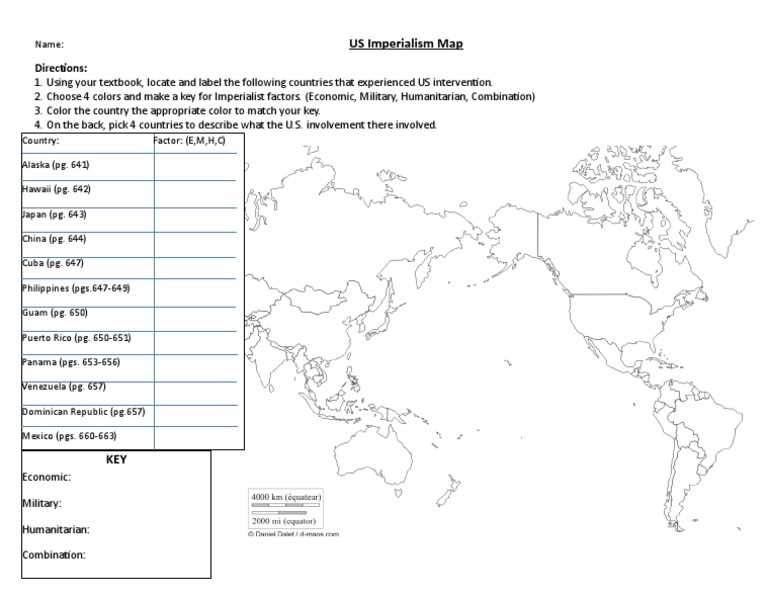
The U.S. pursued an aggressive policy of territorial acquisition and influence over foreign lands during the late 19th and early 20th centuries. This expansion was driven by economic ambitions, military strategies, and the desire to assert dominance on the global stage.
Key historical events, such as the annexation of Hawaii, the Spanish-American War, and the acquisition of the Philippines, Puerto Rico, and Guam, illustrate the complex process through which the U.S. extended its reach across the Pacific and the Caribbean. These actions reshaped global dynamics, sparking debates about ethics, governance, and international relations.
To gain a deeper understanding, it is important to examine the military, economic, and cultural forces that propelled this movement. Analyzing the motivations and consequences allows for a more nuanced perspective on the historical and ongoing implications of U.S. foreign policy decisions in the modern world.
U.S. Expansion and Its Global Impact: A Detailed Guide
The United States’ expansionist policies in the late 19th and early 20th centuries were marked by several key events that reshaped global politics. The annexation of new territories, such as Hawaii, Puerto Rico, and the Philippines, played a central role in establishing U.S. dominance in the Western Hemisphere and beyond.
One significant step was the outcome of the Spanish-American War in 1898, which resulted in the acquisition of strategic territories. The Philippines, Guam, and Puerto Rico became integral parts of U.S. influence, extending military, economic, and political reach. The underlying factors driving these decisions were a mix of economic interests, military strategy, and the pursuit of a stronger international presence.
Understanding the consequences of these actions requires examining both the immediate effects on the regions involved and the long-term shifts in global relations. For instance, while the annexation of territories brought new markets and strategic military bases, it also sparked debates about colonialism, self-determination, and the rights of native populations.
To assess the full scope of U.S. foreign policy during this period, it is important to analyze the economic benefits of territorial expansion, the military objectives of maintaining overseas bases, and the diplomatic challenges that arose from the expansion. By focusing on these areas, one can gain insight into how such decisions shaped not only the countries involved but also the broader global balance of power.
Key Historical Events That Shaped U.S. Expansion
The Spanish-American War of 1898 was a pivotal moment in U.S. foreign policy, marking the transition from continental expansion to overseas intervention. Following the defeat of Spain, the U.S. gained control of territories like Puerto Rico, Guam, and the Philippines, solidifying its presence on the global stage.
Another turning point occurred with the construction of the Panama Canal in the early 20th century. The canal, completed in 1914, significantly shortened the maritime route between the Atlantic and Pacific Oceans. This strategic development enhanced U.S. military and economic influence, particularly in Latin America and the Caribbean.
The Roosevelt Corollary to the Monroe Doctrine (1904) further expanded the U.S. role in Latin America. This policy justified U.S. intervention in the affairs of Latin American countries to maintain stability and prevent European influence, thus reinforcing U.S. dominance in the Western Hemisphere.
The acquisition of Hawaii in 1898 was another critical event. The islands provided a strategic military outpost and served as a key link between the U.S. and Asia. This move, along with the annexation of other territories, highlighted the U.S.’s growing desire to project power beyond its borders.
Each of these events contributed to the establishment of the U.S. as a global power, influencing both its foreign relations and domestic policies for decades to come.
Understanding the Economic Motives Behind Expansion
Economic interests were a driving force behind territorial expansion. The desire for new markets to sell surplus goods became more pressing as the industrial economy grew. The late 19th century saw U.S. producers looking for foreign consumers to absorb overproduction from factories, especially in steel, textiles, and agricultural products.
Access to natural resources played a significant role in shaping expansionist policies. Acquiring territories that offered valuable raw materials, such as sugar, rubber, and minerals, was seen as crucial to sustaining economic growth and supporting manufacturing industries in the U.S.
Strategic trade routes were also a key economic consideration. The construction of the Panama Canal, for instance, was not only a major engineering achievement but a strategic move to control vital shipping lanes, reducing transportation costs and enhancing global trade efficiency.
- New markets to absorb excess goods and increase trade
- Access to raw materials for industries like mining and manufacturing
- Control of key trade routes to lower shipping costs and improve logistics
These economic factors combined with military and political ambitions to drive U.S. expansionism, reinforcing the nation’s status as a global economic power.
How Military Power Influenced U.S. Foreign Policy
Military strength has played a pivotal role in shaping the nation’s diplomatic strategy. The presence of a powerful navy, particularly after the Spanish-American War, enabled the U.S. to assert influence over strategic regions such as the Caribbean and the Pacific.
The construction of military bases abroad, such as in Puerto Rico, the Philippines, and Guam, exemplified the use of military power to secure geopolitical interests. These bases acted as platforms for expanding U.S. influence and exerting control over key trade routes and territories.
The concept of “gunboat diplomacy” became central to American foreign policy. By using the threat of military force, the U.S. sought to gain access to foreign markets and ensure favorable trade terms with other nations.
- Strategic military installations were used to project power globally.
- “Gunboat diplomacy” helped open foreign markets and secure economic advantages.
- Naval superiority allowed the U.S. to exert influence over international trade routes.
The military’s role in foreign policy highlighted a shift from passive diplomacy to active interventionism, often justifying military action as a means to protect national interests and secure economic benefits.
Major Territories Acquired During the Expansion Era
Several territories were acquired by the U.S. during the period of expansion, marking significant shifts in global power dynamics. These acquisitions were driven by both strategic military interests and economic factors.
| Territory | Acquired Year | Method of Acquisition | Significance |
|---|---|---|---|
| Hawaii | 1898 | Annexation | Strategic location for military and trade purposes in the Pacific |
| Philippines | 1898 | Treaty of Paris | Strategic military base in the Pacific; access to Asian markets |
| Puerto Rico | 1898 | Treaty of Paris | Control over the Caribbean region; military and economic importance |
| Guam | 1898 | Treaty of Paris | Naval base for Pacific operations |
| Panama Canal Zone | 1903 | Lease | Control of a vital trade route between the Atlantic and Pacific Oceans |
These territories expanded the nation’s influence and served military, economic, and strategic interests. The acquisition of such lands not only shifted power in specific regions but also positioned the U.S. as a global force in the early 20th century.
Impact of Expansion on Global Politics
The period of expansion significantly altered the balance of power in international relations. By acquiring new territories, the U.S. shifted from a regional player to a dominant global force, influencing policies across the globe.
1. Increased Military Presence: With the establishment of military bases in key regions like the Pacific and the Caribbean, the U.S. exerted greater influence over strategic waterways and regions, ensuring control over global trade routes and military operations.
2. Shift in International Alliances: As the U.S. expanded its reach, it established new diplomatic relationships and alliances with former colonies and territories. These alliances were often based on military support, economic benefits, and strategic positioning.
3. Expansion of Economic Influence: Control over new territories allowed the U.S. to dominate trade routes and markets, particularly in Asia and the Pacific. This economic dominance provided leverage in international negotiations and fostered the growth of multinational corporations.
4. Impact on Colonial Powers: The U.S. expansion threatened traditional European colonial powers, leading to shifts in global power structures. Nations like Spain and France lost territories, while the U.S. began to assume a role in shaping global politics.
5. Increased Global Tensions: The acquisition of new territories and the U.S. military presence in foreign regions sparked tensions with other global powers, especially in the early 20th century. This contributed to the intensification of competition for influence in Asia and Latin America.
The impact of this expansion was profound, reshaping not only U.S. foreign policy but also the political dynamics of the global stage during the early 20th century.
Analyzing the Ethical and Moral Debates of Expansionism
Ethical debates surrounding territorial expansion are rooted in conflicting views about the treatment of indigenous populations, the justification for using force, and the notion of “civilizing” other nations. Critics argue that the practice was a form of oppression, leading to the displacement and exploitation of local populations, often without their consent.
1. Violation of Sovereignty: Many opponents of expansionism view the acquisition of territories as an infringement on the self-determination of other nations and peoples. The annexation of lands without the consent of their inhabitants is seen as a moral violation of their rights to self-governance.
2. Racial and Cultural Superiority: Expansion was often justified through the belief in the racial and cultural superiority of the expanding nation. This idea perpetuated the notion that indigenous populations were inferior and needed to be “civilized” or governed by a more “advanced” culture. Such views were deeply tied to colonial ideologies of racial hierarchy and exploitation.
3. Economic Exploitation: Expansion often led to the extraction of resources from newly acquired territories, benefiting the colonial powers while undermining local economies. The economic systems imposed on these regions frequently disrupted local livelihoods and resulted in long-term economic dependency.
4. Use of Military Force: The ethical question of using military power to acquire territory raises concerns about the legitimacy of violence in international relations. The imposition of military rule often led to significant loss of life, particularly in the case of indigenous populations, and raised moral questions about the justification for war.
5. Resistance Movements: Many territories saw resistance to foreign control, with local populations fighting to maintain their sovereignty and cultural integrity. The moral legitimacy of these movements often conflicted with the expanding power’s claims to bring peace and order.
For further in-depth analysis of the ethical implications of expansionism, the History Channel’s article on imperialism offers a comprehensive overview of these complex issues.
Key Figures and Their Role in U.S. Expansionism
Theodore Roosevelt: Roosevelt was a strong advocate for expanding national influence and military power. His leadership during the Spanish-American War and subsequent support for the Panama Canal project solidified his influence in shaping foreign policies. His “Big Stick” diplomacy emphasized the use of military force to protect U.S. interests abroad.
Alfred Thayer Mahan: A naval strategist and author, Mahan’s writings on sea power greatly influenced expansionist policy. His book, “The Influence of Sea Power upon History,” argued that control of international trade routes and naval dominance were critical to national strength, guiding U.S. military and diplomatic actions during the era.
William McKinley: As president during the Spanish-American War, McKinley played a crucial role in the acquisition of territories like Puerto Rico, Guam, and the Philippines. His decisions marked a turning point in U.S. foreign policy, shifting the country from a focus on continental expansion to overseas territories.
John Hay: Serving as Secretary of State, Hay’s “Open Door Policy” aimed to secure equal trading rights in China, marking a significant diplomatic effort to expand U.S. influence in Asia. His policies exemplified the desire to maintain access to foreign markets and protect American commercial interests abroad.
William Howard Taft: Taft’s “Dollar Diplomacy” sought to promote U.S. interests abroad through economic influence rather than military intervention. His policies in Latin America and East Asia aimed to encourage investment and ensure political stability, further entrenching U.S. power on the global stage.
Jane Addams: While many prominent figures supported expansionist policies, Addams, a social reformer and peace activist, was a vocal critic. She challenged the ethical implications of expansionism, advocating for non-intervention and the protection of human rights across the globe.
Strategies for Evaluating the Long-Term Effects of Expansion
Examine Economic Impact: To assess long-term consequences, analyze the economic growth or decline in both the colonizing and affected regions. Look at trade patterns, industrial development, and shifts in labor markets. Economic indicators such as GDP growth, inflation rates, and wealth distribution offer key insights into the lasting effects of territorial control.
Study Political and Military Influence: Review how military presence has influenced local governance, political stability, and diplomatic relations. Pay attention to military bases, treaties, and defense agreements. The long-term presence of military forces can reshape local and regional political landscapes.
Analyze Cultural and Social Transformations: Investigate how cultural integration or conflict has evolved over time. Study changes in education, language, religion, and local customs. Cultural assimilation, or resistance to it, can have lasting consequences on national identity and social cohesion.
Track Environmental Changes: Environmental impacts are often overlooked but are critical in understanding the full scope of territorial expansion. Look at natural resource extraction, land use changes, and environmental degradation. Long-term ecological effects can influence local economies and populations for generations.
Conduct Comparative Studies: Compare the outcomes of regions that were subjected to control with those that were not. This can help isolate the specific effects of foreign influence and provide a clearer picture of the lasting changes in political systems, economies, and societies.
Focus on Human Rights and Social Justice: Evaluate the long-term social consequences of expansionism by looking at the human rights records of affected regions. Research population displacement, inequality, and labor exploitation. The legacy of imperial control often includes lingering disparities in wealth and power.
Utilize Historical Data and Contemporary Analysis: Incorporate both historical records and modern interpretations of the effects of expansionism. Comparing early 20th-century reports with current analyses allows for a more nuanced understanding of how policies have evolved and their lasting impacts on global affairs.