Understanding the Motivations Behind Colonization for God Gold and Glory
To understand the driving forces behind European expansion, it is important to focus on the underlying factors that shaped the course of history. First, religious objectives played a major role, with many explorers seeking to spread their faith and convert indigenous populations. This effort was often backed by powerful religious institutions and monarchs eager to assert their authority over new territories.
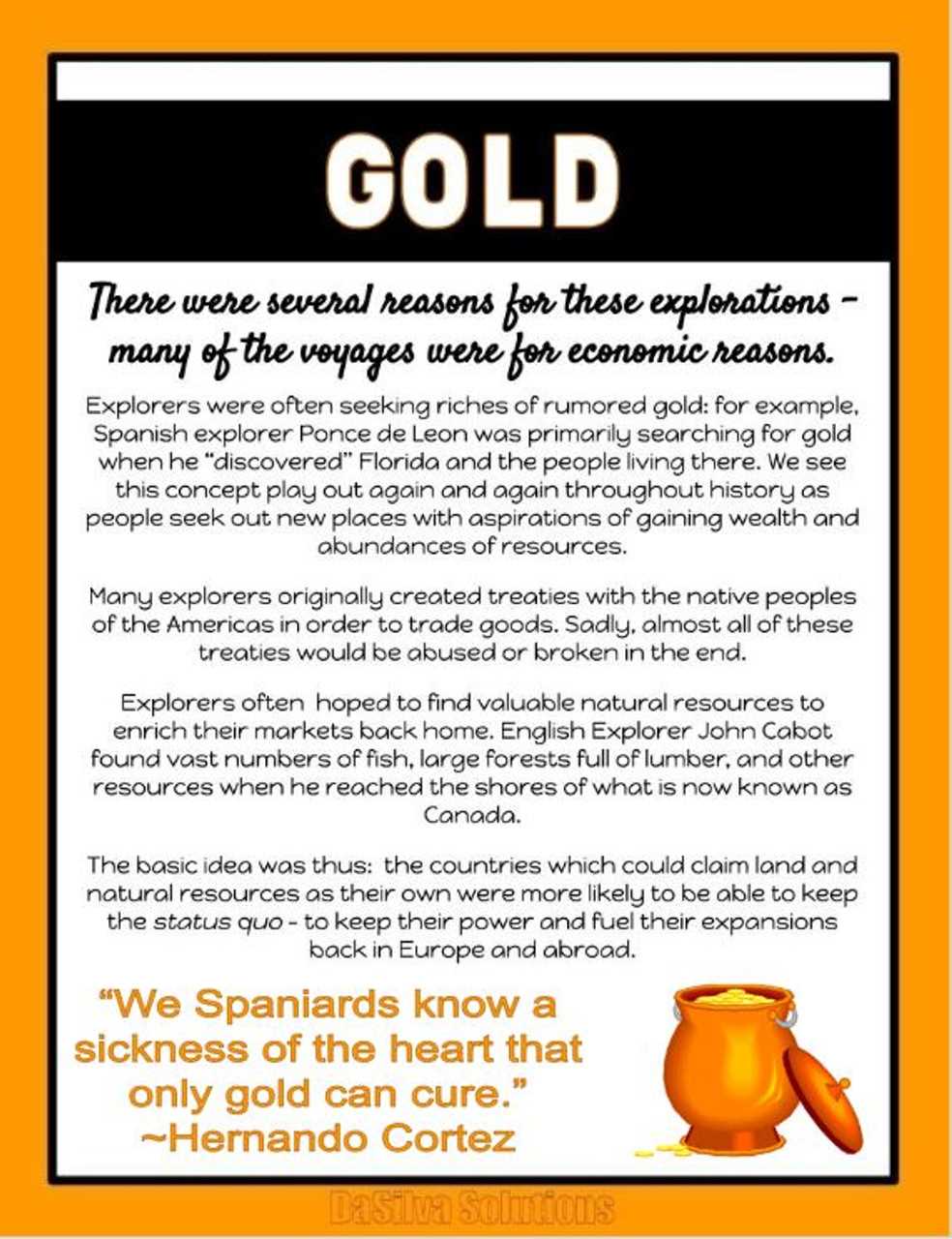
Next, economic incentives were at the forefront of exploration. The discovery of new lands promised access to untapped resources, which could lead to wealth and power. The pursuit of precious metals, valuable commodities, and new trade routes were seen as key drivers in securing economic dominance for European powers.
Lastly, the desire for prestige and power through territorial acquisition fueled much of the expansion. Rulers and explorers alike sought to leave a lasting legacy by claiming new territories, solidifying their influence on a global scale. This quest for recognition was often intertwined with national pride and a desire to outshine rival powers.
Colonization for God Gold and Glory: Key Insights
The primary motivator behind European expansion was religious zeal. Monarchs and explorers were often driven by the desire to spread Christianity to indigenous populations. Catholic and Protestant groups competed to convert as many people as possible, believing that such acts would earn divine favor and secure their place in heaven.
Economic opportunities provided another major impetus. The pursuit of wealth through the acquisition of new lands, natural resources, and trade routes was a central goal. European powers sought to gain control over valuable commodities like spices, tobacco, and precious metals, all of which could be used to increase their economic power and prestige.
Finally, the drive for national prestige and territorial control contributed to the expansion. Rulers aimed to build empires that would enhance their influence and status on the global stage. This desire for dominance often resulted in conflict between rival powers, as they competed to claim new territories and establish their superiority over others.
Understanding the Three Main Motivations: God, Gold, Glory
The motivation rooted in faith was often referred to as the desire to spread religious beliefs to new territories. Religious groups, primarily Christians, believed it was their duty to convert indigenous populations, seeing it as a moral and spiritual obligation. Missionary work was central to many expeditions and explorers’ goals, particularly from the 15th century onward. Missions played a significant role in shaping the cultural and social landscapes of newly encountered regions.
Economic incentives were equally powerful. Wealth from natural resources like precious metals, spices, and other valuable goods provided the financial backing needed for expeditions. Nations competed to dominate trade routes and establish lucrative colonies, which directly influenced the wealth and power of the empire. This wealth, in turn, funded further exploration and conquest.
Lastly, the pursuit of fame and national prestige motivated many explorers and rulers. The establishment of new territories was not just for financial gain but also for political dominance. Expansion was seen as a way to enhance a nation’s power and influence globally. Emperors and kings aimed to assert their authority by building empires, often gaining public recognition and renown in the process.
Analyzing the Role of Religion in Early European Expansion
The spread of Christianity played a central role in the early expansion efforts of European nations. Religious leaders, particularly missionaries, were often among the first to travel to newly discovered territories. Their primary goal was to convert indigenous populations to Christianity, believing it was their divine duty to save souls and spread their faith.
Religious motivations were deeply intertwined with political and economic goals. European monarchs often supported religious missions as part of their broader strategy to expand their empires and assert their dominance. In many cases, the establishment of missions helped legitimize territorial claims, providing a spiritual foundation for expansion.
Notably, the Catholic Church was a powerful influence during this period, with the Pope granting royal charters and supporting exploratory efforts. The Spanish and Portuguese empires, in particular, saw the spread of Christianity as a central component of their global ambitions. Religious justifications were often used to rationalize the treatment of indigenous populations, leading to the establishment of missionary outposts alongside military and trade settlements.
For further reading on the historical impact of religion in European expansion, consider visiting reputable sources such as History.com.
The Economic Drivers Behind Expansion: Search for Wealth
The primary economic motivation for European exploration was the quest for wealth. Nations sought to establish profitable trade routes, access valuable natural resources, and secure valuable commodities such as spices, textiles, and precious metals. Control over new territories allowed for the extraction of these resources, driving the economic growth of European empires.
The mercantile system, which emphasized the accumulation of wealth through trade, spurred nations to compete for dominance in global markets. With the rise of powerful trading companies, such as the British East India Company and the Dutch East India Company, European powers established monopolies over valuable goods, ensuring immense profits. The establishment of plantations in newly acquired territories also generated wealth through the forced labor of indigenous people and African slaves.
Additionally, the discovery of new trade routes and access to untapped resources created a shift in global wealth distribution. The influx of gold and silver from the Americas, for example, fundamentally altered the economies of Europe, contributing to the rise of powerful merchant classes and fueling economic expansion.
The Pursuit of Glory and Prestige Through Territorial Expansion
European powers often viewed territorial expansion as a means to enhance national prestige. Establishing dominance over new regions allowed monarchs and governments to gain recognition on the global stage. By conquering and controlling large areas, they demonstrated strength, ambition, and leadership, enhancing their status among other European nations.
Territories became symbols of national pride, with explorers, military leaders, and settlers eager to achieve fame and glory through their ventures. The competition among European empires, including Spain, Portugal, England, and France, was intense, as each sought to secure not just wealth, but a place in history. The expansion of influence was seen as a direct reflection of a nation’s greatness.
Moreover, explorers and conquistadors who succeeded in establishing new dominions were often celebrated as heroes. Their names became synonymous with bravery, adventure, and conquest, gaining them lasting fame and recognition. The establishment of new colonies and the creation of vast empires contributed to the perception that a nation’s success in expansion was directly tied to its glory and prestige.
The Impact of Technological Advancements on Exploration
Technological progress significantly shaped the capabilities of explorers during early expansion efforts. The development of more accurate maps and navigation tools allowed for longer and safer sea voyages. Instruments like the astrolabe and compass were crucial in determining latitude and direction, enabling sailors to navigate the open seas with greater confidence.
Improvements in ship design, such as the creation of the caravel, made it easier to travel across rough waters and explore new territories. These ships were equipped with multiple sails, which allowed for better maneuverability and speed, particularly along Africa’s coast and across the Atlantic Ocean. This advancement in shipbuilding was a key factor in the ability to reach distant lands.
The invention of the printing press also played a vital role by disseminating knowledge about new discoveries and technologies. The spread of printed maps, books, and journals enabled further exploration by educating navigators and explorers, helping them avoid previous mistakes and enhancing their understanding of the world. Without these innovations, the scope and pace of territorial expansion would have been much slower and more limited.
The Role of Trade Routes and Resources in Motivating Expansion
Trade routes were a driving factor behind territorial acquisition during early expansion efforts. Nations sought control over key passages to enhance access to valuable commodities such as spices, silk, and other goods. The rise of global trade networks made it possible for European powers to establish footholds in strategic regions, ensuring their dominance in international commerce.
Securing vital resources was another significant motivator. The need for precious metals like silver and copper, as well as agricultural products such as sugar, tobacco, and cotton, drove many expeditions. These resources were not only valuable for domestic consumption but also played a critical role in fueling the economies of expanding empires.
Control over trade routes also provided military advantages. By dominating key maritime passages, nations could restrict their rivals’ access to essential goods and increase their own power. This competition for resources and trade routes created a cycle of territorial conquest aimed at securing economic and strategic advantages on the global stage.
The Ethical Dilemmas and Consequences of Expansion
The pursuit of foreign territories often raised profound ethical concerns. Many actions taken by expanding powers involved exploitation, forced labor, and the displacement of indigenous populations. These practices were justified by colonial powers as a means of “civilizing” the local peoples, yet they led to systemic oppression and severe loss of life among native communities.
Another significant ethical dilemma was the destruction of local cultures and traditions. Many local societies were forced to abandon their indigenous ways of life in favor of foreign customs, religions, and governance structures. This imposition of foreign values often led to the erosion of traditional knowledge, languages, and cultural practices.
The economic consequences of expansion were also deeply inequitable. While colonial powers profited immensely from exploiting local resources, the populations in colonized regions often saw little to no benefit. Instead, they endured poverty, hardship, and systemic discrimination, with their wealth extracted and sent abroad to enrich foreign elites.
Despite these harsh realities, colonial expansion was seen by many at the time as a way to increase national prestige and power. However, the long-term consequences of these actions left lasting scars on both the colonizers and the colonized. The legacy of inequality, resentment, and cultural destruction continues to affect former colonies to this day.
The Long-Term Effects on Global Power Structures
The legacy of territorial expansion significantly reshaped global power dynamics, with lasting effects on political, economic, and social structures worldwide. The rise of Western empires left a profound imprint on the balance of power, consolidating wealth and influence in Europe while creating power imbalances across the globe.
In the wake of expansion, many formerly powerful civilizations were diminished, their economies and political structures subordinated to foreign control. This resulted in a shift in the global hierarchy, with European powers exerting disproportionate control over global trade routes, resources, and finance.
Key long-term consequences include:
- Economic Disparities: Regions that were once self-sufficient were integrated into global supply chains controlled by European empires, with wealth extraction benefiting the colonizing powers while local economies stagnated.
- Political Fragmentation: The imposition of foreign governance structures led to the weakening of local leadership and the fragmentation of territories, often causing long-term instability in newly-formed nations.
- Cultural Hegemony: Western culture and governance systems were spread worldwide, often displacing or suppressing indigenous cultures and practices.
Post-expansion, many newly-independent nations struggled to reclaim their autonomy. The social and political systems they inherited were often designed to benefit foreign powers, leaving them ill-equipped to manage their own resources and populations effectively.
Ultimately, the redistribution of power created by these territorial endeavors contributed to global tensions and conflict. The effects of this power shift are still visible in the modern world, as former colonies seek to overcome historical inequalities and assert their influence on the global stage.