Step by Step Guide to Finding the Slope from an Equation
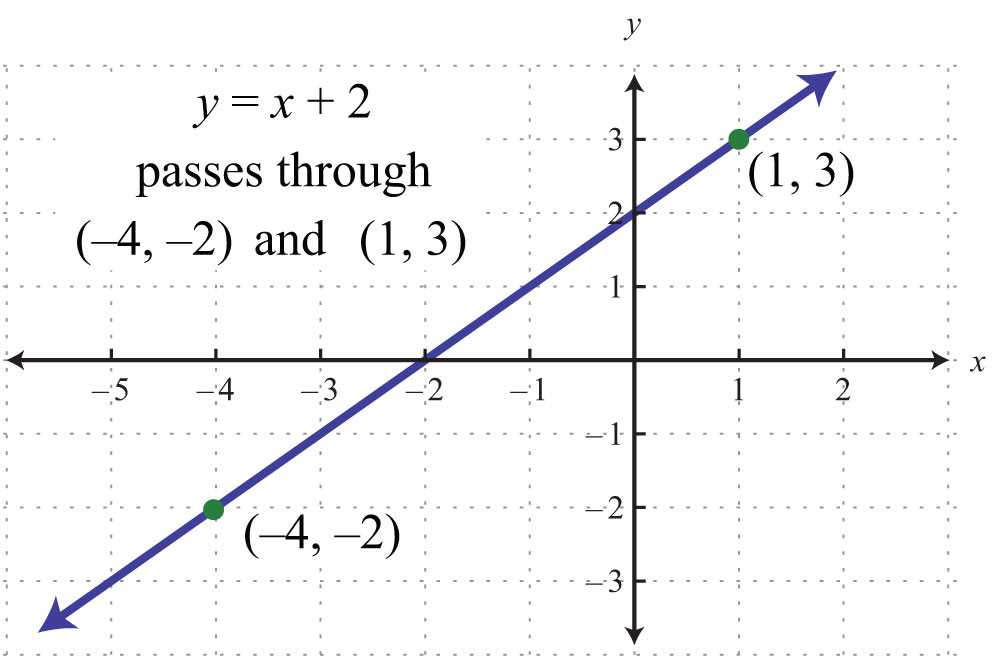
To calculate the rate of change in a linear expression, focus on identifying the coefficient of the variable. This value represents the constant rate at which one variable changes relative to another. If the equation is already in slope-intercept form, the coefficient of the variable (often labeled as “m”) is the rate of change. For other forms, such as standard form, you may need to rearrange the equation to isolate the variable and extract the rate of change.
It is important to correctly interpret the form of the equation you’re working with. In slope-intercept form, the equation is typically written as y = mx + b, where m is the rate of change. If the equation is not in this form, you can manipulate it by solving for y to identify m. Always verify the units and check for common errors when extracting this value.
For equations not written in slope-intercept form, rearranging the expression might require factoring or applying algebraic principles such as isolating variables. Once you identify the rate of change, apply it to real-world contexts like calculating speed, growth rates, or financial changes, where understanding how one quantity changes with respect to another is crucial.
Detailed Guide to Calculating the Rate of Change from an Expression
To extract the rate of change from a linear expression, begin by identifying the form of the equation. If it’s already in slope-intercept form, y = mx + b, the value of m represents the rate of change directly. In this case, m is the coefficient of the variable, indicating how much y increases or decreases for every unit increase in x.
If the expression is not in slope-intercept form, such as standard form (Ax + By = C), rearrange it to isolate the y variable. Start by subtracting Ax from both sides, yielding By = -Ax + C. Then divide each term by B to get y = (-A/B)x + C/B, which reveals the rate of change m = -A/B.
For more complex equations or word problems, ensure you isolate the variable that represents the dependent quantity. Once you have extracted the rate of change, verify that it aligns with the context of the problem, such as speed, growth, or financial changes.
Identifying the Rate of Change from Linear Expressions
To determine the rate of change in a linear expression, first ensure that the equation is in the form y = mx + b. Here, m is the rate of change, also known as the coefficient of x. This number indicates how much the dependent variable y changes for each unit increase in x.
If the expression is given in a different form, such as standard form Ax + By = C, rearrange the equation into slope-intercept form. Start by isolating y on one side. Subtract Ax from both sides to get By = -Ax + C. Then, divide all terms by B to obtain y = (-A/B)x + C/B, revealing that the rate of change is m = -A/B.
For word problems or real-world applications, carefully consider the context to interpret the rate of change. Whether the equation represents speed, temperature change, or cost, understanding m will allow you to calculate how one variable affects the other.
Understanding the Slope-Intercept Form
The slope-intercept form is written as y = mx + b, where m represents the rate of change, and b is the y-intercept, or the value of y when x is zero. This form is particularly useful for quickly identifying both the rate of change and the starting point of a line on a graph.
To find the rate of change, simply look at the coefficient of x, which is m. If the equation is written in slope-intercept form, this is immediately evident. For example, in the equation y = 3x + 2, the rate of change is 3, meaning that for each unit increase in x, y increases by 3.
The b value, the y-intercept, shows where the line crosses the y-axis. In the same equation, y = 3x + 2, the y-intercept is 2, meaning the line crosses the y-axis at (0, 2).
For non-linear equations, first manipulate the expression into this form by isolating y on one side of the equation. This allows you to quickly identify the rate of change and intercept.
How to Rearrange Equations to Solve for Slope
To isolate the rate of change in a linear relationship, you need to rearrange the expression so that the variable representing the rate of change is alone on one side of the equation.
Follow these steps:
- Start with the equation: If the equation is in standard form Ax + By = C, you need to solve for y.
- Isolate the y-term: Subtract Ax from both sides to get By = -Ax + C.
- Divide by the coefficient of y: To solve for y, divide the entire equation by B>, yielding y = (-A/B)x + C/B.
- Identify the rate of change: Now that the equation is in slope-intercept form, the rate of change is -A/B, which is the coefficient of x.
For example, if the equation is 2x + 3y = 6, subtract 2x from both sides to get 3y = -2x + 6. Then, divide by 3: y = (-2/3)x + 2. The rate of change is -2/3.
This method works for any linear equation in standard form, allowing you to easily isolate the rate of change by rearranging terms.
Using Two Points to Find the Rate of Change of a Line
To determine the rate of change of a line, you can use two distinct points on the line. These points are represented as (x1, y1) and (x2, y2). The formula to calculate the rate of change is:
Rate of change = (y2 – y1) / (x2 – x1)
Follow these steps:
- Identify the coordinates: Select two points on the line, where each point is in the form (x, y).
- Subtract the y-values: Subtract the first y-coordinate from the second y-coordinate (y2 – y1).
- Subtract the x-values: Subtract the first x-coordinate from the second x-coordinate (x2 – x1).
- Divide: Divide the result from the y-value subtraction by the result from the x-value subtraction to obtain the rate of change.
For example, if the two points are (2, 3) and (4, 7), apply the formula:
Rate of change = (7 – 3) / (4 – 2) = 4 / 2 = 2
Thus, the rate of change between these points is 2.
This method is a straightforward way to find the rate of change for any two points on a line. It is widely used in algebra and geometry to analyze linear relationships. For further details on this method, you can refer to Khan Academy – Slope Intro.
Common Mistakes to Avoid in Rate of Change Calculations
When calculating the rate of change between two points, it’s easy to make simple errors. Below are some common mistakes and how to avoid them:
- Incorrect subtraction of y-values: Always subtract the second y-value from the first. Using the wrong order (y1 – y2) leads to an incorrect result.
- Mixing up x-values: Ensure the x-values are in the correct order. The first x-value should correspond with the first y-value, and the second x-value with the second y-value.
- Dividing by zero: If the x-values are the same (x1 = x2), division by zero occurs. In this case, the rate of change is undefined, as the line is vertical.
- Forgetting to simplify: After finding the difference in y-values and x-values, remember to simplify the fraction, if possible. Not doing so can leave an incomplete or cumbersome result.
- Not checking for negative signs: Always watch out for negative signs in the formula. Mistaking a positive for a negative sign will give an incorrect value.
By double-checking your work and following the correct order of operations, you can avoid these common mistakes and ensure accurate results. For a detailed guide on avoiding errors, see the Khan Academy – Slope Intro.
How to Handle Horizontal and Vertical Lines

For horizontal and vertical lines, calculating the rate of change is straightforward but requires special attention.
- Horizontal lines: A horizontal line has the same y-value for all x-values. This means the change in y is zero. As a result, the rate of change is zero. The line’s equation is typically in the form y = c, where c is a constant.
- Vertical lines: A vertical line has the same x-value for all y-values. The change in x is zero, leading to division by zero when attempting to calculate the rate of change. Thus, the rate of change is undefined for vertical lines. The line’s equation is generally written as x = c, where c is a constant.
Keep these rules in mind when dealing with these special types of lines to avoid errors in calculations. Horizontal lines always have a rate of change of zero, while vertical lines have an undefined rate of change.
Using Graphs to Verify Slope Calculations
One effective way to confirm your rate of change calculations is by graphing the line and visually checking its steepness. Follow these steps:
- Plot the given points: If you have two points, plot them accurately on a coordinate plane.
- Draw the line: Connect the points with a straight line. Make sure the line is as accurate as possible.
- Use rise over run: Select two clear points on the line, and count the vertical and horizontal changes between them. The vertical change (rise) divided by the horizontal change (run) gives the rate of change.
- Compare with your calculation: The visual slope should match your previously calculated value. If it doesn’t, double-check your calculation steps or plotting accuracy.
Using a graph provides a clear visual confirmation of your results and helps identify potential errors in calculations or interpretation of data.
Practice Problems and Exercises for Mastering Slope Calculation
To build proficiency in determining the rate of change, practice with the following problems. Solve each one step by step, and check your results using the methods outlined in this guide.
- Problem 1: Determine the rate of change between the points (2, 3) and (5, 11).
- Problem 2: Find the rate of change for the line described by the equation y = 4x – 7.
- Problem 3: Given the points (-3, 2) and (4, -5), calculate the rate of change.
- Problem 4: For the line y = -2x + 6, identify the rate of change.
- Problem 5: Calculate the rate of change between the points (0, 0) and (10, 20).
After solving each problem, verify your calculations by graphing the points or equation on a coordinate plane. Ensure the visual result aligns with your computed value for accuracy.