Challenging Brain Teasers with Detailed Solutions
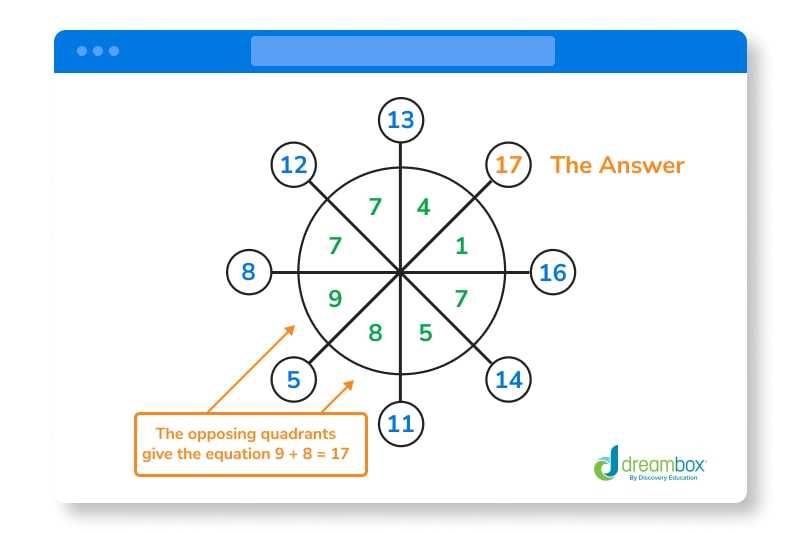
Begin by analyzing the problem’s components. Break it down into smaller parts to identify patterns or relationships that can help simplify the solution process. Look for clues that point towards the answer, and pay attention to any hints that might guide you through the puzzle.
After attempting to solve the puzzle, check your result against the provided solution. This will help you see if there were any mistakes in your approach and highlight areas where you can improve. Understanding the reasoning behind the solution reinforces your problem-solving abilities.
When solving these challenges, focus on staying patient and methodical. Rather than rushing through, take your time to think through each step. The more you practice this approach, the easier it will become to spot patterns and connections that lead to the correct conclusions.
Challenging Riddle Solution
If you’re puzzled by the classic scenario where a man takes a boat across a river with a wolf, a goat, and a cabbage, here’s the solution: The objective is to transport all three items without any being eaten. The trick lies in never leaving the wolf with the goat or the goat with the cabbage on either shore.
Steps:
1. First, take the goat across.
2. Return alone and take the wolf across.
3. Bring the goat back.
4. Take the cabbage across.
5. Finally, return for the goat. All are now safely transported.
This riddle challenges both logic and planning, requiring a balance of strategy and foresight. It’s an excellent exercise in problem-solving with multiple possible solutions, yet only one is optimal.
Understanding the Structure of a Mental Challenge
The foundation of a mental challenge consists of clear elements that test reasoning and creativity. Identifying these components can help in both solving and creating such puzzles.
| Component | Description |
|---|---|
| Premise | A brief situation or setup that outlines the conditions or problem. It often involves constraints or variables that limit choices. |
| Objective | The goal that must be achieved. This may require solving a riddle, reaching a conclusion, or figuring out a hidden pattern. |
| Rules | Explicit conditions that restrict how the situation can unfold. These rules define the boundaries within which a solution is possible. |
| Solution Path | The series of logical steps that leads to the desired outcome. A successful path avoids dead ends and adheres to all the rules and conditions. |
Each mental challenge combines these elements in various ways, providing the solver with both structure and flexibility in their approach. Understanding this structure aids in developing better problem-solving strategies and creating more engaging puzzles.
How to Approach and Solve Puzzles Step by Step
Begin by reading the scenario carefully. Identify the problem and all the details provided, ensuring nothing is overlooked.
Next, break the problem into smaller parts. Focus on one element at a time rather than trying to solve everything at once. This approach often reveals hidden clues.
Look for patterns or relationships between the elements. Often, the solution lies in recognizing these connections, whether it’s numbers, objects, or actions.
Think logically about potential outcomes. Consider various options, eliminating the impossible ones. This can help narrow down the path toward the correct resolution.
Test your hypothesis. Once you have a possible solution, walk through it step by step to ensure it satisfies all the conditions.
If stuck, take a break and return with fresh eyes. Sometimes, stepping away helps reframe the problem in a new light.
Finally, check the solution against the original conditions. If everything aligns, you’ve solved the puzzle. If not, reassess the process and adjust your approach.
Types of Mental Challenges and Their Specific Obstacles
Logical puzzles test deductive reasoning by requiring solvers to apply systematic steps. The challenge is often to piece together seemingly unrelated clues, testing both analytical skills and memory.
Word problems demand linguistic creativity. Solvers must interpret ambiguous language, identify key information, and construct a solution from a narrative that may include distractors or hidden meanings.
Mathematical puzzles focus on numerical logic. These require solvers to understand relationships between numbers, perform calculations, and often apply algebraic or geometric principles to arrive at a solution.
Riddles engage lateral thinking by providing seemingly paradoxical statements that force solvers to think beyond conventional reasoning. The challenge lies in interpreting the clues in unexpected ways.
Visual puzzles challenge pattern recognition and spatial reasoning. They involve images, sequences, or arrangements that need to be analyzed to uncover a hidden rule or structure.
Each type of puzzle introduces its own set of challenges, demanding different cognitive approaches, from careful analysis and reasoning to creative thinking and pattern recognition.
Common Mistakes to Avoid While Solving Mental Challenges
Avoid rushing into conclusions. Carefully analyze all details before making any assumptions. Jumping to answers without full consideration often leads to overlooked elements.
- Ignoring the Rules: Failing to review the constraints and conditions of the problem can result in solving an incorrect or incomplete scenario.
- Overcomplicating the Problem: Sometimes the simplest solution is the correct one. Avoid adding unnecessary complexity when the answer can be found through basic reasoning.
- Disregarding Patterns: Failing to spot key patterns, especially in sequence-based or visual puzzles, can result in missing the underlying solution.
- Relying on Assumptions: Making assumptions about missing information can cloud judgment. Stick to the facts provided within the challenge.
- Neglecting to Test Your Solution: Before finalizing your answer, recheck it against the problem’s conditions. A solution that works in theory may not always satisfy all constraints.
By focusing on each step methodically and avoiding these pitfalls, you’ll improve both your problem-solving accuracy and efficiency.
Using Logical Thinking to Crack Complex Puzzles
Begin by carefully analyzing the given information. Identify key elements, conditions, and constraints that are outlined in the challenge.
Break the problem into smaller, manageable parts. Each piece should be assessed individually, allowing for a step-by-step approach rather than trying to solve everything at once.
Look for patterns and connections between elements. Often, a solution is hidden in the way information relates to itself. For example, if dealing with numbers, check for sequences, arithmetic relationships, or symmetrical structures.
Eliminate impossible options. In many cases, using a process of elimination helps narrow down potential solutions, leaving only the most plausible ones.
Form hypotheses and test them. If a particular approach seems promising, walk through it logically to see if it satisfies all conditions. If it doesn’t, adjust and try a new angle.
Stay organized throughout the process. Write down possible solutions, track what you’ve already tested, and eliminate false paths to prevent confusion.
Revisit the problem from a different perspective if you hit a dead end. Sometimes stepping back and reassessing the challenge can reveal new insights.
How to Verify Your Solutions and Improve Accuracy
First, cross-check your solution against the original problem’s conditions. Ensure all constraints are met and no detail is overlooked. Each requirement should be satisfied without exception.
Review each step of your reasoning. If a solution feels too simple or complex, reassess the logic behind it. Break down your process to identify any flaws or miscalculations.
Use alternative methods to verify your approach. If one technique led you to a solution, try solving the same problem using a different strategy or perspective. Consistency across different methods increases reliability.
Test your solution through examples. Apply the solution to various scenarios or input values to ensure it works across different cases, not just the specific example given in the puzzle.
Stay objective. Avoid getting attached to your first solution. If discrepancies arise during the verification process, be open to modifying your approach.
After confirming the solution, consider documenting the reasoning behind it. Writing out your steps can help identify any weak points in your logic and allow you to spot potential errors more easily in the future.
Building Your Own Mental Challenges: Tips and Guidelines
Start by defining the structure. Begin with a clear and concise scenario that includes a set of rules or conditions. This will guide the solver and make the puzzle engaging without unnecessary complexity.
Incorporate different types of reasoning. Mix logical, numerical, and spatial elements to create a more challenging experience. A good puzzle often combines various cognitive skills and encourages the solver to think from different angles.
Test the difficulty. A balanced puzzle should neither be too easy nor too difficult. Ensure it can be solved by someone with average problem-solving skills but requires careful thought. You can achieve this by adjusting the constraints and the complexity of the problem-solving steps.
Be mindful of ambiguity. Make sure the information provided is clear and unambiguous. Avoid misleading or overly vague statements that could confuse the solver.
Offer a satisfying resolution. A well-crafted puzzle should have one logical solution. Make sure the final outcome fits naturally with the clues provided, and verify that there are no contradictions in the logic.
For more insights and examples, consider exploring resources like Puzzle Prime, which offers a variety of puzzle types along with design tips and guidelines. This site provides both classic challenges and modern variations, helping you understand different ways to create engaging problems for others to solve.
Additional Resources for Practicing and Enhancing Problem-Solving Skills
To improve your reasoning and puzzle-solving abilities, here are some excellent platforms and tools to consider:
- Project Euler – A collection of math-based challenges designed to improve your analytical skills while exploring computational techniques. Visit Project Euler.
- Brilliant.org – Offers interactive lessons and problems across various fields like math, logic, and science, ideal for developing problem-solving techniques. Explore Brilliant.org.
- MindYourDecisions – This website offers a mix of puzzles and challenges, covering topics like probability, logic, and geometry. Check out MindYourDecisions.
- Art of Problem Solving (AoPS) – A resource for math enthusiasts, providing a community and materials for solving complex problems. Visit AoPS.
- MIT OpenCourseWare – Offers free online courses that often include problem-solving components for various disciplines, such as mathematics and computer science. Explore MIT OCW.
By regularly engaging with these resources, you’ll steadily build your problem-solving proficiency and gain exposure to a range of challenging scenarios.