Complete Guide and Answer Key for Articles of Confederation
The first governing document of the United States created a system that placed power largely in the hands of individual states. This arrangement left the central government with limited authority, which posed challenges in areas such as defense, taxation, and trade. To fully understand the impact of this document, it’s crucial to examine how it defined the structure of the new nation and how its limitations contributed to later changes in the U.S. Constitution.
Key features of this system included a unicameral legislature with each state having one vote, regardless of its size. This created disparities in representation and made decision-making slow and difficult. Additionally, the national government had no power to enforce laws or regulate commerce, which led to frequent conflicts between states. Understanding these weaknesses can shed light on why the original framework was eventually abandoned in favor of a stronger federal system.
By reviewing the details of this early document, one can see how its shortcomings directly influenced the drafting of a new constitution, aimed at creating a more balanced and functional government. In this guide, we will break down the components of the first governing framework and explore its long-lasting impact on American political development.
Examining the First U.S. Government Framework
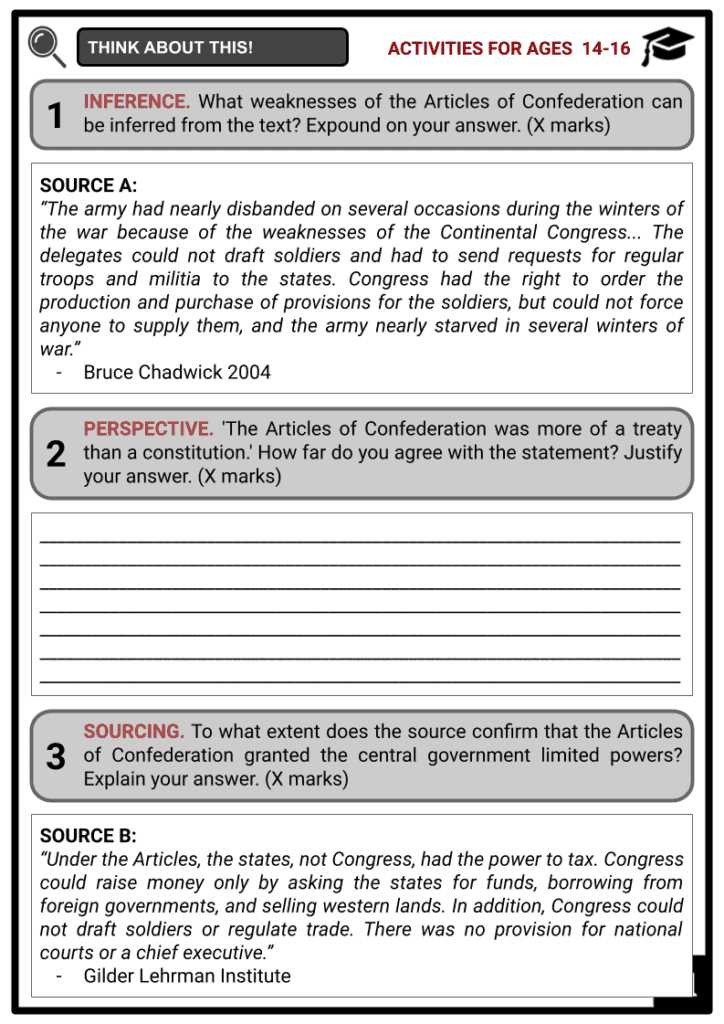
Under the first governing system, the national government lacked the authority to enforce decisions, creating instability among states. The system’s central feature was a unicameral legislature where each state had equal representation. This setup made it difficult to address national issues effectively, such as taxation and defense. Without a central executive or judiciary, the national government had no mechanism to execute laws or resolve disputes between states.
States retained their sovereignty and could impose tariffs, create their own currencies, and enter into foreign treaties independently. This decentralization led to conflicts over trade and commerce, with individual states acting in their own interests. The inability to levy taxes also hindered the government’s ability to function and raise funds for common causes.
The weaknesses of this structure became clear in areas such as national defense and economic stability, where the federal government lacked the power to act decisively. These flaws were addressed when the decision was made to replace the original system with a more robust framework that included a stronger central authority, laying the foundation for the U.S. Constitution.
Key Principles and Structure of the First U.S. Government Framework
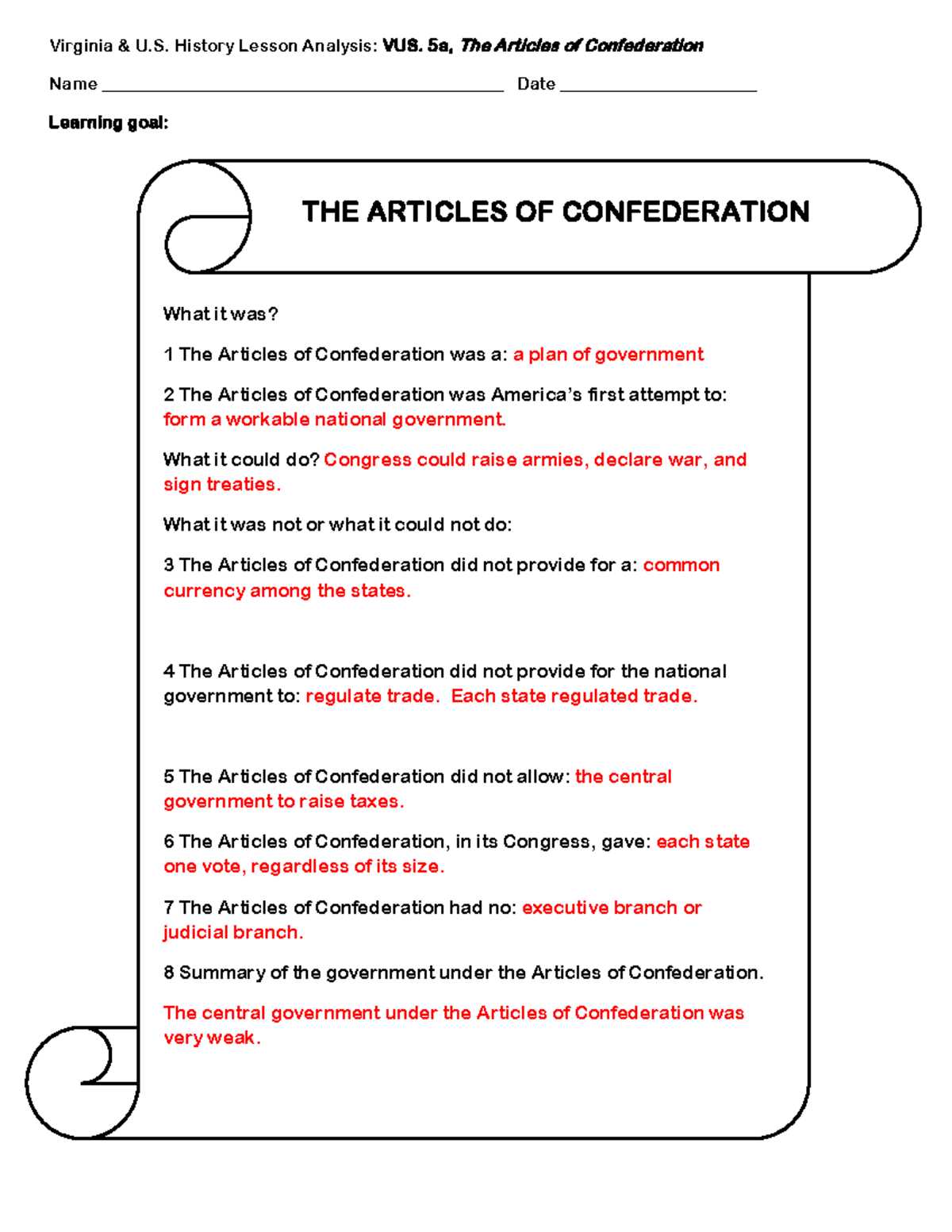
The document set up a decentralized system where individual states retained significant autonomy, and the national authority was intentionally kept weak. This structure aimed to prevent centralized tyranny but led to several governance challenges.
- Unicameral Legislature: A single legislative body, with each state having one vote, regardless of its size or population. This arrangement ensured equality among states but lacked efficient representation for larger populations.
- State Sovereignty: States maintained full independence and control over their domestic affairs. The national government could not impose laws on states without their consent, creating a loose union.
- No Executive Branch: There was no president or executive authority to enforce laws or manage national policy. This absence led to a lack of centralized leadership.
- Limited Power to Tax: The central government had no authority to collect taxes directly. It had to request funds from the states, leading to financial instability and an inability to fund national priorities.
- No National Judiciary: Without a court system, there was no mechanism to resolve disputes between states or to interpret national laws, making it difficult to enforce agreements.
- No Power to Regulate Commerce: Each state was free to control its own trade policies, leading to conflicts and barriers between states, as well as challenges in negotiating with foreign countries.
This framework was a response to the desire for a government that would not overpower individual states. However, the limitations of this structure made it difficult to address key national issues effectively, prompting the eventual drafting of a stronger constitution.
Understanding the Powers of the National Government
The national government under the initial framework had limited authority, which was intentionally designed to avoid a powerful central body. However, it was granted specific powers to manage national affairs.
- Conduct Foreign Affairs: The central authority was responsible for managing relations with foreign nations, including signing treaties and establishing alliances.
- Defend the Nation: The government could maintain an army and navy to protect the country from external threats. However, the government relied on states to provide troops, which limited its military effectiveness.
- Coin Money: The national government had the power to issue currency. However, this authority was weak because states also issued their own money, leading to confusion and instability in the economy.
- Set Standards for Weights and Measures: The government could regulate and standardize measurements across states to facilitate trade and communication.
- Establish a Postal System: The national government was tasked with establishing and maintaining a postal service to support communication and the movement of goods across state lines.
Despite these powers, the government lacked the authority to directly enforce laws, regulate commerce, or raise taxes, which ultimately hindered its ability to effectively govern the country. This limitation led to significant challenges, prompting the creation of a more robust constitution.
State vs. National Authority under the Articles
The balance of power between the state governments and the national government under the initial system was highly skewed in favor of the states. While the national body was given specific responsibilities, its ability to enforce laws and manage the country’s affairs was extremely limited. States retained significant autonomy, creating a system where the national government lacked the necessary authority to govern effectively.
- State Sovereignty: Each state had its own sovereignty, meaning it could govern itself, make laws, and enforce decisions independently. This resulted in a decentralized government structure where states often acted in their own interests rather than aligning with national objectives.
- National Government Limitations: The national government had limited powers such as conducting foreign affairs and managing defense, but it had no authority to regulate interstate commerce or impose taxes, which weakened its ability to govern.
- Disputes over Authority: States had the power to refuse cooperation with national mandates, especially regarding taxes or military support. This led to conflict and inconsistency in how laws and policies were applied across the nation.
- Lack of Enforcement Power: The national government could not compel states to follow its directives, relying on voluntary compliance, which often did not occur.
This imbalance contributed to the inefficiency of the national system, which ultimately led to the drafting of the U.S. Constitution to create a stronger federal government with more centralized powers. For further details on the structure and powers under the early system, see National Archives.
Challenges in Enforcement and Legislative Power
The inability of the national government to enforce laws and regulate actions created significant challenges under the existing system. Without a strong executive branch or judicial authority, the national government lacked the means to ensure states complied with its policies. This often led to inconsistency in the application of laws and disputes between states and the central authority.
- Weak Legislative Power: The national legislature had limited authority to impose taxes, regulate trade, or enforce laws. Without the power to raise funds, the government was dependent on voluntary contributions from the states, which were frequently ignored.
- Lack of Executive Authority: The absence of a centralized executive branch meant there was no enforcement arm for national laws or policies. This led to challenges in managing disputes, coordinating defense, or ensuring compliance with decisions.
- Interstate Disputes: States often ignored national laws or refused to follow directives. Without a system for enforcement, the government had no means to resolve interstate conflicts or compel states to cooperate on national matters.
- Economic Instability: The inability to regulate commerce or collect taxes led to economic instability. States could establish their own trade policies, creating trade barriers that hampered national economic growth.
These weaknesses highlighted the need for a stronger central government, which was one of the key motivations for drafting the U.S. Constitution. The shift towards a more robust federal system aimed to address these enforcement and legislative challenges.
Significance of the Framework in Early American History
This initial framework played a crucial role in shaping the early political structure of the United States. While it ultimately revealed significant weaknesses, it served as the first attempt at unifying the newly independent states under a central authority. The framework provided an important precedent for governance, showing the necessity of a stronger national system to manage collective interests, such as defense, trade, and foreign relations.
- Foundation for Unity: It represented the first step towards a unified nation. Although the system was inefficient, it marked the beginning of centralized governance, which was critical for the survival of the newly formed states.
- Practice in Self-Governance: The framework allowed states to practice limited self-governance and experiment with how power could be shared between the national and state governments. It provided early lessons in balancing state and national interests.
- Influence on the U.S. Constitution: The weaknesses in the structure of government highlighted the need for a more robust system, leading directly to the drafting of the U.S. Constitution. Many of the issues, such as the lack of executive power and financial instability, were addressed in the Constitution, shaping the nation’s future framework.
- Symbol of Sovereignty: During its time, it reinforced the idea that states retained their sovereignty, which was vital for ensuring their participation in a national union. This helped preserve the autonomy of individual states while allowing for a collective government.
While it was ultimately replaced, this framework had lasting effects on the political development of the United States, serving as a stepping stone to a more permanent and structured government.
Why the Framework Failed
The structure introduced in the early years of the United States proved inadequate due to several inherent flaws that prevented it from being a stable and effective system of governance. Key weaknesses included the lack of a strong executive branch, an inability to levy taxes, and the lack of enforceable laws, which left the national government powerless in critical areas.
| Issue | Impact | Explanation |
|---|---|---|
| No Executive Branch | Inability to enforce laws and policies | The absence of a president or central leadership made it difficult to implement decisions or ensure compliance from states. |
| No Power to Tax | Financial instability and lack of resources | Without the authority to collect taxes, the national government could not fund its operations, including military defense or foreign relations. |
| Weak Legislative Authority | Inability to pass laws or resolve conflicts | While the legislature had the ability to make laws, it lacked the power to enforce them or manage disputes between states effectively. |
| State Sovereignty | Lack of unified national policy | States retained too much independence, leading to a fragmented approach to governance and competing interests that undermined unity. |
These weaknesses highlighted the necessity for a more robust and centralized system, leading directly to the drafting of the U.S. Constitution. The limitations of the original framework were clear: without a strong national government, the country could not effectively govern or secure its place on the world stage.
Amendments and Changes to the Framework
Changes to the original governmental framework were proposed several times to address its inherent weaknesses. However, the process to amend the system was difficult, requiring unanimous approval from all states, which proved to be a significant hurdle.
- First Amendment Attempt: The initial proposals for amendment focused on granting the national government the power to levy taxes and regulate commerce. These changes were rejected by the states, which feared increased central authority.
- Shays’ Rebellion: The unrest sparked by the economic conditions in Massachusetts in 1786 highlighted the national government’s inability to maintain order. This event underscored the need for stronger powers at the national level, prompting calls for further reforms.
- Constitutional Convention (1787): With no effective amendments on the horizon, a Constitutional Convention was convened to create a new governing document. The result was the U.S. Constitution, which replaced the previous system and created a stronger federal government with the power to tax, regulate commerce, and enforce laws.
Despite these attempts to modify the existing framework, no meaningful amendments were successfully passed, illustrating the difficulty of making adjustments under the rigid system. The need for a more adaptable and centralized government became clear, leading to the drafting of the Constitution.
Impact of the Framework on the U.S. Constitution
The weaknesses of the previous governing system directly influenced the creation of the U.S. Constitution. While the earlier system aimed to provide a loose union of states, its inability to address key issues like taxation, interstate disputes, and national defense prompted a major restructuring of the government.
- Strengthened Federal Power: The failure to grant sufficient authority to the national government led to the creation of a much stronger central government in the U.S. Constitution. The new system included powers like taxation, commerce regulation, and the ability to raise a standing army.
- Checks and Balances: Concerns over too much centralized power, based on the experience under the previous framework, led to the establishment of a system of checks and balances within the Constitution. This system ensures no one branch of government can dominate the others.
- Federalism: The Constitution also reinforced the idea of federalism, where power is shared between the national and state governments. While the previous system left the states with too much power, the Constitution struck a balance by allocating specific powers to each level of government.
The shortcomings of the earlier system were critical in shaping the structure and principles of the new governing document, ensuring a more flexible and effective framework for governance. These lessons from the past highlighted the need for a stronger, more unified nation capable of addressing both domestic and foreign challenges.