Guide to Correcting Common Misspellings and Improving Accuracy
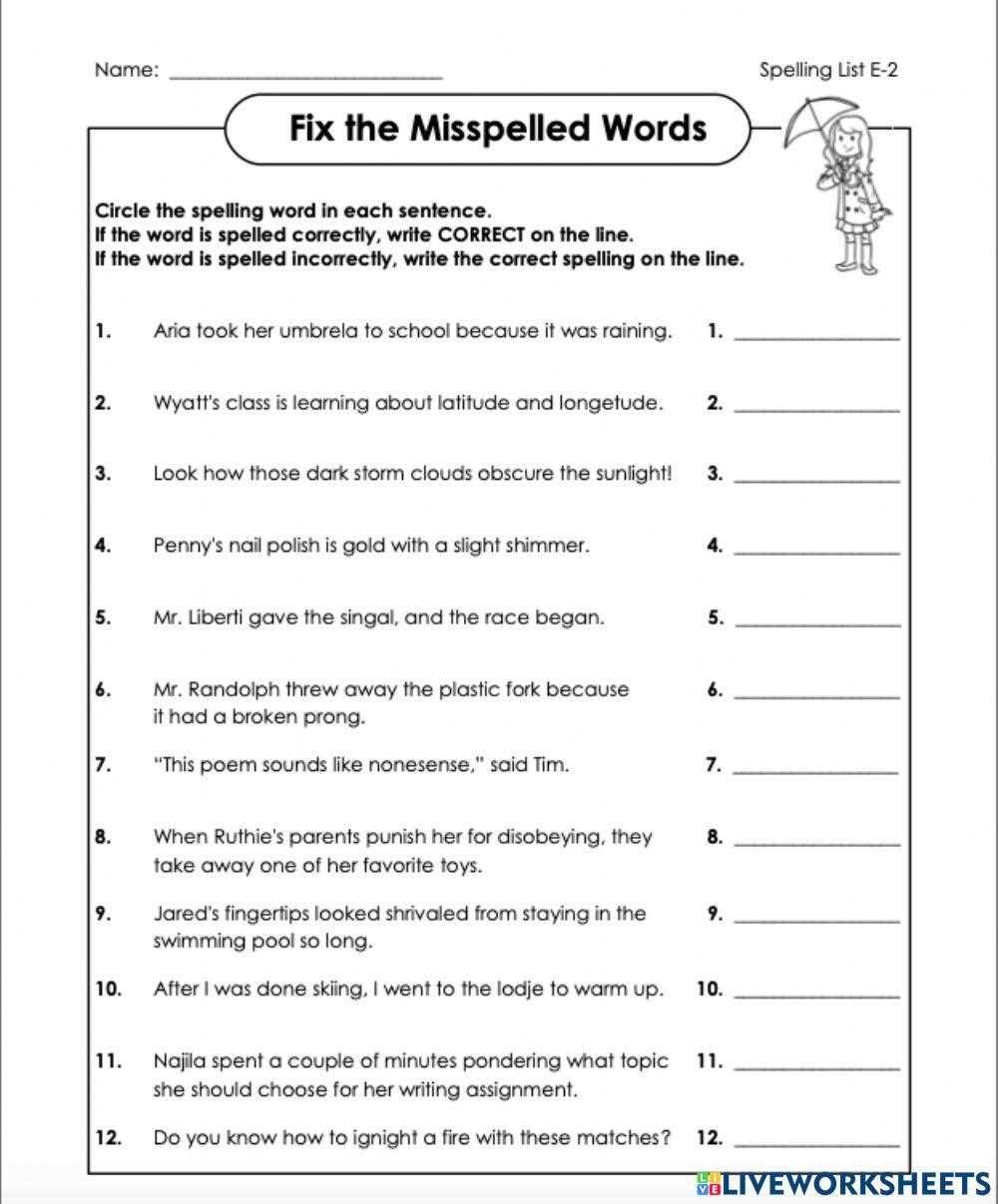
Begin by reading through your text slowly, focusing on each word. Pay close attention to familiar patterns of error, such as missing or extra letters, incorrect vowel combinations, or words that are often confused due to similar sounds.
Use digital tools to verify spelling. Online spell checkers and grammar software can help identify errors that might have been overlooked during manual proofreading. However, do not rely solely on technology–manual review is still necessary to catch mistakes that automated systems may miss.
Familiarize yourself with frequent spelling mistakes, as repetition helps improve accuracy. Keep a list of words that tend to be problematic and practice spelling them regularly. This strategy will build familiarity and reduce the likelihood of repeating the same mistakes in the future.
Finally, read your work aloud. Hearing your words can reveal discrepancies between how you thought they were spelled and how they actually appear. This method can be especially useful for spotting mistakes that are easy to overlook when reading silently.
Fixing Common Spelling Mistakes: Correcting Errors Efficiently
Review each incorrect entry and identify the correct spelling. Compare similar-looking words and apply appropriate spelling rules to resolve confusion. Pay attention to common patterns such as silent letters, double consonants, and vowel combinations.
| Incorrect Form | Correct Form |
|---|---|
| definately | definitely |
| occured | occurred |
| seperated | separated |
| recieve | receive |
After correcting the spelling, double-check the context in which the term is used. Some words might be correctly spelled but used inappropriately, so ensure each word fits properly within the sentence structure.
Use a dictionary or a trusted online resource to confirm the accuracy of any doubtful terms. Online platforms often provide phonetic guidance and additional examples to support proper usage.
Identifying Common Spelling Errors in Everyday Writing
Focus on frequently confused letter combinations such as “ie” versus “ei” (e.g., “believe” vs. “recieve”). Words like “definitely” and “separate” are often incorrectly written due to phonetic similarities. Be alert to these patterns when proofreading.
Another common mistake is the confusion between “their,” “they’re,” and “there.” These words have distinct meanings, but are often mixed up in casual writing. Similarly, watch out for “your” versus “you’re” and “its” versus “it’s,” which are easily misused due to their similar pronunciations.
Also, keep an eye on silent letters. Words like “know,” “thumb,” and “knife” often trip up writers because the silent letters are not pronounced but are still essential for correct spelling.
To catch these errors, make a habit of reviewing your work after a break. Reading your text aloud can help identify areas where words may have been mistyped or misunderstood.
Strategies for Correcting Typographical Errors Quickly
Use built-in spell check tools available in most word processors or web applications to identify errors as you type. These tools can highlight potential issues in real-time, making it easier to address them immediately.
For quicker fixes, customize your autocorrect settings to replace common errors with correct alternatives automatically. This is particularly helpful for frequent typos or words you often mistype.
Break down the text into smaller sections. Reviewing shorter segments of text at a time can help spot errors more effectively than reading the entire document in one go.
Leverage keyboard shortcuts to speed up the correction process. For instance, use “Ctrl + Z” (Undo) if you make a mistake or “Ctrl + Backspace” to delete entire words when you need to quickly remove a typo.
In addition, reading the text backward can help spot errors that your mind often overlooks when reading normally. This method forces you to focus on each word independently.
For advanced users, use grammar and syntax checkers to catch not just spelling errors but also issues related to punctuation and sentence structure.
Common Pitfalls When Identifying Misspelled Words
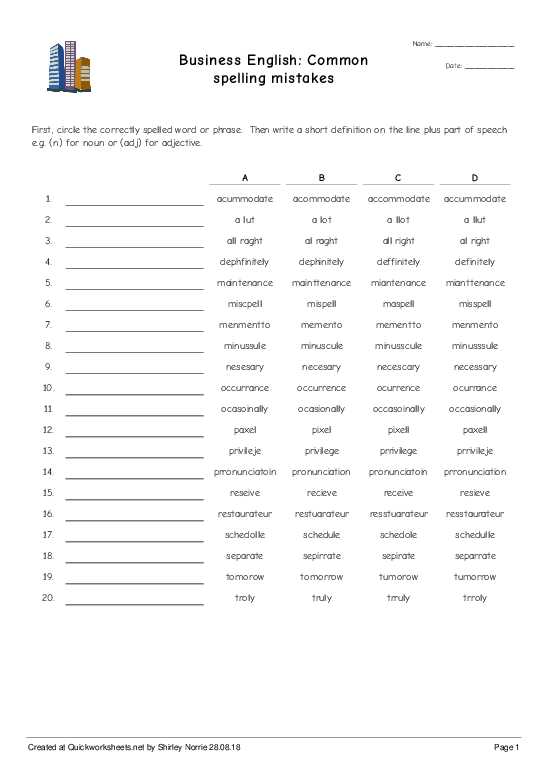
One common mistake is overlooking context. Certain terms may be spelled correctly but still look odd depending on the sentence structure. Always check if the word fits the surrounding words and the overall meaning.
Another issue arises from relying solely on spell-check tools. These tools often miss errors related to homophones (e.g., “their” vs. “there”) or context-specific spelling. Manual proofreading is necessary to catch these mistakes.
Ignoring phonetic similarities can lead to missed errors. Some incorrectly spelled terms may sound correct but are not. Be cautious with words that share similar sounds but differ in spelling (e.g., “accept” vs. “except”).
Focusing too much on one word at a time can cause you to miss repeated errors. It’s important to review the entire text as a whole to identify patterns of mistakes rather than just fixing isolated instances.
Another common oversight is failing to consider regional spelling variations. Words like “color” (American English) and “colour” (British English) can be seen as incorrect if you’re not familiar with the variant being used.
Lastly, skipping the rereading process after corrections is a frequent mistake. Even after making changes, it’s crucial to revisit the text to ensure no new errors were introduced during the editing process.
Tools and Resources for Finding and Correcting Spelling Mistakes
Spell-checking software is a useful starting point for identifying and correcting basic errors. Programs like Microsoft Word and Google Docs automatically underline problematic terms, offering suggestions for corrections.
Online resources, such as Grammarly, provide advanced suggestions beyond basic spelling. These tools also highlight grammar issues and offer context-aware corrections to improve overall writing.
Using browser extensions like Grammarly or Ginger allows for on-the-fly proofreading while working online, ensuring that spelling issues are caught across various platforms like emails, social media, or blogs.
Dictionary websites like Merriam-Webster or Oxford Dictionaries are essential for confirming correct spelling. They also provide phonetic transcriptions and usage examples, which can clarify potential confusion.
For those needing to review longer documents, programs like ProWritingAid or Hemingway Editor can detect and correct a wide range of mistakes while also enhancing readability.
Thesauruses are beneficial for finding alternative spellings or expressions. Tools like Thesaurus.com can help expand your vocabulary and find proper word choices when needed.
Additionally, text-to-speech software, such as Natural Reader, can help spot errors by reading your content aloud, making it easier to hear inconsistencies or mistakes that are visually overlooked.
- Grammarly: Advanced suggestions and grammar corrections.
- Microsoft Word: Built-in spell check for standard corrections.
- Google Docs: Automatic error identification and fixes.
- Oxford Dictionary: Confirm correct spelling and usage.
- ProWritingAid: Proofreading tool for detailed review.
- Thesaurus.com: Find alternatives and correct phrasing.
How Context Can Influence Correct Spelling Choices
Context plays a significant role in determining which spelling is correct. For example, “their,” “there,” and “they’re” are often confused, but their proper use depends entirely on sentence context. “Their” shows possession, “there” refers to a location, and “they’re” is a contraction of “they are.” The surrounding text makes the correct choice clear.
Homophones, like “accept” and “except,” can be tricky. “Accept” means to receive something, while “except” means excluding something. The meaning of the sentence will guide which word is appropriate.
Words that have multiple acceptable spellings, like “theater” and “theatre,” are another example. The choice often depends on regional conventions–”theater” is common in American English, while “theatre” is used in British English. Recognizing the intended audience or location can help decide which spelling to use.
For compound words, such as “alot” vs. “a lot,” understanding the structure of the phrase can help correct errors. “Alot” is never correct; the proper form is always “a lot,” regardless of context.
In some cases, professional or academic contexts may require specific spellings or terminology. For example, legal or medical documents may use specialized terms that need precise spelling, regardless of general usage conventions.
For accurate spelling in technical subjects, it’s important to rely on domain-specific resources, as these often have strict conventions that differ from casual language.
Practical Tips for Improving Your Spelling Skills
Read regularly to enhance your vocabulary and internalize correct spelling patterns. Exposure to well-written content helps reinforce correct forms of words, making spelling mistakes less frequent.
Practice writing frequently. By typing or writing words out by hand, you create muscle memory for correct spelling. This is particularly helpful for more complex terms that are harder to remember.
Use mnemonic devices to remember tricky spellings. For example, “i before e, except after c” helps with words like “receive” and “believe.” Create personal memory aids for other confusing terms.
Break down words into smaller parts. For example, “separate” becomes “sep-a-rate.” This strategy makes it easier to recall correct spellings and identify common mistakes.
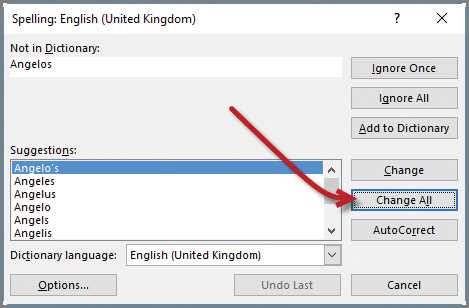
Utilize digital tools like spell checkers to spot errors as you write. While they aren’t foolproof, they provide an easy way to catch common mistakes. Just ensure you review the suggestions carefully.
Take spelling quizzes and tests to challenge your skills. Websites like Merriam-Webster offer interactive tests that can help you assess and improve your spelling abilities.
Consistent revision is key. Regularly review words you’ve previously struggled with, writing them down or saying them aloud to reinforce their spelling in your memory.
Creating a Personalized List of Frequently Misspelled Words
Start by reviewing your past writings to identify recurring spelling errors. This will help you target specific terms that you consistently struggle with. Make a list of these terms and keep it handy for reference.
Organize the list into categories based on difficulty or similarity. For example, group words that share common prefixes or suffixes. This makes it easier to focus on patterns and remember correct forms.
For each term, write it out multiple times. Repetition is key for retention. You can also say the word aloud as you write it to reinforce the spelling through auditory and visual learning.
Use your personalized list to create flashcards. One side should have the word as you commonly write it, and the other side should show the correct spelling. Review these cards regularly.
Incorporate the words from your list into daily writing exercises. By actively using the terms in sentences, you’ll reinforce their correct spelling and improve your confidence in using them.
Track your progress by testing yourself on your personalized list at regular intervals. Note any words that you continue to misspell and revisit them until you have mastered their correct forms.
Using Proofreading Techniques to Ensure Spelling Accuracy
First, read your text slowly and carefully. This helps to catch small errors that might otherwise go unnoticed. Focus specifically on each word as you go through the document.
Use a ruler or your finger to guide your eyes across the text. This slows down your reading speed and makes it easier to spot mistakes. Avoid reading too quickly, as it can cause you to overlook errors.
Print out your work for proofreading. It’s easier to spot spelling mistakes on paper than on a screen. A physical copy can provide a fresh perspective on your writing.
Read the text aloud. Hearing the words can highlight mistakes that you might not see. This technique forces you to slow down and pay attention to each word.
Proofread your work in multiple stages. After reviewing for spelling, go back and check for grammar, punctuation, and overall clarity. Each pass will help you identify different types of mistakes.
Use online tools, such as grammar and spell checkers, but don’t rely solely on them. While these tools catch many errors, they don’t catch everything, especially homophones or context-based mistakes.
Take breaks between proofreading sessions. Stepping away from your text allows you to return with fresh eyes, improving your ability to spot errors.
After using these techniques, create a list of frequent errors that you make. Regularly review and correct these common mistakes in your future writing.