Understanding the Development and Structure of the Periodic Table
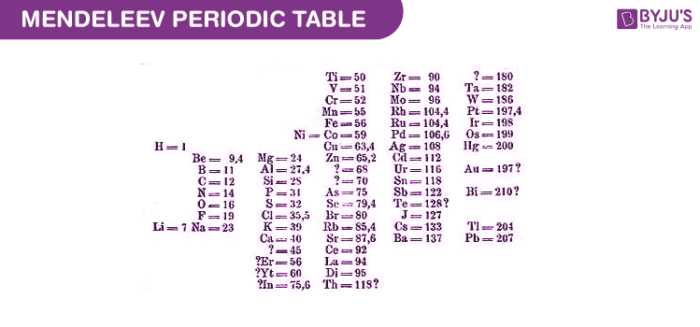
The periodic arrangement of elements we rely on today was not always so clearly structured. Initially, scientists faced difficulties in categorizing elements based on their properties. In this guide, we will walk through the stages that led to the creation of the modern system, from early attempts at classification to Mendeleev’s groundbreaking work.
The key insight that enabled the creation of a systematic arrangement came with the realization that elements showed periodic trends in their properties. As new elements were discovered, the need for a consistent organization became clear. This structured approach eventually allowed chemists to predict the properties of undiscovered elements with remarkable accuracy.
To understand how the table evolved, it’s important to examine the contributions made by various scientists, with Mendeleev being a central figure in the creation of the original format. His arrangement of elements not only grouped them by atomic weight but also revealed the repeating patterns of their properties. These insights formed the basis of the modern system we use today.
Understanding the Structure of Element Organization
When creating the modern element arrangement, scientists focused on specific criteria such as atomic number, electron configuration, and recurring chemical behaviors. Here’s a step-by-step look at how elements were grouped:
- Early Attempts: Before Mendeleev’s arrangement, elements were organized by atomic mass, but this method did not account for periodic trends in properties.
- Mendeleev’s Breakthrough: Dmitri Mendeleev placed elements with similar properties in columns, leaving gaps for unknown elements. His arrangement predicted the properties of yet-to-be-discovered elements.
- Modern System: Today, elements are arranged by atomic number, not atomic mass, which corrects earlier inconsistencies in the classification.
- Periodic Trends: Groups (columns) share similar chemical characteristics, while periods (rows) show a gradual change in properties across the table.
By organizing elements according to atomic number and chemical similarities, scientists created a predictive and systematic model that provides crucial insights into element behavior.
Historical Timeline of Element Classification
Understanding the arrangement of elements involves recognizing key moments in its history. Here’s a breakdown of pivotal milestones:
| Year | Event |
|---|---|
| 1864 | John Newlands proposes the Law of Octaves, suggesting that elements with similar properties appear every eighth element when arranged by atomic mass. |
| 1869 | Dmitri Mendeleev publishes his version of the table, organizing elements by atomic mass and predicting the properties of undiscovered elements. |
| 1913 | Henry Moseley establishes that elements should be arranged by atomic number, not atomic mass, correcting inconsistencies in Mendeleev’s arrangement. |
| 1945 | Glenn T. Seaborg reorganizes the actinide series, adding it below the main table, which results in the modern layout of the current table. |
This timeline highlights the evolution of how scientists have organized elements, leading to the current structure that is widely used today.
Contributions of Mendeleev and Other Scientists
Dmitri Mendeleev’s most notable contribution was arranging elements in increasing order of atomic mass, which revealed that elements with similar properties occur at regular intervals. His work allowed for the prediction of undiscovered elements, which were later confirmed, solidifying the structure of modern elemental classification.
However, Mendeleev was not the only scientist to impact the classification system. John Newlands, before Mendeleev, introduced the Law of Octaves, suggesting that properties of elements repeat every eighth element. Although Newlands’ ideas were not universally accepted at the time, they laid groundwork for Mendeleev’s work.
Henry Moseley advanced Mendeleev’s system in 1913 by showing that the elements should be arranged by atomic number rather than atomic mass. His discovery resolved inconsistencies in Mendeleev’s table and formed the basis of the modern layout of elements.
Another major contributor was Glenn T. Seaborg, who in the 1940s reorganized the actinide series, placing it below the main body of the table. This restructuring of elements contributed significantly to the modern layout, where the f-block is shown separately from the rest of the elements.
Each of these scientists made pivotal contributions that collectively led to the table’s current form, revolutionizing the way scientists understand chemical properties and relationships between elements.
Understanding the Organization of Elements by Atomic Number
Elements are arranged in increasing order of atomic number, which reflects the number of protons in an atom’s nucleus. This organization allows scientists to predict chemical properties based on the position of an element in the arrangement.
The atomic number determines an element’s identity and its place in the chart. For example, hydrogen has an atomic number of 1, and helium follows with an atomic number of 2. Each successive element has one more proton than the previous, leading to a systematic pattern of properties across the rows and columns.
In rows, known as periods, elements have similar electron configurations. As you move across a period, the atomic number increases, and properties change gradually. In columns, or groups, elements exhibit similar chemical behaviors due to having the same number of electrons in their outer shell.
This arrangement by atomic number addresses the limitations of earlier systems, such as those based on atomic mass. It also resolves inconsistencies in the original classification and enhances understanding of element interactions, making it easier to predict reactions and properties.
By organizing elements this way, the table provides a clear structure for comparing and contrasting elements, which is key in many fields such as chemistry and material science.
How Periodic Law Led to the Modern Structure
The idea of periodic law, first proposed by Dmitri Mendeleev, states that elements show a regular pattern of properties when arranged in order of increasing atomic number. This law was a crucial turning point in organizing elements, as it revealed that chemical properties repeat at regular intervals.
Before Mendeleev’s work, elements were arranged according to their atomic mass. However, this arrangement resulted in inconsistencies, with elements that clearly belonged together not fitting into the same groups. Mendeleev’s insight was that if elements were arranged by atomic number rather than mass, the properties of elements would align more predictably.
This realization helped establish a more consistent framework. As elements were added to the structure, gaps were left for elements yet to be discovered. Mendeleev even predicted the properties of some of these undiscovered elements with remarkable accuracy, such as germanium and gallium, which later confirmed the validity of the periodic law.
Periodic law not only clarified the relationships between elements but also laid the foundation for the modern chart. The structure we use today organizes elements into rows and columns based on their atomic number, and the arrangement reflects their electron configurations, leading to a more logical and functional system for understanding chemical behavior.
Modern advances, such as the discovery of new elements and further refinements in quantum theory, have only enhanced the initial framework. The periodic law remains a central principle in chemistry, guiding our understanding of atomic structure, bonding, and reactivity.
The Role of Electron Configuration in Element Grouping
Electron configuration plays a fundamental role in determining how elements are grouped in the chart. Elements are arranged based on their atomic number, which dictates the number of electrons they possess. The way these electrons are distributed in different orbitals directly impacts their chemical properties and reactivity.
Elements in the same column, or group, share similar electron configurations, especially in their outermost shell. This similarity explains why elements within a group exhibit similar chemical behaviors. For example, alkali metals (Group 1) all have a single electron in their outermost shell, making them highly reactive and eager to lose that electron.
The arrangement of electrons also helps explain why elements in different rows or periods have distinct properties. As you move across a period, electrons are added one by one to the same energy level, leading to a gradual change in properties. For instance, as you move from left to right across a period, elements generally become less metallic and more non-metallic, which is a direct result of their increasing nuclear charge and varying electron configurations.
The concept of electron configuration also explains the existence of subgroups within larger groups. Transition metals, for example, are characterized by their ability to fill d-orbitals, leading to complex bonding and multiple oxidation states, while noble gases have full outer electron shells, making them chemically inert.
Understanding electron configuration is key to predicting an element’s behavior and its placement in the structure. This framework has allowed scientists to make sense of the relationships between elements, guiding their study and application in chemistry and other sciences.
Identifying and Understanding Periods and Groups
Each element is organized based on two key characteristics: its position in rows (periods) and columns (groups). These arrangements reveal patterns in element properties that are crucial for understanding chemical behavior.
Periods: A period represents a horizontal row in the structure. As you move across a period from left to right, the atomic number increases, and elements undergo gradual changes in their physical and chemical properties. For example, metals on the left gradually transition into metalloids and nonmetals as you approach the right side of the row. The number of electron shells increases as you move down the table, influencing the element’s reactivity and bonding behavior.
Groups: A group, or family, refers to a vertical column. Elements in the same group share similar electron configurations, particularly in their outermost shell. This results in similarities in chemical properties. For instance:
- Group 1: Alkali metals, like sodium and potassium, all have one electron in their outermost shell, making them highly reactive.
- Group 17: Halogens, such as chlorine and iodine, have seven electrons in their outer shell and tend to form salts when combined with metals.
- Group 18: Noble gases, like helium and neon, have complete outer shells, making them chemically inert.
Understanding the differences between periods and groups helps in predicting how elements will interact with one another, facilitating the study of chemistry and material science.
How the Discovery of Noble Gases Changed the Table

The identification of noble gases in the late 19th century led to significant changes in the arrangement of elements. Prior to this discovery, elements were grouped based on their atomic weights and chemical properties, but the noble gases presented a unique challenge because of their lack of reactivity.
New Group Formation: The discovery of gases like helium, neon, argon, krypton, and xenon led to the creation of a new group in the structure. These elements, with full electron shells, did not fit into the established categories of metals, nonmetals, or metalloids due to their inert nature. This prompted scientists to add Group 18, the noble gases, at the far right of the chart, marking them as stable and chemically inactive.
Impact on the Structure: With noble gases occupying their own group, the arrangement of elements became more systematic. This adjustment helped define the concept of element stability in terms of electron configuration. Elements in other groups were understood to be less stable due to incomplete electron shells, which explained their tendency to react and form compounds to achieve a more stable configuration, akin to that of the noble gases.
Influence on Chemical Behavior: This discovery reinforced the importance of electron configuration in chemical reactions. Understanding the noble gases’ full outer electron shells allowed chemists to predict the behavior of other elements, such as the tendency of alkali metals in Group 1 to lose their single outer electron, or halogens in Group 17 to gain one electron to complete their shells.
The addition of noble gases to the arrangement not only completed the layout of elements but also shifted the scientific understanding of atomic behavior, establishing a clearer picture of chemical reactivity and stability.
The Ongoing Evolution of the Periodic Table
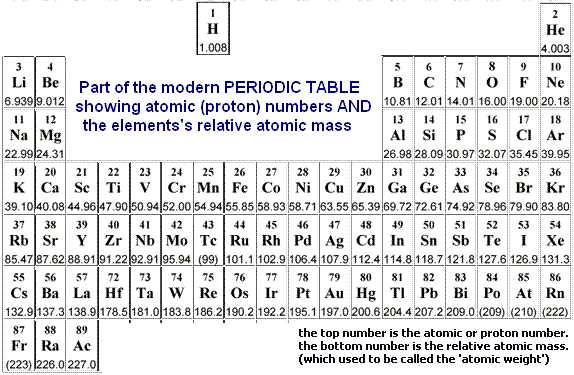
The arrangement of elements continues to evolve as new discoveries in chemistry and atomic theory emerge. While early versions of the layout focused primarily on atomic weights and chemical behavior, modern advancements in atomic theory and technology have led to refinements in the structure.
New Elements and Expanded Structure: The discovery of new elements, particularly those beyond uranium, has prompted the expansion of the structure. In recent decades, synthetic elements such as nihonium (Nh), moscovium (Mc), tennessine (Ts), and oganesson (Og) have been added to the table, all of which belong to the extended actinide and transactinide series. These elements have contributed to a deeper understanding of atomic theory, with ongoing research into their properties and behaviors.
Electron Configuration and Periodicity: As atomic models have evolved, so too has the understanding of electron configurations and their role in element categorization. The modern structure incorporates these configurations, which help explain periodic trends such as electronegativity, ionization energy, and atomic radius. These trends are more accurately represented now that electron configuration is central to grouping elements.
Future Directions: With ongoing advances in quantum mechanics and experimental techniques, scientists continue to explore the potential for new elements and isotopes that could further refine or redefine the current layout. The exploration of the island of stability–where superheavy elements may exhibit more stability than expected–is one such area of active research.
Global Collaboration: International scientific collaboration plays a crucial role in maintaining and advancing the accuracy of the layout. The International Union of Pure and Applied Chemistry (IUPAC) oversees the official naming and classification of newly discovered elements and continues to refine the global standard for element placement. This global cooperation ensures that updates to the layout are consistent and reflect the most current scientific consensus.
For more on the latest advancements in element discovery and atomic theory, visit the IUPAC website at https://www.iupac.org/.