Understanding Sex Linked Traits with Detailed Answer Key
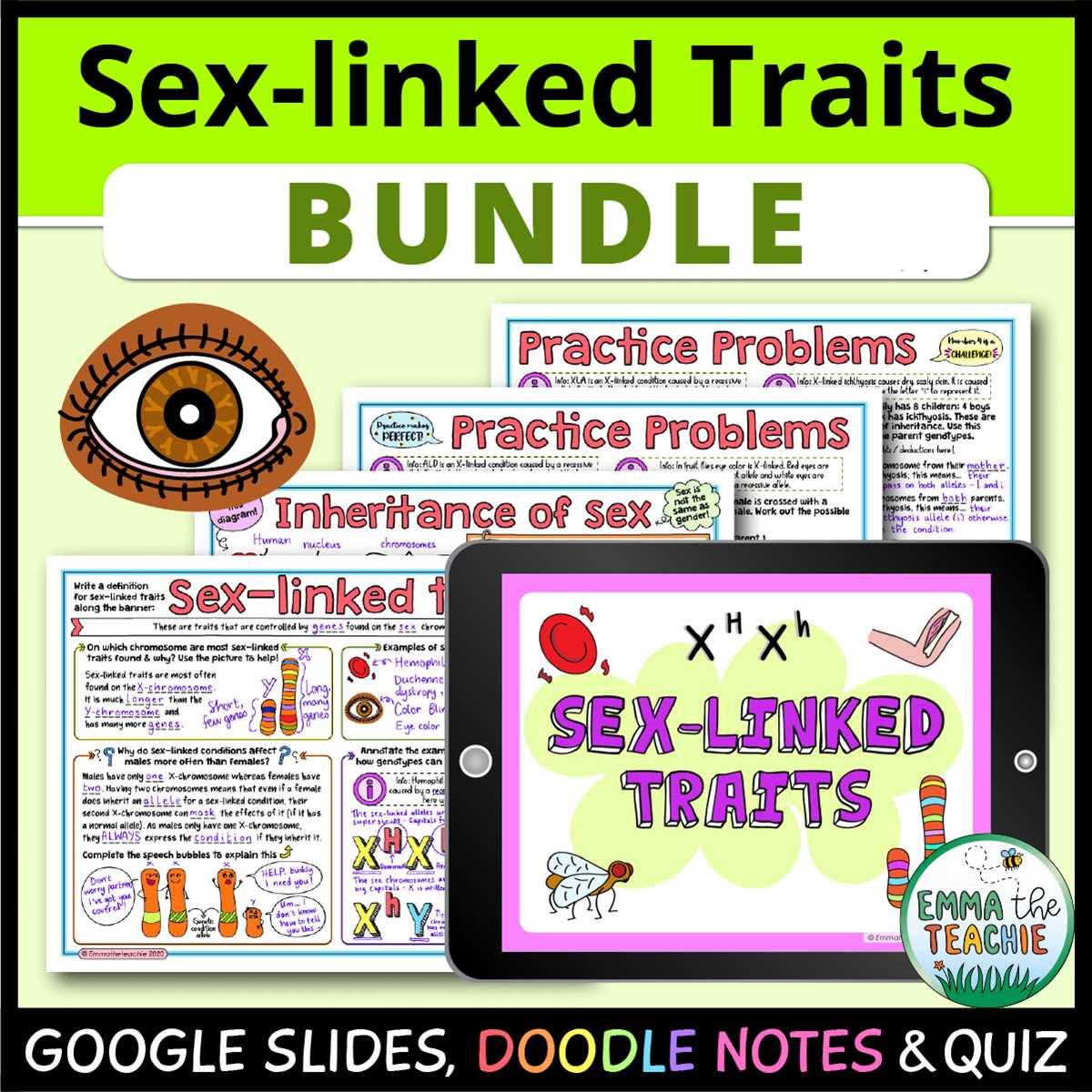
To accurately predict the inheritance patterns of specific genetic characteristics, it’s important to understand how certain genes are passed down through the X and Y chromosomes. These traits follow a distinct inheritance pattern, with males and females showing different likelihoods of expressing these characteristics. Males inherit one X chromosome from their mother and one Y chromosome from their father, while females inherit two X chromosomes, one from each parent. This difference in chromosome composition plays a significant role in the expression of certain traits.
When studying these inherited characteristics, it’s crucial to recognize how these genes behave differently in males and females. For instance, some disorders that are carried on the X chromosome will manifest more frequently in males, as they only have one X chromosome, whereas females, with two X chromosomes, are less likely to express these traits unless both of their X chromosomes carry the gene. Understanding these nuances is key to solving genetic puzzles related to inheritance and identifying potential risks for offspring.
For those learning about these patterns, it’s useful to study various genetic diagrams, such as Punnett squares and pedigree charts, to visualize inheritance. By understanding how traits are passed through the generations, one can better predict genetic outcomes and gain insight into the risk factors for developing certain inherited conditions.
Understanding Inherited Characteristics and Chromosomal Influence
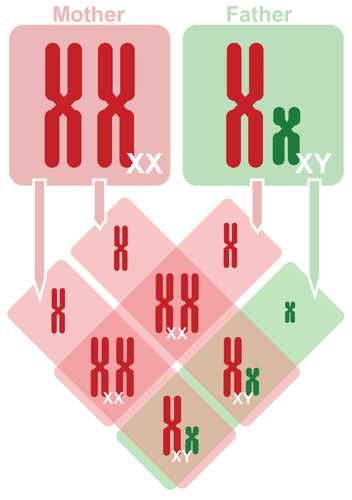
To solve inheritance patterns for traits carried on the X or Y chromosomes, it’s necessary to consider the parental contribution to the offspring’s genetic makeup. The inheritance of these characteristics differs significantly between males and females due to the differing chromosomal combinations each sex possesses. Males carry one X and one Y chromosome, while females carry two X chromosomes.
When analyzing how certain traits are passed, focus on these specific guidelines:
- Males with one X chromosome will express the traits carried on that chromosome, even if the trait is recessive.
- Females, with two X chromosomes, require both X chromosomes to carry the same gene to express a recessive trait. If only one X carries the gene, they will typically be carriers but not express the trait.
- For conditions linked to the X chromosome, males are more likely to express the trait since they do not have a second X chromosome to potentially mask the effect of the gene.
- Females can be carriers of traits linked to the X chromosome without showing symptoms, passing the trait to the next generation, particularly to male offspring who have only one X chromosome.
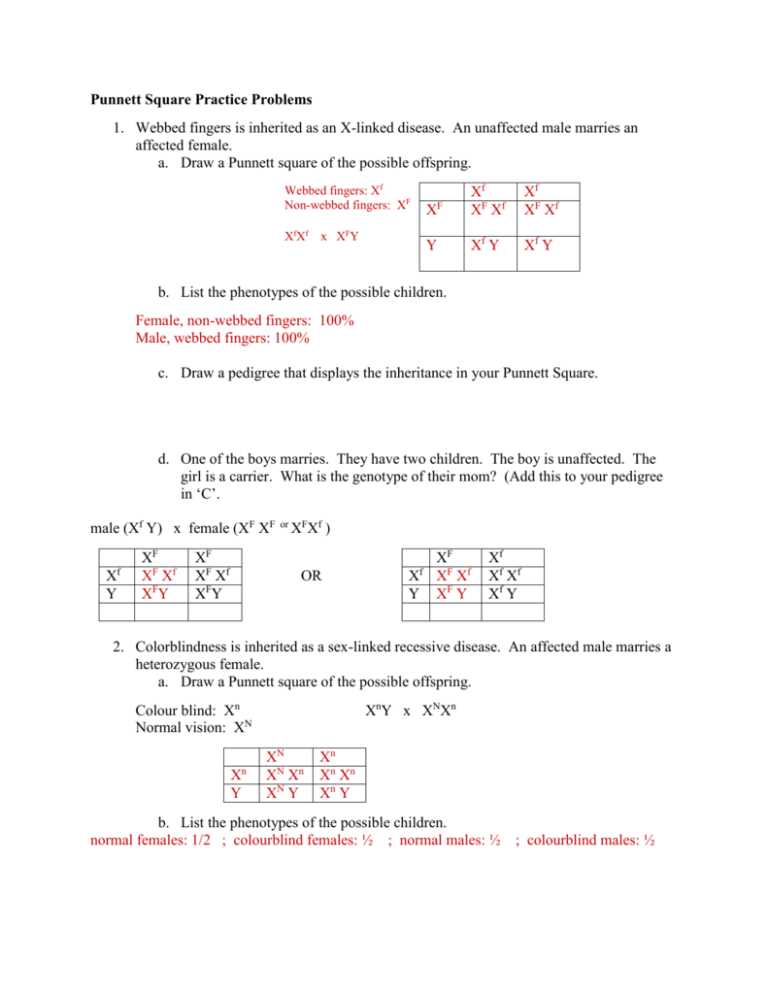
When solving genetic problems involving these traits, use tools like Punnett squares to visualize the probability of inheritance. This helps determine the likelihood that a child will inherit a trait, based on the genetic makeup of the parents.
How to Identify Inherited Chromosomal Traits in Pedigree Charts
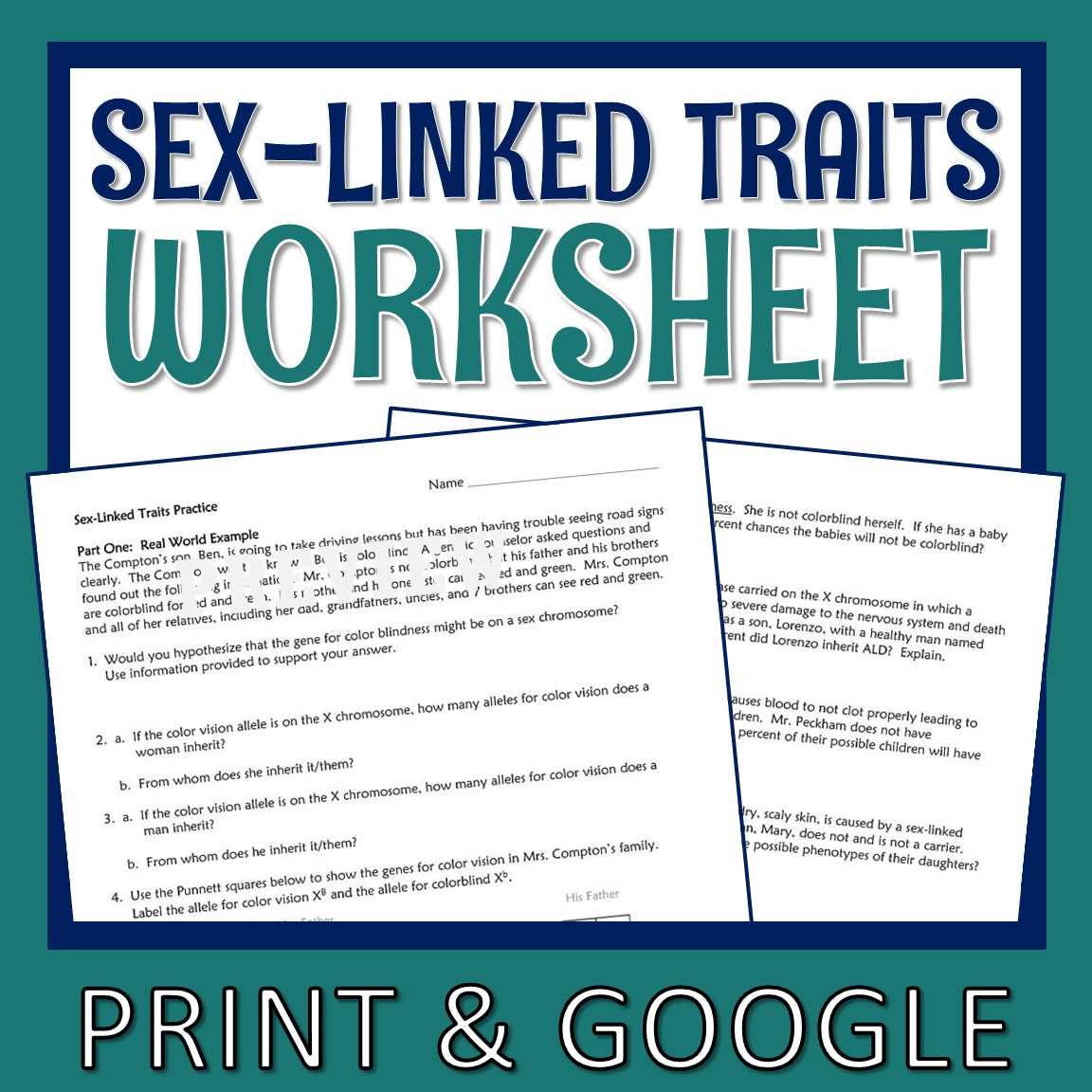
To identify inherited characteristics passed through the X or Y chromosome, examine a pedigree chart for patterns of inheritance. Focus on the following key steps:
- Look for a pattern where males are more frequently affected than females. This indicates an X-linked recessive condition, as males only have one X chromosome to carry the trait.
- Observe if females are carriers. In X-linked recessive traits, females will typically carry the trait on one X chromosome without expressing it, and they can pass it to male offspring.
- If both males and females are equally affected, the trait may be autosomal or Y-linked, depending on the location of the gene.
- Note that a trait that skips generations, especially in males, suggests it is likely recessive, as it may not be expressed if the person carries only one copy of the recessive allele.
- For X-linked dominant traits, both males and females may be affected, but the trait may be more commonly expressed in females, who have two X chromosomes.
By carefully analyzing these patterns, you can determine the likelihood of inheritance and identify whether the trait is associated with the X or Y chromosome.
Understanding the Role of X and Y Chromosomes in Inheritance
The X and Y chromosomes play a central role in the inheritance of genetic traits. Here’s how they function in passing down characteristics:
- X Chromosome: Females have two X chromosomes, while males have one. Traits carried on the X chromosome can be passed down by both parents, with females being carriers if they inherit only one affected X chromosome.
- Y Chromosome: The Y chromosome is only present in males. It carries genes that determine male sex characteristics and can be passed from father to son, ensuring male offspring inherit Y-linked traits.
- Inheritance in Males: Since males have only one X chromosome, any trait on the X chromosome is typically expressed, even if it’s recessive. If the X chromosome carries a mutation or disease, it will likely be expressed in males.
- Inheritance in Females: Females have two X chromosomes. If one X carries a mutation, the other X can often compensate, leading to the trait being recessive or not expressed unless both X chromosomes carry the mutated gene.
- Y-Linked Inheritance: Traits associated with the Y chromosome are passed only from father to son. These traits are not inherited by daughters, as they do not have a Y chromosome.
Understanding how these chromosomes contribute to the inheritance of various genetic conditions is crucial for predicting how traits will be passed down across generations.
Common Examples of Sex Linked Traits and Disorders
Several characteristics and health conditions are associated with specific chromosomes, primarily the X chromosome. Here are some examples:
- Hemophilia: A disorder where blood does not clot properly, typically passed down through the X chromosome. It affects males more often, as they only have one X chromosome.
- Color Blindness: An inability to distinguish between certain colors, commonly red and green. This condition is usually inherited through the X chromosome, making males more likely to be affected.
- Muscular Dystrophy: A group of diseases that cause progressive muscle weakness. Duchenne muscular dystrophy is a common form, which is inherited through the X chromosome, affecting males predominantly.
- Red-Green Color Blindness: A genetic condition where individuals cannot differentiate between red and green colors. This is a recessive trait located on the X chromosome.
- Fragile X Syndrome: A genetic condition linked to intellectual disabilities, especially in males. It is caused by a mutation on the X chromosome.
Understanding these inherited conditions helps in diagnosing and managing them within families. They highlight how specific genetic features can affect males and females differently, based on the presence of the X and Y chromosomes.
Explaining the Mechanism of X-Linked Recessive Inheritance
X-linked recessive inheritance occurs when a gene located on the X chromosome is recessive, meaning that a single copy of the defective gene is not sufficient to express the condition in females, who have two X chromosomes. However, males, with only one X chromosome, are more likely to exhibit the condition if they inherit the mutated gene.
For females to express an X-linked recessive condition, both X chromosomes must carry the defective gene. In contrast, males will show the trait if they inherit a single copy of the mutated gene on their X chromosome from their mother, who is typically the carrier.
Common examples of conditions inherited in this manner include hemophilia and color blindness. In these cases, males are affected more frequently than females due to the presence of only one X chromosome. Female carriers of the mutation generally do not show symptoms but can pass the defective gene to their offspring.
Pedigree analysis can help track X-linked recessive inheritance patterns. Males affected by these conditions will pass the defective gene to all their daughters (who become carriers) but none of their sons. Female carriers have a 50% chance of passing the gene to each child, regardless of sex.
How to Solve Punnett Squares for X Chromosome-Related Inheritance
To solve Punnett squares for X chromosome-related inheritance, follow these steps:
- Determine the genotype of the parents. For example, a mother could be a carrier (XcX) or affected (XcXc), and the father would typically be affected (XcY) if he has the condition.
- Set up the Punnett square. Draw a grid with one parent’s alleles on the top and the other parent’s alleles on the left side. Label the alleles for the X chromosome on both axes (e.g., Xc, X for the mother and Xc, Y for the father).
- Fill in the grid. For each box in the grid, combine one allele from the mother’s X chromosome and one from the father’s X or Y chromosome. This results in possible offspring genotypes.
- Analyze the results. In the case of X chromosome-related inheritance, the offspring’s gender is determined by the combination of X or Y chromosomes. Males will have one X and one Y chromosome (XY), while females will have two X chromosomes (XX).
For example, if the mother is a carrier (XcX) and the father is affected (XcY), the Punnett square will reveal the following potential offspring genotypes:
| Father’s Alleles | XcY | |
|---|---|---|
| Mother’s Alleles | XcX | XcXc |
| XY (Male, Carrier) | XXc (Female, Carrier) |
From this square, you can conclude that half of the male offspring will inherit the affected X chromosome and thus be carriers, while the female offspring may inherit the carrier X chromosome, making them carriers as well.
Difference Between X-Linked and Y-Linked Inheritance
X chromosome-related and Y chromosome-related inheritance follow distinct patterns due to the differences in chromosome composition and gene distribution.
Here are key differences:
| Characteristic | X Chromosome-Related Inheritance | Y Chromosome-Related Inheritance |
|---|---|---|
| Chromosome Involved | X chromosome | Y chromosome |
| Inheritance Pattern | Passed from mother to offspring of both genders | Passed from father to son only |
| Impact on Females | Females have two X chromosomes, so they may be carriers or show symptoms if both X chromosomes carry the gene | Not applicable (females have no Y chromosome) |
| Impact on Males | Males are affected if they inherit one defective X chromosome (since they only have one X) | Males inherit traits directly from the father via the Y chromosome |
| Examples | Hemophilia, color blindness | Y-linked azoospermia, hairy ears |
For more detailed information on these patterns, check resources such as NCBI Genetics.
Impact of Sex-Linked Inheritance on Male and Female Offspring
The inheritance of certain genetic conditions varies significantly between males and females due to differences in X and Y chromosomes.
For male offspring, conditions linked to the X chromosome are often more pronounced, as males possess only one X chromosome. If the X chromosome carries a defective gene, the male will express the trait. Common examples include color blindness and hemophilia.
Female offspring, having two X chromosomes, are typically carriers of X-linked conditions if only one X chromosome is affected. This means that they may carry the gene but may not express the trait unless both X chromosomes are defective. Conditions like hemophilia in females are rarer compared to males due to this double X chromosome safeguard.
In cases where the inheritance pattern follows the Y chromosome, the condition will only be passed to male offspring, as females do not carry a Y chromosome. Traits linked to the Y chromosome are typically passed directly from father to son. An example is Y-linked azoospermia, which results in male infertility.
The distinction in inheritance between males and females explains why some genetic disorders are more prevalent in one gender compared to the other.
Steps for Interpreting Genetic Test Results for Inherited Disorders
To effectively interpret genetic test results for disorders passed through X or Y chromosomes, follow these steps:
- Review the Patient’s Genetic History: Start by understanding the family history to identify any patterns of inherited conditions. This can help guide the interpretation of the results.
- Examine the Chromosomal Information: Check whether the test results indicate a mutation or variant on the X or Y chromosome. Look for specific markers associated with known genetic disorders.
- Assess Inheritance Pattern: Determine if the condition follows a dominant or recessive inheritance pattern. For X-linked recessive conditions, males are more likely to be affected, while females may only be carriers.
- Consider Gender-Specific Outcomes: For disorders linked to the X chromosome, males typically show symptoms if they inherit a defective gene, while females are often carriers unless both X chromosomes are affected. For Y-linked conditions, the trait will only be passed on to male offspring.
- Consult With Genetic Counselors: Genetic counselors can help in explaining complex genetic results and their implications for family planning, further testing, and management of the condition.
- Plan for Further Testing if Needed: If the initial results are inconclusive, additional tests may be required to confirm the diagnosis, especially if the condition has overlapping symptoms with other disorders.
- Understand Implications for Treatment: Finally, consider the potential treatments or interventions available based on the results of the genetic test. Some disorders may have no current treatment options, while others can be managed with targeted therapies.
By following these steps, it is easier to understand the implications of genetic test results and make informed decisions regarding treatment and family planning.