Fossil Dating Methods and Practice Problems with Solutions
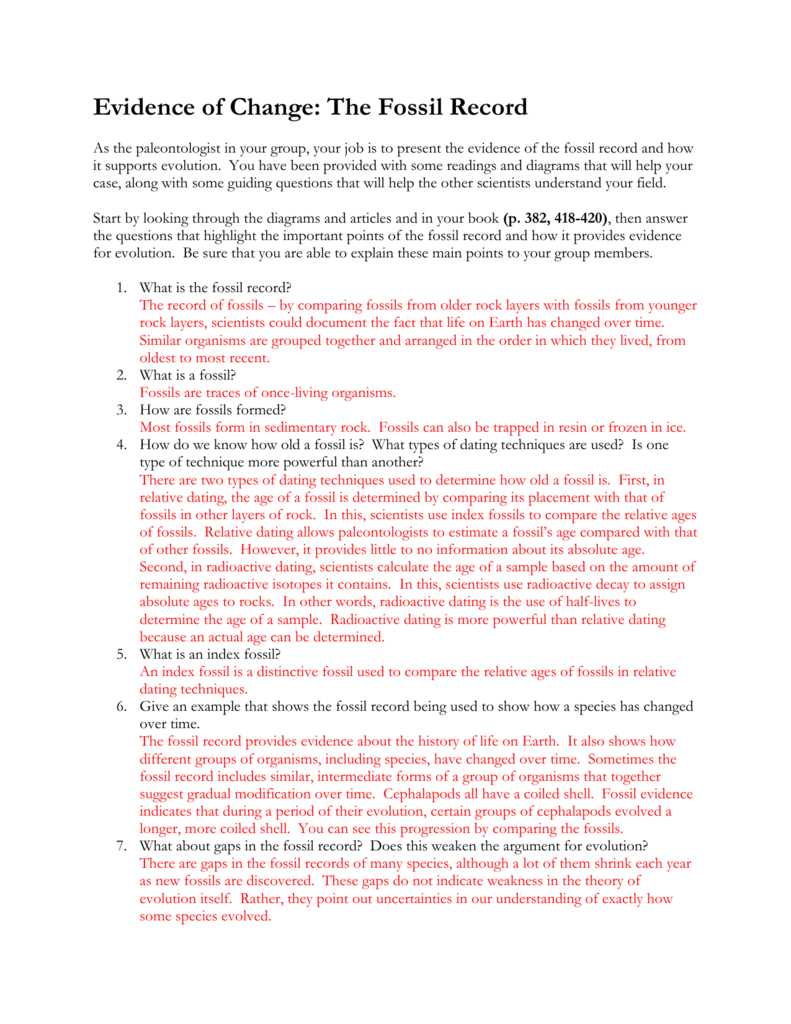
To accurately estimate the age of ancient remains, start by mastering radiometric dating techniques. These methods, including carbon dating, rely on the decay of isotopes within organic material to provide reliable age estimates. Make sure to understand the half-life of the isotope you’re using, as this will directly impact the accuracy of your results.
Next, familiarize yourself with stratigraphy. By analyzing the position of layers in sedimentary rock, you can estimate the relative age of fossils based on their depth within the geological column. Pay attention to principles like superposition, which states that older layers are typically found deeper beneath newer ones.
For more precise results, combine radiometric techniques with index fossils–species that lived during specific time periods. These fossils act as benchmarks, helping to align your findings with known periods in Earth’s history. Understanding the geologic time scale is key to interpreting this data accurately.
Guidelines for Interpreting the Age of Ancient Remains
Start by using radiometric techniques such as carbon dating to determine the age of organic materials. This method relies on measuring the decay of carbon isotopes over time. Ensure you understand the half-life of carbon-14, which allows you to estimate ages up to about 50,000 years. For older specimens, consider using other isotopes like potassium-40 or uranium-238.
When working with sedimentary layers, apply stratigraphy principles to establish relative timelines. Fossils found in deeper layers are generally older than those found closer to the surface. Pay attention to unconformities, where missing layers may indicate periods of erosion or non-deposition, potentially complicating your estimates.
Use index fossils as reference points for calibrating your results. These are species that lived during a specific time period and are found across various locations. The presence of an index fossil in a particular layer can help pinpoint its age relative to other layers in the region.
Cross-check findings from multiple methods to improve accuracy. Combining radiometric results with stratigraphic analysis and the presence of index fossils ensures a more robust conclusion about the age of remains. Always factor in the potential errors in each technique to refine your understanding of geological time.
Understanding Different Methods for Estimating Ages in Remains Analysis
To estimate the age of ancient specimens, one of the most common methods is radiometric analysis. This involves measuring the decay of isotopes like carbon-14 for organic materials. Keep in mind that carbon-14 is most useful for dating remains up to around 50,000 years old. For older remains, consider using potassium-argon dating, which relies on the decay of potassium isotopes to estimate ages of volcanic rocks and minerals, useful for dating materials that are millions of years old.
Stratigraphy is another technique widely used in geological research. By analyzing the relative positions of layers in rock formations, scientists can determine a sequence of events. Older layers, or strata, are typically located deeper in the earth. However, be cautious of disturbances like erosion or tectonic activity that can displace these layers and complicate the timeline.
Another method, known as dendrochronology, is used to date wood specimens. By counting growth rings in a tree, researchers can pinpoint the age of the tree at the time it was cut down. This method can be incredibly accurate, with the potential to yield a precise year for the specimen’s age, especially in regions with temperate climates.
For marine organisms, oxygen isotope analysis can be employed. The ratio of oxygen isotopes in the shells of marine creatures can reveal temperature shifts in the ocean over time, which is then used to estimate the age of the specimen. This technique is particularly valuable for understanding environmental conditions during the organism’s life.
Combining these different methods can provide a more comprehensive understanding of the timeline for a specimen’s existence. Radiometric dating, stratigraphy, dendrochronology, and oxygen isotope analysis all provide distinct but complementary insights into the age of remains and can be cross-verified to improve accuracy.
Using Radiometric Methods for Accurate Specimen Age Estimation
For precise age estimation of ancient materials, radiometric techniques are among the most reliable methods. These methods measure the decay of radioactive isotopes, providing a direct measurement of time passed since the specimen’s formation. One commonly used isotope is carbon-14, which decays into nitrogen-14 at a known rate. This technique is most effective for dating organic remains up to about 50,000 years old. However, it is not suitable for older specimens due to the limited half-life of carbon-14.
For specimens older than 50,000 years, potassium-argon dating is often employed. This method is based on the decay of potassium-40 into argon-40, and it is especially useful for dating volcanic rocks and minerals. As potassium-40 has a much longer half-life than carbon-14, this technique can be used to date materials that are millions of years old, making it ideal for dating materials like volcanic ash that are found alongside remains of prehistoric life.
Another method, uranium-lead dating, is used for materials such as zircon crystals found in igneous rocks. This method is highly accurate and can be used to date rocks and minerals that are up to billions of years old. The uranium isotopes within the crystal decay to lead over time, allowing researchers to calculate the time elapsed since the crystal formed.
For reliable results, these methods should be used in combination with other techniques such as stratigraphy and palaeomagnetic dating. Cross-referencing results from multiple methods provides a more accurate picture of the specimen’s timeline and ensures the validity of the data obtained. By applying these radiometric methods, researchers can confidently estimate the age of specimens and contribute to the understanding of Earth’s history.
How to Interpret Stratigraphic Layers for Age Estimation
To estimate the age of geological layers, examine the sequence of strata where each layer represents a specific time period. The principle of superposition indicates that in undisturbed sequences, the oldest layers are at the bottom, while younger layers lie above. Begin by identifying the lowest layers in a given stratigraphic profile, as these will often contain the earliest materials or remains. The deeper the layer, the older the materials typically are, unless there has been significant tectonic movement.
Additionally, correlate the layers with known time markers, such as volcanic ash or mineral deposits that can be dated through radiometric methods. If these materials are found within the layers, they can help narrow down the age of the surrounding strata. Pay close attention to the variations in fossil assemblages within different layers. If fossilized remains of species are found that are known to have lived during specific periods, this can provide valuable clues to the age of the strata they occupy.
Consider the potential for disturbances such as faulting, folding, or erosion that could have altered the original layering. These factors can complicate the interpretation of age, so be cautious and cross-reference data from multiple layers when possible. Also, look for the presence of unconformities, which represent gaps in the geologic time record and may indicate periods of non-deposition or erosion. Identifying these gaps is important, as they can help pinpoint the relative age of the strata above and below them.
By systematically applying these principles, researchers can make more accurate estimates of the time each layer represents. Combining stratigraphic analysis with other dating techniques improves the reliability of age determinations and provides a clearer understanding of geological history.
Challenges in Carbon Dating and Alternative Methods
Carbon-based methods face limitations, especially when working with samples older than 50,000 years. The primary issue arises from the gradual decay of Carbon-14, which becomes increasingly difficult to detect over time. For samples beyond this age, the concentration of Carbon-14 diminishes to levels too low for accurate measurement. Environmental contamination, such as modern carbon entering older samples, can also distort results. To avoid these issues, researchers must handle specimens carefully to minimize contamination.
Another challenge is the calibration curve. Radiocarbon dates are adjusted using calibration curves that account for fluctuations in atmospheric Carbon-14 levels over time. These curves can be complex, and errors in calibration can lead to inaccurate age estimations. It is crucial to use well-established calibration databases, such as those maintained by radiocarbon labs, to ensure precise results.
For older specimens or those not suitable for carbon-based methods, alternative techniques are often employed. Some of the most common are:
- Uranium-Series Dating: Useful for dating calcium carbonate deposits found in cave formations, this method is effective for older specimens ranging from 50,000 to 500,000 years.
- Potassium-Argon Dating: Ideal for volcanic rocks and ash layers, this technique works for samples millions of years old, making it valuable for understanding geological timeframes.
- Optically Stimulated Luminescence (OSL): This method measures the last time sediment grains were exposed to light and is particularly useful for dating sedimentary layers up to several hundred thousand years old.
- Thermoluminescence Dating: Similar to OSL, thermoluminescence measures trapped electrons in minerals and is useful for dating crystalline materials like pottery or stone tools.
Each alternative method has its strengths and limitations, and the choice of technique depends on the type and age of the sample, as well as the available resources for analysis. Combining multiple dating methods often provides a more accurate timeline and a deeper understanding of historical events.
Determining Fossil Age with Index Fossils
Index species provide a reliable method for estimating the age of rock layers and associated specimens. These organisms are characterized by a widespread distribution but a short time range, making them excellent markers for specific time periods. By identifying index species in various locations, geologists can correlate layers and assign approximate ages based on the known lifespan of these species.
The key attributes of index organisms include:
- Wide geographical distribution – These species must have been able to spread across different regions during their existence.
- Short lifespan – The organism must have existed for a relatively brief period, ensuring a narrow window of time during which it was present.
- Distinctive features – Index species should be easily identifiable in the rock record due to unique physical characteristics.
Common examples of index organisms include trilobites, ammonites, and brachiopods. Their rapid evolutionary changes and widespread presence across different environments allow for precise correlation of strata, even in regions far apart. By studying the layers containing these species, scientists can estimate the relative age of surrounding rocks and other organisms found in the same strata.
It’s important to remember that the accuracy of this method depends on the availability of well-documented fossils and the correct identification of the species. The more abundant and well-preserved the fossils, the more accurate the timeline of geological events becomes.
| Index Fossil | Time Period | Key Characteristics |
|---|---|---|
| Ammonite | Jurassic to Cretaceous | Coiled shells, diverse species |
| Trilobite | Ordovician to Permian | Segmented bodies, exoskeletons |
| Brachiopod | Paleozoic era | Two-valved shells, stationary lifestyle |
Using index organisms alongside other methods, such as stratigraphy, offers a more accurate and reliable approach to constructing geological timelines and understanding Earth’s history.
Using Geologic Time Scale for Contextualizing Fossil Data
To properly interpret fossil data, it is critical to place it within the framework of the geologic time scale. This scale divides Earth’s history into distinct intervals based on major events in geological and biological history, such as mass extinctions or significant evolutionary developments. By aligning fossils with the appropriate time period, scientists can build a more precise understanding of life’s evolution.
Each segment of the geologic time scale represents a specific range of time during which certain species flourished or became extinct. These divisions help contextualize fossils in relation to one another and to the broader history of Earth. The major divisions of the geologic time scale include:
- Eons – The largest units of time, representing billions of years.
- Erars – Subdivisions of eons, marked by significant changes in Earth’s geology and biology.
- Periods – Smaller divisions within eras, typically characterized by more specific events in evolutionary history.
- Epochs – Even more specific divisions within periods, reflecting finer changes in Earth’s environment and life forms.
For example, the Paleozoic Era is characterized by the rise of complex life forms and the appearance of major animal groups. By identifying fossils from this era, one can place them in context with other species from the same time. The Jurassic Period within this era is particularly important for understanding the rise of dinosaurs.
The ability to correlate fossils with specific time periods offers a clearer picture of the evolutionary process. Fossils found in a given strata can be compared to known events on the time scale, aiding in the dating of the specimens and offering insight into their ecological environment.
| Geologic Time Unit | Duration | Key Events |
|---|---|---|
| Eon | Billions of years | Major geological and biological transformations |
| Era | Hundreds of millions of years | Formation of continents, development of life forms |
| Period | Tens of millions of years | Rise of specific species, climatic shifts |
| Epoch | Millions of years | Detailed changes in species and environmental conditions |
By using this scale, paleontologists can not only estimate the age of fossils but also better understand the environmental conditions and evolutionary trends that shaped life on Earth at different times.
Common Mistakes in Fossil Dating and How to Avoid Them
Misinterpreting the age of ancient specimens can lead to significant errors in reconstructing Earth’s history. Here are the most common mistakes and tips for avoiding them:
- Relying on a single method: Using one technique, like radiometric analysis, without cross-checking it with other methods can lead to inaccurate results. Always verify with multiple techniques, such as stratigraphy or biostratigraphy, to ensure a more accurate age estimation.
- Assuming fossil placement in strata is accurate: Fossils found in a certain layer may be misinterpreted if the geological context is overlooked. Faulty assumptions about the vertical or lateral position of strata can lead to erroneous conclusions. Make sure to thoroughly examine the surrounding layers and their relationships to each other.
- Ignoring environmental context: Environmental factors can affect preservation. For instance, a fossil’s age could be misestimated if it comes from an area where geological disturbances have occurred. Always account for any disturbances, such as erosion or tectonic shifts, that could have altered the strata.
- Not considering contamination: Contaminants like carbon from nearby sources can skew radiometric dating results. Ensure that the sample is properly cleaned and free from any contamination before analysis. This is especially important when dealing with organic materials.
- Overlooking the limitations of methods: Every technique has its limitations. For example, radiocarbon dating is only effective for specimens less than 50,000 years old. Understanding the specific range and limitations of each method will help avoid incorrect interpretations.
For further guidance on the various dating techniques and their appropriate applications, refer to trusted sources like the USGS website.
Step-by-Step Guide to Solving Fossil Dating Practice Problems
Follow these steps to effectively solve practice problems related to estimating the age of ancient specimens:
- Step 1: Identify the method used for analysis
Determine which technique is applied in the problem, such as radiometric methods, stratigraphy, or index species. Understanding the method will help you know which data to focus on. - Step 2: Gather all available data
Carefully read through the problem and extract all provided information, such as isotopic ratios, stratigraphic layer positions, or species of organisms found. Each piece of information will aid in the analysis. - Step 3: Apply the appropriate formula or concept
For problems involving radiometric dating, use the decay equation or half-life data. For stratigraphic dating, compare the position of the specimen to known time periods. For index species, identify the time frame associated with the species found in the sample. - Step 4: Perform calculations or comparisons
If the problem involves numerical data, perform the necessary calculations using the provided constants, such as the decay constant for carbon isotopes or the stratigraphic position relative to other layers. - Step 5: Cross-check with known reference data
Use reference tables or geological time scales to verify the accuracy of your results. Ensure that the estimated age aligns with known periods and species occurrences. Cross-referencing helps avoid errors in your solution. - Step 6: Double-check your results
Review all steps and calculations for potential mistakes. Pay special attention to units, constants, and any assumptions made during the process. A thorough check ensures the validity of your result.
By following these steps, you can confidently solve problems related to estimating the age of ancient specimens and understand the methods behind these calculations.