Comparing Richter and Moment Magnitude Scales for Earthquake Measurement
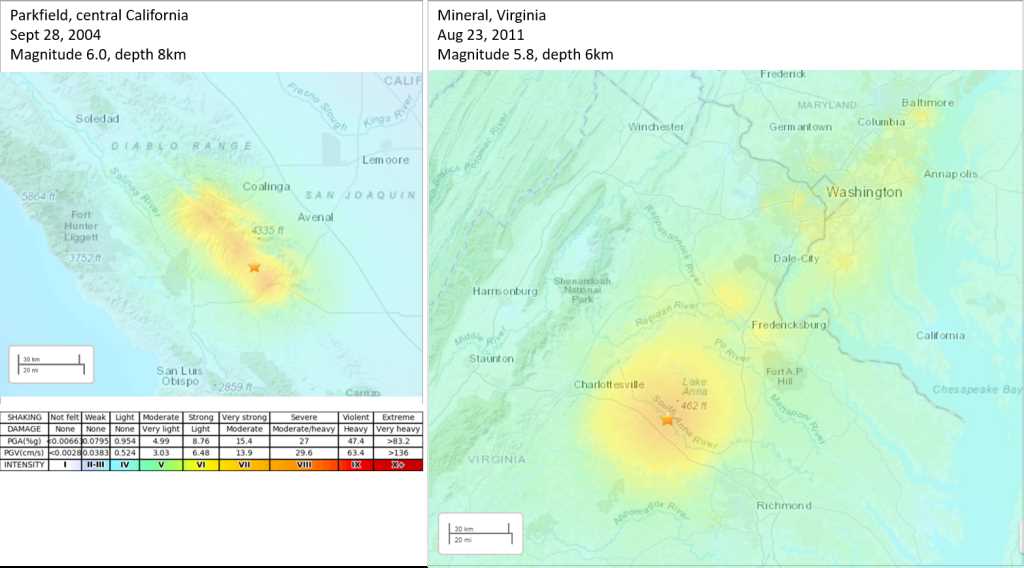
The first step in earthquake analysis is understanding how seismic activity is quantified. Two commonly used methods for determining the strength of earthquakes are based on the amplitude of seismic waves and the total energy released. These methods are crucial for accurate reporting, emergency response, and construction planning.
For smaller earthquakes, an early system using wave amplitude provides a quick and straightforward estimate. However, for larger, more powerful quakes, a more sophisticated system takes into account the total energy released, which offers a more reliable reading for catastrophic events.
Each of these methods has its strengths and weaknesses. The first method, designed for real-time analysis, is less accurate for large quakes, while the second system provides precise results but is more complex and takes longer to compute. Both are valuable, but knowing how to interpret their readings is key to accurate seismic assessment.
Comparing Earthquake Measurement Methods
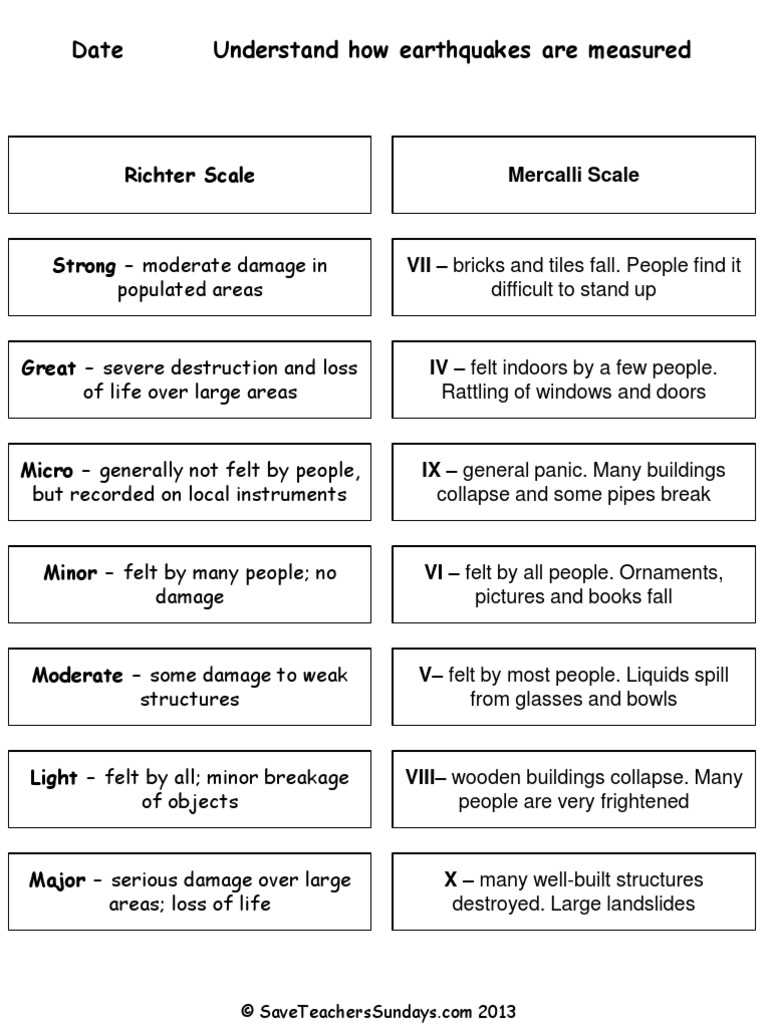
For accurate seismic assessments, two key methods are used to determine the intensity of earthquakes. The first method estimates earthquake strength by measuring the largest wave amplitude. It works well for smaller events, where wave size provides a quick, reliable estimate of energy release. However, for larger earthquakes, this method may underestimate the true power.
The second method, more suitable for powerful quakes, calculates the total energy released during the event. This approach takes into account various factors, including the area of the fault line and the depth at which the earthquake originates. Unlike the first method, this technique provides a more precise reading for large earthquakes, making it invaluable in assessing significant seismic events.
Both methods have their limitations. While the first method is faster and easier to use, it is less accurate for larger events. The second method, while offering more accuracy, requires more complex calculations and is not as immediate. Choosing between these methods depends on the scale and urgency of the seismic event being analyzed.
Understanding Basic Principles of Seismic Measurement
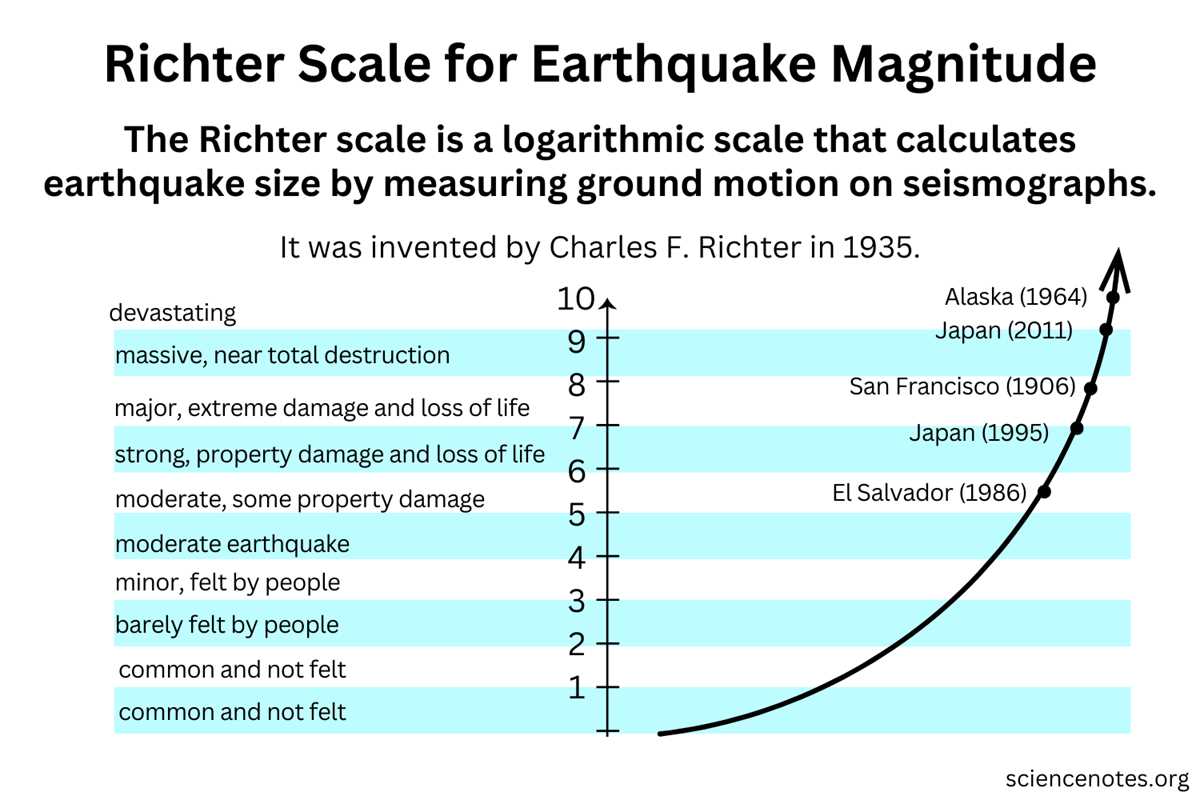
This method quantifies the energy released during an earthquake by analyzing the amplitude of seismic waves. The scale measures the highest point of the seismic waves recorded by a seismograph. Each unit on the scale represents a tenfold increase in wave amplitude, making it a logarithmic scale. For instance, a magnitude 5 quake is ten times larger than a magnitude 4 quake in terms of wave height.
The scale is primarily effective for moderate-sized quakes. However, it is limited when dealing with very powerful events, where the waves might be too large or distant for accurate measurements. The method also tends to underestimate the total energy release of larger quakes, as it doesn’t account for factors like fault size or depth.
Despite its limitations, this measurement system remains a widely used tool for rapid earthquake assessment, offering immediate insights into the scale of seismic activity based on observed wave amplitudes.
How New Seismic Measurement Method Differs from Earlier Systems
Unlike earlier systems, this modern approach measures the energy released directly from the earthquake source, rather than just the amplitude of seismic waves. It takes into account various factors, including fault size, depth, and the material properties of the rock, providing a more accurate representation of the event’s true energy. This method is particularly effective for large quakes, where traditional methods may underestimate their power.
Another key difference lies in the logarithmic nature of the original scale, which works well for moderate events but becomes less reliable for larger seismic activities. The updated method avoids this limitation by offering consistent measurements regardless of the earthquake’s size or location, making it more versatile for a wide range of events.
While both systems are valuable, this newer method provides a better understanding of the total energy released, giving scientists a clearer picture of the earthquake’s impact on both local and global scales.
Key Factors in Measuring Earthquake Magnitude with Seismic Method
Accurate earthquake measurement using this method involves analyzing the amplitude of seismic waves recorded by seismographs. The size of these waves correlates with the energy released at the fault line, allowing for the calculation of the earthquake’s strength. The formula used considers the logarithmic relationship between wave amplitude and energy, which is crucial for determining the quake’s intensity.
Another important factor is the distance between the seismograph and the earthquake’s epicenter. This distance affects the observed amplitude of seismic waves. Correcting for this distance ensures that the magnitude is not underestimated for distant events or exaggerated for nearby ones.
Additionally, the frequency of the seismic waves plays a role in accurate measurements. Lower-frequency waves tend to travel longer distances, while higher-frequency waves are absorbed more quickly by the Earth’s material, requiring careful calibration to account for their different propagation characteristics.
Finally, the depth of the earthquake’s origin is a factor in the magnitude calculation. Quakes occurring deeper within the Earth typically release more energy, but their surface impact is lessened due to the distance the energy travels before reaching the surface.
Key Factors in Measuring Earthquake Magnitude with Seismic Moment
The method for determining earthquake strength with seismic moment involves multiple factors, the most important being the area of the fault rupture. The larger the fault surface that slips during an earthquake, the greater the energy released, contributing to a higher magnitude. This is one of the primary factors in assessing the event’s overall size.
Another factor is the amount of slip along the fault. Seismic energy release is proportional to how much the ground shifts during the earthquake. More significant displacement of the Earth’s crust results in a stronger event. This factor is crucial when evaluating large or deep quakes, where traditional methods like amplitude-based measures might not be as accurate.
Additionally, the rigidity of the Earth’s crust is accounted for in calculating the seismic moment. This is a measure of how resistant the Earth’s rocks are to deformation. A higher rigidity means that more energy is required to generate a given amount of displacement, resulting in a higher magnitude.
In contrast to other measurement methods, this technique provides a more consistent and reliable estimate of earthquake strength, especially for large, distant, or deep quakes. By focusing on the energy released and fault parameters, it avoids the limitations that arise with distance or local wave characteristics.
For more detailed information on the seismic moment and its calculation, refer to the U.S. Geological Survey Earthquake Science Center.
Advantages and Disadvantages of the Richter Scale
Advantages:
- Quick and straightforward to calculate: The Richter method provides immediate results based on seismic data, allowing for quick assessments of earthquake intensity.
- Widely understood: Due to its historical use, it is familiar to the public, making it a useful communication tool in emergency situations.
- Effective for small to moderate quakes: The scale provides reliable measurements for events up to a magnitude of around 7.0, where the system was originally designed to work most effectively.
Disadvantages:
- Less accurate for large earthquakes: The Richter scale becomes less reliable for measuring large-scale events, especially those above magnitude 7.0, as it doesn’t account for all fault and seismic energy details.
- Local variability: The scale’s reliance on amplitude and distance means that its readings can vary depending on the location of measurement, making it harder to compare events in different regions.
- Does not account for fault dynamics: The scale doesn’t consider the size of the fault rupture or the amount of slip, which are critical for understanding the true energy release during an earthquake.
Advantages and Disadvantages of the Moment Magnitude Scale
Advantages:
- More accurate for large earthquakes: This method provides a consistent measurement for seismic events of any size, particularly those greater than magnitude 7.0, where other systems become less reliable.
- Comprehensive data: It accounts for various factors such as fault length, slip, and depth, offering a better understanding of energy release compared to earlier methods.
- Uniformity: The scale is based on data from multiple seismic stations and provides a more standardized approach, allowing for better comparison of global seismic activity.
Disadvantages:
- More complex to calculate: Requires detailed seismic data, which can be difficult to obtain immediately after a large earthquake, delaying the results.
- Less intuitive for the public: Unlike older systems, the method’s calculation is not as easily understood by non-experts, which can hinder communication with the public during emergencies.
- Can be sensitive to deep events: Earthquakes occurring at great depths may produce different readings compared to those at shallow depths, leading to potential inconsistencies in assessment.
Why the Moment Magnitude Scale is More Accurate for Large Earthquakes
The Moment Magnitude system is more precise for large seismic events because it directly measures the total energy released during an earthquake, unlike older methods which rely on amplitude measurements from seismograph readings. For large events, these amplitude-based methods become less accurate due to their reliance on local station data that may not capture the full extent of a major earthquake’s energy. The Moment Magnitude method, however, calculates the energy release based on fault characteristics, including size, slip, and depth, ensuring a more comprehensive measure.
Large earthquakes can generate seismic waves that travel vast distances, making traditional amplitude-based readings less reliable. In contrast, the Moment Magnitude system accounts for the entire seismic source, offering consistency even when the event is far from seismograph stations. This allows for more accurate comparisons between distant and powerful earthquakes.
Additionally, the Moment Magnitude system is not influenced by the distance between the event and the seismograph, which is a key limitation of older methods. This makes it particularly useful in measuring global seismic events, as it provides uniform results regardless of location, depth, or distance from measurement stations.
Real-World Applications: When to Use the Richter vs Moment Magnitude Scale
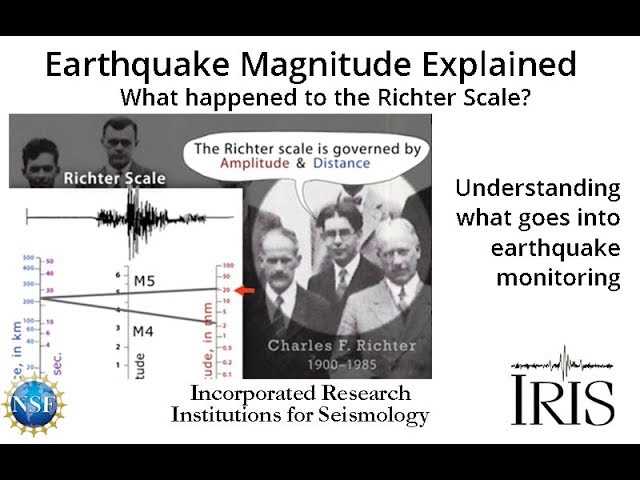
For small to medium earthquakes, the traditional amplitude-based system is often sufficient for estimating the size of seismic events, particularly when they are relatively close to monitoring stations. This method provides quick and reliable results for earthquakes of lower magnitudes, typically below 6.5. In these cases, the amplitude measurement is accurate enough for immediate assessments and local response actions.
However, for large seismic events, especially those exceeding magnitude 7, the Moment Magnitude system becomes more relevant. It provides a more accurate measure of energy release, capturing the full extent of the event, even at great distances from the epicenter. This makes it the preferred method for global earthquake monitoring and research, ensuring consistent results regardless of distance or seismic station location.
Seismologists typically use both methods in tandem for comprehensive analysis. For local earthquake assessments, especially in real-time, the older amplitude-based system may still be used, while the Moment Magnitude method offers a more detailed analysis for large-scale events. In scientific studies, global earthquake monitoring, and post-event analysis, the Moment Magnitude method is indispensable for its precision and reliability in measuring the energy released by significant seismic events.