Complete Guide to Leaf Anatomy Coloring with Answer Key
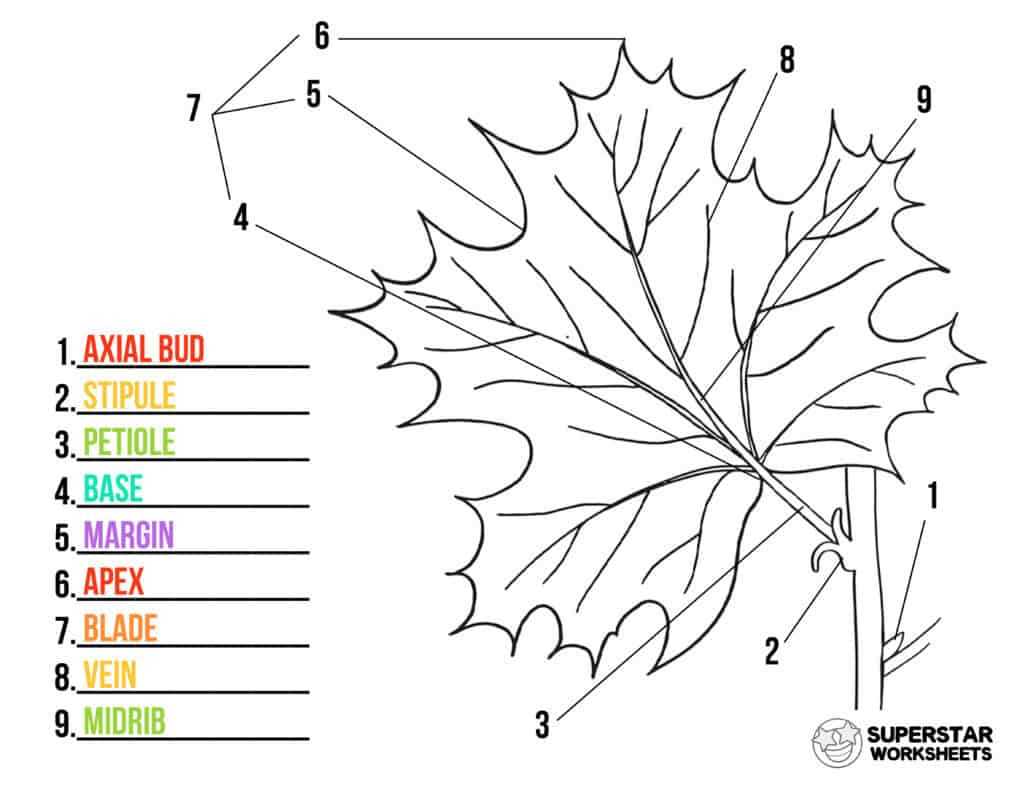
Begin by carefully identifying each component of the plant structure you are working with. Understanding the function of each part, such as veins, stomata, and chloroplasts, will help you apply the correct colors in the appropriate areas. The vascular bundles, which transport water and nutrients, are usually highlighted in a distinct color to differentiate them from other parts.
Use the provided diagram to match the colors for the epidermis, mesophyll, and vascular tissues. Different shades should represent each layer, allowing for better clarity and comprehension. Pay attention to the way colors correspond to different tissue types to ensure your depiction is accurate and educational.
Refer to the provided color guide to check if your work matches the established patterns. The key will help verify the proper color placements, ensuring you have not overlooked any details. This process will not only enhance your knowledge of plant biology but also ensure you are representing the structure accurately.
Plant Structure Diagram Guide
Begin by coloring the upper epidermis in light green to represent the protective outer layer. This tissue prevents water loss and acts as a barrier to pathogens.
The mesophyll layers should be differentiated: the palisade layer (near the top of the leaf) can be colored dark green, reflecting its role in photosynthesis due to its high concentration of chloroplasts. The spongy mesophyll, located beneath the palisade, should be colored in a lighter green to indicate its role in gas exchange.
Next, color the vascular tissue. The xylem, which transports water, can be shaded in blue, while the phloem, responsible for nutrient transport, should be depicted in yellow. This helps to clearly separate the two transport systems.
The veins of the plant are part of the vascular system, and should be outlined with a darker color for clear visibility. This will highlight their function in supporting and transporting essential fluids through the structure.
Ensure that the stomata on the underside of the leaf are left uncolored or lightly shaded to indicate their role in gas exchange. These small openings are critical for the movement of oxygen and carbon dioxide.
After applying the colors according to the guide, double-check that all parts are distinct and accurate. The final illustration should visually reflect the functional areas of the plant with clear differentiation between the layers and transport systems.
Understanding the Basic Structure of a Plant’s Structure
The primary components of a plant’s structure include the epidermis, mesophyll, and vascular bundles. The epidermis acts as the protective outer layer, preventing water loss and pathogen invasion. This tissue covers the entire surface and is often transparent to allow sunlight to penetrate deeper into the leaf.
Within the mesophyll, the two main layers are the palisade and spongy layers. The palisade layer, located just under the upper epidermis, contains tightly packed cells that house the majority of chloroplasts. These cells are the site for photosynthesis, where sunlight is converted into energy. Below this, the spongy mesophyll contains loosely arranged cells that aid in gas exchange, facilitating the movement of carbon dioxide and oxygen.
The plant’s vascular system consists of two main elements: the xylem and phloem. The xylem transports water and minerals from the roots, while the phloem carries sugars and other nutrients produced during photosynthesis to other parts of the plant. These vessels are arranged in veins that run through the structure, providing both nourishment and structural support.
Finally, the stomata, tiny openings located primarily on the underside of the plant’s surface, play a critical role in gas exchange. They regulate the intake of carbon dioxide and the release of oxygen and water vapor, which is key for photosynthesis and maintaining the plant’s water balance.
Coloring Guide for Various Parts of a Plant Structure
Here’s a suggested color scheme to help differentiate the key components of a plant’s structure:
- Epidermis: Light green or pale yellow to represent its protective and transparent nature.
- Palisade Layer: Dark green to emphasize the abundance of chloroplasts where photosynthesis occurs.
- Spongy Mesophyll: Light green or a shade slightly different from the palisade layer to indicate its loosely arranged cells that facilitate gas exchange.
- Xylem: Brown or red to indicate the transport of water and minerals from the roots to the rest of the plant.
- Phloem: Yellow or orange to denote the movement of sugars and nutrients throughout the plant.
- Stomata: Light gray or white, symbolizing the small pores that control gas exchange and water vapor release.
Using this color guide will make it easier to visually identify and understand the function of each part in the structure. These colors are not universally fixed but offer a useful approach for educational purposes and detailed study.
How to Identify Veins and Their Functions in Plant Structure
The veins in a plant’s structure are responsible for transporting water, minerals, and nutrients to various parts of the organism. Here’s how to identify them:
- Major Veins (Midrib and Main Veins): These are the thickest veins running from the base to the tip. They act as the primary highways for water and nutrients and provide structural support.
- Minor Veins: Smaller veins branching off the main ones, helping distribute nutrients and water to the cells.
- Vein Pattern: Look for the arrangement of the veins, whether it is parallel, reticulate (net-like), or other forms. The pattern is often unique to plant species and helps in identifying them.
- Xylem and Phloem: The xylem carries water and minerals from the roots, while the phloem transports food and sugars from the leaves to other parts. The xylem is usually positioned on the upper side of the vein, and the phloem is on the lower side.
Understanding these veins will not only help in proper identification but also in understanding their role in maintaining the health and function of the plant.
Role of Stomata and How to Represent Them in Illustrations
Stomata play a critical role in regulating gas exchange and water loss in plants. These tiny pores allow carbon dioxide to enter for photosynthesis and oxygen to exit, while also controlling water evaporation.
- Function of Stomata: The primary function of stomata is to f
Choosing the Right Colors for Plant Tissues and Layers
For accurate representation, select colors that reflect the natural appearance and function of each tissue and layer in the plant structure. Here are specific guidelines:
- Upper Epidermis: Typically transparent or lightly tinted, use pale colors like light green or off-white to reflect the thin, protective layer that covers the plant.
- Mesophyll: This layer is rich in chloroplasts and responsible for photosynthesis. Use vibrant greens to indicate its role in energy production. Darker greens work well for the palisade mesophyll, and lighter greens are suitable for the spongy mesophyll.
- Vascular Bundles: Represent the plant’s vascular system with shades of red or brown for xylem (water transport) and green for phloem (nutrient transport).
- Lower Epidermis: Similar to the upper epidermis but often containing stomata. A slightly darker tone of green or even a muted yellow can be used to depict this protective layer and the pores.
- Stomata: For accuracy, use a pale yellow or light green for guard cells, with a small dark center for the pore itself.
By carefully choosing the appropriate colors for each layer, you can achieve a realistic and scientifically accurate representation of the plant structure.
Common Mistakes to Avoid When Coloring Plant Structures
When illustrating plant structures, ensure accuracy by avoiding the following common mistakes:
- Using Incorrect Colors for Tissues: Avoid using unrealistic colors like bright yellow or purple for internal tissues. Use different shades of green for photosynthetic layers and natural tones for vascular tissues, like red or brown for xylem and green for phloem.
- Over-saturating with Color: Keep the color intensity balanced. Over-saturation can obscure the details of individual layers and structures. Light shades often better highlight intricate tissue patterns.
- Neglecting to Differentiate Layers: Ensure each tissue or layer is clearly distinguishable. Use varying shades or color tones for the epidermis, mesophyll, and vascular tissues to enhance visual clarity.
- Inconsistent Application: Apply color evenly across all areas to avoid streaks or patches that could make the representation confusing. Be mindful of smooth transitions between adjacent layers.
- Ignoring the Function of Structures: Color the structures according to their biological role. For example, chloroplast-rich areas should have vibrant green hues to indicate their function in photosynthesis.
By staying mindful of these common errors, your depiction of plant structures will be both accurate and visually appealing.
Step-by-Step Guide to Color a Plant Structure Diagram
Follow these steps to accurately illustrate the various tissues and layers of a plant diagram:
- Step 1: Prepare Your Materials – Gather your materials: colored pencils, markers, or digital tools for illustration. Choose shades that closely resemble the natural colors of plant structures.
- Step 2: Identify Major Structures – Begin by identifying and labeling the main parts of the diagram: epidermis, mesophyll, vascular tissues (xylem and phloem), and stomata. Each structure should be outlined clearly.
- Step 3: Start with the Epidermis – Use a light green or pale color to fill in the epidermis. This tissue serves as the outer protective layer, so it typically appears lighter compared to the inner layers.
- Step 4: Color the Mesophyll – For the palisade mesophyll, choose a vibrant green to represent the photosynthetic cells. The spongy mesophyll should be colored a slightly lighter shade of green to differentiate it from the palisade layer.
- Step 5: Add Colors for Vascular Tissues – Use red or brown for the xylem to symbolize water transport and darker green for the phloem for nutrient transport. Ensure the xylem and phloem are clearly distinct from each other.
- Step 6: Represent Stomata – Stomata can be represented using a pale yellow or beige color. They should be small and located mainly on the epidermis, typically near the lower part of the diagram.
- Step 7: Final Touches – Check for any missed areas or inconsistencies. Smooth out transitions between adjacent structures by using a gradient of colors where necessary. Add labels to clarify each tissue.
This method ensures clarity and precision while helping to better understand the roles of different plant tissues.
Using the Answer Key to Double-Check Your Work
Once you have finished illustrating the plant structure, compare your diagram with the provided reference guide to ensure accuracy. Focus on the following areas:
- Accuracy of Color Placement – Verify that the shades you have used correspond with those in the guide. The color choices should match the natural appearance of each tissue type.
- Correct Positioning of Structures – Double-check that the tissues are placed in the correct locations, such as the epidermis on the outermost layer and the vascular tissues within the interior.
- Clear Labels – Ensure that all parts of the diagram are correctly labeled. Check if the names of structures are legible and positioned near their corresponding areas.
- Consistency in Size and Shape – Compare the size and shape of each part with the reference. It’s crucial to maintain proportions to avoid distortion.
- Overall Neatness – A well-organized diagram with clear boundaries between tissues will enhance readability and understanding.
To further validate your work, consult authoritative resources on plant biology, such as those provided by educational institutions or biology textbooks. For example, you can find reliable reference materials on the Khan Academy website, which covers key biological concepts in detail.