Amoeba Sisters Mitosis Video Recap and Answer Breakdown
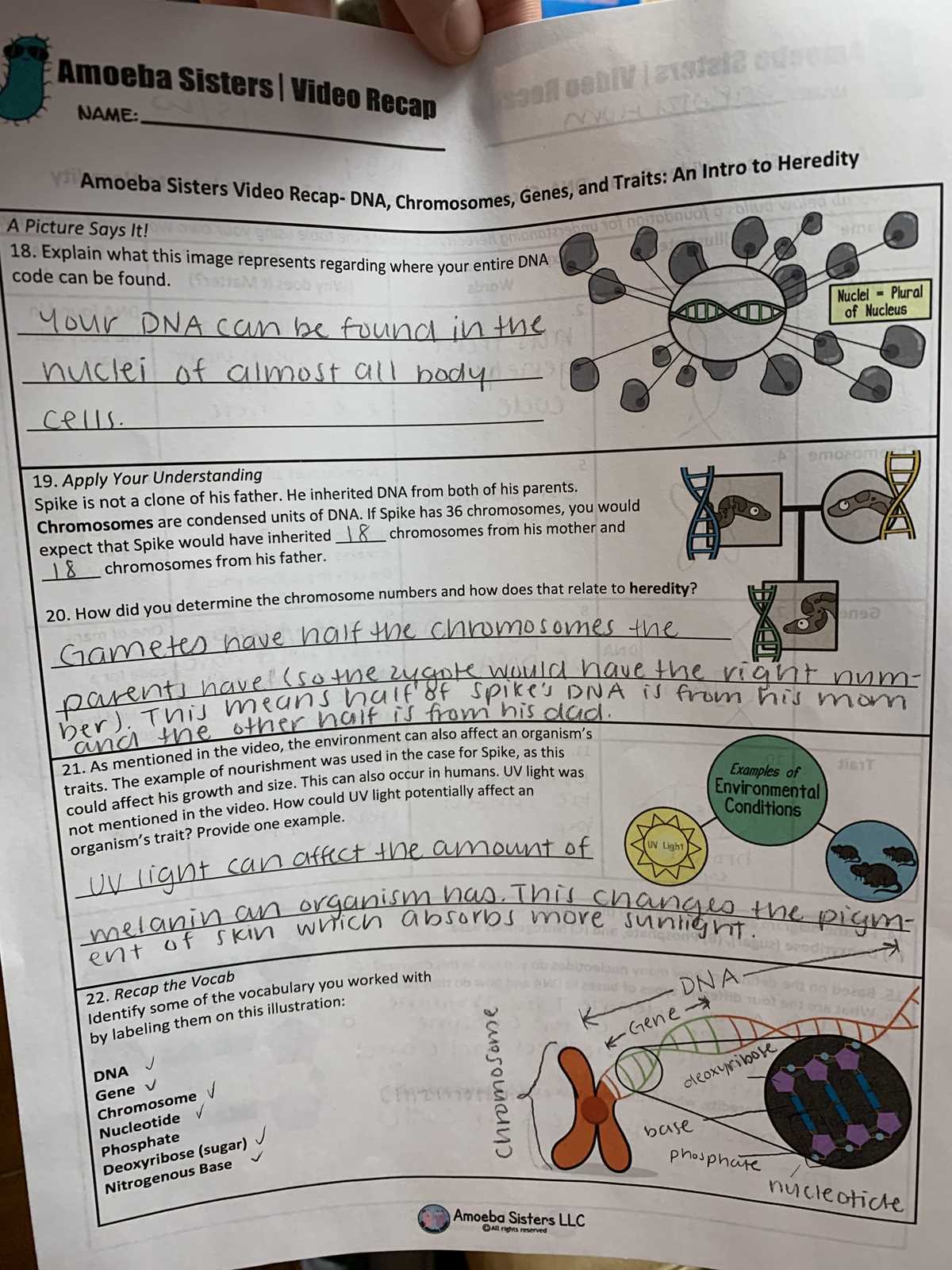
Start by focusing on the major phases of cellular division as demonstrated in the guide. Recognizing each stage’s characteristics–such as chromosome alignment, separation, and final cell formation–helps in clearly identifying the biological processes involved. Pay close attention to visual cues like the breakdown of the nuclear membrane and the movement of chromosomes. This knowledge is vital for a deeper grasp of cell reproduction.
Make sure to connect the terminology with the corresponding events in each stage. For instance, terms like “prophase” or “anaphase” are not just labels; they refer to specific actions within the process. Understanding these terms in context is crucial for interpreting diagrams or test questions related to cell division.
Finally, as you work through the content, use the guide to check for common errors. Many students confuse the phases due to overlapping features or misinterpret the steps. Ensure that each step is fully understood by referring to clear examples and carefully reviewing explanations of key differences between phases. Once this foundation is solid, you’ll be able to apply the knowledge to more complex biological topics with confidence.
Mitosis Breakdown and Key Concepts Explained
To properly understand the process of cell division, begin by recognizing the key stages: prophase, metaphase, anaphase, and telophase. Each stage has specific events that define it. For instance, during prophase, the chromatin condenses into chromosomes, and the nuclear envelope begins to break down. This phase is crucial for setting up the rest of the division process.
In metaphase, the chromosomes align along the equator of the cell, an essential step for ensuring that each daughter cell will receive an equal and correct number of chromosomes. Pay attention to the role of the spindle fibers in this phase–they attach to the centromeres of the chromosomes, ensuring their proper alignment and movement.
Anaphase is characterized by the separation of sister chromatids. This is the moment when the chromatids are pulled toward opposite sides of the cell. This stage is vital for ensuring that each new cell receives the correct genetic material.
Finally, during telophase, the chromosomes start to de-condense, and two new nuclear envelopes form around the sets of chromosomes at each side of the cell. This marks the near-completion of the cell division process, which is followed by cytokinesis, the physical separation of the cytoplasm into two daughter cells.
Use this breakdown to cross-reference your answers when reviewing your work. Understanding each stage’s distinctive features and key processes helps in recognizing any mistakes or areas that need further clarification. Check diagrams or animations to solidify your understanding of the visual aspects of the division process.
Understanding the Cell Division Process in the Amoeba Sisters Explanation
In the explanation, the process begins with the identification of the phases: prophase, metaphase, anaphase, and telophase. In prophase, chromatin condenses into visible chromosomes. The nuclear membrane starts to break down, and the spindle fibers begin to form. This phase sets the stage for the accurate division of genetic material.
During metaphase, chromosomes align along the cell’s equator. This alignment ensures that each daughter cell will receive an equal set of chromosomes. The spindle fibers, attached to the centromeres, are crucial for this step, as they guide the chromosomes to their correct position.
In anaphase, the sister chromatids are pulled apart by the spindle fibers. Each chromatid moves toward opposite poles of the cell. This stage is pivotal for the proper distribution of genetic information into the two daughter cells.
Telophase marks the near-completion of division. Chromatids begin to de-condense, and two new nuclear membranes form around the separate sets of chromosomes. This process is followed by cytokinesis, where the cytoplasm divides, creating two distinct daughter cells.
The visual representation in the explanation makes it easier to understand the timing and sequence of these events. By watching and following the detailed breakdown, you can better grasp the key stages of cell division and check your comprehension against the correct information provided in the guide.
Key Stages of Cell Division Explained in the Recap
The first phase is prophase. During this stage, the chromatin condenses into visible chromosomes, and the nuclear membrane begins to break down. The spindle fibers, which will be used to separate the chromosomes, start to form from the centrosomes.
Next is metaphase. Chromosomes align along the cell’s equatorial plane, known as the metaphase plate. This ensures that each daughter cell will receive a full set of chromosomes when they are separated.
In anaphase, the sister chromatids are pulled apart toward opposite poles of the cell. The spindle fibers shorten, effectively separating the chromatids, which are now considered individual chromosomes.
Telophase follows. The chromatids, now at opposite poles, begin to de-condense back into chromatin. The nuclear membrane re-forms around each set of chromosomes, and the cell begins to prepare for division into two.
Finally, cytokinesis occurs, where the cytoplasm divides, completing the formation of two distinct daughter cells, each with its own nucleus and set of chromosomes. This step marks the end of cell division.
Common Misunderstandings in Cell Division and How to Avoid Them
A frequent misunderstanding is the confusion between mitosis and meiosis. While both involve the division of cells, mitosis results in two identical daughter cells, whereas meiosis produces four genetically unique cells. To avoid this, always remember that mitosis is used for growth and repair, and meiosis is specific to gamete production.
Another common mistake is misinterpreting the stages of division. For instance, prophase is often confused with metaphase due to the similarity in chromosomal behavior. In prophase, chromosomes condense and the nuclear membrane dissolves, while in metaphase, the chromosomes align at the center of the cell. A visual timeline or diagram can help clarify these stages.
During anaphase, the misconception may arise that the chromosomes are still linked together. In reality, the sister chromatids are separated and pulled to opposite poles. It’s important to recognize this as the step where chromosome segregation happens, ensuring equal genetic material for each daughter cell.
Lastly, cytokinesis is often overlooked or confused with telophase. While telophase involves the reformation of the nuclear envelope around the chromosomes, cytokinesis is the final step, where the cell’s cytoplasm divides, resulting in two separate daughter cells. Pay close attention to these two processes to fully understand how cell division concludes.
How to Use the Video for Classroom Learning
Start by showing the recording to introduce the core concepts of cell division. Pause the video at key moments to highlight the different phases of the process, asking students to identify what is happening in each stage.
After watching, facilitate a discussion around the visual aids and concepts presented. Use targeted questions to engage students and confirm their understanding. For example, ask them to explain how chromosomes behave during anaphase or describe the role of the spindle fibers.
For deeper comprehension, divide the class into small groups and assign each group to focus on one specific stage of division. Have them prepare a brief explanation or demonstration, using the video as a reference to ensure accuracy.
Reinforce learning by assigning exercises that align with the key stages shown in the video. Have students fill in diagrams, label stages of the process, or answer questions based on what they observed.
Finally, encourage students to revisit the video at home for review. Provide them with follow-up questions or prompts that allow them to critically analyze the content on their own time.
Breaking Down the Answer Key for Each Stage of Mitosis
During the first stage, prophase, chromatin condenses into visible chromosomes. The nuclear envelope starts to break down, and the mitotic spindle begins to form. It’s crucial to note that this is the point where the cell prepares for the separation of its genetic material.
In metaphase, chromosomes align along the cell’s equator. This stage ensures that each daughter cell will receive an equal and exact copy of the chromosomes. Verify that students understand the importance of spindle fibers connecting to the centromeres of the chromosomes.
Anaphase is the stage where sister chromatids are pulled apart toward opposite poles of the cell. The answer should highlight the role of the spindle fibers in separating these chromatids and ensuring that each new cell receives a full set of chromosomes.
Telophase follows with the reformation of the nuclear envelope around the separated chromatids, which are now called chromosomes again. The mitotic spindle begins to break down, and the cell starts preparing for cytokinesis.
Finally, during cytokinesis, the cell’s cytoplasm divides, forming two distinct daughter cells. This stage ensures that each new cell has its own set of organelles and sufficient resources to survive independently.
How Mitosis Differs from Meiosis: Insights from the Video
Mitosis and meiosis are both processes of cell division, but they serve different purposes. Mitosis results in two identical daughter cells, while meiosis produces four genetically distinct cells, each with half the chromosome number of the parent cell. The key difference lies in the end products and their genetic composition.
In meiosis, genetic variation is introduced through processes like crossing over during prophase I and independent assortment during metaphase I. These steps are absent in mitosis, where the chromosomes align and separate without exchange of genetic material.
Another key distinction is the number of divisions. Mitosis involves one division, leading to two diploid cells, while meiosis consists of two divisions: meiosis I and meiosis II, ultimately resulting in haploid cells.
In meiosis, homologous chromosomes pair up and segregate during the first division, whereas in mitosis, chromosomes align individually. These differences ensure that meiosis contributes to genetic diversity, while mitosis is focused on growth and tissue repair.
Practical Tips for Teachers Using the Cell Division Recap
To maximize the effectiveness of the lesson, consider pausing the presentation at key points to engage students in brief discussions. Ask questions about the stages and encourage students to predict what happens next. This promotes active learning and helps solidify the concepts.
Another strategy is to use diagrams or models alongside the presentation. Visual learners will benefit from the added context. Try having students work in pairs to label stages of the process on a diagram as the video progresses.
Encourage students to take notes during the viewing. Provide a worksheet that aligns with the content in the video, so students can write down key details as they watch. This will help reinforce their understanding and give them a concrete reference for later review.
For deeper engagement, consider having students create their own animations or drawings of the cell division process after viewing. This can be an excellent way for them to apply their understanding in a creative way.
Lastly, ensure you reference reliable scientific resources for further explanation. Websites like Khan Academy provide great supplementary content that can help clarify difficult concepts and offer additional practice opportunities.
Additional Resources for Deepening Understanding of Cell Division
To gain a deeper understanding of cell division, students can explore various supplemental resources that break down complex concepts and provide interactive learning opportunities.
| Resource | Description | Link |
|---|---|---|
| Khan Academy: Cell Division | Comprehensive lessons with animations and quizzes on cell division, including stages and processes. | Khan Academy |
| HHMI Biointeractive: Cell Cycle | Interactive simulations that visualize the cell cycle and division, highlighting key events and transitions. | HHMI Biointeractive |
| MIT OpenCourseWare: Cell Biology | Free course materials, including lecture notes and videos on cell biology topics, including cell division. | MIT OpenCourseWare |
| BioMan Biology: Cell Cycle Game | An online interactive game that tests knowledge of the cell cycle stages and processes. | BioMan Biology |
These resources offer interactive tools, detailed explanations, and quizzes that can help reinforce the learning of cellular processes. They provide a variety of formats, including text, video, and games, to cater to different learning styles.