Dna Replication Homework Answer Key for Understanding Molecular Biology Concepts
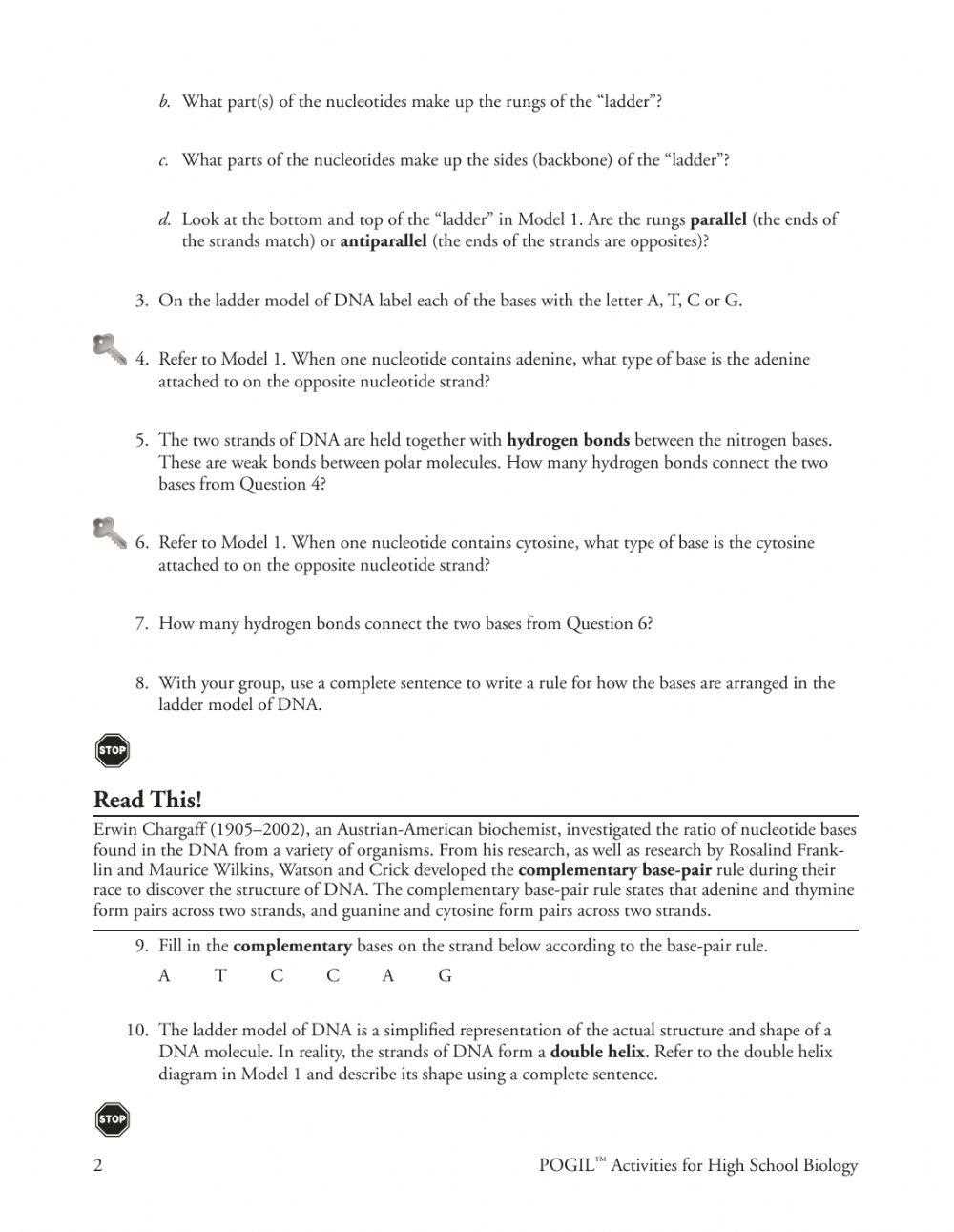
To tackle problems related to the duplication of genetic material, focus on the stages that include strand separation, synthesis of new strands, and the final proofing steps that ensure accuracy. A fundamental step is the unwinding of the helix, typically facilitated by helicase, which separates the two original strands, providing templates for synthesis.
Next, polymerase enzymes play a critical role in adding nucleotides to the exposed strands, ensuring the correct base pairing. The leading strand is synthesized continuously, while the lagging strand is synthesized in segments, later joined together by ligase. This asymmetry in strand elongation is a key feature to note when solving related tasks.
Lastly, the proofreading process conducted by exonucleases ensures that any mistakes during the synthesis are corrected. This proofreading system minimizes errors in the newly formed molecules, ensuring high fidelity in the genetic material. Be sure to focus on these enzymes and their specific functions when tackling related questions.
DNA Synthesis Process: Steps and Key Components
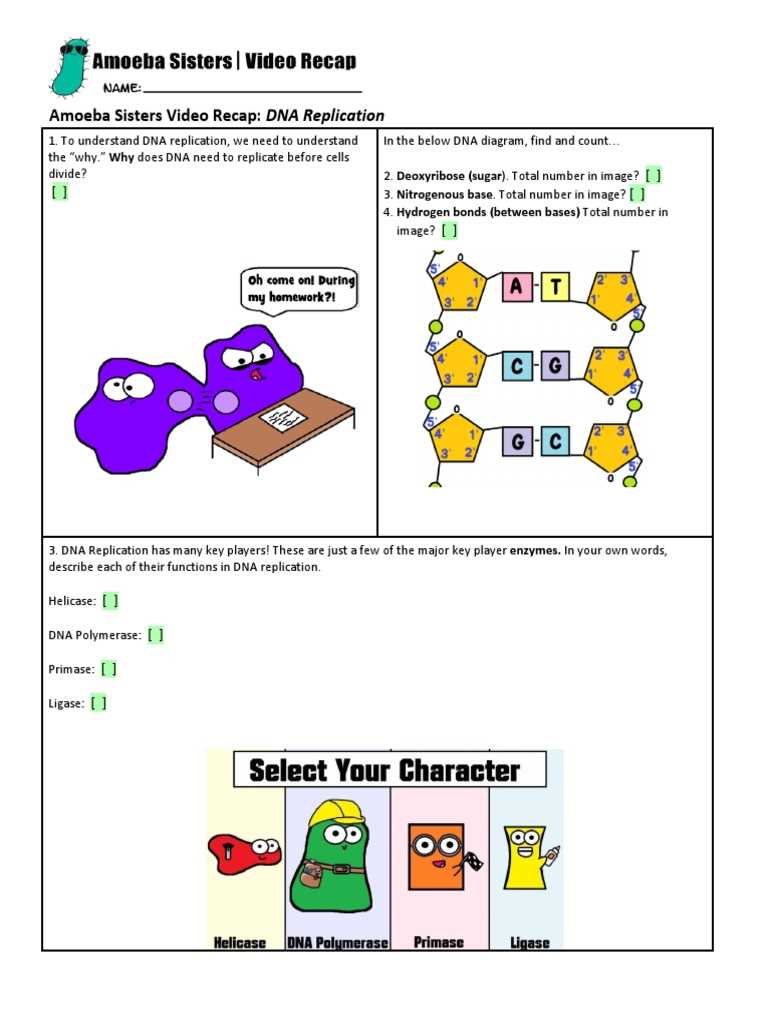
The first step is the unwinding of the double-stranded structure by helicase. This enzyme breaks the hydrogen bonds between complementary base pairs, resulting in two single strands of genetic material.
Following this, single-strand binding proteins (SSBs) attach to the separated strands to prevent them from re-annealing. These proteins ensure that the strands remain open, ready for the next steps in the process.
Primase then synthesizes short RNA primers on the leading and lagging strands. These primers serve as starting points for DNA polymerase, which can only add new nucleotides to an existing strand.
On the leading strand, DNA polymerase III continuously adds nucleotides in the 5′ to 3′ direction. On the lagging strand, the process is more complex, as DNA is synthesized in short segments known as Okazaki fragments. DNA polymerase I later replaces the RNA primers with DNA nucleotides, while DNA ligase seals the gaps between the fragments.
Finally, the enzyme topoisomerase helps to relieve tension in the DNA molecule that arises from unwinding, preventing supercoiling that could hinder the progress of helicase.
To ensure accuracy, the polymerase also proofreads its work, identifying and correcting errors in nucleotide pairing during synthesis. This proofreading function minimizes the chances of mutations being passed on to daughter cells.
Understanding the Key Enzymes Involved in DNA Duplication
The process of DNA duplication relies on a variety of enzymes, each playing a specific role in the faithful copying of genetic material. One of the most critical enzymes is DNA helicase, which unwinds the double-stranded molecule, creating two single strands. This is necessary for other enzymes to gain access to the individual strands and begin their work.
Next, primase synthesizes short RNA primers, providing the starting point for DNA polymerase to begin the addition of new nucleotides. DNA polymerase III is the primary enzyme responsible for elongating the new strand in the 5′ to 3′ direction, continuously adding nucleotides to the growing strand.
On the lagging strand, where synthesis occurs in fragments, DNA polymerase I removes RNA primers and replaces them with DNA nucleotides. The Okazaki fragments, which are the short DNA segments on the lagging strand, are eventually joined by the enzyme DNA ligase, sealing the sugar-phosphate backbone and ensuring the integrity of the newly synthesized strand.
For more detailed information on the functions and mechanisms of these enzymes, consult the resources available at NCBI.
How DNA Unzips: The Role of Helicase in Replication
Helicase is the enzyme responsible for unwinding the double-stranded molecule. It begins by binding to the origin site, where it initiates the separation of the two strands, creating two single-stranded templates. This process is critical for allowing polymerases to synthesize complementary strands. Helicase works by breaking the hydrogen bonds between base pairs using energy from ATP hydrolysis.
The enzyme travels along the DNA, moving in the 5’ to 3’ direction. As it progresses, it creates a replication bubble with two replication forks. These forks are regions where the two strands are actively separated, enabling the copying machinery to attach. Helicase’s role is vital because if it fails to unwind the molecule, the entire copying process is blocked.
Key points about helicase’s function include:
- Unwinding of the helix requires energy, which helicase gets from ATP hydrolysis.
- It operates in the 5’ to 3’ direction along the leading strand and the lagging strand.
- The enzyme works in conjunction with other proteins, like single-strand binding proteins, to prevent the strands from re-annealing.
- As helicase progresses, it exposes single-stranded regions that serve as templates for new strand synthesis.
Without helicase, replication would be impossible because the DNA would remain in its double-helix form, preventing access for other enzymes involved in strand synthesis. Therefore, helicase is indispensable for the accurate duplication of genetic material.
What is the Function of Primase in DNA Synthesis?
Primase synthesizes short RNA primers that are necessary for DNA polymerase to begin adding nucleotides to the growing strand. Without these primers, the polymerase cannot initiate strand synthesis on its own. The RNA primers are complementary to the single-stranded DNA template and provide a starting point for DNA polymerase to add the corresponding nucleotides.
The primase enzyme specifically binds to the single-stranded template and catalyzes the formation of an RNA chain, which is typically about 10 nucleotides long. This RNA primer serves as the foundation for DNA polymerase to extend the strand in the 5′ to 3′ direction.
In the case of the lagging strand, primase creates multiple primers to allow for discontinuous synthesis of small fragments, known as Okazaki fragments. These fragments are later joined together by DNA ligase.
The precise regulation of primase activity is vital for maintaining the speed and accuracy of the synthesis process. If primase activity is unregulated, it could lead to incomplete or incorrect strand formation, affecting the integrity of the resulting molecule.
| Function of Primase | Details |
|---|---|
| Primer Synthesis | Primase synthesizes short RNA primers for DNA polymerase to initiate replication. |
| Template Binding | Primase binds to the single-stranded DNA template to begin primer synthesis. |
| Lagging Strand Synthesis | On the lagging strand, primase produces multiple primers for Okazaki fragment formation. |
| Regulation | Proper primase activity ensures efficient and accurate DNA strand synthesis. |
DNA Polymerase: Correcting Mistakes During Synthesis
DNA polymerase employs a proofreading mechanism to ensure accuracy in nucleotide addition. The enzyme identifies errors through its exonuclease activity, removing incorrectly paired bases and replacing them with the correct ones.
The process begins when the polymerase detects a mismatch between the newly synthesized strand and the template. The enzyme’s 3′ to 5′ exonuclease domain removes the mismatched base, shifting the strand by one nucleotide. This action prevents the accumulation of mutations.
Key steps in the proofreading process:
- Mismatch detection: The polymerase senses abnormal base pairing through structural distortions in the DNA helix.
- Exonuclease activity: The enzyme excises the wrong nucleotide in the 3′ to 5′ direction.
- Resynthesis: After error removal, the correct base is inserted, resuming the synthesis of the strand.
This mechanism significantly reduces replication errors, achieving near-perfect fidelity. However, some mistakes may still slip through, requiring other repair systems to correct them post-synthesis.
In organisms with high replication rates, this proofreading function is vital for maintaining genetic stability, especially in rapidly dividing cells. Mutations in DNA polymerase can lead to diseases caused by improper repair mechanisms.
Leading vs. Lagging Strand: A Comparison of Replication Processes
The leading strand undergoes continuous synthesis, with the enzyme DNA polymerase moving in the same direction as the unwinding helicase. This allows for a smooth, uninterrupted addition of nucleotides. The process relies on the 3′ to 5′ template, as the polymerase can only add nucleotides in the 5′ to 3′ direction.
In contrast, the lagging strand is synthesized in fragments. Since the direction of the template is opposite, polymerase must work away from the replication fork. This results in the formation of Okazaki fragments, each requiring a separate primer for initiation. These fragments are later joined by DNA ligase to create a continuous strand.
The key difference lies in the method of strand synthesis. The leading strand is synthesized in a single, uninterrupted process, whereas the lagging strand requires multiple initiation events and fragment joining. This makes the lagging strand synthesis more complex and time-consuming, even though both strands rely on the same core enzymes.
In both cases, the 3′ to 5′ template is critical for guiding the enzyme’s movement, but the mechanics of how the strands are synthesized differ significantly due to the directionality of the process.
How Okazaki Fragments Are Formed and Linked Together
Okazaki fragments are short segments of DNA that form on the lagging strand during the process of strand synthesis. These fragments are synthesized in the opposite direction to the movement of the replication fork.
1. Initiation of Fragment Formation: The process begins when RNA primase synthesizes an RNA primer, providing a starting point for DNA polymerase III. This primer is necessary for the extension of the fragment.
2. Synthesis of the Fragment: DNA polymerase III then adds nucleotides in a 5′ to 3′ direction, creating the Okazaki fragment. This process occurs in small, discrete chunks as the lagging strand is synthesized in short pieces rather than continuously.
3. RNA Primer Removal: Once the Okazaki fragment is extended, the RNA primer is removed by DNA polymerase I. This enzyme also fills in the gap with the appropriate DNA nucleotides.
4. Linking of Fragments: After the primer is replaced, the gap between adjacent Okazaki fragments is sealed by DNA ligase. This enzyme catalyzes the formation of a phosphodiester bond between the 3′ end of one fragment and the 5′ end of the next, creating a continuous strand of DNA.
The coordination of these steps ensures that the lagging strand is synthesized efficiently, despite its fragmented nature.
The Importance of Telomerase in DNA Replication and Cell Division
Telomerase is critical for maintaining chromosomal stability during cell division by extending the telomeres at chromosome ends. Without this enzyme, telomeres shorten with each cell cycle, leading to potential loss of genetic material and cell death. In rapidly dividing cells, such as stem and cancer cells, telomerase activity is often increased to counteract telomere shortening and enable continued cell division.
During cell division, the replication machinery struggles to fully replicate the ends of chromosomes. This results in the gradual shortening of telomeres. Telomerase adds repetitive sequences to the ends, preserving the integrity of the chromosomes. The enzyme is especially important in germ cells and certain somatic cells where preserving genetic information is necessary for long-term survival.
Studies have demonstrated that telomerase inhibition can halt tumor growth, as many cancer cells rely on this enzyme for their prolonged survival. Conversely, artificially activating telomerase in somatic cells has been investigated as a means to combat aging, though this approach comes with risks, including the potential promotion of cancerous cell growth.
In conclusion, telomerase ensures the proper maintenance of chromosomes during cell division, supporting healthy cellular function and preventing premature aging or cell death.
Common Mistakes and Misunderstandings in DNA Replication Tasks
Incorrectly understanding the role of helicase is a frequent mistake. This enzyme unwinds the double helix, but students often mix it up with other enzymes involved in the process. Remember, helicase’s job is only to open up the strands, not to stabilize or build the new strands.
Another common issue is confusing leading and lagging strand synthesis. Students often think both strands are replicated in a continuous manner, but only the leading strand follows a continuous path. The lagging strand, on the other hand, is synthesized in short segments called Okazaki fragments.
Failure to recognize the function of RNA primers is also common. These primers, made by primase, are necessary to provide a starting point for DNA polymerase. It’s essential to note that DNA polymerase cannot start synthesis from scratch; it can only extend an existing strand.
Misunderstanding the directionality of synthesis leads to confusion about how the strands are formed. The new strands are always synthesized in a 5’ to 3’ direction, meaning that the template strand must be read in the opposite direction, 3’ to 5’.
Errors related to the role of ligase often arise. Ligase is responsible for joining Okazaki fragments on the lagging strand. This process is necessary to ensure that the replication fork is fully completed and the newly synthesized DNA is a continuous strand.
Lastly, many students overlook the proofreading function of DNA polymerase. While DNA polymerase does not always catch errors, it has a proofreading ability that can correct mistakes during synthesis. Ignoring this can lead to misconceptions about how mutations are prevented.
| Mistake | Clarification |
|---|---|
| Confusing helicase with other enzymes | Helicase unwinds the DNA double helix, but does not synthesize or stabilize strands. |
| Mixing up leading and lagging strand synthesis | The leading strand is continuous; the lagging strand is synthesized in fragments. |
| Ignoring the role of RNA primers | Primers provide a starting point for DNA polymerase to begin strand synthesis. |
| Misunderstanding directionality | Synthesis always occurs in a 5’ to 3’ direction, with the template strand read 3’ to 5’. |
| Overlooking ligase’s role | Ligase joins Okazaki fragments to complete the lagging strand. |
| Underestimating DNA polymerase proofreading | DNA polymerase can proofread and correct errors during synthesis. |