Mastering the Concept of Ratios with Practical Examples and Tips

To solve problems involving numerical relationships, it is important to break them down into simpler components. First, determine the simplest form of the comparison by reducing the numbers or expressions involved. This will help clarify the connection between the values and make calculations easier to handle.
Next, ensure that you interpret the question correctly. Pay close attention to the wording of the problem, as it may provide subtle clues that point to the required method of solving. Use simple examples to practice identifying the correct relationship between the quantities, whether it’s through division, multiplication, or finding equivalent forms.
Finally, review your solution carefully. After simplifying and solving the problem, verify that your result fits logically within the context of the problem. This step will confirm whether you’ve followed the correct method and ensure that your interpretation of the relationship between the numbers was accurate.
Understanding Proportions with Practical Examples
Consider the following real-life example: You are making a batch of cookies, and the recipe requires 2 cups of flour for every 1 cup of sugar. The relationship between the flour and sugar is expressed as a ratio of 2:1. This means for every 2 cups of flour, you need 1 cup of sugar. To adjust the recipe for a larger batch, multiply both parts of the ratio by the same factor. For instance, if you need to make 4 cups of flour, you would need 2 cups of sugar to maintain the same proportions.
Another example involves mixing paint. If a specific color requires a 3:4 ratio of blue to yellow, and you want to make 12 parts of paint, divide the total parts by the sum of the ratio components (3 + 4 = 7). Then, calculate the proportion of each color by multiplying: for blue, 12 × (3/7) = 5.14, and for yellow, 12 × (4/7) = 6.86. This ensures the final color matches the desired ratio.
For a better understanding, it’s helpful to practice with various scenarios and adjust the quantities accordingly. Whether you’re cooking, mixing paint, or planning a project, these calculations ensure that proportions are kept consistent, yielding the expected results. You can explore further examples and tools for solving proportional problems on reputable educational websites, such as Khan Academy.
How to Simplify Proportions for Easy Understanding
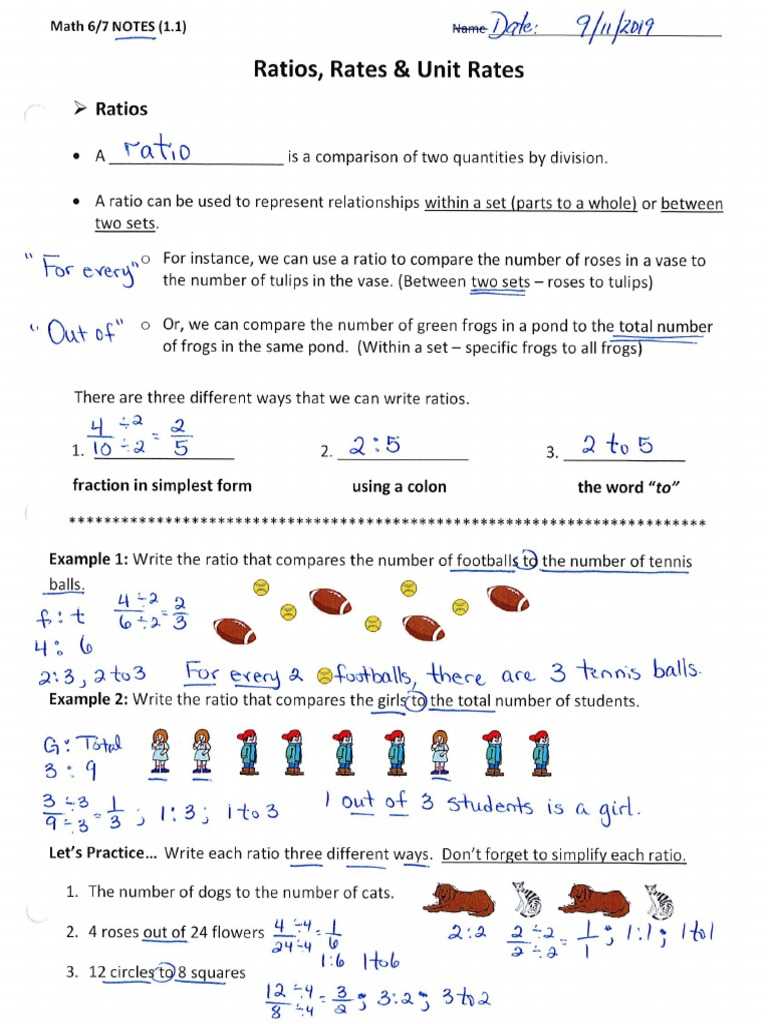
To simplify a proportion, divide both numbers by their greatest common divisor (GCD). This makes the numbers smaller and easier to interpret. For example, if you have a proportion like 8:12, first find the GCD of 8 and 12, which is 4. Then, divide both parts of the proportion by 4: 8 ÷ 4 = 2 and 12 ÷ 4 = 3. The simplified proportion is 2:3.
If the numbers in the proportion are already small, and you can’t find a common factor other than 1, the proportion is already in its simplest form. For example, 5:9 is already simplified, as 5 and 9 do not share any common factors besides 1.
Another method for simplifying is using prime factorization. Break down both numbers into their prime factors, and then cancel out common factors. For example, to simplify 18:24, first find the prime factors of each number: 18 = 2 × 3 × 3 and 24 = 2 × 2 × 2 × 3. Cancel out the common factors (2 and 3), leaving 3:4 as the simplified proportion.
By simplifying proportions, you can more easily identify relationships and solve problems accurately, whether you’re dealing with recipes, financial calculations, or other practical scenarios.
Interpreting Proportions in Word Problems
To correctly interpret a proportion in a word problem, first identify the quantities being compared. Look for phrases like “for every”, “per”, or “out of”, which indicate the relationship between two numbers. For instance, if a word problem states “For every 3 apples, there are 5 oranges,” the proportion is 3:5.
Next, determine what the problem is asking for. If it asks you to find how many oranges there are for 9 apples, use the proportion 3:5. Set up a proportion by cross-multiplying and solving for the unknown value: 3/5 = 9/x, where x is the number of oranges. Then, cross-multiply and solve: 3x = 45, so x = 15 oranges.
It’s important to understand the context of the problem. If the numbers in the proportion refer to different units (such as distance and time, or ingredients and servings), make sure to account for those units in your calculations. This will help you interpret and solve the problem correctly.
In some cases, the problem may involve scaling or adjusting the proportion. If the word problem provides an example with a specific ratio, but asks for a larger or smaller group, the same proportion logic applies. For example, if the original proportion is for 3 items, but you need to find the proportion for 30 items, simply multiply the ratio accordingly.
By carefully interpreting the context and using proper mathematical methods, word problems involving proportions can be solved easily and accurately.
Common Mistakes to Avoid When Solving Proportion Problems
One common error is mixing up the order of numbers when setting up the proportion. Ensure that you match corresponding quantities correctly. For example, if you know that the ratio of apples to oranges is 3:5, make sure that the same order is maintained when comparing it with another set of numbers.
Another mistake is forgetting to simplify the proportion before solving. It’s often easier to simplify the numbers before proceeding, especially when dealing with large numbers. Simplifying reduces the risk of errors in calculations and makes the problem more manageable.
A third mistake is failing to check the units. If a problem involves different units (e.g., miles and time), be sure to convert them to the same unit before calculating. If the units aren’t compatible, the result won’t be accurate.
Don’t skip the step of verifying your solution. After solving the proportion, check if the solution makes sense in the context of the problem. If the numbers seem unreasonable, retrace your steps to find where an error occurred.
Lastly, avoid assuming that the relationship in the problem is always direct. Sometimes the problem may involve inverse relationships or require using a different method. Always read the problem carefully to understand how the quantities are related.
Step-by-Step Guide to Solving Proportion Equations
Start by identifying the variables and constants in the equation. Typically, proportions involve two pairs of quantities. Label each part clearly so you can distinguish the known values from the unknown ones.
Next, cross-multiply the equation. For example, in the equation a/b = c/d , multiply a * d and b * c . This step eliminates the fractions and simplifies the equation to a more manageable form.
After cross-multiplying, you’ll have a linear equation. Solve for the unknown variable by isolating it on one side. Use basic algebraic operations–addition, subtraction, multiplication, or division–to solve the equation.
Once the variable is isolated, solve for it. If necessary, check your work by plugging the solution back into the original equation to verify that both sides are equal.
Lastly, ensure your answer is in the correct unit or format, especially if the problem involves measurements. Double-check the units and convert them if needed to ensure consistency.
| Equation | Step 1: Cross-Multiply | Step 2: Solve for the Variable |
|---|---|---|
| a/b = c/d | a * d = b * c | Solve for a or b by isolating the variable |
How to Convert Proportions into Fractions or Percentages
To convert a proportion into a fraction, simply write the two quantities as a fraction. For example, the ratio of 3 to 5 becomes the fraction 3/5. This method is straightforward and directly reflects the ratio as a fraction.
To convert a ratio into a percentage, first convert the ratio into a fraction, then multiply by 100. For example, to convert a ratio of 3 to 5 into a percentage: 3/5 × 100 = 60%. This step expresses the ratio as a percentage of 100.
For a ratio greater than 1, follow the same steps. For instance, for the ratio 7 to 4: 7/4 × 100 = 175%. This method is effective for both proper and improper ratios.
Always double-check your calculations to ensure that the fraction or percentage is correct, especially when dealing with more complex ratios.
Understanding the Relationship Between Proportions and Comparisons
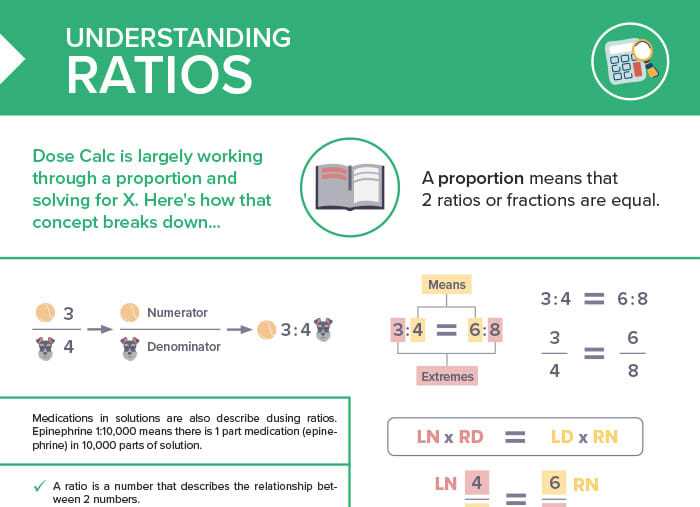
A proportion is an equation that shows two ratios are equal. The key to solving proportions is recognizing that they represent an equivalence between two fractions or comparisons. For example, if you have the proportion 3/4 = 6/8, it means that both fractions are equivalent.
To solve a proportion, use cross-multiplication. Multiply the numerator of one fraction by the denominator of the other and set them equal. For the proportion 3/4 = x/8, multiply 3 × 8 and 4 × x, which gives you 24 = 4x. Solving for x, you get x = 6.
The relationship between comparisons and proportions is built on the idea of equality. Proportions help to determine unknown values when the relationship between two sets of quantities is constant. For instance, if a recipe requires 2 cups of flour for every 3 cups of sugar, you can set up a proportion to find out how much sugar is needed for 4 cups of flour.
Proportions are commonly used in real-life applications such as cooking, scaling, map reading, and financial calculations. By grasping the relationship between ratios and proportions, you can apply these tools to a wide variety of practical problems.
Using Comparisons in Real-Life Scenarios and Applications
In cooking, the relationship between ingredients can be calculated using proportions. For example, a recipe that calls for 2 cups of flour for every 3 cups of sugar can be scaled based on the amount of flour you have. If you need to adjust for 5 cups of flour, set up a proportion to find the correct amount of sugar:
- 2/3 = 5/x
- 2x = 15
- x = 7.5 (cups of sugar)
In finance, proportions are used to calculate interest rates, investments, and tax rates. If an investment grows by 5% annually, you can determine how much it will grow in a specific time frame by applying percentage comparisons. For example, if you invest $1,000, the value after 1 year would be:
- 1,000 × 0.05 = 50 (annual growth)
- New total = 1,000 + 50 = 1,050
In sports, player statistics are often expressed in ratios. For instance, a basketball player’s shooting accuracy can be represented as a ratio of successful shots to total attempts. If a player made 200 out of 500 shots, their shooting accuracy ratio is:
- 200/500 = 0.4 or 40% accuracy
These practical applications demonstrate how the concept of proportional relationships helps solve everyday problems, whether you’re cooking, managing money, or analyzing sports performance. The ability to apply proportions makes calculations quicker and more accurate in real-world contexts.
How to Check Your Work and Verify Solutions
To ensure accuracy when solving problems involving proportions, follow these steps:
- Rearrange the equation: Ensure the equation is set up correctly. If you’re working with a proportion, check that both sides of the equation are comparable. For example, in the equation 3/5 = x/20, make sure that both the fractions represent the same type of quantities (e.g., amounts of flour to sugar).
- Cross multiply: In proportion problems, cross-multiply to check your solution. If you have a proportion like 3/5 = x/20, cross-multiply to get 3 * 20 = 5 * x. This gives 60 = 5x, and solving for x gives x = 12. Cross-multiply to verify your result.
- Check units: Ensure that the units match up. For example, if the problem involves converting 3 liters of milk into cups, ensure that the final answer is expressed in the correct unit (e.g., cups) after you solve the equation.
- Reverse calculations: Substitute your solution back into the original problem to check if it satisfies the equation. If you’re solving for x in the equation 2/3 = x/12, substitute x = 8 into the original equation: 2/3 = 8/12. Since both sides are equal, your solution is correct.
- Estimate: Before solving, estimate your answer. For instance, if you’re solving a problem where the final answer is supposed to be less than the number you’re comparing to, use logic to quickly assess whether your final solution is reasonable. This acts as a sanity check.
By following these simple steps, you can ensure that your calculations are correct and verify your solutions. Checking your work is an important habit to develop when solving proportional problems.