Step by Step Guide to Computing State Income Tax with Examples
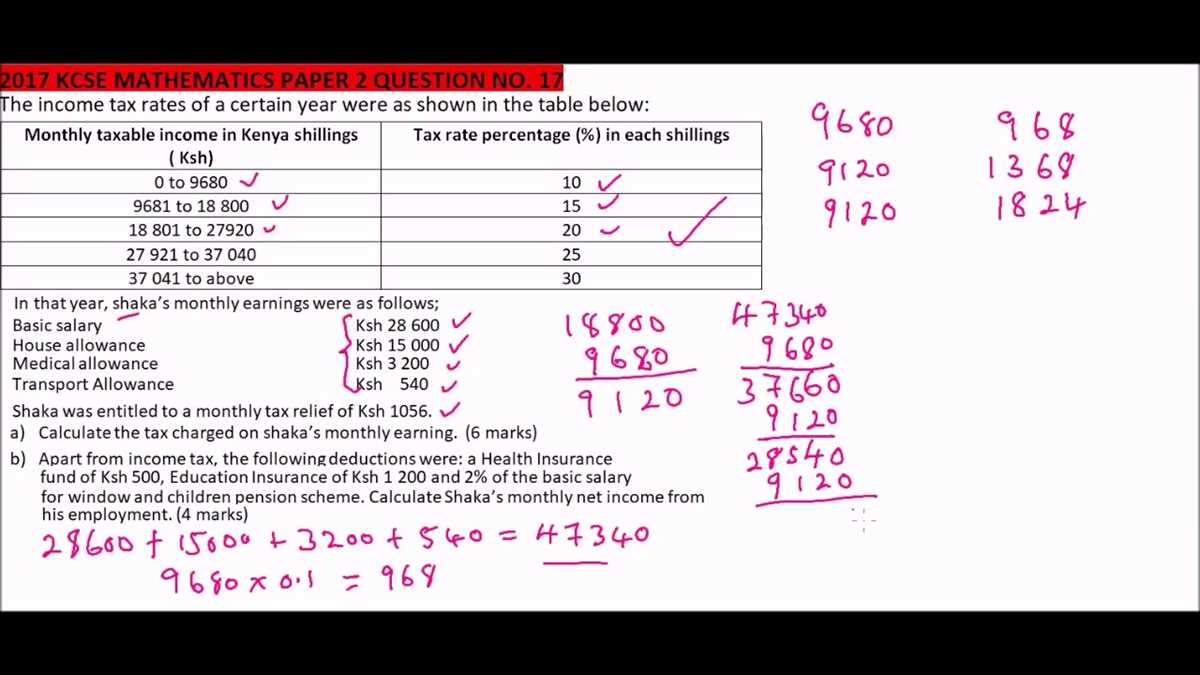
To accurately assess your fiscal obligations, focus on the key elements that determine the amount owed to the government. Begin by understanding the specific rules governing your jurisdiction. Each region sets its own rate system, which is essential for calculating how much you will pay based on your earnings.
Start by identifying your total income and applying the relevant deductions. These adjustments reduce the amount considered taxable and help in determining your liability. After applying these, use the applicable tax bracket to determine your final amount owed. Many people make errors in this phase, so double-checking each step ensures accuracy.
Once your calculation is complete, compare it to an official verification tool or guide. These resources often provide pre-calculated examples, which can help confirm your results. Understanding how to use these resources allows for more precise adjustments, especially if there are any exemptions or rebates you qualify for.
Step by Step Guide to Calculating Your Fiscal Responsibility with Examples
To calculate the amount owed, begin by identifying your total earnings. This figure should include all wages, salary, and any other forms of compensation or income received throughout the year. For example, if you earned $50,000 during the year, your starting point will be $50,000.
Next, apply any allowable deductions. These could include personal exemptions, charitable contributions, and other expenses that reduce the total taxable amount. If you qualify for a $5,000 deduction, subtract this from your initial earnings of $50,000. Your adjusted amount is now $45,000.
After determining your taxable amount, consult the applicable tax brackets for your area. Tax brackets are usually progressive, meaning the higher your earnings, the higher the rate at which you are taxed. For example, if the first $20,000 is taxed at 5%, and the next $25,000 is taxed at 7%, you would pay 5% on the first $20,000 and 7% on the remaining $25,000.
Finally, apply the tax rates. For our example, calculate the following:
- 5% on the first $20,000 = $1,000
- 7% on the remaining $25,000 = $1,750
Add the results together: $1,000 + $1,750 = $2,750. Therefore, the total amount owed is $2,750 based on a taxable income of $45,000. Always verify the brackets and rates for your specific jurisdiction as they may change annually.
Understanding the Basics of How to Calculate Your Fiscal Obligations
To begin with, identify your total earnings. This includes wages, salary, and any other forms of compensation. For instance, if you earned $60,000 in a year, that amount is your starting point.
Next, apply any allowable deductions. Deductions reduce your taxable earnings. These may include standard deductions, exemptions, and specific credits. If you qualify for $5,000 in deductions, subtract this from your total earnings of $60,000, leaving you with $55,000 as the amount that will be taxed.
After determining your taxable amount, check the local tax brackets. These brackets typically increase in percentage as your earnings rise. For example, you may pay 5% on the first $20,000 and 7% on the next $30,000. Each range of income is taxed at a different rate based on the scale set by your jurisdiction.
Now, calculate the amounts owed for each bracket. Using the earlier example, here’s how it works:
- 5% on the first $20,000 = $1,000
- 7% on the next $30,000 = $2,100
Finally, add up the amounts: $1,000 + $2,100 = $3,100. This is the total amount owed based on a taxable income of $55,000. Make sure to verify the correct tax brackets for your specific area, as they may vary each year.
Identifying the Key Elements in a Fiscal Obligation Formula
Start by determining your total earnings. This includes all sources of income, such as wages, business profits, and other compensations. For example, if you earned $50,000 from your job and $5,000 from freelance work, your total income is $55,000.
Next, identify any allowable deductions. Deductions reduce your taxable amount. Common deductions include retirement contributions, charitable donations, and medical expenses. For instance, if you qualify for $8,000 in deductions, subtract that from your total income of $55,000, resulting in a taxable amount of $47,000.
Then, locate the applicable tax rates. These rates may vary depending on your taxable income range. For example, earnings up to $20,000 might be taxed at 5%, and earnings above that could be taxed at a higher rate, like 7%. Understanding where your income falls within these ranges is critical for accurate calculation.
Finally, calculate your total liability by multiplying your taxable amount by the appropriate rates for each income bracket. If your taxable amount of $47,000 falls into multiple ranges, apply the correct percentage to each portion of income and then sum the results. For example, 5% on the first $20,000 and 7% on the remaining $27,000 will give you your final obligation.
Step 1: Determining Your Taxable Earnings
First, identify all sources of your earnings. This includes your salary, wages, bonuses, freelance work, rental income, and any other sources. For example, if you earn $50,000 from your job and $10,000 from a side business, your total earnings amount to $60,000.
Next, subtract any allowable adjustments or deductions that reduce your gross earnings. These could include contributions to retirement plans, student loan interest, or medical expenses. For instance, if you qualify for $5,000 in deductions, your taxable earnings would be reduced to $55,000.
Make sure to account for any exemptions you may be eligible for, such as personal exemptions or deductions for dependents. If, for example, you can deduct $2,000 for dependent children, this will further reduce your taxable amount.
After applying all deductions and exemptions, the result is your taxable earnings. This figure will serve as the foundation for the next steps in calculating your financial obligations.
Step 2: Applying Regional Tax Rates
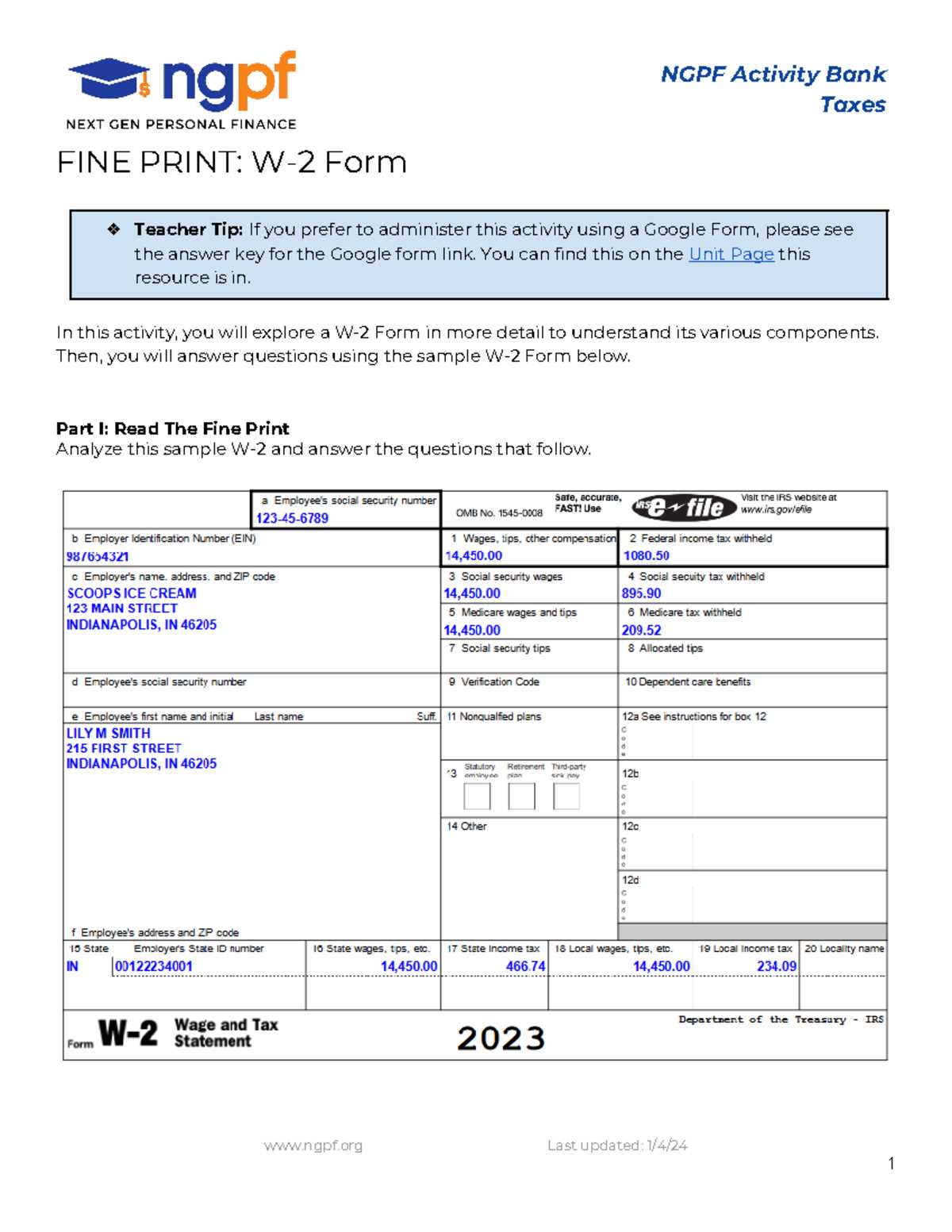
Next, determine the applicable rates for your jurisdiction. Different regions may use flat rates or progressive brackets, meaning the rate increases as your earnings rise. For example, if you live in a region with a flat rate of 5%, you simply multiply your taxable earnings by 0.05. If you have taxable earnings of $55,000, your calculation would be:
- $55,000 x 0.05 = $2,750
Alternatively, if your region uses a progressive system, you need to apply different rates to different portions of your earnings. For instance, the first $20,000 might be taxed at 3%, the next $30,000 at 5%, and any remaining earnings at 7%. Here’s how you would break it down for $55,000 of taxable earnings:
- First $20,000 x 3% = $600
- Next $30,000 x 5% = $1,500
- Remaining $5,000 x 7% = $350
Now, add these amounts together to get the total obligation:
- $600 + $1,500 + $350 = $2,450
Make sure to refer to the specific rates for your region, as they can vary significantly. Always check the latest official rates to ensure accuracy.
How to Use Deductions and Exemptions in Your Calculation
To reduce your overall obligation, identify eligible deductions and exemptions. These may include costs like mortgage interest, medical expenses, or contributions to retirement accounts. By subtracting these from your earnings, you lower your taxable base, which can result in a smaller liability. Here’s how to apply these reductions:
- Start with your total taxable earnings.
- Subtract any eligible deductions, such as student loan interest or charitable donations.
- If applicable, subtract exemptions for yourself, your spouse, and dependents.
For example, if your taxable earnings are $60,000, and you qualify for $5,000 in deductions and $2,000 in exemptions, your revised calculation would be:
- $60,000 – $5,000 (deductions) – $2,000 (exemptions) = $53,000
Now, you will calculate based on the reduced amount. Always check the specific regulations for your region to ensure you are applying the correct deductions and exemptions, as they vary depending on local rules.
Common Pitfalls to Avoid When Computing State Taxes
Avoid these common mistakes to ensure accuracy in your calculations:
- Incorrectly Reporting Deductions: Not all expenses qualify. Double-check eligibility before subtracting amounts like home office expenses or medical bills.
- Overlooking Tax Credits: Some credits directly reduce the amount owed. Ensure you’re taking full advantage of credits like education or energy-efficient home credits.
- Rounding Errors: Small rounding mistakes can add up, leading to a significant difference in the final amount. Always round to the correct number of decimal places as per local guidelines.
- Misunderstanding Tax Brackets: Ensure you apply the correct rate for each income tier. Many systems have progressive tax rates that require careful application.
- Failing to Account for Changes in Legislation: Tax rules often change, so stay updated on any new deductions, exemptions, or rate modifications for the current year.
By paying attention to these potential issues, you can reduce errors and avoid overpayment or underpayment on your filing.
Double-Checking Your Final Computation and Verifying with Official Tables
After completing your calculations, always double-check your final figure to ensure accuracy. Follow these steps:
- Review Each Step: Carefully go over the entire process. Verify that you’ve correctly applied deductions, exemptions, and rates for each income bracket.
- Use Official Rate Tables: Refer to the most recent government-issued rate tables for your specific location. These tables are typically updated annually and should be used as the authoritative source.
- Check for Common Errors: Look for common mistakes, such as incorrect rounding, missing figures, or wrong tax brackets. Even small errors can lead to a significant discrepancy.
- Compare to Previous Years: If possible, compare your result with your previous year’s filing. If the figures differ drastically, review your calculations for potential missteps.
- Seek Assistance if Needed: If you’re unsure about any step, consider consulting with a professional or using online verification tools provided by your local tax authorities.
Verifying your results with these steps will help ensure that your filing is both accurate and compliant with the latest regulations.
How to Interpret the State Income Tax Answer Key for Accuracy
To ensure the correctness of your calculations, follow these steps to accurately interpret the result guide:
- Match Your Calculations: Compare each of your computed amounts with the guide provided. Pay close attention to whether your figures fall within the correct brackets or categories.
- Check the Formula Application: Verify that the same formulas and rules are being applied correctly. Cross-reference with official guidelines to ensure no mistakes in applying rates or deductions.
- Understand the Calculation Method: Confirm that the same methodology (e.g., progressive rate structures) is being used as outlined in the provided solution guide.
- Look for Anomalies: Check for inconsistencies or errors in your final figure. If the guide suggests a different result, investigate whether you’ve missed a crucial step or input.
- Reference Official Resources: Always check official sources, such as your local government tax agency, to ensure the accuracy of rates and rules. Visit the [IRS website](https://www.irs.gov) for federal guidelines and information.
By carefully comparing your calculations with the provided answer guide and verifying with trusted resources, you can be confident in the accuracy of your final result.