Understanding the Dust Bowl Causes and Impacts Answer Key

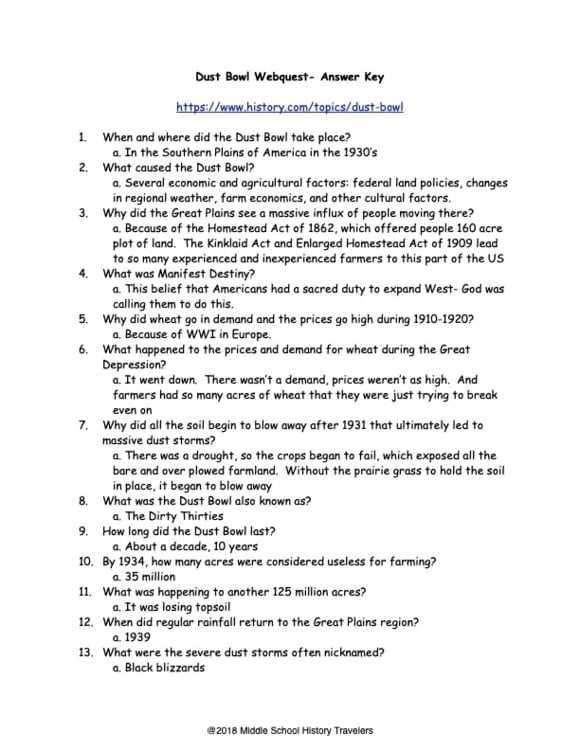
The 1930s saw one of the most severe ecological disasters in American history, causing widespread damage to agriculture and communities. The catastrophic weather events, coupled with poor land management practices, led to a series of massive dust storms that devastated farming regions. Understanding the main causes, effects, and responses to this period is crucial in recognizing its long-lasting impact on both the environment and the people affected.
The environmental catastrophe was driven by a combination of severe drought and over-farming, which stripped the soil of its natural nutrients and moisture. This left the land vulnerable to high winds, which carried away vast amounts of topsoil, creating what became known as the “black blizzards.” As a result, crops failed, livestock perished, and many families were forced to abandon their farms.
This section breaks down the key factors that contributed to the crisis, the efforts made to address the devastation, and the lessons learned that still influence agricultural practices and land conservation today. A closer look at these events reveals the complex interplay between human activity, climate, and the environment, offering important insights into how similar issues can be prevented in the future.
Key Insights into the 1930s Environmental Disaster
The severe weather patterns in the 1930s, coupled with unsustainable farming practices, led to a massive ecological crisis. The primary cause was the combination of a prolonged drought and over-plowing of the Great Plains, which left the soil exposed and vulnerable to high winds. Without natural vegetation to hold the soil in place, massive dust storms, often referred to as “black blizzards,” swept across the region, devastating crops and property.
Another key factor was the lack of effective land management strategies. The expansion of agriculture during World War I had encouraged farmers to increase crop production, but without proper crop rotation and soil conservation practices, the land was left barren. As a result, when drought struck, the soil became loose and easily swept away by wind, creating the iconic dust storms that defined the disaster.
The impact was severe, with many families losing their livelihoods and homes. The economic toll was immense, as the agricultural sector, particularly in states like Oklahoma, Texas, Kansas, and Colorado, collapsed. The government responded with the creation of soil conservation programs, which helped stabilize the land over time. Techniques such as crop rotation, planting grass to anchor the soil, and reducing the amount of land tilled each season became central to preventing further damage.
Understanding the social, environmental, and economic factors that contributed to this crisis is vital in preventing similar ecological disasters today. Sustainable farming practices and careful land management are key lessons from this period that remain relevant in modern agricultural policy.
Factors Leading to the 1930s Environmental Disaster
The primary cause of the crisis was the extended period of drought that affected the Great Plains. This natural event drastically reduced the moisture content in the soil, making it highly vulnerable to erosion.
Another significant factor was poor agricultural practices. Farmers extensively plowed the land to increase crop yields, but they did not implement crop rotation or maintain enough natural vegetation. This practice left the soil exposed and unable to retain its structure, making it prone to blowing away in the wind.
The combination of high winds and dry conditions led to massive soil erosion. Without vegetation to anchor the soil, the winds picked up the loose dirt, creating enormous dust clouds that caused severe visibility issues and environmental damage.
Over-farming in the region further exacerbated the problem. The demand for crops during World War I encouraged farmers to cultivate more land than was sustainable, and after the war, market prices for crops dropped. Farmers continued to plant without adjusting for the depleted soil, worsening the ecological conditions.
Finally, the lack of adequate government oversight and conservation efforts contributed to the disaster. There were few policies in place to promote sustainable farming practices or soil conservation until the effects of the crisis were felt, delaying the response and recovery.
Impact of Drought on Agricultural Practices
Extended drought conditions in the 1930s had a devastating effect on farming. The lack of rainfall made it impossible for crops to grow and left the soil dry and vulnerable to erosion. Farmers were unable to maintain adequate moisture levels, which resulted in reduced yields and the collapse of many agricultural operations.
Without sufficient water, crops like wheat, corn, and cotton failed to thrive. The lack of rain also meant that irrigation systems, where available, were ineffective. Fields turned barren as the ground cracked under the intense heat, and dust storms further complicated the situation by stripping away topsoil.
| Crop | Impact of Drought | Resulting Loss |
|---|---|---|
| Wheat | Inability to grow, reduced harvests | Mass crop failure, income loss |
| Corn | Stunted growth, low yield | Declining market value, food shortages |
| Cotton | Soil depletion, poor harvests | Farming collapse, economic impact on farmers |
The drought forced many farmers to abandon their land, as they were unable to make a living from the failed crops. This triggered a mass migration, with families leaving affected regions in search of work or more fertile land. The shortage of crops also led to an increase in food prices, further exacerbating the financial strain on farming communities.
In response to the crisis, the government introduced soil conservation programs to promote sustainable farming techniques, such as crop rotation and the planting of cover crops, to help preserve the land and prevent further damage from erosion.
Role of Over-farming in Dust Bowl Formation
Over-farming was a significant contributor to the ecological collapse of the 1930s. The demand for crops, especially wheat, led to the extensive plowing of the Great Plains. Farmers removed large amounts of native grasses, which had previously helped retain moisture and anchor the soil. This overexploitation of land weakened the soil structure, making it more susceptible to erosion.
As more land was cleared for farming, the natural cycle of the soil was disrupted. The lack of crop rotation and insufficient use of cover crops left the soil exposed and vulnerable to wind. With no protective vegetation, the soil dried out, and strong winds carried it away in massive quantities, creating the severe conditions that defined the environmental crisis.
Furthermore, many farmers over-planted during the early 1920s, encouraged by high crop prices, without considering the long-term health of the soil. This created a boom-and-bust cycle. When crop prices fell after World War I, many continued to over-farm to maintain profits, which only worsened the damage to the land. The repeated planting of crops without allowing the soil to regenerate ultimately led to a massive depletion of its nutrients.
To address these issues, the government later introduced soil conservation measures, such as the promotion of crop rotation, windbreaks, and grass planting, to restore the health of the land. However, the immediate impact of over-farming in the 1930s was devastating, and its role in the environmental disaster is undeniable.
Government Response and Relief Efforts During the Dust Bowl
The U.S. government’s response to the environmental and agricultural crisis in the 1930s involved several programs designed to provide immediate relief and prevent further damage. The main federal initiative was the creation of the Soil Conservation Service (SCS) in 1935, which aimed to implement soil-saving techniques across the Great Plains.
The SCS promoted practices such as crop rotation, planting cover crops, and building windbreaks to reduce erosion. These efforts helped stabilize the soil and increase crop yields in the long term. The government also paid farmers to reduce the amount of land they farmed and to allow the soil to rest, preventing further depletion of nutrients.
In addition to conservation efforts, the federal government provided direct financial assistance to struggling farmers. Programs like the Agricultural Adjustment Act (AAA) of 1933 offered subsidies to farmers who reduced production to help stabilize prices. Although this had limited success, it marked a significant step in the government’s involvement in managing agricultural issues.
The New Deal, under President Franklin D. Roosevelt, also aimed to address the broader economic hardships caused by the crisis. Agencies like the Works Progress Administration (WPA) and the Civilian Conservation Corps (CCC) created jobs for people affected by the disaster, offering work in public infrastructure projects and conservation efforts.
For further details on the government’s response and relief efforts, visit the official U.S. National Archives website: National Archives.
Effects of the Dust Bowl on Migrant Communities
The environmental disaster forced many farming families to leave their homes in search of work and better living conditions. As farms failed and crops were destroyed, thousands of families, particularly from Oklahoma, Texas, and Kansas, became displaced. These individuals, often referred to as “Okies” despite coming from various states, migrated primarily to California, hoping for better opportunities in agriculture or industry.
Upon arrival in California, migrant communities faced significant hardships. The state, which was experiencing its own economic difficulties during the Great Depression, was unable to accommodate the influx of new workers. Many migrant families lived in makeshift camps, which were overcrowded and lacked basic sanitation. The conditions were harsh, with little access to healthcare, food, or shelter.
These displaced families were often met with prejudice and hostility. Local residents viewed them as competition for jobs, which were already scarce. Migrants were frequently subjected to low wages and poor working conditions, especially in agricultural fields, where they were employed as seasonal laborers. The struggles of these communities were often depicted in literature, such as John Steinbeck’s “The Grapes of Wrath,” highlighting the severe social and economic impact of the migration.
Despite the difficult circumstances, migrant communities played a crucial role in California’s agricultural sector. Many continued to work in farming, contributing significantly to the state’s economy, even though they were treated as second-class citizens. The experience of these migrants during this period led to a greater awareness of labor rights and prompted later reforms in working conditions for agricultural workers.
How Soil Conservation Techniques Helped Mitigate the Crisis
Soil conservation methods introduced during the 1930s played a significant role in reducing further environmental damage caused by farming practices. These techniques helped restore soil fertility, prevent erosion, and stabilize the affected areas.
Some of the most effective practices included:
- Crop Rotation: Rotating different crops each season helped prevent the depletion of essential nutrients in the soil, allowing it to recover and maintain its fertility.
- Cover Cropping: Planting cover crops, such as clover or rye, between harvests provided ground cover that protected the soil from wind and water erosion while also adding organic matter to improve soil health.
- Terracing and Contour Plowing: These methods helped slow water runoff and reduce soil erosion by plowing along the contours of the land, allowing water to be absorbed rather than washed away.
- Windbreaks: Planting trees and shrubs in rows helped reduce wind speed, preventing soil from being blown away. These barriers also helped protect crops from harsh weather conditions.
These practices were promoted through federal programs, particularly the Soil Conservation Service (SCS), which was established in 1935. Farmers were encouraged to adopt sustainable farming practices through financial incentives and educational programs.
Over time, these soil conservation techniques led to improved soil stability and fertility, which helped mitigate the long-term effects of the disaster. By reducing erosion and encouraging more sustainable farming practices, the government’s efforts were instrumental in restoring agricultural productivity in the affected regions.
Long-term Environmental Changes Caused by the Dust Bowl

The environmental damage caused by the agricultural crisis in the 1930s had long-lasting effects on both the soil and the ecosystem. Over-farming, combined with severe droughts, led to a significant decline in soil fertility and an increase in erosion that impacted the land for decades.
Key long-term environmental changes included:
- Soil Degradation: Intense farming without proper conservation practices stripped the soil of its nutrients, making it less productive. Even after the crisis subsided, many areas faced difficulties in regaining soil health.
- Increased Erosion: The loss of vegetation and topsoil resulted in severe erosion, which continued for years. This led to the further deterioration of fertile land, making it challenging for farmers to restore their crops.
- Altered Water Cycles: The loss of soil integrity also affected the local water cycles. Soil erosion impacted water retention and the natural filtration of rainwater, leading to water scarcity in some areas and reduced agricultural output.
- Decline in Biodiversity: The destruction of natural habitats due to farming and wind erosion contributed to a decline in wildlife populations. Many plant species also struggled to grow, further reducing the region’s biodiversity.
Despite the adoption of soil conservation methods over time, the environmental recovery was slow. The prolonged effects of over-farming and erosion left a permanent mark on the affected regions, requiring decades of restoration efforts.
Additionally, the lessons learned during this period contributed to modern-day land management practices and agricultural policies, which emphasize sustainability and conservation to prevent similar environmental disasters.
Lessons Learned from the Dust Bowl for Modern Agriculture
Modern agriculture has benefited greatly from the lessons learned during the 1930s environmental crisis. Key takeaways have shaped contemporary farming practices, focusing on sustainability and soil health.
Important lessons include:
- Soil Conservation: Implementing crop rotation, cover cropping, and no-till farming helps maintain soil structure and prevent erosion. These methods ensure long-term soil fertility and reduce the risk of land degradation.
- Proper Land Management: Over-farming without considering soil health leads to permanent damage. Today, farmers use techniques like contour plowing and terracing to manage water flow and minimize soil loss.
- Diversification: Relying on a single crop can leave land vulnerable to market fluctuations and environmental stresses. Modern farming encourages crop diversity to improve resilience against pests, diseases, and extreme weather events.
- Use of Technology: Advances in irrigation systems, soil sensors, and weather forecasting have helped optimize resource use, ensuring crops are grown in conditions that promote health and productivity without overexploiting the land.
- Government Policies and Support: Policies promoting sustainable practices, financial incentives, and research into climate-resistant crops are vital to preventing a recurrence of past mistakes. The federal programs established after the crisis set a precedent for modern agricultural subsidies and education.
By learning from past mistakes, today’s agricultural practices focus on balancing productivity with environmental preservation. These methods help mitigate the risk of another environmental disaster, ensuring that farming can continue sustainably for future generations.