French Revolution Video Questions and Answers Key for Students and Educators
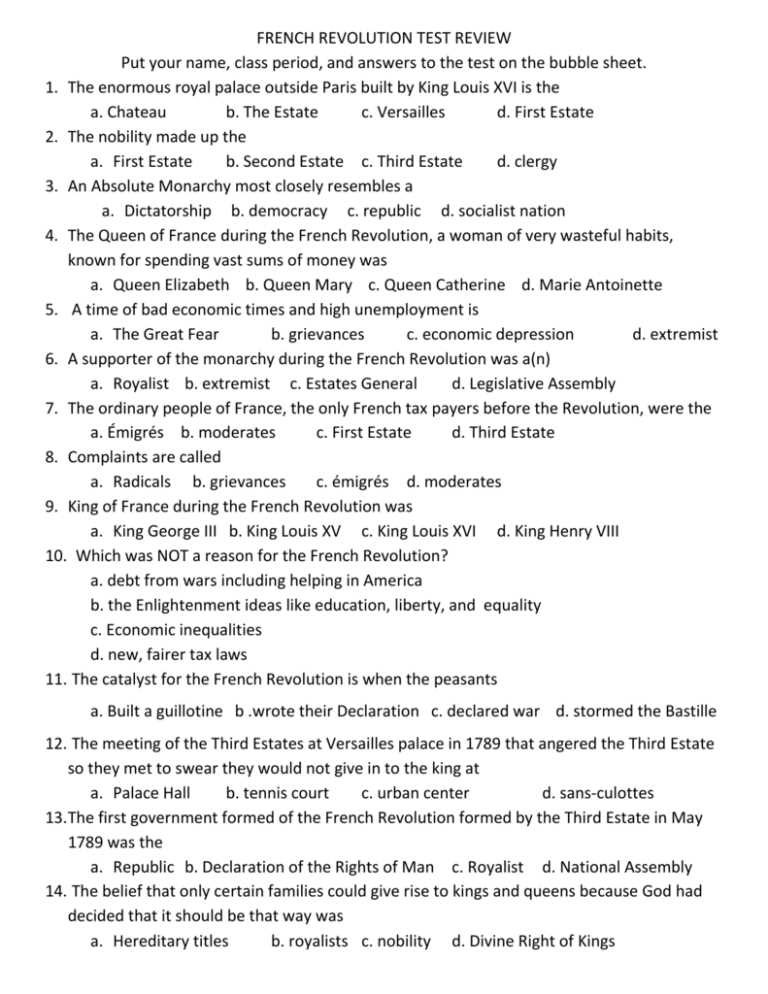
To fully grasp the profound changes in society, begin by understanding the primary factors that fueled major uprisings and the core shifts in governance. Focus on identifying the root causes that led to widespread discontent, such as economic crises, inequality, and the influence of radical intellectual movements.
Pay close attention to pivotal events–these turning points often offer clear evidence of how shifts in power were realized, from the fall of monarchies to the rise of new political frameworks. Recognizing key figures and their roles will give a solid foundation in comprehending how each decision impacted the trajectory of societal transformation.
Test your knowledge by exploring how the actions of different social groups–such as the working class or intellectuals–shaped outcomes. The path from unrest to significant structural change was rarely linear, so understanding the complexity of these events can provide a clearer picture of their lasting impact on modern governance and political thought.
By focusing on these core elements, you’ll be equipped to analyze not only the historical sequence but also the deeper shifts in cultural and social fabric that were set in motion during these critical moments.
Key Insights and Detailed Responses for History-Related Film Queries
To deepen your understanding of the significant events and figures portrayed, refer to the following clarifications and reflections based on the visual content:
| Topic | Explanation |
|---|---|
| Estates-General Assembly | This assembly, convened in 1789, was an effort to address France’s financial crisis. The First and Second Estates (clergy and nobility) had a significant advantage over the Third Estate, which included peasants and the bourgeoisie. This imbalance contributed to widespread dissatisfaction. |
| Bastille Storming | The attack on the Bastille prison on July 14, 1789, symbolized the rising tension against monarchy and inequality. While the prison held little strategic value, it became a powerful symbol of the struggle for freedom and a turning point in the struggle against royal authority. |
| Reign of Terror | This period, from September 1793 to July 1794, saw mass executions, including those of perceived enemies of the state. Led by Robespierre and the Jacobins, it highlighted the radical turn of the movement, where fear of counter-revolutionaries led to violent suppression. |
| Role of Women | Women played a crucial role in the political changes of the time. The march on Versailles in October 1789 was one example, as women, motivated by hunger and frustration, demanded that the King address their concerns and move to Paris. |
| End of Monarchy | The abolition of the monarchy was declared in September 1792. The execution of Louis XVI followed in January 1793. This marked a definitive break with centuries of absolute royal power and the beginning of the establishment of a republic. |
For further clarification and detailed analysis of these pivotal events, visit trusted educational resources, such as Encyclopaedia Britannica, which provides extensive coverage of the period and its complexities.
Understanding the Causes of the French Revolution Through Video
Focus on identifying the underlying economic struggles, social inequality, and the influence of Enlightenment ideals. These key factors set the stage for the rise of discontent among the population. Watch for explanations of how financial crises, such as the costly wars and royal debt, burdened the common people while the nobility remained largely exempt from taxation.
Pay close attention to the depiction of social structures. The rigid hierarchy, with the clergy and nobility enjoying privileges, created widespread resentment among peasants and urban workers. The video will often contrast the lavish lifestyles of the upper classes with the hardships faced by lower classes.
Enlightenment thinkers like Rousseau and Voltaire are crucial in shaping public opinion. Their ideas on liberty, equality, and democracy gained traction, fueling dissatisfaction with absolute monarchy. Watch for references to their writings and how they inspired calls for political change.
- Look for mention of the Estates-General and its failure to address grievances, leading to the formation of the National Assembly.
- Watch for discussions on the storming of the Bastille and its symbolism in the popular struggle against monarchy.
- Identify key moments when common citizens, inspired by philosophical texts, started questioning the legitimacy of the existing power structures.
By focusing on these elements, the visuals and narratives in the video provide a clear picture of the factors that led to the overthrow of the monarchy and the shift in power to the people.
Key Figures in the French Revolution: Who Were They?
Maximilien Robespierre was one of the most prominent leaders of the radical phase. His influence grew as he became a key figure in the Committee of Public Safety, overseeing the Reign of Terror. His role in shaping policies that led to mass executions remains a topic of historical debate.
Louis XVI, the king at the time, faced growing opposition as his inability to address economic crises and political unrest led to his downfall. His execution marked a definitive break from the monarchy and the beginning of a new political order.
Marie Antoinette, queen and wife of Louis XVI, became a symbol of excess and indifference to the common people’s struggles. Her lavish lifestyle and failure to reform the monarchy contributed to her eventual execution alongside her husband.
Jean-Paul Marat, a radical journalist, stirred public opinion through his fiery publications, advocating for the destruction of enemies of the people. His assassination by Charlotte Corday highlighted the intensity of political factions at the time.
Georges Danton, once an ally of Robespierre, was known for his powerful oratory and leadership in the early stages of the conflict. His later execution by Robespierre’s faction marked a significant shift in the direction of the revolution.
Napoleon Bonaparte, although emerging after the most violent phases, played a pivotal role in the subsequent consolidation of power. He would eventually rise to become emperor, reshaping France’s political structure and influencing European history for decades.
Impact of the Storming of the Bastille: Key Points
The assault on the Bastille on July 14, 1789, marked a decisive moment, symbolizing the breakdown of royal authority in Paris. This event sparked widespread panic among the ruling class and marked the start of radical political change. The fall of the prison signified a direct challenge to King Louis XVI’s power and the traditional system of governance.
First, the storming triggered a chain of events that led to the dismantling of feudal privileges. The attack united different segments of society, from the urban poor to the bourgeoisie, as a symbol of resistance against oppression. It galvanized the spread of revolutionary sentiments across France, especially in the cities, where similar uprisings soon followed.
Second, the symbolic value of Bastille’s capture was pivotal. The fortress, once a symbol of royal tyranny, became a rallying point for the masses, signaling that the old regime was vulnerable. Its fall spurred the establishment of the National Assembly, which declared the end of absolute monarchy and called for a constitutional system.
Third, the event influenced the actions of King Louis XVI, who, after the storming, realized the extent of unrest in the capital. In the following weeks, the king made critical missteps, such as recalling the Estates-General and later attempting to flee Paris, actions which ultimately weakened his position further.
Finally, the Bastille’s fall contributed to the broader spread of reformist ideas. The image of the prison’s destruction and the subsequent abolition of feudal dues in the months that followed became a symbol for the fight for equality and civil rights. It laid the groundwork for the creation of the Declaration of the Rights of Man and Citizen, marking a new political and social order.
The Role of the Estates-General in Shaping Social Change
The Estates-General played a pivotal role in igniting large-scale unrest. It was summoned by King Louis XVI in 1789 due to the financial crisis facing the monarchy. The assembly consisted of three estates: the clergy, nobility, and commoners. The third estate, representing the majority, quickly became frustrated with the lack of political power and underrepresentation.
This frustration led to a historic event–the Tennis Court Oath. After being locked out of the meeting hall, members of the third estate vowed not to disband until a new constitution was created. This act of defiance was a direct challenge to the king’s authority and laid the groundwork for subsequent radical shifts.
The Estates-General’s failure to resolve issues of taxation and inequality highlighted the systemic problems plaguing the old order. It marked the beginning of a breakdown in traditional authority structures, with the commoners seeking more power and voice in governance. The assembly’s inability to effectively address the grievances of the majority eventually led to the dissolution of the Estates-General and the formation of the National Assembly.
Explaining the Reign of Terror in Documentaries
Focus on how the period of intense political upheaval and violence is depicted in visual media. Emphasize the role of the Committee of Public Safety and its leaders, particularly Maximilien Robespierre, in implementing extreme measures against perceived enemies. Highlight key moments such as the execution of King Louis XVI and Marie Antoinette, which serve as powerful symbols of the era’s brutality.
Pay attention to the use of imagery, such as guillotines and crowds, which convey the sense of fear and tension that dominated society. Many documentaries capture the chilling atmosphere of mass executions, demonstrating the widespread panic and suspicion that led to public purges. The portrayal of Revolutionary tribunals also adds a sense of urgency and injustice, showing how quickly accusations led to death sentences.
Look for a balance between individual stories and broader historical context. Documentaries often focus on personal accounts of those who lived through the Terror, offering insight into the psychological and emotional toll on both the victims and perpetrators. At the same time, it’s important to examine the underlying political and social conditions that fueled such an extreme response to dissent.
Consider how the themes of justice, power, and morality are explored in these documentaries. The Reign of Terror is often framed as a response to external threats, but also as a period marked by internal conflict over the direction of the state. Documentaries frequently raise questions about whether the violence was justified and the lasting impact it had on the political structure that followed.
The Role of Napoleon Bonaparte in Documentary Analysis
Highlight Napoleon’s rise to prominence through military success and political maneuvering. His role in stabilizing the country after widespread disorder is key, as he capitalized on public discontent with the existing government structures. Examine his strategic brilliance on the battlefield, which earned him significant support and influence, enabling him to secure control over key military positions.
Focus on how his shift from general to ruler is portrayed. Documentaries often showcase his ability to consolidate power, beginning with his appointment as First Consul and culminating in his self-declaration as Emperor. Note how these shifts in power are connected to his strategic manipulations of the political system, as well as his understanding of public sentiment.
Pay attention to his reforms, which are often depicted as both progressive and authoritarian. The introduction of the Napoleonic Code is crucial in understanding his impact on the legal system, and how he centralized authority under his rule. This element of his leadership is usually analyzed in terms of its long-term effects on the structure of governance.
Consider the portrayal of his foreign policy and its impact on his reign. Documentaries frequently examine his military campaigns across Europe, where his ambitions were met with both success and eventual failure. His expansionist policies, particularly in the later stages of his rule, contribute to the narrative of his rise and fall.
Lastly, focus on how Napoleon’s complex legacy is addressed. Documentaries often present conflicting views on his role as a reformer versus a tyrant, highlighting the paradoxes of his rule and the consequences of his decisions for both France and Europe at large.
Social and Economic Effects Depicted in Films
Highlight the stark contrast between the elite and the common people. Films often show the lavish lifestyles of the aristocracy in direct juxtaposition to the dire poverty of the lower classes. These depictions emphasize the deep social divide and its consequences, illustrating how the disparity contributed to mass unrest.
Focus on the economic hardships faced by the working class. Look for scenes that showcase rising food prices, particularly the cost of bread, which led to widespread suffering. The burden of heavy taxes on peasants is often portrayed as a key factor in fueling public anger and disillusionment with the ruling class.
Analyze how filmmakers depict the collapse of the old economic order. Major shifts, such as land redistribution and the dismantling of feudal systems, are often central to the narrative. Document how these economic changes are portrayed as attempts to correct inequality, even though they came with their own challenges and consequences.
Examine how social mobility is impacted. Films frequently portray how the old class system is upended, with some lower-class characters rising to power, while others face new forms of oppression. The shift in social dynamics is often shown through dramatic scenes of upheaval and power struggles.
Pay attention to the portrayal of the consequences of social reforms. As old hierarchies dissolve, new systems of power emerge, often with mixed results. Look for scenes where the struggle for power between different social groups is shown, reflecting the complexities of reshaping society.
- Class disparity: nobility vs. working people.
- Economic distress: food shortages, rising prices, and tax burdens.
- Collapse of feudal economic systems and land redistribution.
- Impact on social mobility and new power structures.
- Challenges of social reforms and their consequences.
Common Misconceptions About the French Revolution in Films
One common misconception is that the entire population was united in their goals. Many films portray a singular, homogenous group of revolutionaries, but in reality, there were significant divisions within society. The struggle was not only between the monarchy and the commoners but also among various factions, including moderates, radicals, and royalists. Films often oversimplify these complex dynamics by focusing too much on the “us vs. them” narrative.
Another misconception is that the Reign of Terror was universally supported. Documentaries often present the period as a necessary step to safeguard the changes, but many people were horrified by the mass executions and the suspension of civil liberties. Not all revolutionaries or citizens supported the extreme measures of the Committee of Public Safety. Films sometimes fail to capture the nuances of public opinion during this time.
Some films exaggerate the role of a single leader. Napoleon Bonaparte is often depicted as the ultimate beneficiary of the upheaval, but his rise was just one aspect of the broader political chaos. In many narratives, his role seems too central, overshadowing the broader political shifts that led to the establishment of a new government. This can distort the timeline and significance of other key events and figures.
Another mistake is the portrayal of the events as being primarily about ideology. While ideas like liberty and equality were central, films sometimes downplay the economic pressures and social injustices that sparked the unrest. Bread shortages, high taxes, and economic instability were just as critical as philosophical debates about rights and freedoms.
Lastly, films often overemphasize the success of the aftermath. While the end of the monarchy was significant, the transition to a stable government was far from smooth. Many films fail to show the chaos that followed the period of upheaval, such as the ongoing power struggles and economic struggles under successive governments.