Chapter 12 Molecular Genetics Answer Key Solutions and Explanations
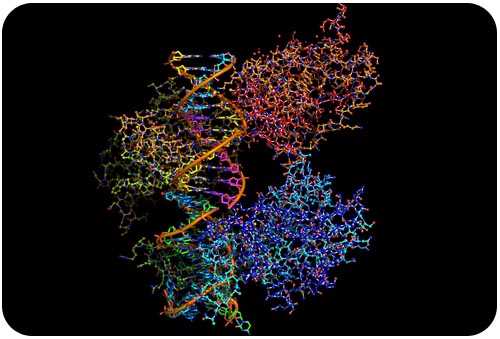
Focus on the major biological processes outlined in this section: DNA replication, transcription, translation, and gene regulation. These areas often cause confusion, so ensure you understand the specific mechanisms and their significance. For example, when studying DNA replication, pay attention to the enzymes involved, such as helicase and polymerase, and their roles in unwinding and building new strands.
Don’t skip over the question on the central dogma of biology. It’s crucial to grasp the flow of genetic information from DNA to RNA to protein. Break down each step in transcription and translation. Consider how the codons in mRNA are matched with amino acids to form a protein. Knowing the role of ribosomes and tRNA in translation can simplify these concepts.
Make sure to pay attention to gene regulation mechanisms. Promoters, enhancers, silencers, and transcription factors are central to how genes are turned on or off. These concepts appear frequently in exams and understanding them in the context of cellular processes will make them easier to recall.
Lastly, look for questions that require application of these processes to real-world scenarios. This includes genetic disorders or biotechnology applications, where you can link theoretical knowledge to practical uses. Approach these problems methodically, starting with the basic principles and building on them.
Understanding Key Concepts in Molecular Biology
To grasp the material thoroughly, focus on these specific topics and their application in solving practice problems. Start with DNA replication–identify key enzymes and their roles in the process:
- Helicase – Unwinds the double helix.
- DNA polymerase – Synthesizes the new strand by adding nucleotides.
- Ligase – Joins Okazaki fragments on the lagging strand.
For transcription, it’s vital to know how RNA polymerase interacts with the promoter region to begin transcription. Practice determining the direction of transcription based on template strand polarity. Be sure to review the significance of splicing and RNA processing, as these steps are often tested.
Next, study protein synthesis. Understand the relationship between codons in mRNA and their corresponding amino acids. A solid grasp of the roles of tRNA and the ribosome will help you accurately answer questions about translation. Test yourself on identifying which codons signal the start and stop of translation.
For gene regulation, focus on the roles of enhancers, silencers, and transcription factors. Learn how the environment can influence gene expression through epigenetic modifications. This will help in answering applied questions, such as how mutations in regulatory regions can lead to diseases.
Lastly, practice interpreting real-life examples. Questions often require applying your knowledge to scenarios involving biotechnology or genetic disorders. Break down these problems step by step by identifying relevant processes and mechanisms.
How to Interpret Molecular Biology Solutions
To interpret solutions effectively, begin by identifying the core concepts addressed in each question. For example, when faced with a problem on gene expression, isolate the key terms like promoter regions, transcription factors, and RNA polymerase. Determine how these components interact within the cell to affect gene regulation.
Next, break down the step-by-step process outlined in the solution. Each answer typically follows a logical progression. For replication questions, track the sequence of events: from helicase unwinding the DNA, to polymerase adding complementary bases, followed by ligase sealing the strands. Repeating this process helps clarify the underlying mechanisms.
Pay attention to diagrams or illustrations included in the solution. Often, these visual aids are used to highlight complex processes like RNA splicing or protein folding. Make sure you understand the visual representations and how they complement the written explanation.
For applied scenarios, focus on how theoretical knowledge is applied to real-world situations. If a question relates to genetic disorders, identify the mutation described, then trace how it alters normal cellular processes. Understanding the “why” behind the mutation’s effect is key to interpreting these answers correctly.
Finally, test yourself by recreating the steps from the solution independently. This ensures that you’re not just memorizing information, but actively engaging with the material and reinforcing your understanding of each concept.
Common Mistakes in Molecular Biology Questions
One frequent mistake is misunderstanding the direction of DNA replication. Many students confuse the roles of the leading and lagging strands. The leading strand is synthesized continuously, while the lagging strand is made in short fragments known as Okazaki fragments. Remember to distinguish between these two during replication-related questions.
Another common error occurs when answering questions about gene expression regulation. Students often overlook the role of enhancers and silencers, assuming that only the promoter region affects transcription. These regulatory elements, located far from the gene, play a crucial role in enhancing or silencing gene expression.
Misidentifying the function of tRNA during translation is another pitfall. Some students mistakenly believe that tRNA directly participates in protein synthesis by carrying amino acids to the mRNA. While it does carry amino acids, its true function is to match the codon sequence of mRNA with the correct amino acid.
Pay close attention to questions regarding mutations. A common mistake is not recognizing the difference between silent, missense, and nonsense mutations. Silent mutations do not change the amino acid sequence, while missense mutations replace one amino acid with another. Nonsense mutations result in a premature stop codon that truncates the protein.
Lastly, many students fail to link DNA structure and function in applied questions. For example, they may not realize how the double helix structure facilitates the semi-conservative nature of DNA replication. Be sure to connect molecular structures with their respective biological processes in your answers.
Understanding the Genetic Code and Its Application
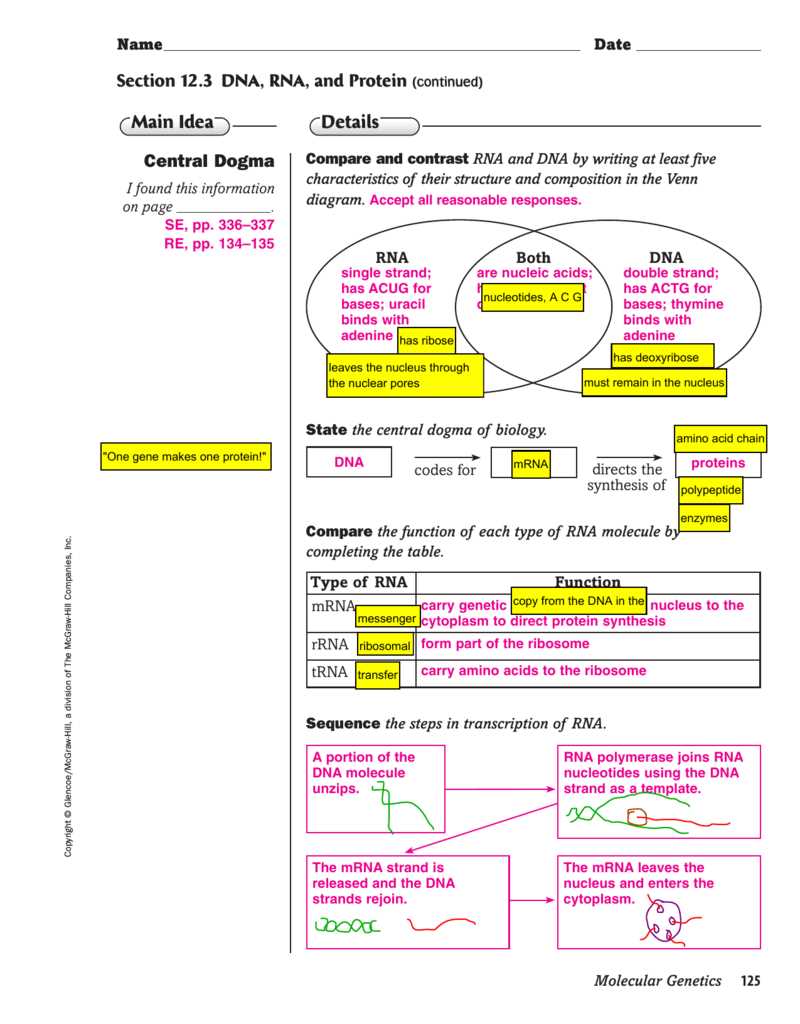
Focus on the triplet codon structure of the genetic code, where each set of three nucleotides in mRNA corresponds to a specific amino acid. Knowing the codon table is key to solving questions related to protein synthesis. Start by memorizing the start codon, AUG, which signals the beginning of translation, and the stop codons–UAA, UAG, and UGA–which signal the end of translation.
When faced with a mutation question, remember how changes in codons can lead to different outcomes. A missense mutation alters one amino acid, while a nonsense mutation results in a premature stop codon. Understand how these mutations can affect protein function and structure. For example, replacing a single amino acid in a critical protein domain could disrupt its function entirely.
Be prepared for questions on silent mutations as well. These occur when a codon change does not alter the encoded amino acid due to the redundancy of the genetic code. While silent mutations typically don’t impact protein function, they can still affect gene expression or splicing.
Pay close attention to applied problems that involve translating mRNA sequences into amino acid chains. Break down the mRNA sequence into codons, and use the codon table to identify the corresponding amino acids. This exercise is crucial for understanding how changes at the nucleotide level translate to protein-level effects.
- Step 1: Write down the mRNA sequence.
- Step 2: Divide it into codons (groups of three bases).
- Step 3: Use the codon table to determine the amino acid sequence.
Mastering these steps will help you not only answer specific test questions but also apply the genetic code concepts to real-world biological scenarios, such as gene mutations and their consequences in diseases.
Key Techniques in Molecular Biology Explained
One of the most widely used techniques in biological research is polymerase chain reaction (PCR). This method amplifies small segments of DNA, making it possible to study them in greater detail. Understanding the principles of PCR, including the role of primers, nucleotides, and DNA polymerase, is crucial. PCR typically involves three key steps: denaturation, annealing, and elongation. If you struggle with these steps, practice by working through real PCR problem sets.
Gel electrophoresis is another fundamental technique. This method separates DNA, RNA, or protein fragments based on size. To interpret the results, remember that smaller fragments travel farther through the gel, while larger ones move slower. Pay attention to the loading buffer, the agarose concentration, and the voltage applied, as these factors can impact the resolution of the bands. This technique is often used after PCR to confirm the presence of amplified fragments.
Restriction enzyme digestion is commonly employed to cut DNA at specific sequences. Recognizing the significance of these enzymes will help you understand their applications in cloning, mapping, and analysis of genetic variation. Be sure to learn the recognition sites for the most commonly used enzymes, such as EcoRI or HindIII, and practice interpreting digestion patterns on electrophoresis gels.
Another important technique is DNA sequencing, which determines the exact order of nucleotides in a DNA segment. Understanding methods like Sanger sequencing and next-generation sequencing will help you analyze sequencing results more effectively. Pay attention to the principles behind chain termination in Sanger sequencing and the advantages of high-throughput methods in large-scale genomic studies.
For more in-depth explanations of these techniques, consult reputable sources such as the National Center for Biotechnology Information (NCBI): https://www.ncbi.nlm.nih.gov.
How to Approach DNA Replication Questions
To tackle DNA replication questions, start by clearly identifying the enzymes involved. Focus on their specific roles during the process. For example, helicase unwinds the DNA double helix, while DNA polymerase synthesizes the new strand by adding complementary nucleotides. Understanding these functions helps in tracking the replication fork and its progression.
Next, differentiate between the leading and lagging strands. The leading strand is synthesized continuously, while the lagging strand is formed in small fragments, known as Okazaki fragments. Pay attention to the direction of synthesis for each strand, as it helps clarify the mechanism behind their formation.
Make sure you understand the role of primase in laying down an RNA primer, which is required for DNA polymerase to start adding nucleotides. This is a crucial step in ensuring replication starts correctly.
When answering questions about DNA replication, always specify the enzymes and processes involved. For example, you might be asked about the function of DNA ligase, which seals the gaps between Okazaki fragments, completing the lagging strand synthesis.
Also, watch out for questions on replication errors. Recognize how proofreading by DNA polymerase reduces mistakes and how mismatch repair works to correct errors after replication. Understanding these error-checking mechanisms is often critical in answering replication-related questions.
Decoding Protein Synthesis Concepts
Focus on the two key stages: transcription and translation. In transcription, an RNA copy of the DNA sequence is made, starting with the binding of RNA polymerase to the promoter region. Pay close attention to the processes of initiation, elongation, and termination. For translation, ensure you understand the role of ribosomes and tRNA in synthesizing proteins from mRNA sequences.
To decode questions on transcription, identify the main steps: RNA polymerase binds to the promoter, unwinds the DNA, and synthesizes an mRNA strand complementary to the DNA template. Make sure to note the key differences between the template and coding strands of DNA.
During translation, remember that each codon on mRNA corresponds to an amino acid, and tRNA carries the appropriate amino acid to the ribosome. Focus on how the ribosome reads the mRNA sequence and assembles amino acids into a polypeptide chain. Be sure to identify the start codon AUG and the three stop codons UAA, UAG, and UGA.
| Stage | Key Players | Process |
|---|---|---|
| Transcription | RNA polymerase, DNA | Synthesizing RNA from a DNA template |
| Translation | Ribosome, mRNA, tRNA | Building a protein by matching codons with amino acids |
Keep track of how mRNA is processed before translation, including splicing and the addition of a 5′ cap and poly-A tail. Recognize that these modifications are essential for mRNA stability and proper translation initiation.
When studying these processes, practice by mapping out the stages and components involved in both transcription and translation. This will help you clearly understand the flow of genetic information and apply this knowledge to related questions effectively.
Real-World Applications of Concepts in Biological Research
Understanding the mechanisms behind DNA replication and gene expression is crucial for applications in biotechnology, such as gene editing. Techniques like CRISPR-Cas9 rely on our knowledge of DNA repair and recombination. By targeting specific genes, scientists can make precise edits to the genome, leading to potential treatments for genetic disorders, cancer, and viral infections.
Another application is the use of PCR (polymerase chain reaction) in forensic science. PCR allows for the amplification of minute amounts of DNA, enabling the identification of individuals from trace biological samples. This technology is also pivotal in diagnosing genetic conditions and infectious diseases, where rapid and accurate detection is necessary.
The principles of protein synthesis are applied in drug development, particularly in creating targeted therapies. Understanding how proteins are made and how mutations affect their structure and function has led to the development of enzyme replacement therapies for conditions like cystic fibrosis and Gaucher’s disease. These therapies restore normal protein function in patients.
Genetic sequencing is another real-world application that has revolutionized personalized medicine. By analyzing an individual’s genetic makeup, doctors can tailor treatments to the person’s specific genetic profile, improving the efficacy and minimizing the side effects of medications.
These applications demonstrate how fundamental concepts in genetics are translated into practical tools and therapies that impact healthcare, law enforcement, and biotechnology industries. As these techniques continue to evolve, they open new possibilities for improving human health and solving complex biological problems.
How to Use the Answer Key to Study for Exams
To maximize the effectiveness of the solution guide, begin by carefully reviewing the explanations for each question. Focus on understanding why specific answers are correct and how they relate to core principles, such as the role of enzymes in DNA replication or the function of tRNA during protein synthesis. This approach helps reinforce the concepts behind each step.
After reviewing the solutions, test yourself by attempting similar problems. Use the answer guide only after attempting the question on your own. This active recall method solidifies your understanding and helps identify areas where you may need further review.
Look for patterns in the types of questions that frequently appear on exams. For example, if a topic like transcription or translation is heavily featured, create a focused study session on these areas. Practice writing out detailed steps, including all key enzymes and molecules involved, to ensure thorough comprehension.
Utilize the provided answers to cross-check your own work. If your answers differ, analyze where you went wrong and understand the reasoning behind the correct solution. Pay special attention to common mistakes, such as confusing the roles of DNA polymerase and RNA polymerase or misidentifying the functions of different types of RNA.
Lastly, actively engage with the material by teaching the concepts to someone else or explaining them out loud. Teaching reinforces your understanding and helps identify any gaps in knowledge.