Solutions for Correct Unit Usage in Chemistry Problems
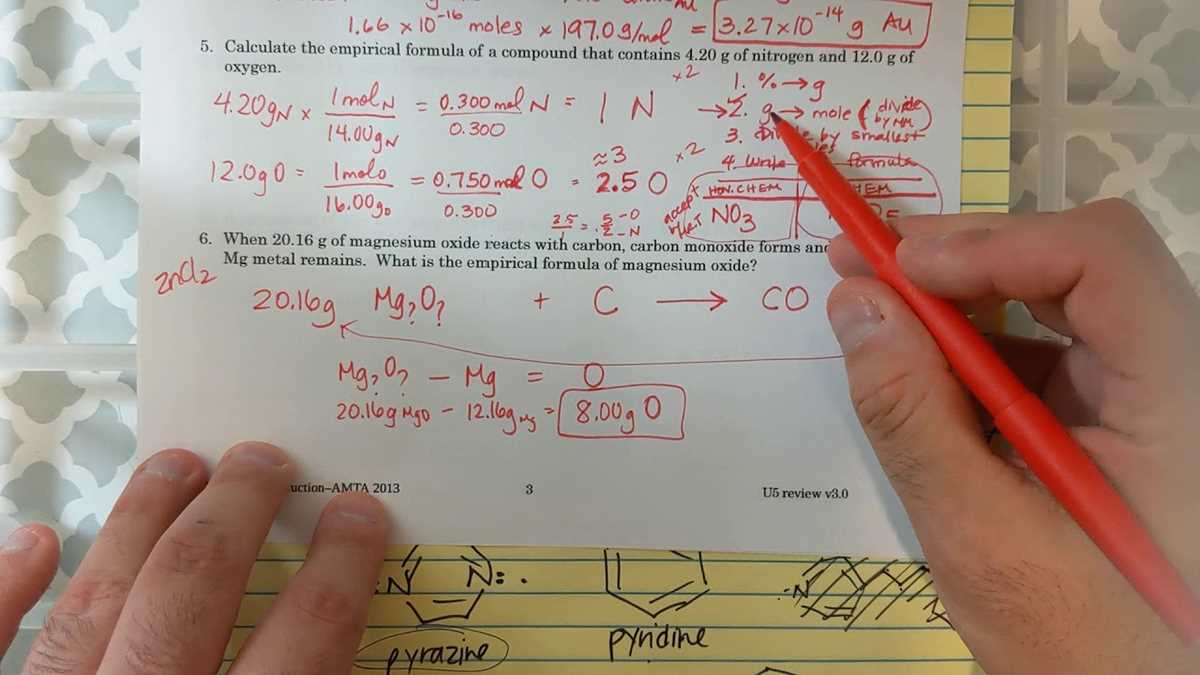
When solving scientific problems, ensuring accurate measurement conversions is vital. A common mistake involves improper conversion between different scales, which can lead to incorrect results. Always verify the units you are using to match the given problem’s requirements.
For instance: If a question asks for the mass of an object in grams and you are given the data in kilograms, ensure to convert the value correctly. 1 kilogram equals 1000 grams. A failure to convert accurately will skew the results.
Another key aspect is the proper handling of derived units. For example, when working with density, you may need to use grams per milliliter (g/mL) instead of kilograms per liter (kg/L). Different units can express the same quantity, but the relationship must be correct for meaningful calculations.
Lastly, take note of the specific contexts in which different units are more applicable. For instance, gas laws commonly require the use of atmospheres (atm) or pascals (Pa) for pressure, while the metric system is frequently used for volume and mass. Misapplication can lead to errors in your final answer, so always double-check your unit conversions before finalizing your calculations.