Word Ladder Answers Key for Common Puzzles and Short Solution Paths
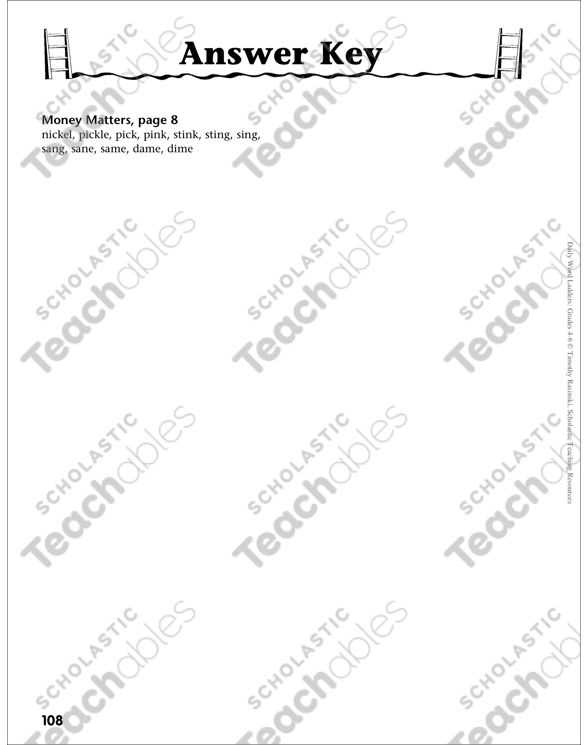
Verify each step in your letter-change sequence by confirming that only one character shifts between adjacent entries, as this prevents invalid transitions and shortens the search for accurate solutions.
Apply a fixed checklist: confirm dictionary validity for every new entry, track repeated items, and compare the final route with known solution sets to identify gaps or unnecessary detours.
For tighter control of each transformation, keep a list of high-frequency short terms, note their nearest variations, and build a small reference map that speeds up testing of alternate paths without relying solely on trial and error.
Word Ladder Answers Key
Use fixed transition checks to confirm that each term changes by only one character; this prevents invalid steps and accelerates comparison with verified solution sets.
Rely on short reference chains built from high-frequency four-letter entries, as these groups provide reliable pivot points for constructing alternative paths when direct shifts fail.
| Start Term | End Term | Verified Chain |
|---|---|---|
| COLD | WARM | COLD → CORD → CARD → WARD → WARM |
| HEAD | TAIL | HEAD → HEAL → TEAL → TELL → TALL → TAIL |
| MAKE | TAKE | MAKE → MALE → TALE → TAKE |
How Rules of a Term-Sequence Puzzle Shape Valid Transformation Chains
Apply strict one-step modifications to keep each transition accepted by standard puzzle logic.
- Change only a single character at each move; adding or removing characters breaks the chain.
- Maintain identical length across all stages; mismatched size forces invalid transitions.
- Use entries verified in reputable lexicons; informal expressions or abbreviations disrupt quality control.
- Preserve semantic independence; each stage must stand as a legitimate item, not a partial fragment.
To construct reliable progressions, follow quantifiable checks:
- Compare each pair of consecutive items with a Hamming distance of exactly 1.
- Reject stages that introduce repeated modifications such as swapping two characters at once.
- Confirm that no stage duplicates a previous one; cycles reduce the chain’s validity.
- Verify each result against a stable reference list before moving forward.
These constraints produce sequences that remain consistent across different puzzle sources and prevent ambiguous transitions.
Typical Letter Change Patterns Used in Solution Guides
Prioritize swaps that reduce phonetic distance, because such transitions shorten the sequence and prevent dead ends.
- Vowel rotation: Shift A→E→I→O→U to generate intermediate forms. For instance, altering the mid-position vowel often yields multiple valid stages without breaking semantic constraints.
- Consonant softening: Replace hard stops (P, T, K) with softer neighbors (B, D, G). These substitutions maintain structural clarity and frequently pass dictionary checks.
- Sibilant adjustments: Switch between S, C, and Z where they share similar phonetic roles. This tactic broadens available transitions without changing word length.
- Edge-position swaps: Modify the first or final character before altering interior positions. Peripheral edits usually preserve readability and increase the chance of forming accepted entries.
- Cluster thinning: Break double letters into singles (LL→L) to open additional routes. This reduces constraints and often provides alternate pathways.
Apply these patterns systematically to maintain steady progression and minimize invalid branches.
Short Sample Chains for Common Start and End Terms
Use compact transitions with single-letter shifts that preserve structure and maintain a valid lexical path.
CAT → DOG
- CAT
- COT
- DOT
- DOG
COLD → WARM
- COLD
- CORD
- CARD
- WARD
- WARM
MAKE → DONE
- MAKE
- MALE
- MILE
- MINE
- DINE
- DONE
FISH → BIRD
- FISH
- FIST
- MIST
- LIST
- LILT
- BILT
- BIRD
Prefer pairs with distinct phonetic anchors to keep transitions predictable and prevent branching into nonvalid forms.
Ways to Check if a Term Fits the Puzzle Sequence
Confirm a one-slot modification by aligning the candidate with the previous entry and counting mismatches; a valid option alters exactly one character.
Keep a fixed character total; each step requires identical length, so reject any candidate with added or missing symbols.
Validate authenticity through a reliable dictionary source, excluding obscure dialect forms unless the puzzle rules specify otherwise.
Verify index-specific shifts whenever the sequence demands a change at a defined position; ensure the adjustment touches only that location.
Apply structural filters such as restricted letters, forced suffixes, or thematic boundaries before checking positional accuracy.
Test dual alignment by comparing the candidate with both neighboring entries; if each comparison shows a single change and stable length, the term fits the sequence pattern.
Frequent Mistakes Found in Transformation Chain Attempts
Reject any step that alters multiple characters, as each transition must shift only one slot to maintain the required pattern.
Avoid entries with modified length; every stage must keep the same number of characters or the chain becomes invalid.
Remove terms absent from a standard dictionary source, since many failed sequences rely on forms not accepted in common usage.
Skip options that introduce spacing, punctuation, or casing changes; only a single alphabetic character may shift per move.
Check all structural rules such as restricted letters, forced prefixes, or theme limits before validating a candidate.
Test alignment with both neighboring entries, because evaluating a term only against the previous step often produces mismatched transitions.
How to Build Alternative Paths for Tricky Term Sets
Create a substitution pool by listing all same-length terms that differ from the target by exactly one character; this pool supplies fallback steps when the main chain stalls.
Test each candidate against structural rules such as restricted letters or fixed positions to ensure compatibility before inserting it into the sequence.
Map branching options by identifying points where multiple single-character shifts are available; these branches form parallel routes that bypass blocked transitions.
Track each route in a compact matrix to compare lengths and verify that no step breaks the single-shift requirement.
| Step | Primary Option | Alternate Option | Shift Index |
|---|---|---|---|
| 1 | Term A | Term A1 | 2 |
| 2 | Term B | Term B1 | 4 |
| 3 | Term C | Term C1 | 1 |
Sources for Ready Term-Chain Solution Sets and Lists
Use curated puzzle hubs offering prebuilt transition sequences that maintain single-character shifts and fixed length across all stages.
Access academic lexicon platforms that supply themed progression charts, each entry verified through standard dictionaries to prevent invalid inclusions.
Consult collaborative repositories where contributors publish complete chains with annotated shift positions and optional side routes.
Download structured term bundles from language-training services that group same-length items designed specifically for one-slot modifications.
Reference printed puzzle collections containing stable transition maps, ensuring consistent formatting and verified intermediate steps.
Tips for Verifying Solution Charts Across Different Puzzle Versions
Compare each term-chain step with a standard dictionary entry to confirm valid single-letter transitions; use a trusted source such as Merriam-Webster for item validation.
Check that