Understanding Ionic Bonds with Detailed Solutions
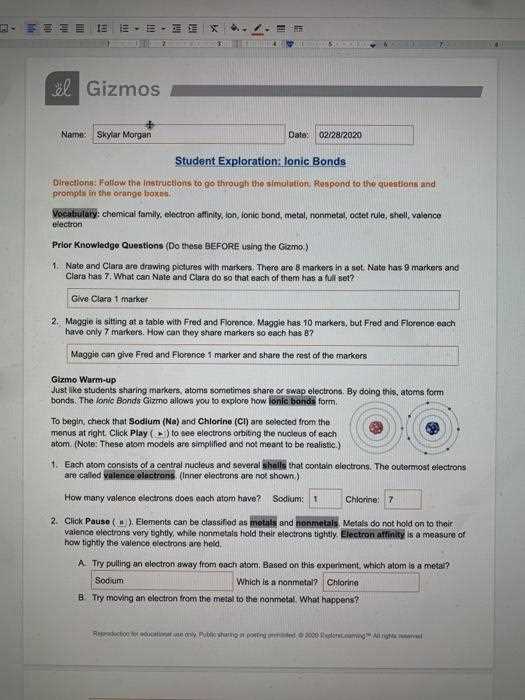
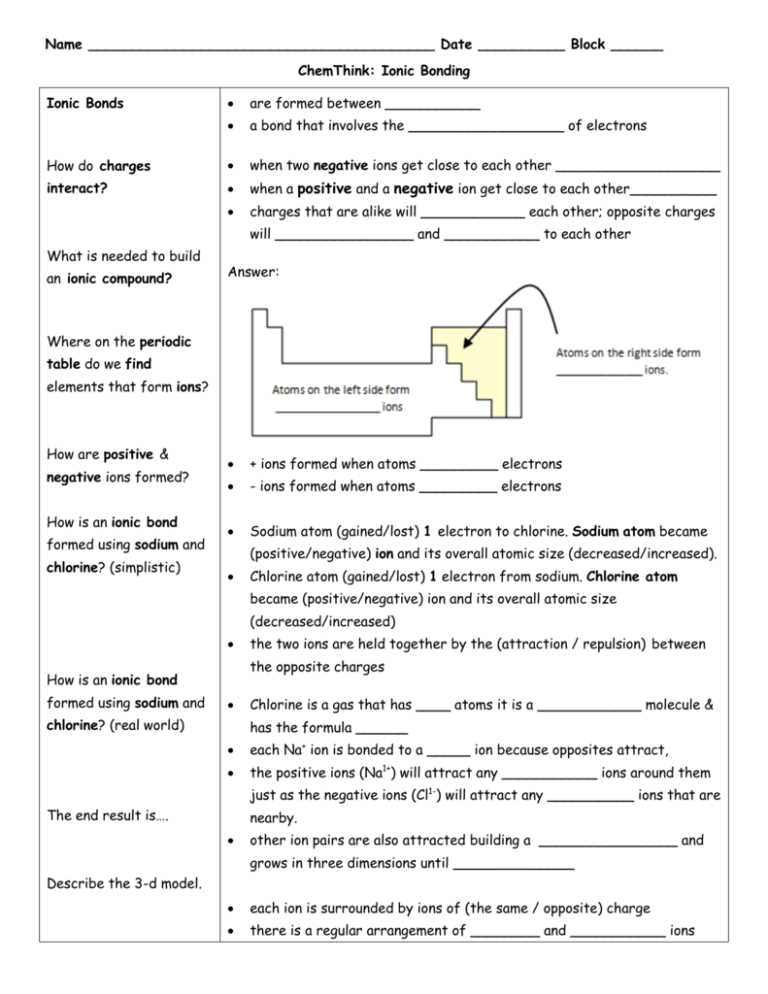
To solve the problem involving electron transfer between atoms, focus on identifying how the electron distribution changes when atoms of different electronegativities come together. The atom with higher electronegativity gains electrons, while the atom with lower electronegativity loses them. This transfer creates charged particles, leading to a stable compound due to electrostatic attraction.
When handling such exercises, carefully examine the resulting positive and negative charges. Ensure you count the number of electrons lost and gained. The balance between these charges is what holds the compound together, and understanding this balance is key to solving related problems correctly.
Always double-check your work to confirm the number of electrons on each atom after the transfer. This will help prevent common mistakes and ensure that the final product is accurate. Practice with different elements to strengthen your grasp on these interactions and improve your problem-solving skills.