Understanding the Components of Blood and Their Functions
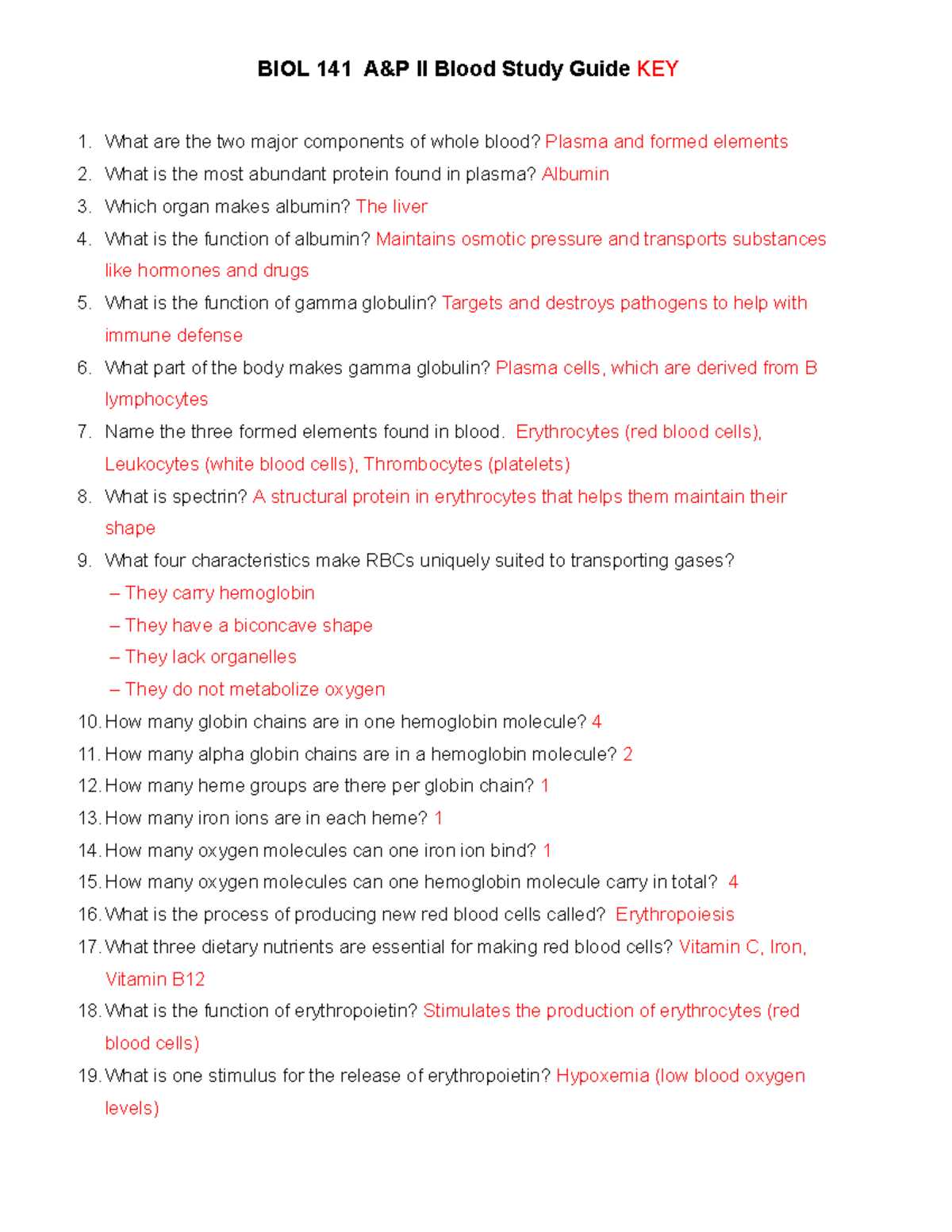
The red cells play a key role in transporting oxygen throughout the body. Their unique structure allows them to carry large amounts of oxygen, ensuring efficient delivery to tissues and organs. When studying these cells, focus on their lifespan and the process by which they are produced in the bone marrow.
White cells, which are integral to the immune system, defend the body against infections. They are classified into various types, such as neutrophils and lymphocytes, each with distinct functions in protecting the body. Pay attention to their ability to recognize and destroy pathogens through complex mechanisms like phagocytosis and antibody production.
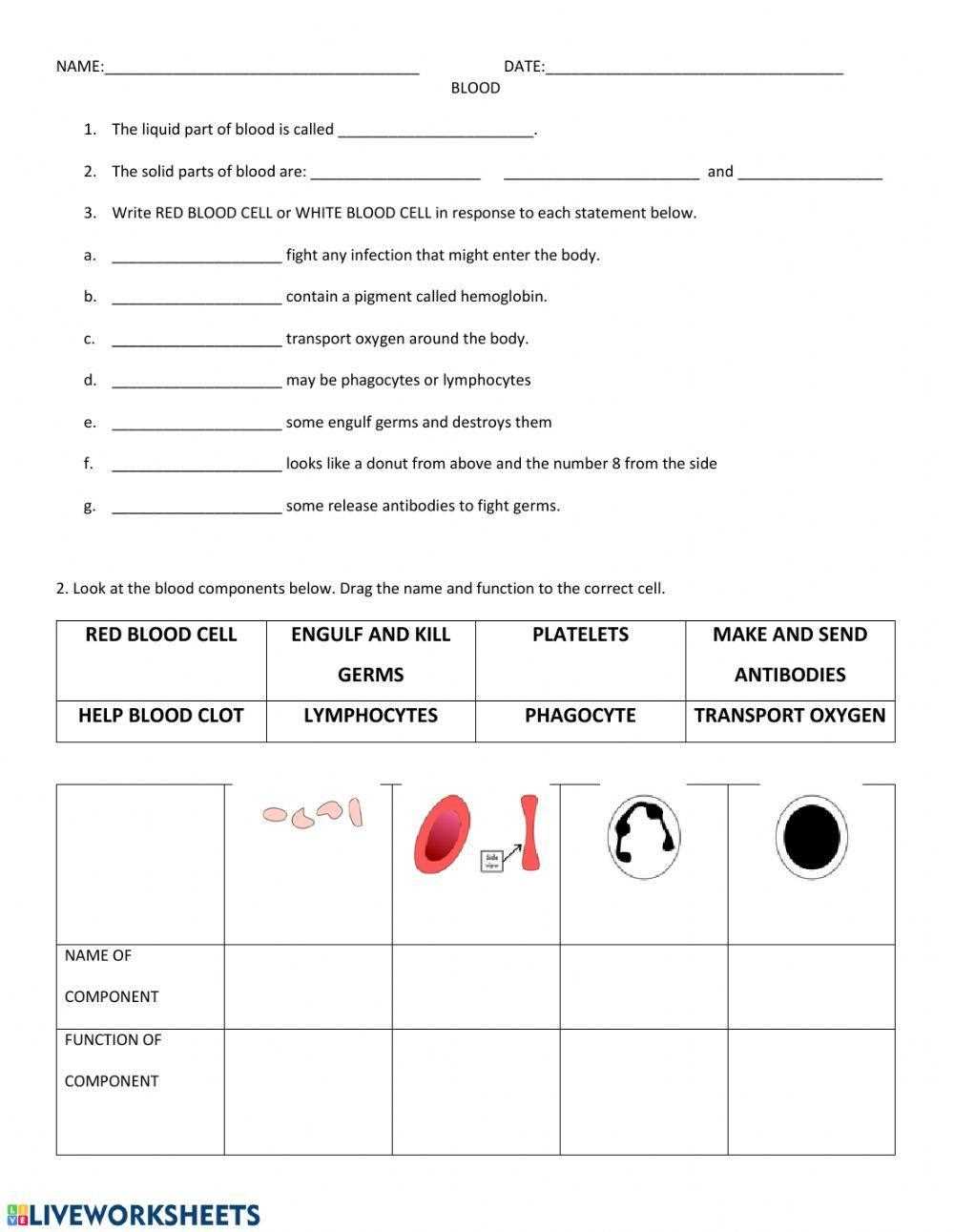
The fluid portion, known as plasma, is crucial for transporting nutrients, hormones, and waste products. It makes up about 55% of the total volume and contains water, proteins, and other substances vital for maintaining homeostasis. Make sure to understand how plasma proteins like albumin help regulate blood volume and pressure.
Finally, platelets play a critical role in clot formation. These small cell fragments are essential in preventing excessive bleeding when injuries occur. Study their activation process, as well as how they interact with clotting factors to form a stable fibrin mesh at the site of injury.