Answer Key for Mendelian Genetics Worksheet with Detailed Solutions and Explanations
To tackle exercises on inheritance patterns, it’s crucial to begin by reviewing dominant and recessive traits. Recognize that a single trait can be inherited through various combinations of alleles. Understanding these combinations, such as homozygous or heterozygous pairs, will allow you to predict outcomes based on genetic crosses.
Focus on the Punnett square method for determining the likelihood of offspring inheriting particular traits. This tool is invaluable for organizing genetic information and visualizing potential genotypic and phenotypic ratios. It’s essential to know how to apply this technique in simple monohybrid crosses as well as more complex dihybrid crosses.
Accuracy in recognizing different allele combinations will help when determining the expected ratio of traits in offspring. Pay attention to whether the traits are linked or independent, as this affects the predictions made. Mastering these concepts provides a solid foundation for solving problems related to heredity.
Once you have a solid grasp on the basics, challenge yourself with problems involving incomplete dominance, codominance, and sex-linked traits. These scenarios often require a deeper understanding of how alleles interact in more advanced genetic systems. Test your knowledge by considering different scenarios and using tools like Punnett squares to predict genetic outcomes.
Guidelines for Solving Genetic Inheritance Problems
To predict the likelihood of offspring inheriting specific traits, use a Punnett square. Start by identifying the genotypes of the parents. For example, if one parent is homozygous dominant (AA) and the other is heterozygous (Aa), the square will show possible combinations of alleles in the offspring. In this case, half the offspring will be heterozygous (Aa) and half will be homozygous dominant (AA).
For a cross between two heterozygous parents (Aa x Aa), the Punnett square will yield a 1:2:1 ratio, with 25% homozygous dominant (AA), 50% heterozygous (Aa), and 25% homozygous recessive (aa) offspring.
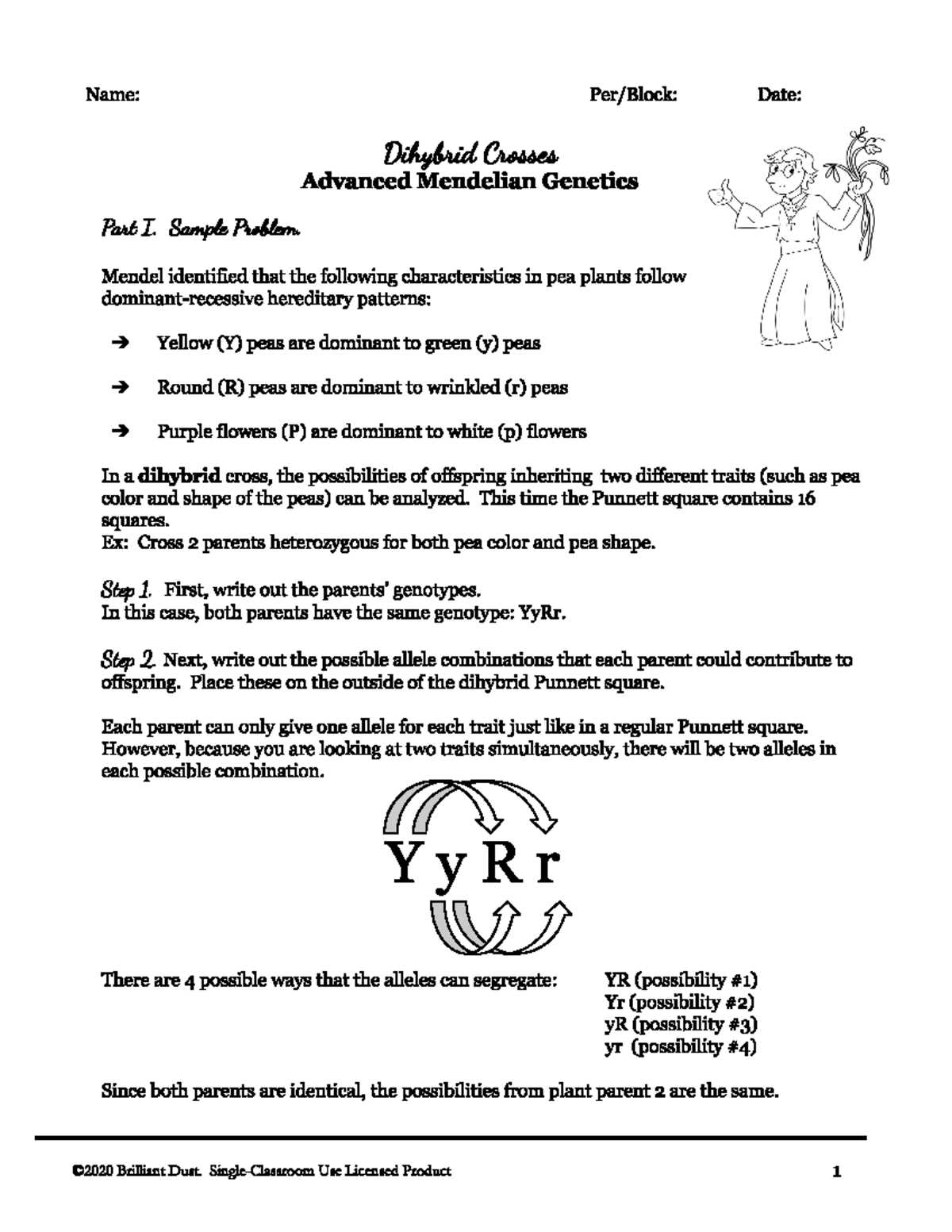
When working with dihybrid crosses, treat each gene independently. For example, if you cross two individuals that are heterozygous for two traits (AaBb x AaBb), use a 16-square Punnett square to show all possible combinations. The resulting phenotypic ratio for this cross is typically 9:3:3:1.
Understand the inheritance of dominant and recessive traits. A dominant allele will mask the expression of a recessive allele. For example, if a dominant allele (A) is paired with a recessive allele (a), the dominant trait will be expressed. Recessive traits only appear when an individual has two copies of the recessive allele (aa).
Always remember that when both parents contribute the same allele, the offspring’s genotype will reflect the parental genotype. If the alleles differ, the dominant allele will determine the phenotype of the offspring. Additionally, use the laws of probability to estimate the chances of inheriting particular traits, especially in large crosses.
Understanding Punnett Squares in Heredity
To predict offspring traits, construct a Punnett square by placing parental genetic information along the top and side. Each square within the grid represents a potential genetic combination for the offspring. For a monohybrid cross, use a 2×2 grid for two alleles. The alleles from each parent combine in the boxes, showing possible genotypes for the offspring.
In a dihybrid cross, a 4×4 grid is used to account for two traits. When working with dominant and recessive alleles, dominant traits are represented by uppercase letters and recessive by lowercase. The offspring may inherit either homozygous or heterozygous combinations of alleles, which will determine the phenotype based on the dominance pattern.
Ensure the genotypic ratios are calculated accurately. After completing the Punnett square, identify the proportion of each genotype in the grid. For example, a 3:1 ratio of dominant to recessive traits is typical for a monohybrid cross involving a heterozygous pair of parents.
By applying Punnett squares, one can forecast genetic outcomes based on probability, making them a crucial tool for understanding inheritance patterns.
How to Interpret Genotypic Ratios from Crosses
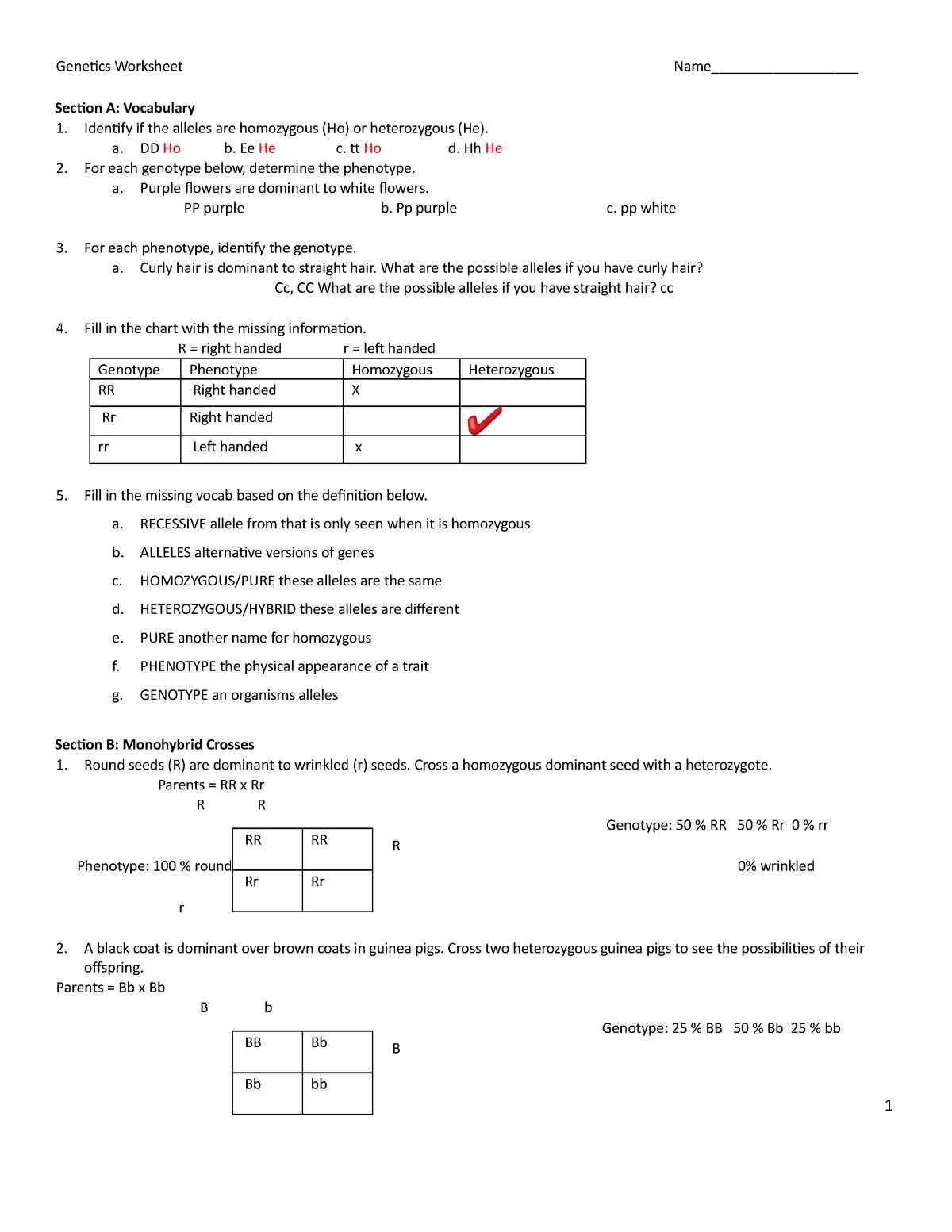
When analyzing the outcome of genetic crosses, the genotypic ratio reveals the distribution of different genetic makeups in the offspring. For a simple monohybrid cross involving a dominant and recessive allele, the genotypic ratio can be determined by examining the allele combinations from each parent’s gametes. A typical monohybrid cross between heterozygous parents (e.g., Aa x Aa) produces a 1:2:1 ratio: 25% homozygous dominant (AA), 50% heterozygous (Aa), and 25% homozygous recessive (aa).
For dihybrid crosses, the ratio can be more complex. Consider a cross between two organisms heterozygous for two traits (e.g., AaBb x AaBb). This results in a 9:3:3:1 phenotypic ratio, which corresponds to a genotypic ratio of 1:2:2:4:2:2:1:2:1. Understanding this ratio requires breaking down the combinations of alleles that each gamete can produce and applying the rules of independent assortment. This interpretation helps predict the likelihood of different genotypic combinations in the offspring.
To interpret any cross’s genotypic ratio, it’s important to first determine the parental genotypes, then apply the Punnett square method to calculate all possible allele combinations. The resulting numbers will give the probability of specific genotypes occurring, allowing predictions about the offspring’s genetic makeup.
For more detailed explanations on genetic ratio analysis, refer to reputable sources such as NCBI, which offers extensive research on the topic.
Identifying Dominant and Recessive Traits in Assignments
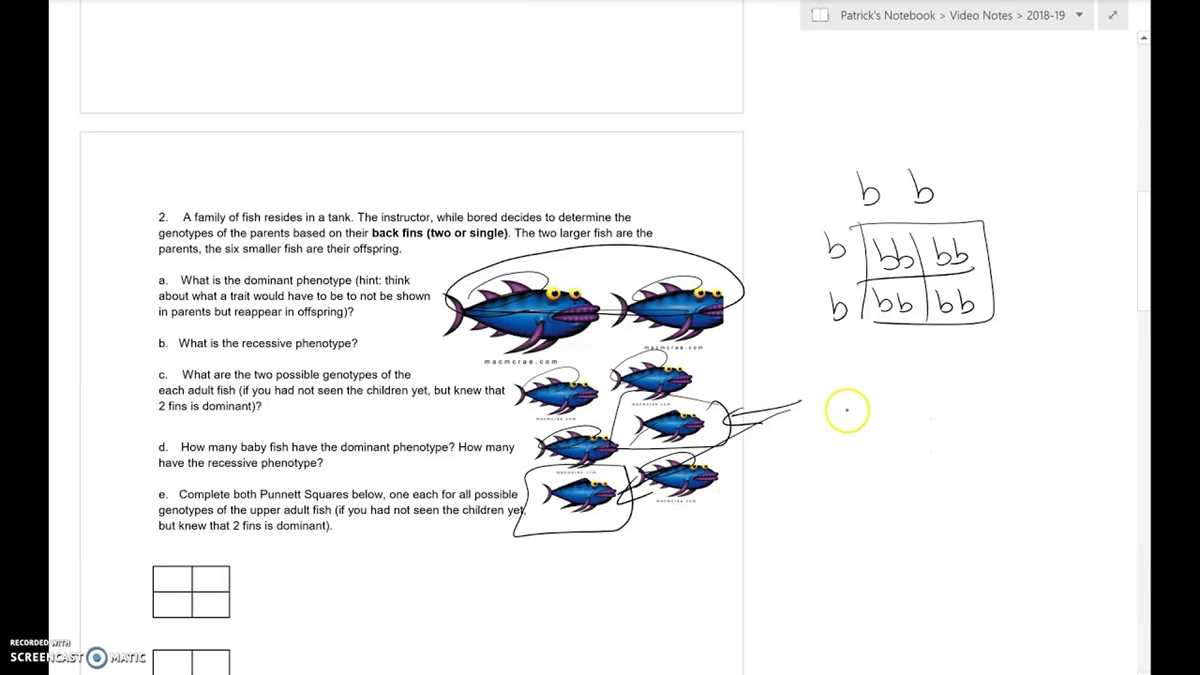
To determine which traits are dominant or recessive in a set of genetic problems, begin by recognizing the following patterns: Dominant traits are typically expressed when at least one dominant allele is present (e.g., “AA” or “Aa”), while recessive traits require two recessive alleles (e.g., “aa”) for expression. The presence of a dominant allele can mask the effect of a recessive one.
Next, examine the phenotype ratios and genotypic combinations in each problem. Dominant traits usually appear in the offspring when one or both parents carry a dominant allele, whereas recessive traits only show if both parents contribute a recessive allele.
For example, if the parents are “Aa” and “aa,” the offspring could inherit the dominant “A” from one parent and the recessive “a” from the other, resulting in a heterozygous (dominant) phenotype. A ratio of 1:1 could be observed in this case for a dominant-to-recessive trait.
Pay attention to the question format. Many problems will present the genetic makeup of the parents in a simple form, such as “Aa x Aa” or “AA x aa.” From here, create a Punnett square to predict possible genetic outcomes, which will clearly show the distribution of dominant and recessive traits.
| Parent 1 Genotype | Parent 2 Genotype | Offspring Genotype | Offspring Phenotype |
|---|---|---|---|
| Aa | Aa | AA, Aa, Aa, aa | Dominant (AA, Aa), Recessive (aa) |
| AA | aa | Aa, Aa | Dominant |
Use these methods to clarify which alleles are responsible for a given trait and to predict the likelihood of inheritance. The process relies heavily on understanding how alleles combine and how their interactions determine the physical characteristics of the offspring.
Step-by-Step Guide to Solving Monohybrid Cross Problems
1. Identify the parent genotypes. Begin by determining the genetic makeup of both parents. This is crucial as it dictates the possible alleles each parent can pass on. For example, if a plant with a dominant allele for flower color (A) crosses with a recessive plant (a), the genotypes of the parents are AA and aa.
2. Determine the gametes. Each parent will produce gametes (eggs or sperm) that contain only one allele from each gene pair. In the example above, one parent (AA) will produce gametes with the allele A, and the other (aa) will produce gametes with the allele a.
3. Set up the Punnett square. Create a 2×2 grid where the gametes from one parent are placed along the top and the gametes from the other parent along the side. This visual representation will help track the potential combinations of alleles in the offspring.
4. Fill in the Punnett square. For each box, combine the alleles from the corresponding row and column. The resulting combinations show the potential genotypes of the offspring. In the case of a cross between AA and aa, the Punnett square will show all offspring as Aa.
5. Analyze the phenotypic ratio. Once the genotypes of the offspring are known, determine the observable traits (phenotypes). For example, if A represents the dominant allele for purple flowers and a represents the recessive allele for white flowers, all offspring from the AA x aa cross will have purple flowers, with a 100% purple phenotype ratio.
6. Double-check your results. Ensure that all steps align with Mendel’s laws of inheritance and that the combinations of alleles make sense. Mistakes can occur when identifying the correct parent genotypes or filling out the Punnett square. Reassess each step for accuracy.
7. Interpret the results. Use the completed Punnett square to predict the genetic outcomes of the cross. These predictions can be useful for understanding inheritance patterns in future generations or for experiments with organisms.
Calculating Phenotypic Ratios in Dihybrid Crosses
To determine the phenotypic ratio from a dihybrid cross, first identify the genotype combinations of the two parents involved. For a cross between two individuals heterozygous for both traits (e.g., AaBb x AaBb), construct a Punnett square with 16 possible combinations. Each combination represents one of the potential offspring genotypes.
Next, classify the offspring genotypes into distinct phenotypic categories based on dominant and recessive traits. For example, if “A” represents a dominant allele for a trait and “a” is recessive, individuals with at least one “A” will express the dominant phenotype. The same rule applies to the second trait represented by “B” and “b”. Count how many of the 16 combinations fall into each phenotype group.
After counting the offspring in each phenotypic category, calculate the phenotypic ratio by dividing the number of individuals in each phenotype by the total number of offspring (typically 16 for a dihybrid cross). For instance, if there are 9 dominant for both traits, 3 dominant for one and recessive for the other, 3 recessive for one and dominant for the other, and 1 recessive for both traits, the ratio is 9:3:3:1.
Ensure to check if the ratio follows the expected distribution (9:3:3:1) for a dihybrid cross of heterozygous parents. Any deviations may indicate factors such as linked genes or incomplete dominance.
Common Mistakes in Genetics Problems
Misinterpreting allele ratios is a common issue. For example, assuming the ratio of phenotypes in a dihybrid cross should always be 9:3:3:1 can lead to errors. This only applies when genes are unlinked and assort independently. If genes are linked, the expected ratio will differ.
Another frequent error involves incorrectly applying the rules of dominance and recessiveness. Many students confuse co-dominance and incomplete dominance with simple dominant-recessive inheritance patterns. In co-dominance, both alleles are expressed equally, while incomplete dominance results in a blend of traits.
Overlooking the significance of genotypic ratios when predicting outcomes can also lead to mistakes. For example, crossing two heterozygotes should produce a 1:2:1 genotype ratio, but many forget to calculate the probability of homozygous dominant and recessive offspring, instead assuming it will always be 1:2:1 phenotypically.
Misunderstanding sex-linked traits can also lead to confusion. Remember, males have only one X chromosome, meaning they inherit all X-linked traits from their mothers. This is often overlooked when determining the inheritance of traits carried on the X chromosome.
Finally, when analyzing pedigrees, incorrect assumptions about carriers of recessive traits often arise. It’s easy to mistake a heterozygote carrier for an individual showing the recessive trait, leading to errors in determining family genetic patterns.
Using Pedigree Charts to Solve Inheritance Problems
To determine how traits are passed through generations, analyze pedigree charts. These diagrams provide a visual record of family history, tracking genetic conditions and traits across multiple generations. By examining the patterns of inheritance, one can deduce the underlying genetic mechanisms at play.
Follow these steps to interpret a pedigree chart effectively:
- Identify the Trait of Interest: Focus on the trait you need to analyze, such as a dominant or recessive characteristic. Mark each individual’s phenotype (physical appearance) to understand inheritance patterns.
- Trace Generations: Pedigree charts usually display at least three generations. Start from the top and move downward, following the family lineage.
- Understand Symbols: Circles represent females, and squares represent males. Filled symbols indicate individuals expressing the trait, while empty symbols show those without it.
- Analyze Inheritance Patterns: Look for repeated occurrences of the trait in successive generations. A dominant trait tends to appear in every generation, while a recessive trait may skip generations.
- Make Predictions: Based on the observed pattern, predict the likelihood of offspring inheriting the trait. For example, if two carriers of a recessive trait marry, their children have a 25% chance of inheriting both alleles.
By following these steps, one can predict the inheritance of various traits in a family and solve inheritance problems with confidence. Pay close attention to any unusual patterns or anomalies, which could provide insights into complex genetic scenarios.
Linking Inheritance Patterns to Real-World Applications
To understand how traits are passed down, it’s critical to observe the inheritance of specific characteristics in organisms, from human diseases to agriculture. Traits often follow simple or complex inheritance models that influence the genetic makeup of offspring.
One example is the inheritance of cystic fibrosis, a recessive disorder. Both parents must carry the recessive allele for the disease to manifest in their child. This reflects a straightforward pattern, but in other cases, like height or skin color, multiple genes interact, resulting in more varied outcomes.
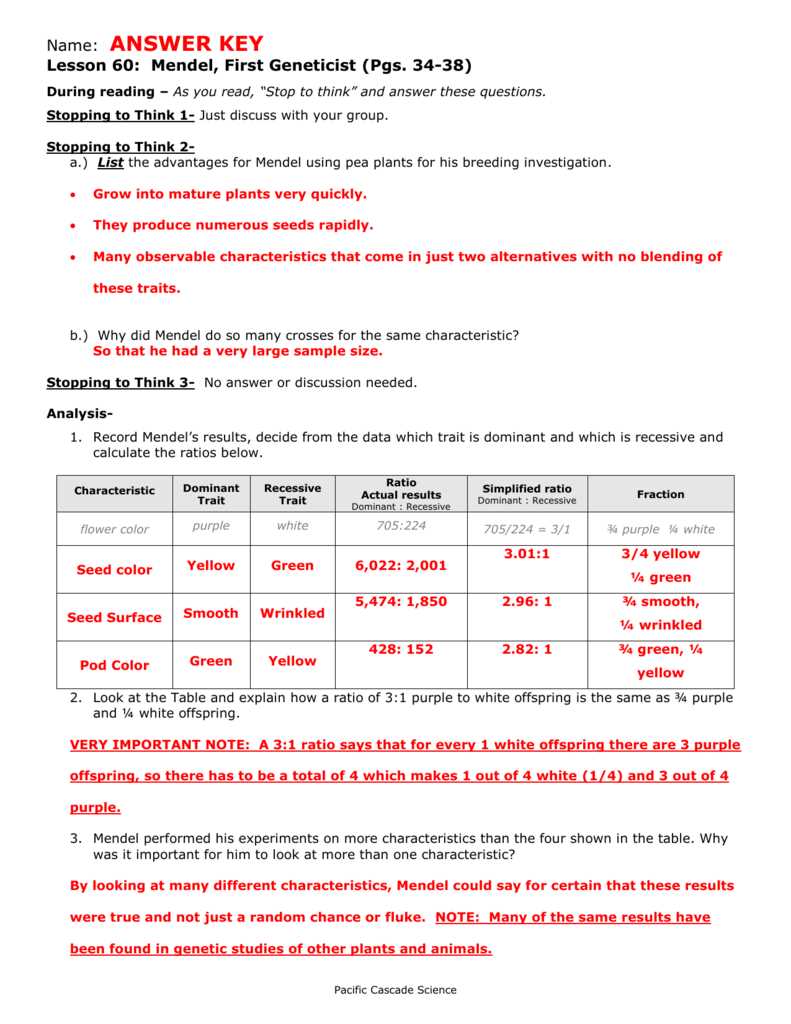
The color of pea pods in plants or coat patterns in animals can be used to predict genetic outcomes based on dominant and recessive traits. For instance, a cross between two plants with different traits can result in offspring that exhibit the dominant trait, while hidden recessive traits can appear in subsequent generations.
Complex inheritance, such as polygenic traits, where several genes contribute to a single outcome, is common in human features like intelligence or susceptibility to diseases. Here, each gene may add a small effect, but the combination can create a broad spectrum of outcomes.
Understanding these principles is not only fundamental in studying biological inheritance but also in areas like personalized medicine and breeding programs, where knowing the genetic makeup of organisms helps predict future characteristics.