Understanding Key Concepts in Community Ecology and Species Interactions
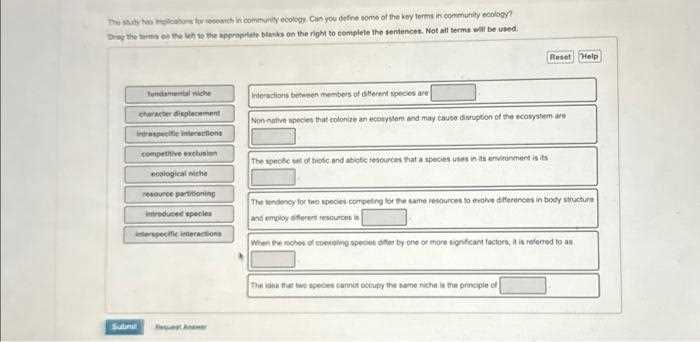
When studying interactions among organisms and their environment, it’s crucial to understand the fundamental roles different species play. Recognizing how producers, consumers, and decomposers function within an ecosystem is key to unraveling the complexities of natural systems. Focus on identifying how energy flows from one trophic level to another and how different species depend on each other for survival.
Identify the types of symbiotic relationships that shape ecosystems. Mutualism, commensalism, and parasitism have distinct effects on the species involved. Knowing how these relationships influence population dynamics will enhance your understanding of ecological balance and species coexistence.
In addition to relationships, examine how organisms adapt to their ecological niche. Species adapt to environmental pressures, leading to specialization that helps maintain balance within their habitat. Recognizing these adaptations can deepen your insight into the structure and function of ecosystems.
Finally, consider the influence of human activities on these systems. Habitat destruction, pollution, and climate change all disrupt the delicate interactions between species. Understanding these impacts helps in developing strategies for conservation and sustainable management of natural resources.
Understanding Interactions and Species Roles
Identify key species in each ecological role: producers, consumers, and decomposers. Producers convert solar energy into food, forming the foundation of ecosystems. Consumers include herbivores, carnivores, and omnivores, each interacting within food chains and webs. Decomposers, such as fungi and bacteria, recycle nutrients, maintaining system balance.
Symbiotic Relationships and Their Impact
Recognize the different types of symbiosis: mutualism, commensalism, and parasitism. In mutualism, both species benefit, like pollinators and flowering plants. In commensalism, one species benefits without harming the other, while in parasitism, one benefits at the expense of the other. These relationships affect population dynamics and species survival strategies.
Energy Flow and Trophic Levels
Understand how energy flows through an ecosystem from producers to various levels of consumers. Energy decreases as it moves up each trophic level. Trophic pyramids help visualize this energy transfer, where each level supports fewer individuals due to energy loss at each step.
Adaptations to Environmental Pressures
Focus on the adaptations that enable species to thrive in their environments. These adaptations can be structural (physical traits), behavioral (actions taken for survival), or physiological (internal processes that support survival in harsh conditions). Understanding these allows for a better comprehension of biodiversity.
Impact of Invasive Species
Identify how non-native species disrupt native ecosystems. Invasive species often outcompete local organisms for resources, leading to imbalances. Their introduction can drastically alter community structure and function, highlighting the importance of ecological management and prevention strategies.
Human Influence on Natural Systems
Examine how human activities, such as deforestation, urbanization, and pollution, alter ecosystem dynamics. Habitat destruction leads to loss of biodiversity, while climate change introduces new environmental challenges. Understanding these impacts can guide conservation efforts and sustainable resource management practices.
Succession and Community Changes
Study how ecological communities change over time through succession. Primary succession occurs in areas where no soil exists, while secondary succession happens in areas where soil remains after a disturbance. These processes reflect the resilience and adaptability of ecosystems in response to changes.
Conservation and Restoration Techniques
Explore methods used to conserve and restore ecosystems. These can include habitat preservation, species reintroduction, and ecological restoration projects that aim to return disturbed areas to a state of health. Effective conservation strategies depend on understanding the delicate balance within natural communities.
Understanding the Basics of Species Interactions
Species interactions play a central role in shaping ecosystems. There are four primary types of interactions: competition, predation, mutualism, and parasitism. Each of these affects how species survive, grow, and reproduce within their environment.
Competition occurs when two species vie for the same resources, such as food, space, or mates. This can lead to one species being outcompeted and displaced or force adaptations to reduce overlap. An example is different plant species competing for sunlight in a forest.
Predation refers to one species hunting, killing, and eating another. This interaction can regulate population sizes and drive evolutionary adaptations in prey, such as camouflage or speed. Classic examples include wolves hunting deer or eagles preying on fish.
Mutualism involves a relationship where both species benefit. One well-known example is the relationship between bees and flowers. Bees collect nectar from flowers for food, while simultaneously aiding in pollination, which helps flowers reproduce.
Parasitism is a relationship where one species benefits at the expense of the other. Parasites, such as ticks or tapeworms, live on or inside their hosts, often harming them in the process. This can weaken the host and lead to diseases or other detrimental effects.
Understanding these interactions helps explain the dynamics of populations and the structure of ecosystems. Species adapt to these pressures, and the balance between cooperation and competition is what maintains ecological stability.
How to Analyze the Role of Producers in an Ecosystem
To assess the role of producers in an ecosystem, begin by understanding their primary function: converting solar energy into chemical energy through photosynthesis. This process forms the foundation of energy flow in most ecosystems, providing the energy needed for all other organisms.
Primary Productivity is the key metric used to evaluate producers. It refers to the rate at which producers (typically plants, algae, and some bacteria) convert sunlight into organic matter. A higher primary productivity indicates a more robust ecosystem capable of supporting diverse consumer populations.
Next, examine the types of producers present. In terrestrial environments, plants are the dominant producers, while in aquatic ecosystems, algae and phytoplankton play this role. Each type of producer has different requirements for light, nutrients, and space, which influence its productivity.
Consider the nutrient cycles that producers are involved in. They play a vital role in cycling carbon, nitrogen, and phosphorus through the system, which supports the survival and growth of other organisms. For example, plants absorb carbon dioxide during photosynthesis and release oxygen, supporting herbivores and higher trophic levels.
To fully understand their impact, also evaluate the interaction between producers and consumers. Producers form the base of food chains, and their abundance directly affects the biomass of herbivores, which in turn impacts the entire food web. A decrease in producer populations can lead to cascading effects throughout the ecosystem.
For further reading and a deeper dive into the importance of producers, visit reliable resources like National Geographic for educational material on ecosystem dynamics.
Identifying Different Types of Symbiotic Relationships
To identify various types of symbiotic relationships, it’s important to understand the three main categories: mutualism, commensalism, and parasitism. Each represents a different way species interact with each other in their environment.
- Mutualism: In this relationship, both species benefit. For example, bees and flowers. Bees collect nectar for food, while transferring pollen between flowers, aiding in pollination.
- Commensalism: Here, one species benefits while the other is neither helped nor harmed. An example is barnacles attached to the shell of a turtle. The barnacle gains access to nutrient-rich water as the turtle moves, while the turtle is unaffected.
- Parasitism: One species benefits at the expense of the other. A classic example is the relationship between ticks and mammals. Ticks feed on the blood of the host, which can result in health issues for the mammal.
When identifying these relationships in nature, consider the impact on both species involved. If both organisms gain from the interaction, it’s mutualism. If one gains without affecting the other, it’s commensalism. If one benefits at the other’s expense, it’s parasitism.
Exploring the Concept of Ecological Niches
To understand an ecological niche, focus on the role a species plays within its environment, including its interactions with other organisms and its habitat. The niche is defined by two primary factors: the organism’s habitat (where it lives) and its functional role (how it survives and reproduces).
Each species has a unique niche that minimizes competition by occupying specific environmental spaces, utilizing particular resources, and engaging in certain behaviors. For example, one bird species may feed on insects at the top of trees, while another may focus on insects found on the forest floor. Though they share the same habitat, their niches are different because they exploit distinct resources.
When identifying niches, pay attention to the following aspects:
- Resource Utilization: What food, shelter, and other resources does the species rely on?
- Behavior: How does the species interact with other organisms in its environment?
- Role in the Ecosystem: What does the species contribute to the overall function of the ecosystem, such as pollination or decomposing organic matter?
Understanding the concept of niches helps explain how biodiversity is maintained. Each species fulfills a specific function, preventing overlap and ensuring the stability of ecosystems. This principle also helps in conservation efforts, as preserving a species’ niche is critical for its survival.
Interpreting Food Webs and Energy Flow in Communities
To understand food webs and energy transfer, examine how energy flows from one organism to another. Start by identifying producers, such as plants and algae, which capture solar energy and convert it into food through photosynthesis. These producers form the base of the food chain.
Next, identify consumers at different trophic levels. Primary consumers (herbivores) eat producers, while secondary and tertiary consumers (carnivores and omnivores) feed on other consumers. Decomposers, such as fungi and bacteria, break down dead organisms and recycle nutrients, completing the cycle.
Energy flow is typically depicted in food webs. Each arrow in a food web represents energy moving from one organism to another. However, only about 10% of the energy at one level is transferred to the next. The rest is lost as heat or used in metabolic processes.
When interpreting a food web:
- Look for key producers: These are usually plants or phytoplankton, the starting point of energy flow.
- Identify trophic levels: Consumers can be primary, secondary, or tertiary depending on what they eat.
- Understand energy loss: Only a small fraction of energy is transferred between levels; most is lost as heat.
- Consider the complexity: A food web illustrates multiple interconnected food chains, showing the interconnectedness of organisms in an ecosystem.
Analyzing energy flow and food webs helps clarify the structure and stability of ecosystems. Understanding how energy moves through ecosystems is vital for conservation and managing resources sustainably.
Factors Influencing Species Distribution and Abundance
Several factors determine the distribution and abundance of organisms in an area. These factors can be biotic, such as interactions with other species, or abiotic, like environmental conditions.
Temperature plays a significant role. Organisms have a specific range of temperatures they can tolerate. Temperature extremes can limit the survival and reproduction of species, influencing where they are found.
Water availability is another critical factor. Species adapted to dry conditions are often found in deserts, while aquatic organisms require water for survival. Changes in water levels or availability can dramatically affect species distribution.
Food resources influence abundance. Species tend to thrive in areas where resources are abundant. The presence of suitable prey or plants is critical for consumer populations, while producers rely on nutrient-rich soil or water to grow.
Interactions with other species also affect distribution. Predation, competition, and mutualistic relationships can either limit or facilitate the presence of certain species. For example, predators may reduce the abundance of prey species, while mutualistic relationships can increase both species’ success.
Habitat structure provides shelter, breeding sites, and other necessities. Species are often adapted to specific habitat types, and the availability of these habitats can determine where they can live.
To analyze how these factors affect a species’ distribution and abundance, consider the following:
- Assess climate data: Temperature and precipitation patterns influence habitat suitability.
- Evaluate water sources: Look for proximity to rivers, lakes, or oceans for aquatic species.
- Consider resource availability: Food and shelter directly impact species’ populations.
- Examine species interactions: Competition, predation, and symbiosis all affect population dynamics.
- Map habitats: Identify the types of habitats available and the species’ adaptations to those environments.
By considering these factors, we can predict the likelihood of species occurring in a given area and understand the reasons behind population fluctuations over time.
Role of Human Impact in Shaping Ecosystem Dynamics
Human activities have a profound influence on the functioning of ecosystems, often altering their structure and processes. Urbanization, agriculture, deforestation, and pollution are key drivers that change natural balances.
Habitat destruction due to industrial expansion and agriculture reduces biodiversity. Forest clearing for farming or urban development displaces native species, disrupts food webs, and fragments habitats, making it harder for species to thrive or migrate.
Climate change, driven largely by human emissions of greenhouse gases, is shifting temperature and precipitation patterns. These changes affect species’ distribution and survival, especially for those with limited adaptive capacities. Warming oceans, for example, lead to coral bleaching and loss of marine biodiversity.
Pollution affects both land and water ecosystems. Chemical runoff from agriculture can contaminate freshwater resources, while plastics and industrial waste harm marine life. Air pollution can also disrupt plant growth and affect food chains by reducing the availability of clean air and water.
Invasive species are introduced by human transport, often unintentionally. These species can outcompete native organisms for resources, disrupt ecosystems, and lead to the extinction of vulnerable species. For instance, the introduction of the zebra mussel in North America has altered freshwater ecosystems.
To assess human impact on ecosystem dynamics, consider the following:
- Track land use changes: Analyze satellite images and maps to monitor urban sprawl and deforestation.
- Measure pollution levels: Use water, air, and soil testing to determine contamination levels and their effects on organisms.
- Monitor species population trends: Keep track of native species decline or the rise of invasive species in response to human activities.
- Study climate models: Use climate data to predict how future temperature and weather changes could alter ecosystems.
Human actions often lead to long-term, irreversible changes. Understanding these impacts is critical for developing sustainable practices that balance human needs with environmental preservation.
Practical Methods for Studying Community Structure
To effectively study the structure of ecological communities, researchers employ a variety of methods to assess species composition, abundance, and interactions. Below are several practical techniques:
1. Quadrat Sampling
This method involves selecting a defined area (a quadrat) in the field and counting the number of individuals or species present within it. It is particularly useful for studying plant populations and sessile organisms. Quadrat size and placement should be consistent for reliable data.
2. Transect Sampling
A transect line is established across a study area, and organisms are counted at regular intervals along the line. This technique helps identify patterns of species distribution and changes in community structure along environmental gradients, such as altitude or moisture.
3. Point-Count Method
Used mainly for birds or other mobile animals, this method involves standing at a fixed point and recording all individuals seen or heard within a specified time period. This approach is useful for estimating population density and understanding species diversity.
4. Species Richness and Diversity Indices
Quantitative indices, such as the Shannon-Weiner index or Simpson’s index, are used to measure species diversity. These indices account for both the number of species (richness) and their relative abundance, providing a measure of community complexity.
5. Observational Studies of Species Interactions
By directly observing species interactions, such as predation, competition, and mutualism, researchers can gain insights into the functional relationships that shape community dynamics. Behavioral studies help determine how these interactions influence community structure.
6. Remote Sensing
For large-scale studies, remote sensing technologies, such as satellite imaging or drones, are used to gather data on vegetation cover, land use, and habitat fragmentation. This method allows for monitoring community structure across vast or inaccessible areas.
7. Molecular Tools
Genetic techniques, such as DNA barcoding and metagenomics, are used to identify species and assess biodiversity at a molecular level. These tools help in detecting cryptic species and understanding the genetic diversity within communities.
8. Long-Term Monitoring
Establishing long-term monitoring programs helps track changes in community composition over time, especially in response to environmental disturbances, climate change, or management interventions. Repeated surveys allow for more accurate trend analysis and prediction of future changes.
By using a combination of these methods, researchers can gain a holistic understanding of community structure and its dynamics, providing valuable insights for conservation and management efforts.