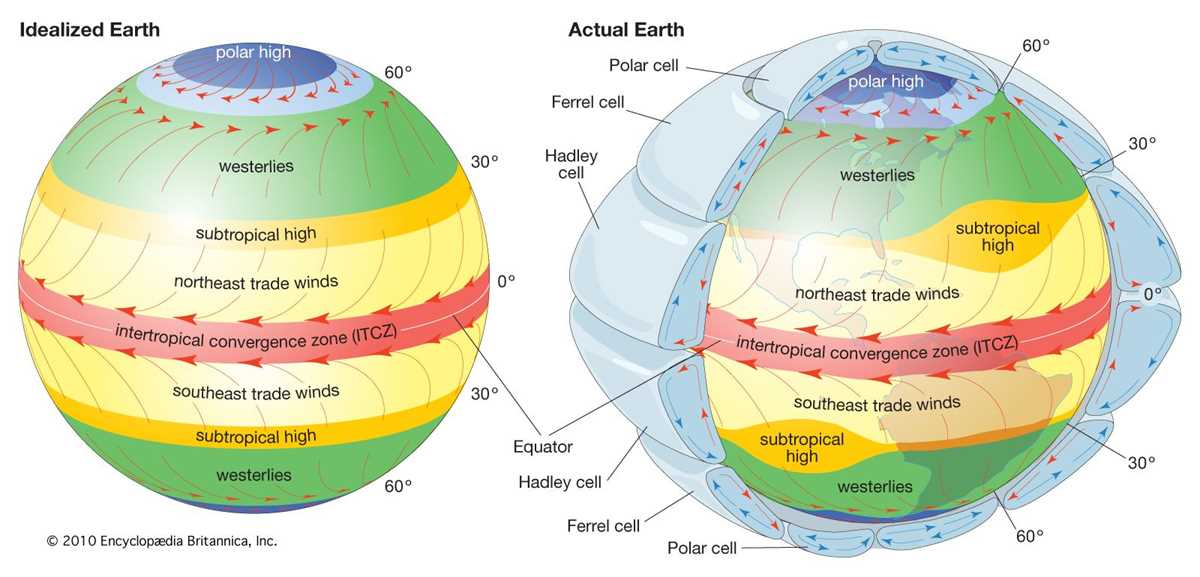
Understanding Major Wind Belts and Their Global Impact
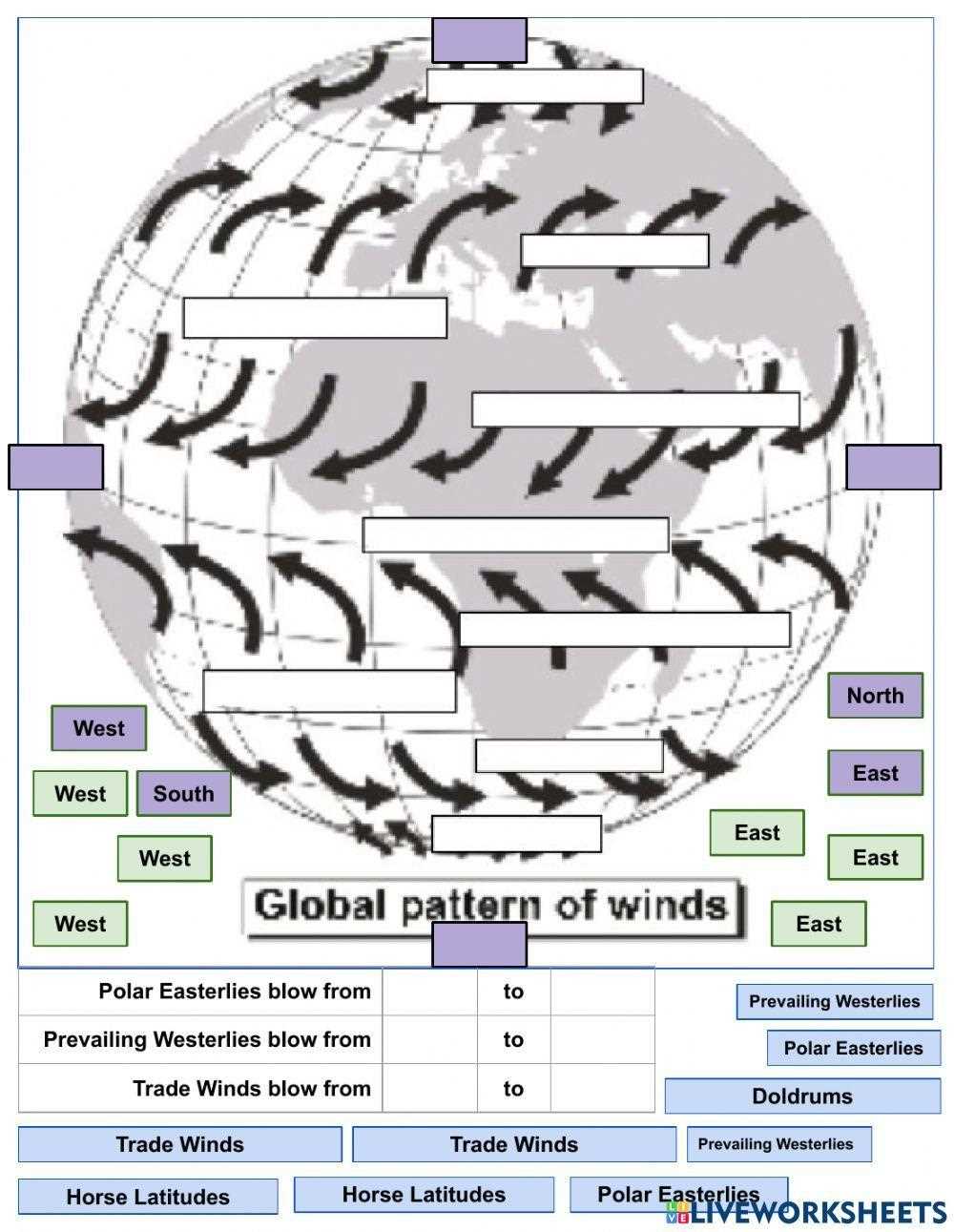
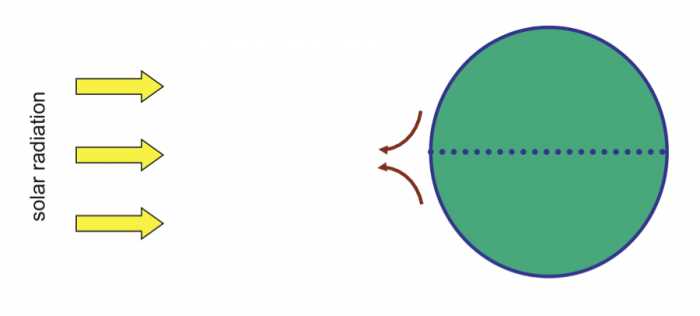
Start by reviewing the primary atmospheric circulations that shape Earth’s climate. These patterns move air masses in a predictable manner, influencing weather and ocean currents around the planet. The movement of air is driven by temperature differences across the Earth, primarily due to the Sun’s heat, and the Coriolis effect caused by Earth’s rotation.
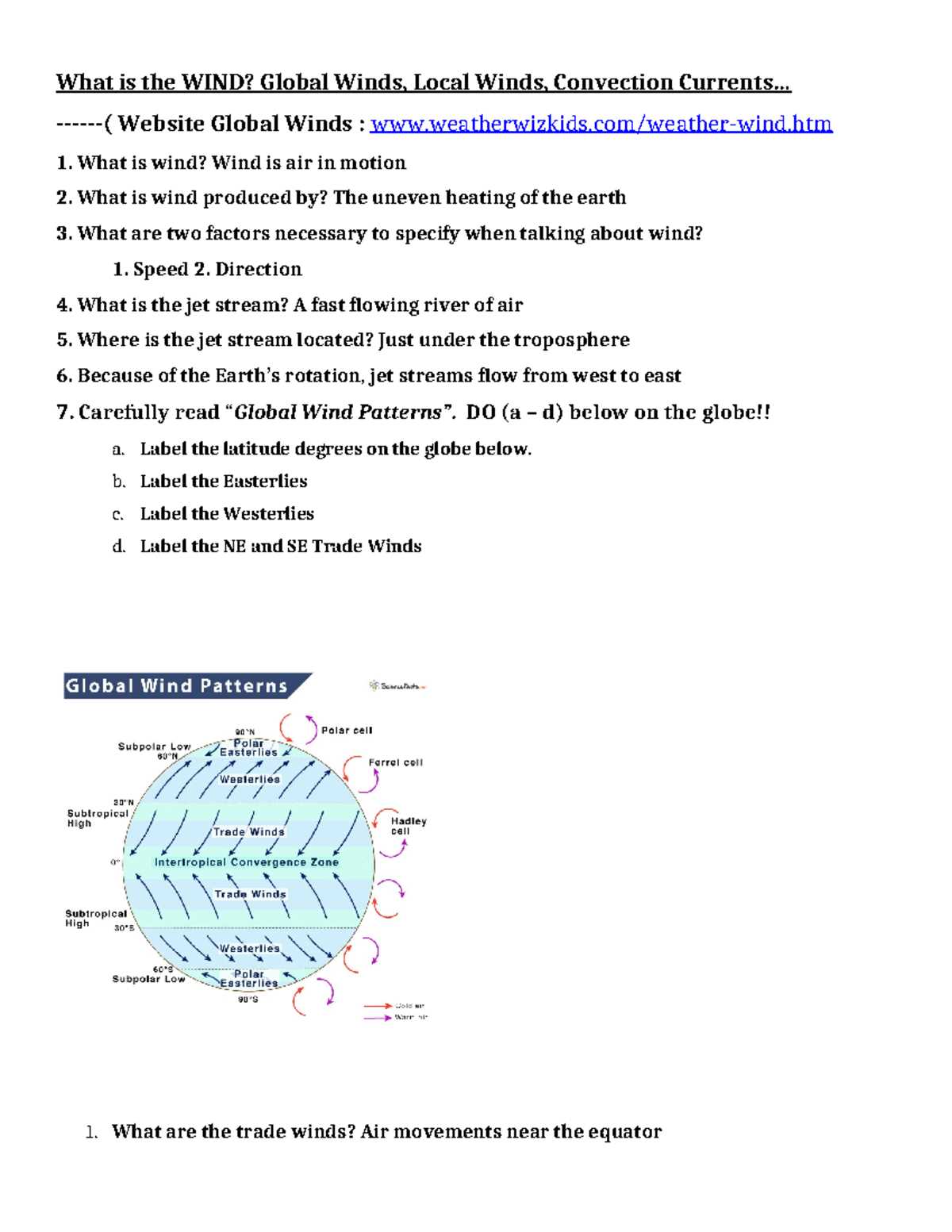
Focus on the key circulation zones, which include the trade winds, westerlies, and polar easterlies. Each of these regions has distinct characteristics based on latitude and seasonal changes. Understanding their direction and intensity is crucial for comprehending weather systems and climatic patterns.
Next, identify the role of these winds in shaping regional climates. For instance, the trade winds help drive tropical weather systems and influence oceanic currents, while the westerlies play a significant role in mid-latitude storms. Recognizing how these winds interact with landforms can also help explain regional weather anomalies.