Gas Laws Practice Calculations Solution Guide
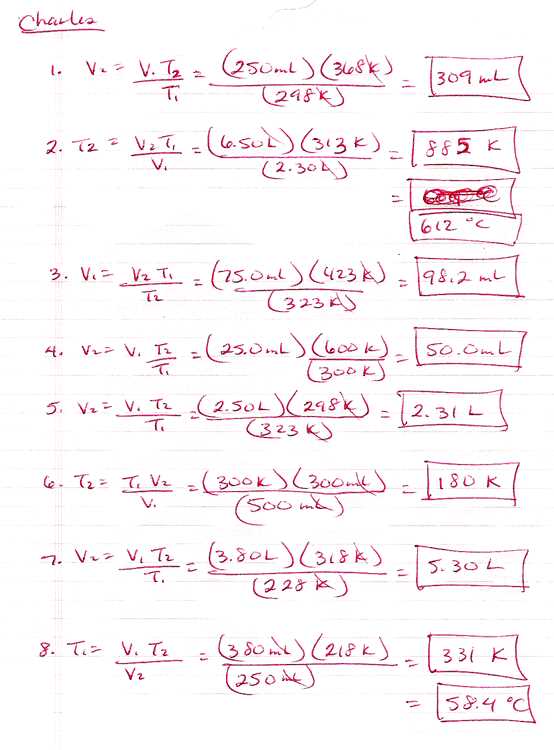
Begin by identifying the given values in each scenario, such as pressure, volume, and temperature. These are the variables that form the basis for solving the problems. Recognize the relationship between them and determine the formula that fits the situation, whether it’s for determining pressure changes, volume shifts, or temperature variations.
Step-by-step procedure: Apply the relevant equations, such as Boyle’s, Charles’s, or the Ideal Gas Law, based on the problem type. Carefully rearrange the formula to isolate the unknown variable, ensuring you maintain consistency with units throughout the process. Pay attention to whether temperature needs to be in Kelvin or if pressure should be in atmospheres or pascals.
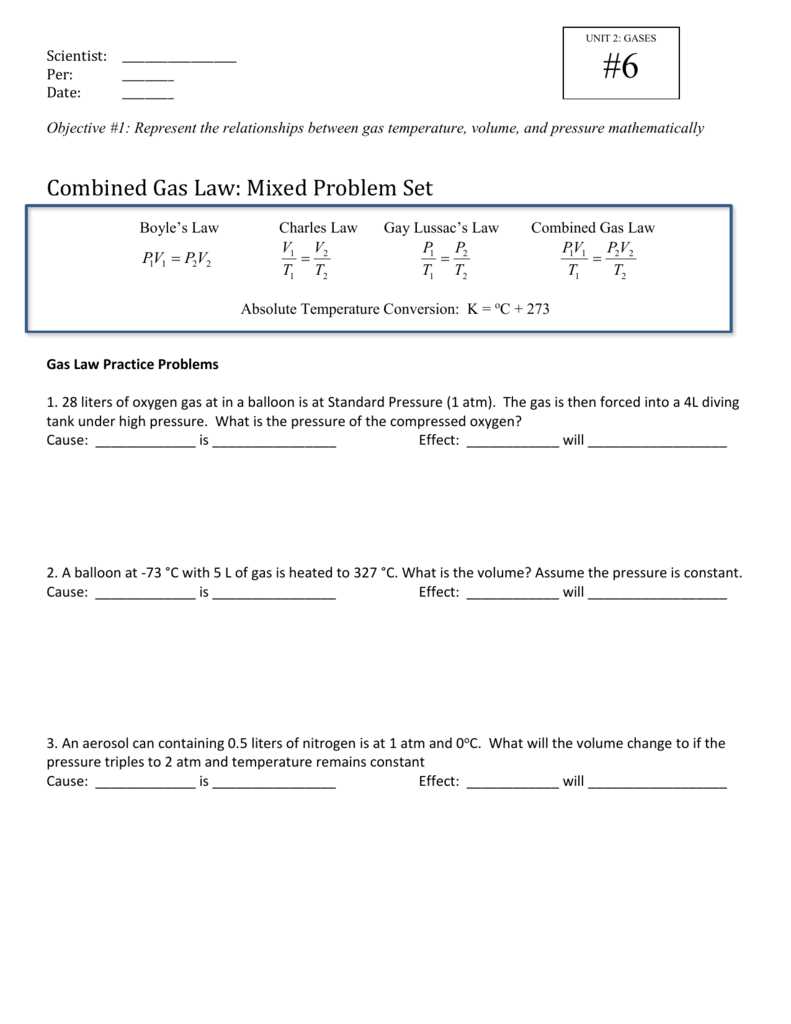
Tip: Double-check each calculation for unit conversions, especially when dealing with gas constant values or temperature scales. This helps ensure that your final answer is both accurate and appropriately formatted.