Genetics Problems and Inheritance Patterns Solutions Guide
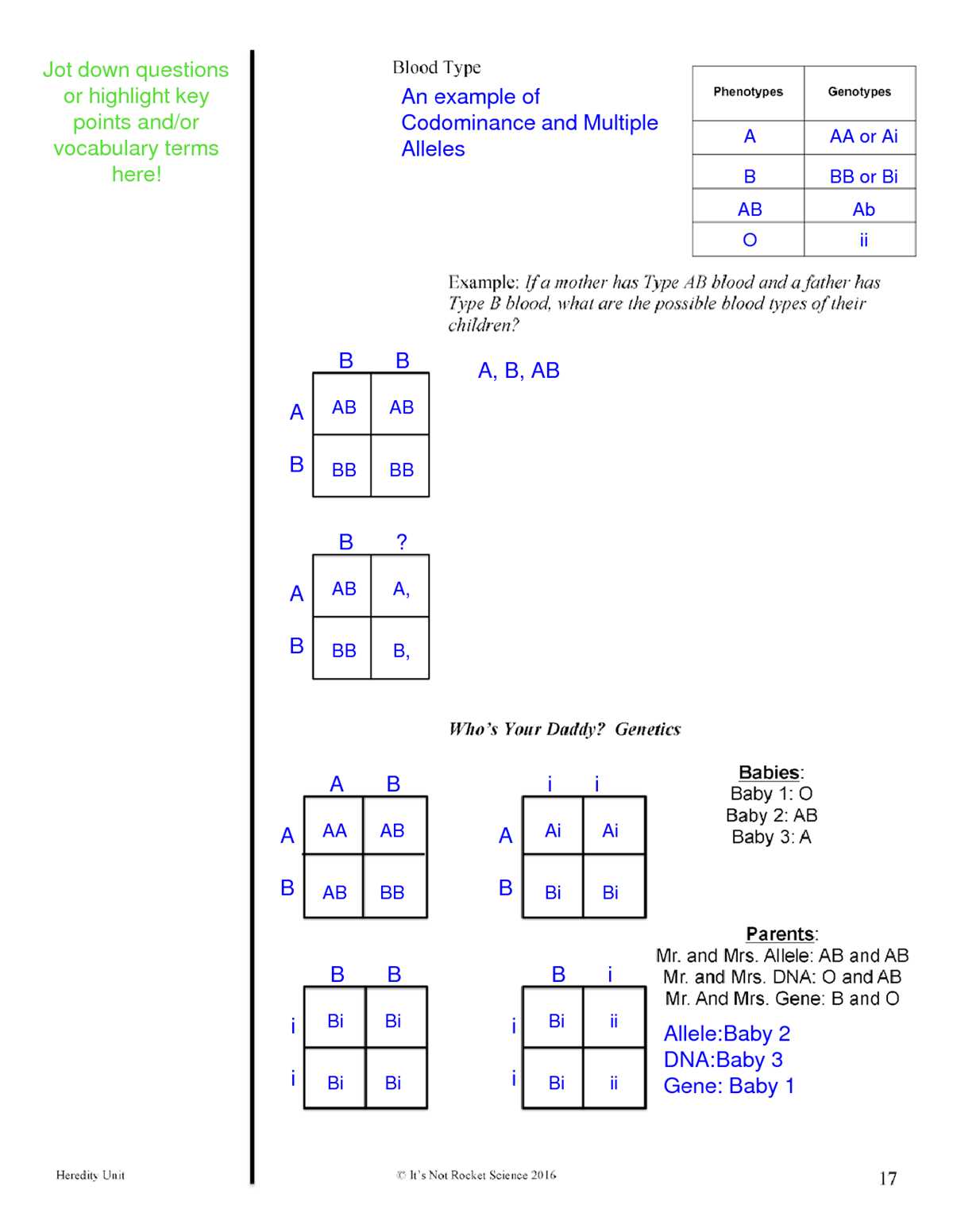
Start by recognizing the different types of genetic inheritance mechanisms that govern how traits are passed down from one generation to the next. In this section, we focus on solving common issues related to the transmission of traits, whether dominant or recessive, through various family pedigrees. The first step is to understand the specific allele combinations and their impact on the offspring’s phenotype.
Pay attention to the symbols used in Punnett squares, as they offer a clear visual representation of gene pairings. These charts help predict the probability of certain traits appearing in the offspring, depending on whether the parent alleles are homozygous or heterozygous. Be sure to use this tool to your advantage when solving genetic problems, ensuring accuracy in determining possible outcomes.
Consider more complex inheritance patterns beyond simple Mendelian genetics, such as incomplete dominance, co-dominance, and multiple allele systems. These can add layers of complexity to genetic problems, requiring a deeper understanding of how traits express themselves. For example, in incomplete dominance, neither allele is completely dominant, resulting in a blended phenotype. Co-dominance presents a situation where both alleles are expressed simultaneously, such as in blood type inheritance.