Step-by-Step Guide to Finding Volume Using Unit Cubes
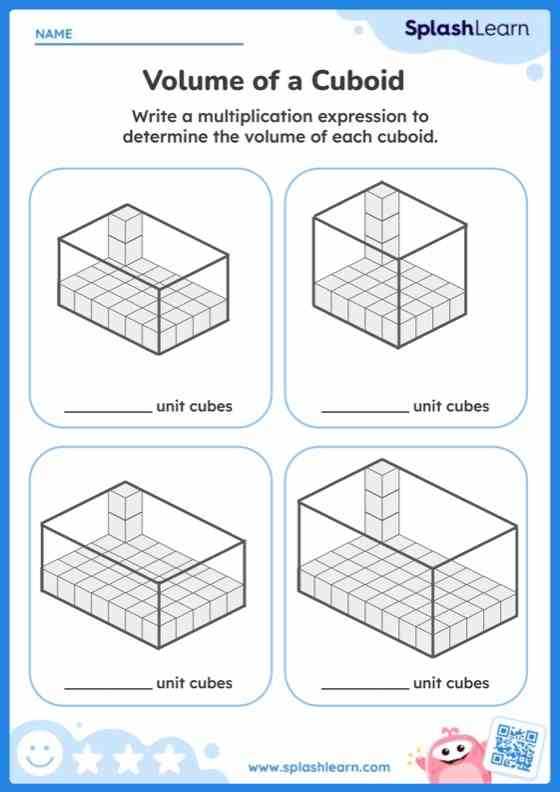
Start by counting the number of small cubes that fill the space completely. Ensure that each cube represents a consistent measurement, and each side has an equal length. This method provides a hands-on approach to visualizing the concept of space and capacity in three-dimensional objects.
For rectangular and cubic structures, multiply the length, width, and height, adjusting as needed for irregular shapes. The more cubes you place into a given space, the clearer the volume calculation becomes. You’ll see how each cube contributes to the overall space being measured.
If the object is not a simple shape, break it down into smaller sections, measuring each part separately and then summing them together. This approach works well for complex shapes, ensuring that even irregular objects can be accurately assessed.
As you work through problems, verify your measurements by physically counting cubes where possible. This will help you avoid errors and increase your understanding of how volumes are represented in real-world scenarios. Checking your results will reinforce the accuracy of your calculations.
Calculating Space Occupied by Objects: Step-by-Step Guide
1. Begin by measuring the dimensions of the object: its length, width, and height. These values are crucial for accurate calculations.
2. Divide the object into smaller sections if it has an irregular shape. For each section, calculate the space it occupies by multiplying its own dimensions.
3. For simple rectangular or cubic shapes, multiply the length, width, and height. The result will give you the total space occupied by the object.
4. If the object’s shape isn’t uniform, measure different parts separately and sum the results to find the total space occupied.
5. Use the cube method by filling the space with smaller cubes. Count how many cubes fit within the object, and that count represents the total space occupied.
6. For more accurate results, double-check the dimensions and ensure all cubes used for filling are of the same size.
7. Finally, compare the calculated result with any available reference values to verify accuracy. This helps ensure no miscalculations have occurred.
Understanding the Concept of Space Occupied by Objects Using Small Blocks
To grasp the concept of space an object occupies, break it down into smaller, measurable sections. This method simplifies complex shapes into manageable units.
Each small section can be thought of as a block that fits perfectly within a defined space. The total number of these blocks represents the overall space occupied.
The key is to visualize how these blocks stack together to fill the given area. The more blocks it takes to fill a space, the greater the space occupied by the object.
When working with standard shapes, such as rectangular boxes or cubes, simply multiply the object’s length, width, and height. For irregular shapes, divide the space into smaller, measurable sections and calculate the total based on how many blocks fill the area.
This approach provides a clear and hands-on method to understand how much space is filled by an object, helping build a deeper understanding of dimensional measurements.
How to Set Up Your Small Block Grid for Accurate Measurements
To accurately measure the space occupied by an object, first create a grid using smaller blocks. This grid helps break down the object’s shape into manageable sections for easy counting and calculation.
Follow these steps to set up your grid:
- Start by selecting a flat surface to place your grid. This ensures accurate alignment of your blocks.
- Arrange the blocks evenly within the grid area. The dimensions of each block should be consistent to ensure accurate measurements.
- Ensure that each row and column of blocks is aligned, creating a clear and defined boundary for the object you’re measuring.
- If the object is irregular, divide it into smaller sections, filling each section with the blocks. This allows for precise calculation of the space it occupies.
- Count the total number of blocks in the grid. This gives you a clear measurement of the object’s space.
By setting up your grid methodically, you will have a more accurate understanding of the object’s dimensions and the space it fills.
Calculating the Space of Simple 3D Shapes Using Small Blocks
To calculate the space occupied by basic three-dimensional shapes, arrange small blocks in a way that matches the shape’s structure. Here’s how to calculate the space for common shapes:
Cuboid or Rectangular Prism: To find the space occupied by a rectangular prism, multiply its length, width, and height. Each block represents a unit of space. For example, a shape with dimensions 4x3x2 would have a total of 4 x 3 x 2 = 24 units of space.
Cube: A cube has equal sides, so simply cube the length of one side. For instance, a cube with side length 3 would have a space of 3 x 3 x 3 = 27 unit blocks.
Cylinder: A cylinder’s space is calculated by finding the area of the base and multiplying by the height. To do this with blocks, approximate the base area using a grid and then multiply by the height. The formula is: Base Area (π x radius²) x height.
For a practical example, consider a cylinder with a radius of 2 units and a height of 5 units. The approximate base area using blocks is 12, and the height is 5, so the total space is 12 x 5 = 60 units.
These methods allow for easy estimation of the space occupied by simple shapes. For further learning on geometric shapes and volume calculation, visit educational resources like Khan Academy for more detailed guides and examples.
How to Break Down Complex Shapes into Smaller Blocks
Start by dividing the shape into smaller, easier-to-manage sections. Each section should resemble a basic geometric form, such as a cuboid or cube. Follow these steps:
Step 1: Identify the distinct parts of the shape. For example, if the shape is a combination of rectangular and cylindrical sections, isolate each section individually.
Step 2: Break down each part into simple shapes like cubes or rectangular prisms. Count the number of small blocks that fit into each section. If a section can be perfectly divided into smaller blocks, calculate how many fit within its dimensions.
Step 3: For irregular shapes, approximate the volume by covering the shape with smaller blocks, counting how many fit, and adding the totals for each section. For example, if one part of the shape consists of 6 blocks and another part consists of 12, the total is 18 blocks.
Step 4: Add up the results from all sections. This will give you the total number of blocks needed to fill the entire shape.
By following these steps, you can convert complex forms into simple, measurable blocks, making the calculation of space easier and more accurate.
Using Blocks to Verify Space Measurements
To confirm the accuracy of your space calculations, arrange small blocks inside the object. Each block represents a consistent measure of space. Follow these steps:
Step 1: Fill the object with small blocks, ensuring they fit snugly and completely within the shape. If the space is irregular, approximate the total number of blocks that would fit.
Step 2: Count the number of blocks you used to completely fill the space. This count should match the calculated measurement if the process is accurate.
Step 3: For more complex shapes, divide the object into smaller, manageable sections. Use blocks to verify each section’s space separately, and then combine the results to check the total measurement.
Step 4: Compare the result from the block count to your initial measurement. Any significant difference indicates the need to reassess your approach or calculations.
By using blocks to physically verify the space, you can ensure your measurements align with the expected results. This method provides a tangible way to confirm your calculations.
Common Mistakes to Avoid When Calculating Space Using Small Blocks
When determining the amount of space an object occupies, it’s easy to make errors. Avoid these common mistakes:
- Incorrectly Counting the Blocks: Always ensure that each block is counted properly. Missing even a single block can throw off the total measurement.
- Not Considering Gaps: Gaps between blocks may occur, especially when filling irregular spaces. Be sure to adjust for any empty areas that may not be captured by the blocks.
- Assuming All Blocks Fit Perfectly: Ensure that all blocks fit the space snugly. Irregular shapes may cause blocks to shift, leading to inaccurate measurements.
- Overlooking Complex Shapes: Complex or irregular shapes need to be broken down into smaller sections. Failing to do this can lead to inaccurate estimates of the total space.
- Relying on Visual Estimation: Estimating the number of blocks by eye can be misleading. Always count each block individually for the most accurate result.
By being mindful of these mistakes, you can improve the accuracy of your space measurements and avoid errors in your calculations.
How to Convert Units of Measurement in Space Calculations
To accurately calculate the amount of space an object occupies, converting between different units of measurement is crucial. Follow these steps:
- Identify the Units: Determine the current unit of measurement (e.g., cubic centimeters, cubic meters) and the target unit (e.g., liters, gallons).
- Use Conversion Factors: Utilize known conversion factors between units. For example, 1 cubic meter equals 1,000 liters, or 1 cubic inch equals 16.387 cubic centimeters.
- Multiply or Divide: Apply the conversion factor. If converting to a larger unit, divide. If converting to a smaller unit, multiply.
- Check Your Work: Always double-check your conversion calculations to ensure accuracy. One simple error in a conversion factor can affect your results.
For example, to convert 2 cubic meters into liters, multiply by 1,000:
2 cubic meters × 1,000 = 2,000 liters
Converting units properly ensures that your calculations are correct and reliable.
Practical Applications of Small Blocks in Real-World Space Problems
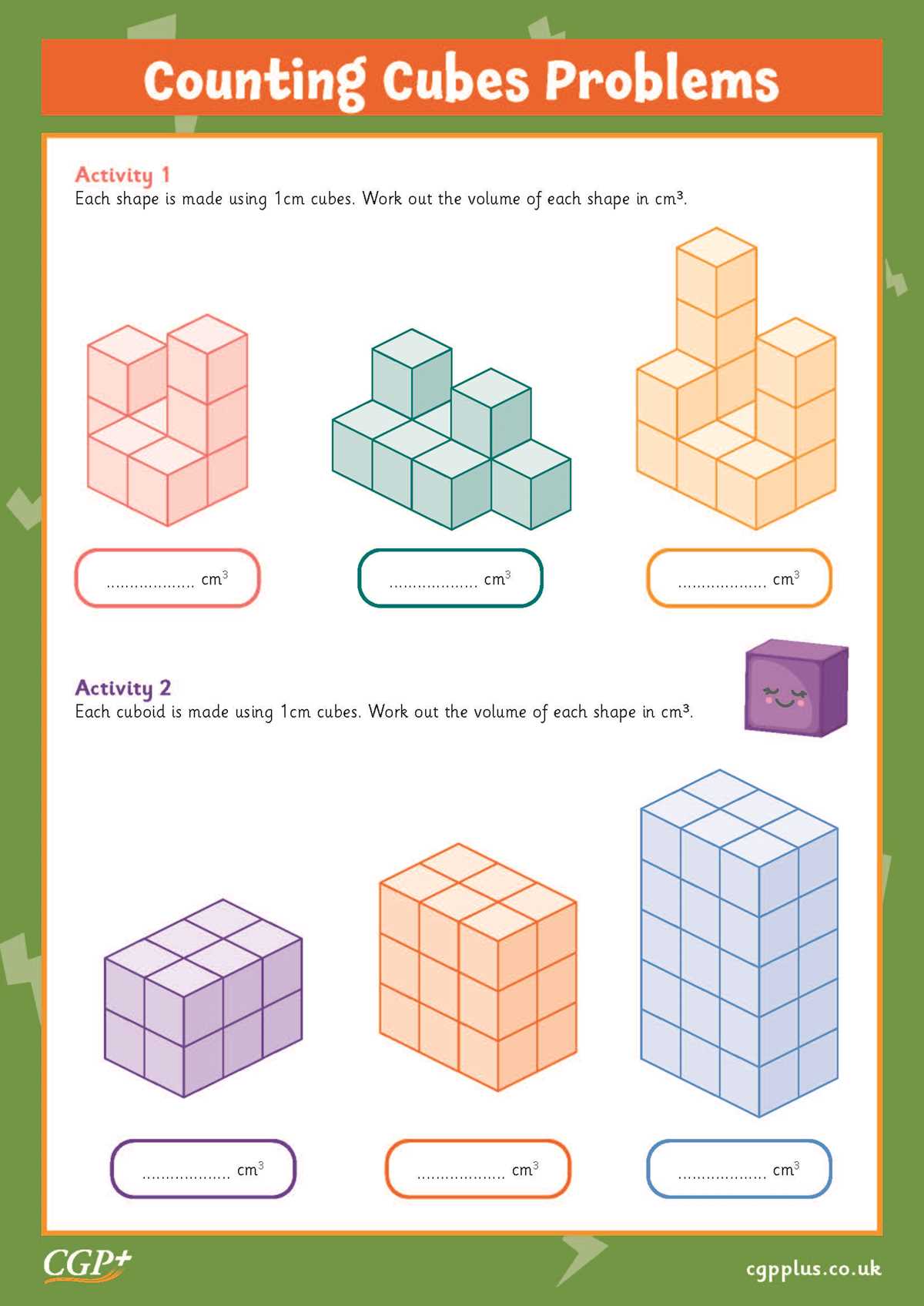
Small blocks serve as a useful tool for solving real-world space-related problems. Here are a few practical examples where this method proves valuable:
- Shipping and Packaging: In logistics, determining the space occupied by items in a container can be simplified by imagining the items as blocks. This helps in optimizing packing and maximizing space usage.
- Construction: When designing buildings or other structures, engineers use this technique to estimate the amount of material needed for construction, such as calculating the number of bricks for walls or tiles for floors.
- Storage Systems: In warehouses or retail stores, arranging goods into uniform spaces can be approached by using small blocks to ensure the most efficient use of available space.
- Manufacturing: For production planning, manufacturers can calculate the amount of raw material required by breaking down large objects into smaller components represented as blocks.
- Landscaping: When planning garden beds or water features, this approach allows landscapers to calculate the quantity of soil, gravel, or water needed by breaking the area into smaller measurable blocks.
By breaking down irregular shapes into manageable blocks, one can simplify the process of estimating space and materials needed in a variety of fields.